
- Back to sections list
- 1. General provisions
- 2. Obligations and rights of motor vehicle drivers
- 3. Movement of vehicles with special signals
- 4. Obligations and rights of pedestrians
- 5. Obligations and rights of passengers
- 6. Requirements for cyclists
- 7. Requirements for persons driving animal-drawn vehicles and animal herders
- 8. Traffic regulation
- 9. Warning signals
- 10. Starting movement and changing direction
- 11. Positioning of vehicles on the road
- 12. Speed limits
- 13. Following distance, lateral clearance, oncoming traffic
- 14. Overtaking
- 15. Stopping and parking
- 16. Crossing intersections
- 17. Advantages of route transport vehicles
- 18. Crossing pedestrian crossings and vehicle stops
- 19. Use of external lighting devices
- 20. Movement through railway crossings
- 21. Passenger transportation
- 22. Cargo transportation
- 23. Towing and operation of vehicle trains
- 24. Driving instruction
- 25. Movement of vehicles in convoys
- 26. Movement in residential and pedestrian zones
- 27. Movement on highways and roads for automobiles
- 28. Movement on mountain roads and steep descents
- 29. International traffic
- 30. Number plates, identification signs, inscriptions and markings
- 31. Technical condition of vehicles and their equipment
- 32. Specific traffic issues requiring coordination
- 33.1. Warning signs
- 33.2. Priority signs
- 33.3. Prohibitory signs
- 33.4. Mandatory signs
- 33.5. Information and directional signs
- 33.6. Service signs
- 33.7. Supplementary plates for road signs
- 34.1. Horizontal road markings
- 34.2. Vertical road markings
33. Road signs » 7. Supplementary plates
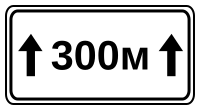
7.1.1-7.1.4 - Distance to object
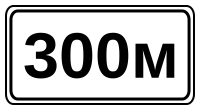
7.1.1
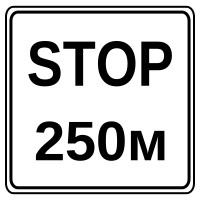
7.1.2
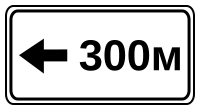
7.1.3
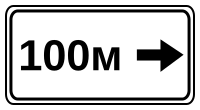
7.1.4
They indicate the distance from the sign to the beginning of the dangerous section, the place of introduction of the corresponding restriction or to a certain object (place) located ahead of the traffic flow.
2.1

2.2
5.1
5.3
5.16
5.18
5.20.1
5.20.2
5.31.1

5.31.2
5.31.3
5.42.1
5.42.2
5.63
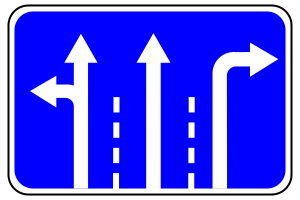
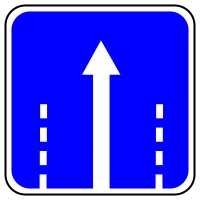
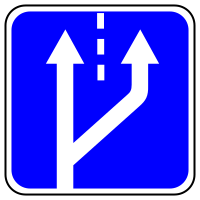
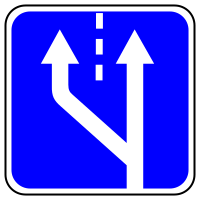
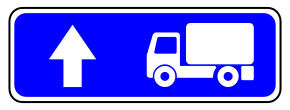
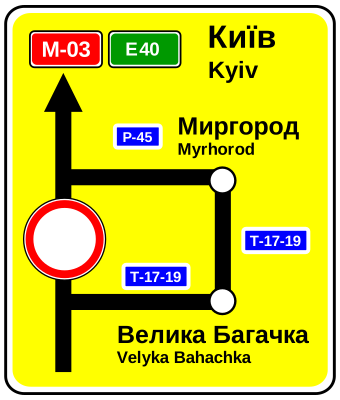
Plate 7.1.1 is used with warning signs, as well as with other previously established signs, with the exception of signs 5.16, 5.18, 5.20.1, 5.20.2, 5.31.1-5.31.3, 5.63 and service signs.
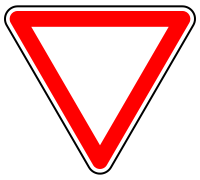
Table 7.1.2 is used with sign 2.1 as well as with sign 2.2.
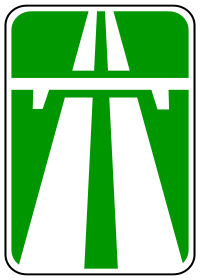
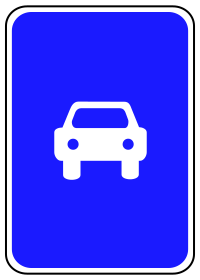
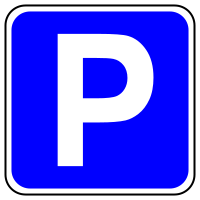
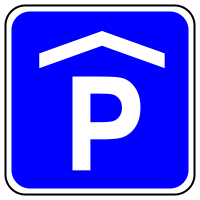
Plates 7.1.3 and 7.1.4 are used with warning signs at the places of turning towards dangerous sections of the road, as well as with signs 5.1, 5.3, 5.42.1, 5.42.2 at the places of turning towards the specified objects.
Plates 7.1.3 and 7.1.4 indicate the distance from the edge of the carriageway from which the turn is made to the object located near the road.
Supplementary plates for road signs are used to clarify or limit the effect of other road signs. Plates are used only together with signs.
When signs are placed on posts, plates are positioned directly below the sign to which they relate.
When signs are placed on cantilever supports or above the carriageway, shoulder or pavement, plates are positioned to the right of the sign.
7.2.1-7.2.7 - Zone of action
7.2.1
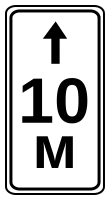
7.2.2
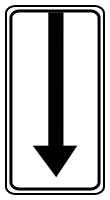
7.2.3
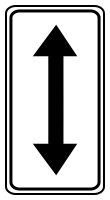
7.2.4
7.2.5
7.2.6
7.2.7
1.3.1
1.3.2
1.6
1.7
1.9
1.10
1.11
1.12
1.13
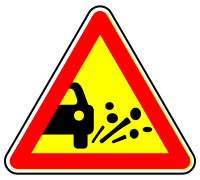
1.14
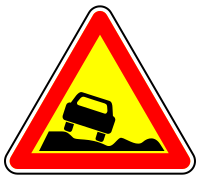
1.15
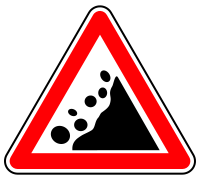
1.16
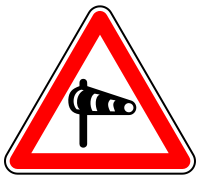
1.17
1.18
1.33
1.36
1.37

1.39
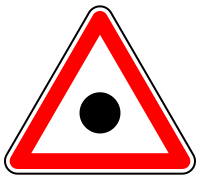
1.41
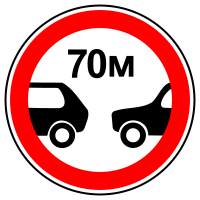
3.20
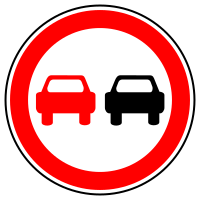
3.25
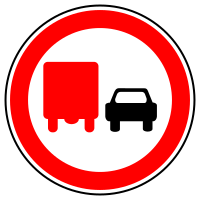
3.27
3.33

3.34
3.35
3.36
3.37
5.33
5.45.1
5.46.1
5.47.1
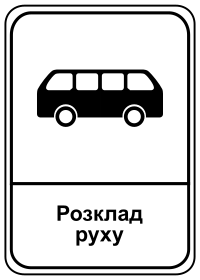
5.45.2
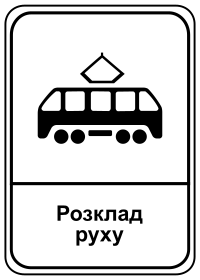
5.46.2
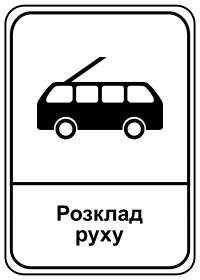
5.47.2
Table 7.2.1 indicates the length of the dangerous area marked with warning signs, or the area of effect of prohibition and informational signs. Table 7.2.1 is used:
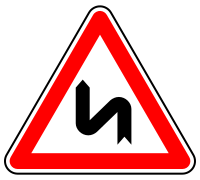
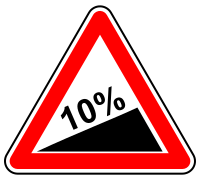
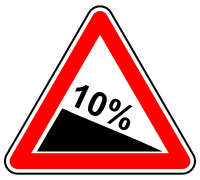
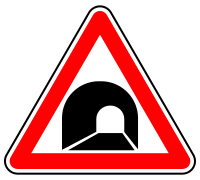
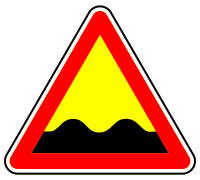
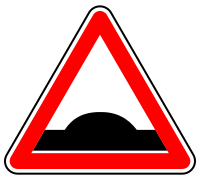
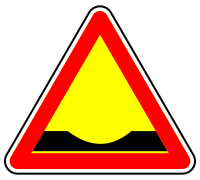
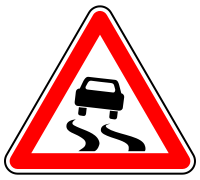
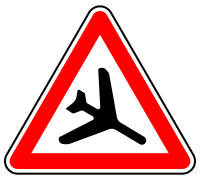
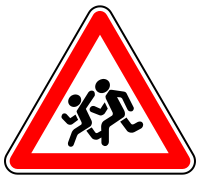
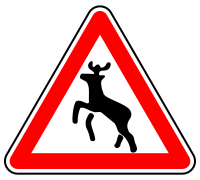
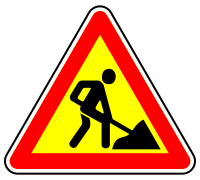
with warning signs 1.3.1, 1.3.2, 1.6, 1.7, 1.9, 1.10, 1.11, 1.12, 1.13-1.18, 1.33, 1.36, 1.37, 1.39 and 1.41 to indicate the length of the dangerous area;
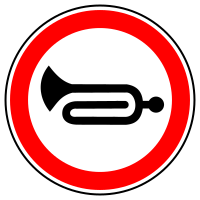
with prohibition signs 3.20, 3.25, 3.27 and 3.33 to indicate the area of effect of the signs;
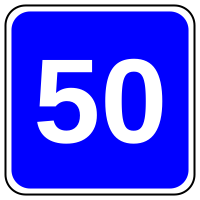
with an information-indicative sign 5.33, except when it is applied with a warning sign, if the effect of the signs does not extend to the nearest intersection.
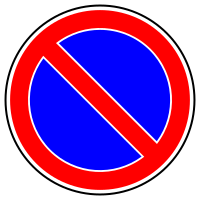
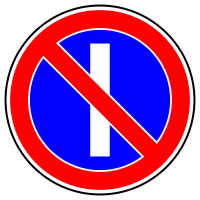
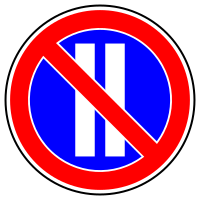
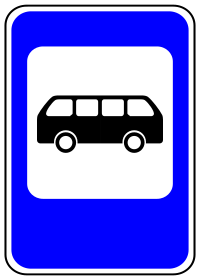
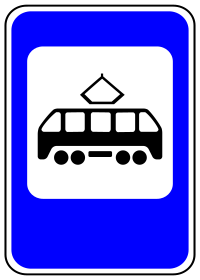
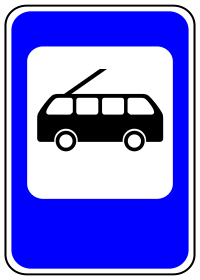
Plates 7.2.2-7.2.7 are used with signs 3.34-3.37, as well as signs 5.45.1, 5.46.1, 5.47.1 (only plate 7.2.2):
7.2.2 indicates the zone of the sign, if it does not extend to the nearest intersection, as well as to indicate the length of one or more stop areas located one after the other, marked with signs 5.45.1, 5.46.1 and 5.47.1, without marking the end of the landing area with signs 5.45.2, 5.46.2 and 5.47.2;
7.2.3 indicates the end of the area of effect of the sign;
7.2.4 informs about being in the area of effect of signs 3.34-3.37;
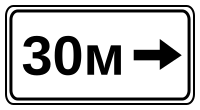
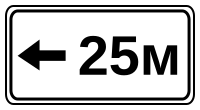
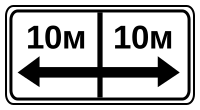
7.2.5-7.2.7 indicates the area of effect of the sign to the right, to the left or to the right and to the left of it, if stopping or parking is prohibited along one side or on both sides of the square, the facade of the building, etc.
It is allowed to place plates 7.2.2-7.2.4 to the right of the signs to which they belong, if two or three signs are placed on one riser.
Supplementary plates for road signs are used to clarify or limit the effect of other road signs. Plates are used only together with signs.
When signs are placed on posts, plates are positioned directly below the sign to which they relate.
When signs are placed on cantilever supports or above the carriageway, shoulder or pavement, plates are positioned to the right of the sign.
7.3.1-7.3.3 - Direction of action
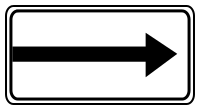
7.3.1
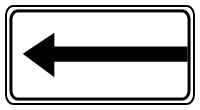
7.3.2
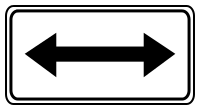
7.3.3
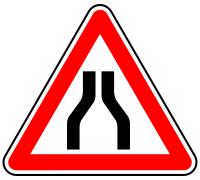
1.5.1
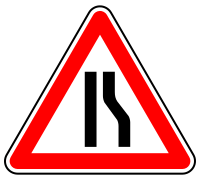
1.5.2
1.5.3
1.37

3.1
3.2
3.3
3.4
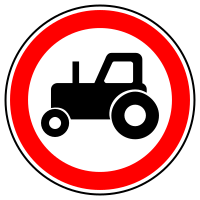
3.5
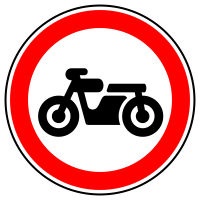
3.6
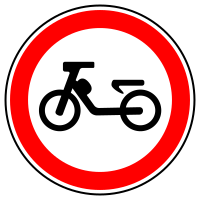
3.7
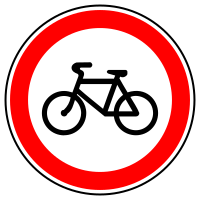
3.8
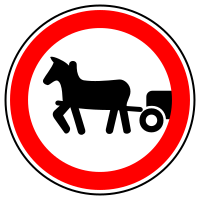
3.11

3.12
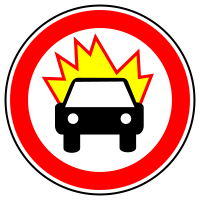
3.13
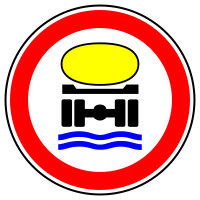
3.14
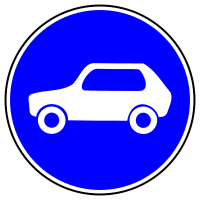
4.11
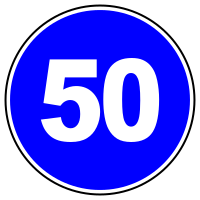
4.12
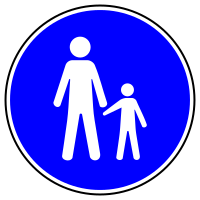
4.16
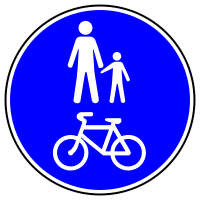
4.17
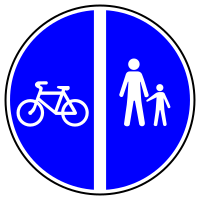
4.18
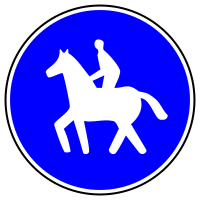
4.19
5.3
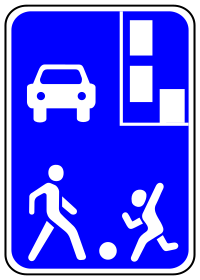
5.34
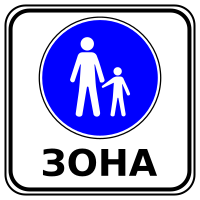
5.36
5.42.1
5.42.2
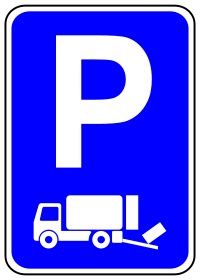
5.42.3
5.91
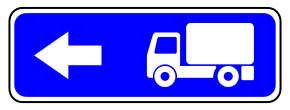
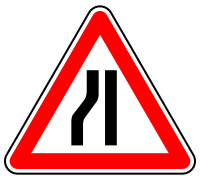
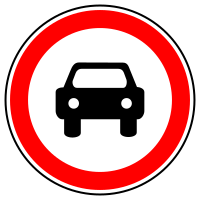
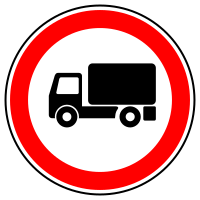
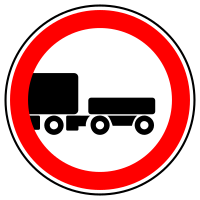
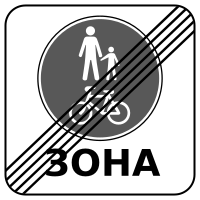
They are used with signs 3.1-3.8, 3.11-3.14, 4.11, 4.12, 4.16-4.19, 5.3, 5.34, 5.36 and 5.91 to indicate the direction of action of the signs located immediately before the intersection, or the direction of movement to the marked objects located immediately next to the road.
Plates 7.3.1 and 7.3.2 with signs 5.42.1-5.42.3 indicate the location of parking lots relative to the road, and with signs 1.5.1-1.5.3 and 1.37 inform about areas of road works.
Supplementary plates for road signs are used to clarify or limit the effect of other road signs. Plates are used only together with signs.
When signs are placed on posts, plates are positioned directly below the sign to which they relate.
When signs are placed on cantilever supports or above the carriageway, shoulder or pavement, plates are positioned to the right of the sign.
7.4.1-7.4.7 - Time of action
7.4.1
7.4.2
7.4.3
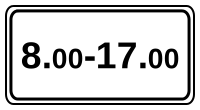
7.4.4
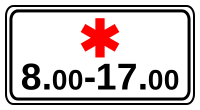
7.4.5
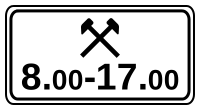
7.4.6
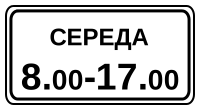
7.4.7
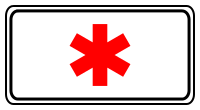
Table 7.4.1 - Saturdays, Sundays and holidays;
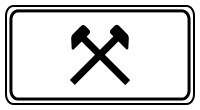
Table 7.4.2 - working days;
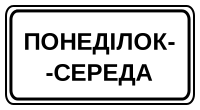
Table 7.4.3 - days of the week;
Tables 7.4.4-7.4.7 - days of the week and time of day during which the sign is valid.
Supplementary plates for road signs are used to clarify or limit the effect of other road signs. Plates are used only together with signs.
When signs are placed on posts, plates are positioned directly below the sign to which they relate.
When signs are placed on cantilever supports or above the carriageway, shoulder or pavement, plates are positioned to the right of the sign.
7.5.1-7.5.9 - Vehicle type
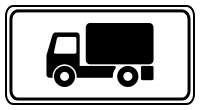
7.5.1
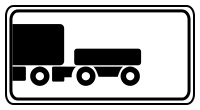
7.5.2
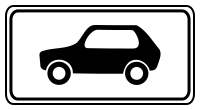
7.5.3
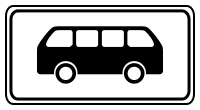
7.5.4
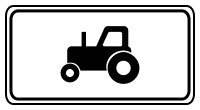
7.5.5
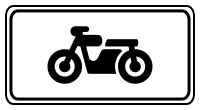
7.5.6
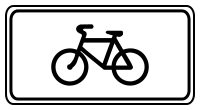
7.5.7
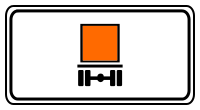
7.5.8

7.5.9
They show the type of vehicle to which the sign applies.
Plate 7.5.1 extends the effect of the sign to trucks (including with a trailer) with a permissible maximum weight of more than 3.5 tons;
Plate 7.5.3 - for passenger cars, as well as trucks with a maximum permissible weight of up to 3.5 tons;
Plate 7.5.8 - for vehicles with the identification mark "Orange plate" that transport dangerous goods;
Plate 7.5.9 - on cars carrying out international road transportation of goods.
Supplementary plates for road signs are used to clarify or limit the effect of other road signs. Plates are used only together with signs.
When signs are placed on posts, plates are positioned directly below the sign to which they relate.
When signs are placed on cantilever supports or above the carriageway, shoulder or pavement, plates are positioned to the right of the sign.
7.6.1-7.6.7 - Vehicle parking method
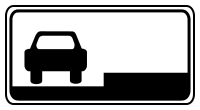
7.6.1
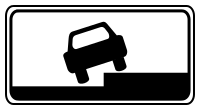
7.6.2
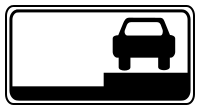
7.6.3
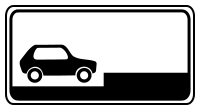
7.6.4
7.6.5
7.6.6
7.6.7
5.43
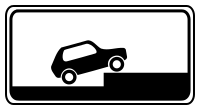
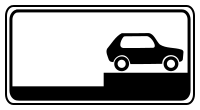
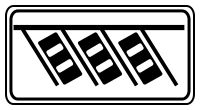
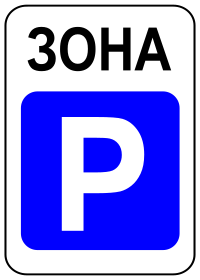
They are used with sign 5.43 to indicate the method of parking a vehicle near the sidewalk or using it.
Plate 7.6.7 indicates the method of parking at an angle of 30°, 45° or 60°.
Plate 7.6.1 indicates that all vehicles must be parked on the roadway along the sidewalk, and plates 7.6.2-7.6.6 indicate the manner in which cars and motorcycles are parked near the sidewalk and using it.
In settlements where parking is allowed on the left side of the street, plates 7.6.1-7.6.7 with a mirror image of the symbols may be used.
Supplementary plates for road signs are used to clarify or limit the effect of other road signs. Plates are used only together with signs.
When signs are placed on posts, plates are positioned directly below the sign to which they relate.
When signs are placed on cantilever supports or above the carriageway, shoulder or pavement, plates are positioned to the right of the sign.
7.7 - Parking with engine off
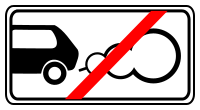
7.7
Means that in the parking lot marked with signs 5.42.1-5.42.3 or 5.43, it is allowed to leave vehicles only with the engine not working.
Supplementary plates for road signs are used to clarify or limit the effect of other road signs. Plates are used only together with signs.
When signs are placed on posts, plates are positioned directly below the sign to which they relate.
When signs are placed on cantilever supports or above the carriageway, shoulder or pavement, plates are positioned to the right of the sign.
7.8 - Priority road direction

7.8
The direction of the main road at the intersection.
2.1
2.2
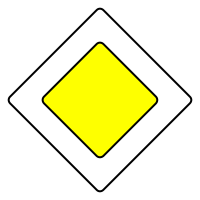
2.3
Used with signs 2.1-2.3.
It is allowed to place plate 7.8 to the right of the signs to which they belong, if two or three signs are placed on one riser.
Supplementary plates for road signs are used to clarify or limit the effect of other road signs. Plates are used only together with signs.
When signs are placed on posts, plates are positioned directly below the sign to which they relate.
When signs are placed on cantilever supports or above the carriageway, shoulder or pavement, plates are positioned to the right of the sign.
7.9 - Traffic lane
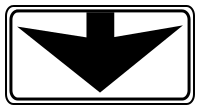
7.9
Defines the traffic lane to which the sign or traffic light applies
Supplementary plates for road signs are used to clarify or limit the effect of other road signs. Plates are used only together with signs.
When signs are placed on posts, plates are positioned directly below the sign to which they relate.
When signs are placed on cantilever supports or above the carriageway, shoulder or pavement, plates are positioned to the right of the sign.
7.10 - Number of turns
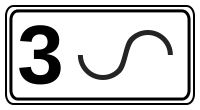
7.10
1.3.1
1.3.2
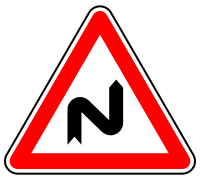
It is used with signs 1.3.1 and 1.3.2, if there are three or more turns. The number of turns can be directly indicated on signs 1.3.1 and 1.3.2.
Supplementary plates for road signs are used to clarify or limit the effect of other road signs. Plates are used only together with signs.
When signs are placed on posts, plates are positioned directly below the sign to which they relate.
When signs are placed on cantilever supports or above the carriageway, shoulder or pavement, plates are positioned to the right of the sign.
7.11 - Ferry crossing
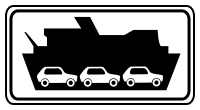
7.11
Indicates the approach to the ferry crossing.
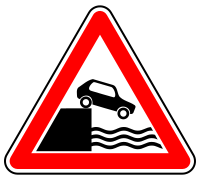
1.8
It is used with the sign 1.8
Supplementary plates for road signs are used to clarify or limit the effect of other road signs. Plates are used only together with signs.
When signs are placed on posts, plates are positioned directly below the sign to which they relate.
When signs are placed on cantilever supports or above the carriageway, shoulder or pavement, plates are positioned to the right of the sign.
7.12 - Ice on road

7.12
Means that the effect of the sign applies only to the winter period of time, when the roadway can be slippery.
1.13
1.38
1.39
3.1
3.2
3.3
3.4
3.6
3.7
3.8
3.9
3.10
3.11
3.12
3.13
3.14
3.25
3.27
3.29
3.31

4.21
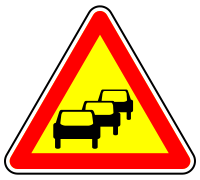
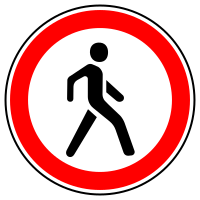
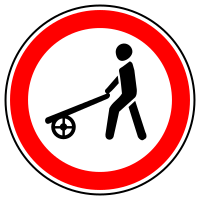
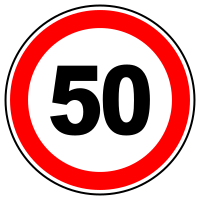
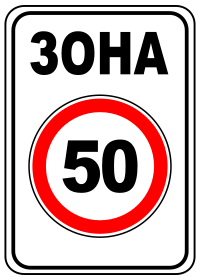
Applies to signs 1.13, 1.38, 1.39, 3.1-3.4, 3.6-3.14, 3.25, 3.27, 3.29, 3.31 and 4.21.
Supplementary plates for road signs are used to clarify or limit the effect of other road signs. Plates are used only together with signs.
When signs are placed on posts, plates are positioned directly below the sign to which they relate.
When signs are placed on cantilever supports or above the carriageway, shoulder or pavement, plates are positioned to the right of the sign.
7.13 - Wet surface

7.13
Means that the effect of the sign extends to the period when the surface of the carriageway is wet or wet.
1.13
1.38
1.39
3.1
3.2
3.3
3.4
3.6
3.7
3.8
3.9
3.10
3.11
3.12
3.13
3.14
3.25
3.27
3.29
3.31
It is used with signs 1.13, 1.38, 1.39, 3.1-3.4, 3.6-3.14, 3.25, 3.27, 3.29 and 3.31.
Supplementary plates for road signs are used to clarify or limit the effect of other road signs. Plates are used only together with signs.
When signs are placed on posts, plates are positioned directly below the sign to which they relate.
When signs are placed on cantilever supports or above the carriageway, shoulder or pavement, plates are positioned to the right of the sign.
7.14 - Paid services
7.14
5.42.1
5.42.2
5.43
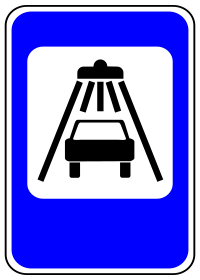
6.6
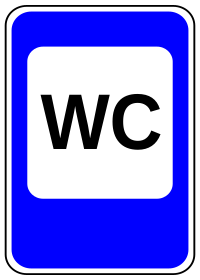
6.11
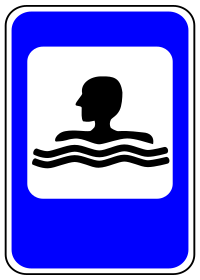
6.21
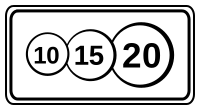
Used with signs 5.42.1, 5.42.2 or 5.43 to indicate places, areas or parking areas for vehicles where parking is charged, and with signs 6.6, 6.11 and 6.21 where services are provided only on a fee basis.
Supplementary plates for road signs are used to clarify or limit the effect of other road signs. Plates are used only together with signs.
When signs are placed on posts, plates are positioned directly below the sign to which they relate.
When signs are placed on cantilever supports or above the carriageway, shoulder or pavement, plates are positioned to the right of the sign.
7.15 - Vehicle inspection area
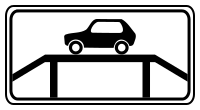
7.15
5.42.1
5.42.2
6.15
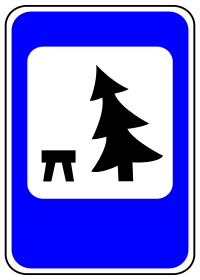
Used with signs 5.42.1, 5.42.2 and 6.15 to indicate parking areas and places where there is a flyover or viewing ditch.
Supplementary plates for road signs are used to clarify or limit the effect of other road signs. Plates are used only together with signs.
When signs are placed on posts, plates are positioned directly below the sign to which they relate.
When signs are placed on cantilever supports or above the carriageway, shoulder or pavement, plates are positioned to the right of the sign.
7.16 - Visually impaired pedestrians
7.16
1.32
5.38.1
5.38.2
5.39
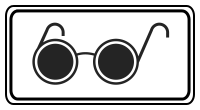
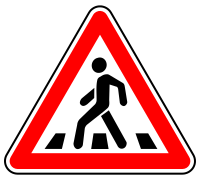
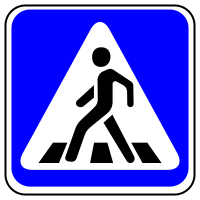
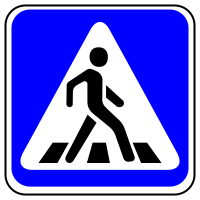
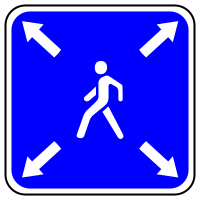
It is used with signs 1.32, 5.38.1, 5.38.2 and 5.39, as well as with traffic lights to warn that the pedestrian crossing is used by visually impaired pedestrians.
Supplementary plates for road signs are used to clarify or limit the effect of other road signs. Plates are used only together with signs.
When signs are placed on posts, plates are positioned directly below the sign to which they relate.
When signs are placed on cantilever supports or above the carriageway, shoulder or pavement, plates are positioned to the right of the sign.
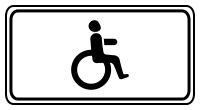
7.17 - Persons with disabilities
7.17
5.42.1
5.42.2
5.43
It is used with signs 5.42.1, 5.42.2 and 5.43 to indicate a place (or a specially designated part of the site) for the parking of vehicles on which the identification sign "Driver with a disability" is installed in accordance with the requirements of these Rules.
Supplementary plates for road signs are used to clarify or limit the effect of other road signs. Plates are used only together with signs.
When signs are placed on posts, plates are positioned directly below the sign to which they relate.
When signs are placed on cantilever supports or above the carriageway, shoulder or pavement, plates are positioned to the right of the sign.
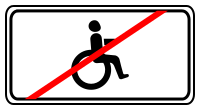
7.18 - Except persons with disabilities
7.18
3.1
3.34
3.35
3.36
3.37
3.38
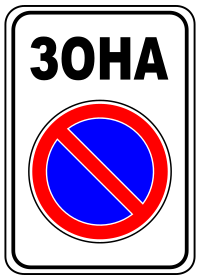
It is used to indicate that the effect of signs 3.1, 3.34-3.38 does not apply to motorized strollers and cars on which the identification sign "Driver with a disability" is installed in accordance with the requirements of these Rules.
Supplementary plates for road signs are used to clarify or limit the effect of other road signs. Plates are used only together with signs.
When signs are placed on posts, plates are positioned directly below the sign to which they relate.
When signs are placed on cantilever supports or above the carriageway, shoulder or pavement, plates are positioned to the right of the sign.
7.19 - Parking time limit
7.19
5.42.1
5.42.2
5.43
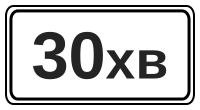
Determines the maximum duration of a vehicle's stay in the parking lot marked with signs 5.42.1, 5.42.2 and 5.43.
Supplementary plates for road signs are used to clarify or limit the effect of other road signs. Plates are used only together with signs.
When signs are placed on posts, plates are positioned directly below the sign to which they relate.
When signs are placed on cantilever supports or above the carriageway, shoulder or pavement, plates are positioned to the right of the sign.
7.20 - Temperature restriction
7.20
3.15
3.16
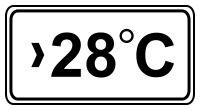
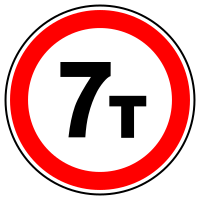
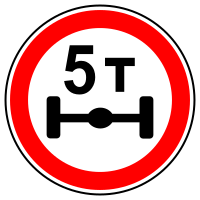
It is used with signs 3.15 and 3.16 to prohibit movement at an air temperature of more than 28° C, for vehicles whose mass exceeds 24 tons, and the axle load is 7 tons.
Supplementary plates for road signs are used to clarify or limit the effect of other road signs. Plates are used only together with signs.
When signs are placed on posts, plates are positioned directly below the sign to which they relate.
When signs are placed on cantilever supports or above the carriageway, shoulder or pavement, plates are positioned to the right of the sign.
7.21.1-7.21.5 - Type of danger
7.21.1
7.21.2
7.21.3
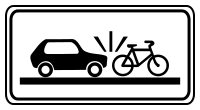
7.21.4

7.21.5
1.41
1.39
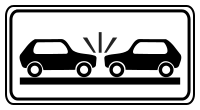
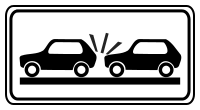
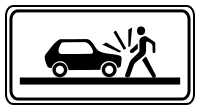
It is used with sign 1.41 to inform about the possible type of traffic accident in places or areas of their concentration.
It is allowed to use plates 7.21.1-7.21.5 with the sign 1.39.
Supplementary plates for road signs are used to clarify or limit the effect of other road signs. Plates are used only together with signs.
When signs are placed on posts, plates are positioned directly below the sign to which they relate.
When signs are placed on cantilever supports or above the carriageway, shoulder or pavement, plates are positioned to the right of the sign.
7.22 - Skiers
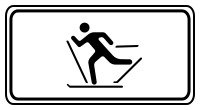
7.22
1.39
It is used with the sign 1.39 to indicate sections of roads near which ski tracks or tracks of other winter sports are located.
Supplementary plates for road signs are used to clarify or limit the effect of other road signs. Plates are used only together with signs.
When signs are placed on posts, plates are positioned directly below the sign to which they relate.
When signs are placed on cantilever supports or above the carriageway, shoulder or pavement, plates are positioned to the right of the sign.
7.23 - Electric vehicle charging point
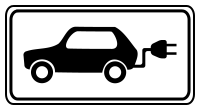
7.23
5.42.1
5.42.2
It is used with signs 5.42.1, 5.42.2 in the case when the charging station for electric vehicles is located outside the gas station in specially designated places.
Supplementary plates for road signs are used to clarify or limit the effect of other road signs. Plates are used only together with signs.
When signs are placed on posts, plates are positioned directly below the sign to which they relate.
When signs are placed on cantilever supports or above the carriageway, shoulder or pavement, plates are positioned to the right of the sign.
7.24 - Tow truck
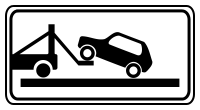
7.24
3.34
3.35
3.36
3.37
It is used with signs 3.34-3.37 to warn about the possible evacuation of the car without the knowledge of the owner.
Supplementary plates for road signs are used to clarify or limit the effect of other road signs. Plates are used only together with signs.
When signs are placed on posts, plates are positioned directly below the sign to which they relate.
When signs are placed on cantilever supports or above the carriageway, shoulder or pavement, plates are positioned to the right of the sign.
7.25 - Safety island
7.25
1.39
1.41
1.5.1
1.5.2
1.5.3
3.29
5.33
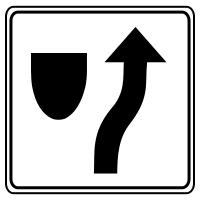
It is used to inform drivers about the presence of a safety island ahead and narrowing the width of the carriageway. The plate is installed with signs 1.39, 1.41, 1.5.1-1.5.3, 3.29, 5.33.
Supplementary plates for road signs are used to clarify or limit the effect of other road signs. Plates are used only together with signs.
When signs are placed on posts, plates are positioned directly below the sign to which they relate.
When signs are placed on cantilever supports or above the carriageway, shoulder or pavement, plates are positioned to the right of the sign.
7.26 - Daytime running lights period
7.26
5.50
5.52
5.54
5.55
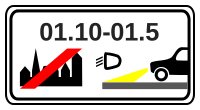
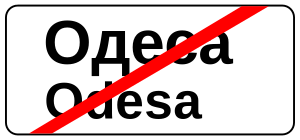
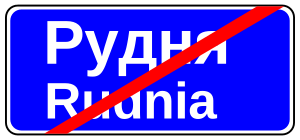
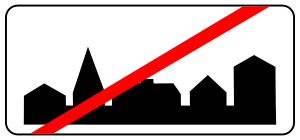
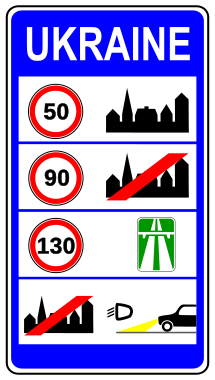
It is allowed to be used with signs 5.50, 5.52, 5.54 to remind domestic and provide information to foreign drivers about the general requirements for traffic conditions on the roads of Ukraine.
The enlarged plate is placed in the fourth section of the sign 5.55.
Supplementary plates for road signs are used to clarify or limit the effect of other road signs. Plates are used only together with signs.
When signs are placed on posts, plates are positioned directly below the sign to which they relate.
When signs are placed on cantilever supports or above the carriageway, shoulder or pavement, plates are positioned to the right of the sign.
7.27 - Road marking application
7.27
1.37
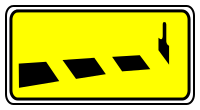
It is used with signs 1.37 to inform about the type of road works.
Supplementary plates for road signs are used to clarify or limit the effect of other road signs. Plates are used only together with signs.
When signs are placed on posts, plates are positioned directly below the sign to which they relate.
When signs are placed on cantilever supports or above the carriageway, shoulder or pavement, plates are positioned to the right of the sign.
7.28.1-7.28.4 - Type of public transport
7.28.1
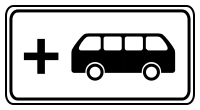
7.28.2
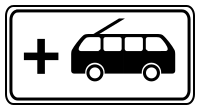
7.28.3
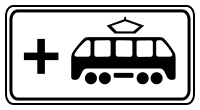
7.28.4
5.42.1
5.42.2
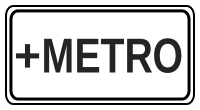
They are used with signs 5.42.1 and 5.42.2 to inform vehicle drivers about the possibility of transferring to city public transport (metro and other types of route transport).
Supplementary plates for road signs are used to clarify or limit the effect of other road signs. Plates are used only together with signs.
When signs are placed on posts, plates are positioned directly below the sign to which they relate.
When signs are placed on cantilever supports or above the carriageway, shoulder or pavement, plates are positioned to the right of the sign.
7.29.1-7.29.6 - Bicycle direction
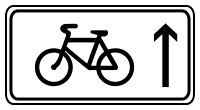
7.29.1
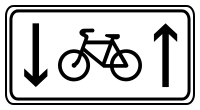
7.29.2
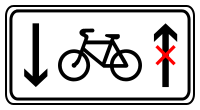
7.29.3
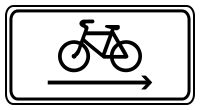
7.29.4
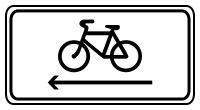
7.29.5
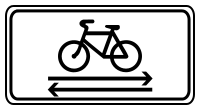
7.29.6

4.14
4.17
4.18
They are used with signs 4.14, 4.17 and 4.18 to inform cyclists about the direction of movement, one-way or two-way traffic on a bicycle path.
Supplementary plates for road signs are used to clarify or limit the effect of other road signs. Plates are used only together with signs.
When signs are placed on posts, plates are positioned directly below the sign to which they relate.
When signs are placed on cantilever supports or above the carriageway, shoulder or pavement, plates are positioned to the right of the sign.