
- Back to sections list
- 1. General provisions
- 2. Obligations and rights of motor vehicle drivers
- 3. Movement of vehicles with special signals
- 4. Obligations and rights of pedestrians
- 5. Obligations and rights of passengers
- 6. Requirements for cyclists
- 7. Requirements for persons driving animal-drawn vehicles and animal herders
- 8. Traffic regulation
- 9. Warning signals
- 10. Starting movement and changing direction
- 11. Positioning of vehicles on the road
- 12. Speed limits
- 13. Following distance, lateral clearance, oncoming traffic
- 14. Overtaking
- 15. Stopping and parking
- 16. Crossing intersections
- 17. Advantages of route transport vehicles
- 18. Crossing pedestrian crossings and vehicle stops
- 19. Use of external lighting devices
- 20. Movement through railway crossings
- 21. Passenger transportation
- 22. Cargo transportation
- 23. Towing and operation of vehicle trains
- 24. Driving instruction
- 25. Movement of vehicles in convoys
- 26. Movement in residential and pedestrian zones
- 27. Movement on highways and roads for automobiles
- 28. Movement on mountain roads and steep descents
- 29. International traffic
- 30. Number plates, identification signs, inscriptions and markings
- 31. Technical condition of vehicles and their equipment
- 32. Specific traffic issues requiring coordination
- 33.1. Warning signs
- 33.2. Priority signs
- 33.3. Prohibitory signs
- 33.4. Mandatory signs
- 33.5. Information and directional signs
- 33.6. Service signs
- 33.7. Supplementary plates for road signs
- 34.1. Horizontal road markings
- 34.2. Vertical road markings
33. Road signs » 4. Mandatory signs
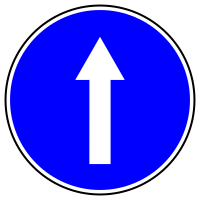
4.1 - Straight ahead only
4.1
Traffic only in the directions shown by arrows.
Sign 4.1 does not apply to vehicles moving along established routes.
The effect of the sign 4.1 extends to the crossing of road sections in front of which they are installed.
The effect of sign 4.1, installed at the beginning of the road or beyond the intersection, extends to the section of the road to the nearest intersection. The sign does not prohibit turning right into yards and other areas adjacent to the road.
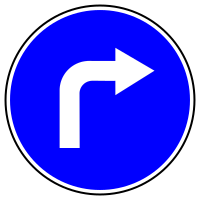
4.2 - Turn right only
4.2
Traffic only in the directions shown by arrows.
Sign 4.2 does not apply to vehicles moving along established routes.
The effect of sign 4.2 extends to the intersection of road sections in front of which they are installed.
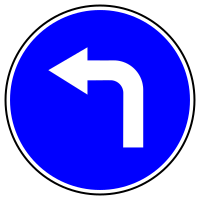
4.3 - Turn left only
4.3
Traffic only in the directions shown by arrows.
Sign 4.3 also allows vehicles to turn around.
Sign 4.3 does not apply to vehicles moving along established routes.
The effect of the sign 4.3 extends to the crossing of road sections in front of which they are installed.
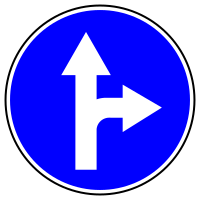
4.4 - Straight ahead or right only
4.4
Traffic only in the directions shown by arrows.
Sign 4.4 does not apply to vehicles moving along established routes.
The effect of sign 4.4 extends to the intersection of road sections in front of which they are installed.
4.5 - Straight ahead or left only
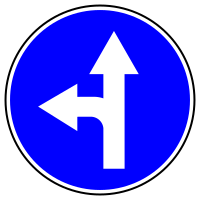
4.5
Traffic only in the directions shown by arrows.
Sign 4.5 also allows vehicles to turn around.
Sign 4.5 does not apply to vehicles moving along established routes.
The effect of sign 4.5 extends to the intersection of road sections in front of which they are installed.
4.6 - Right or left only
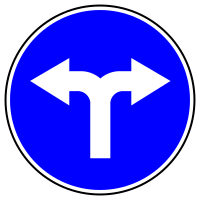
4.6
Traffic only in the directions shown by arrows.
Sign 4.6 also allows vehicles to turn around.
Sign 4.6 does not apply to vehicles moving along established routes.
The effect of the sign 4.6 extends to the crossing of road sections in front of which they are installed.
4.7 - Pass obstacle on right
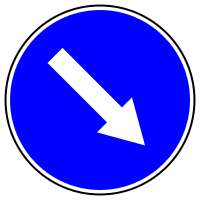
4.7
Pass only from the side indicated by the arrow.
4.8 - Pass obstacle on left

4.8
Pass only from the side indicated by the arrow.
4.9 - Pass obstacle on right or left
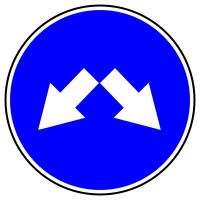
4.9
4.10 - Roundabout

4.10
Requires bypassing the flowerbed (central island) in the direction indicated by the arrows at the roundabout.
4.11 - Passenger cars only
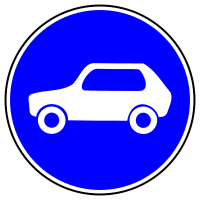
4.11
The movement of only passenger cars, buses, motorcycles, vehicles operating on established routes and trucks with a maximum permissible weight of 3.5 tons is allowed.
Sign 4.11 does not apply to vehicles serving citizens or belonging to citizens who live or work in the marked zone, as well as to vehicles serving enterprises located in this zone. In such cases, vehicles must enter the marked zone and exit it at the nearest intersection to the destination.
4.12 - Minimum speed limit
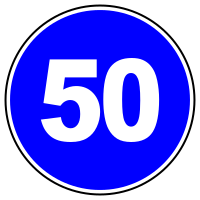
4.12
Movement at a speed not less than that indicated on the sign, but not more than that provided for in clauses 12.4-12.7 of these Rules.
4.13 - End of minimum speed limit
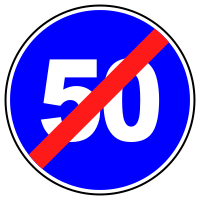
4.13
4.14 - Bicycle path
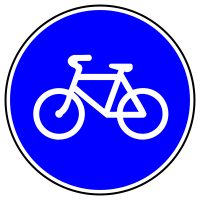
4.14
Bicycle traffic. People in wheelchairs are allowed to move at the speed of a pedestrian. If there is no sidewalk or footpath, pedestrian traffic is also allowed.
4.15 - End of bicycle path
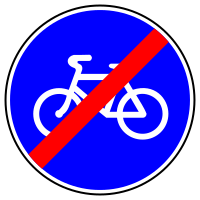
4.15
The end of the path marked with the sign 4.14.
4.16 - Pedestrian path
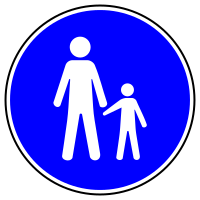
4.16
It is used to indicate paths intended only for pedestrian traffic.
4.17 - Shared pedestrian and bicycle path
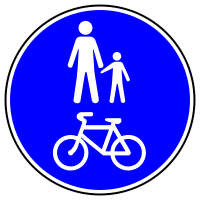
4.17
Movement of pedestrians and cyclists. People in wheelchairs are allowed to move at the speed of a pedestrian.
4.18 - Adjacent pedestrian and bicycle paths
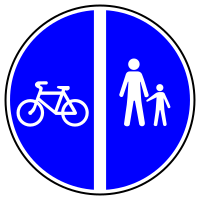
4.18
The movement of pedestrians and cyclists, respectively, on pedestrian and bicycle paths that are adjacent to each other, but demarcated by marking 1.1 or the color of the surface. People in wheelchairs are allowed to move at the speed of a pedestrian on any of the tracks.
4.19 - Equestrian path
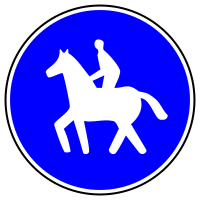
4.19
4.20.1-4.20.3 - Direction for vehicles with dangerous goods
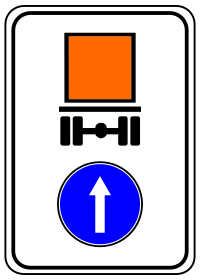
4.20.1
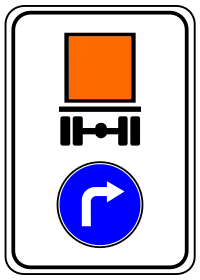
4.20.2
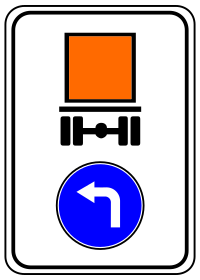
4.20.3
Shows the permitted direction of movement of vehicles with identification signs "Danger sign" and "Orange plate".
4.21 - Snow chains required

4.21
The movement of cars, trucks and buses with the use of anti-skid chains on at least two driving wheels of the vehicle.

7.12
Sign 4.21 is used with plate 7.12
4.22 - End of snow chains zone

4.22
Denotes the end of the area of effect of the sign 4.21.
4.23 - Shared road for cars and bicycles
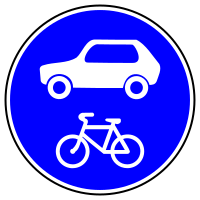
4.23
Marks the beginning of streets and roads of local importance (except pedestrian streets) intended for the combined traffic of cyclists and cars.
4.24 - End of shared road for cars and bicycles
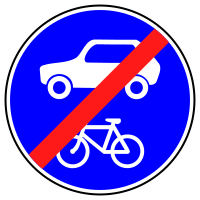
4.24
Denotes the end of streets and roads of local importance (except pedestrian streets) intended for the combined traffic of cyclists and cars.