
52.1. What do these two road signs have in common?
UAЩо спільного у цих двох дорожніх знаків?

This exam question from the Traffic Rules of Ukraine checks attentiveness to prohibitory road signs and exceptions to their effect, which directly impacts road safety and proper interaction with public transport. On the road, drivers often perceive such signs as an absolute prohibition, but the traffic rules contain important clarifications that must be known for the theoretical exam and real-life situations in the city.
52.2. Which of the depicted road signs is installed at the end of the bus stop boarding platform?
UAЯкий із зображених дорожніх знаків встановлюється в кінці посадкового майданчика зупинки автобуса?
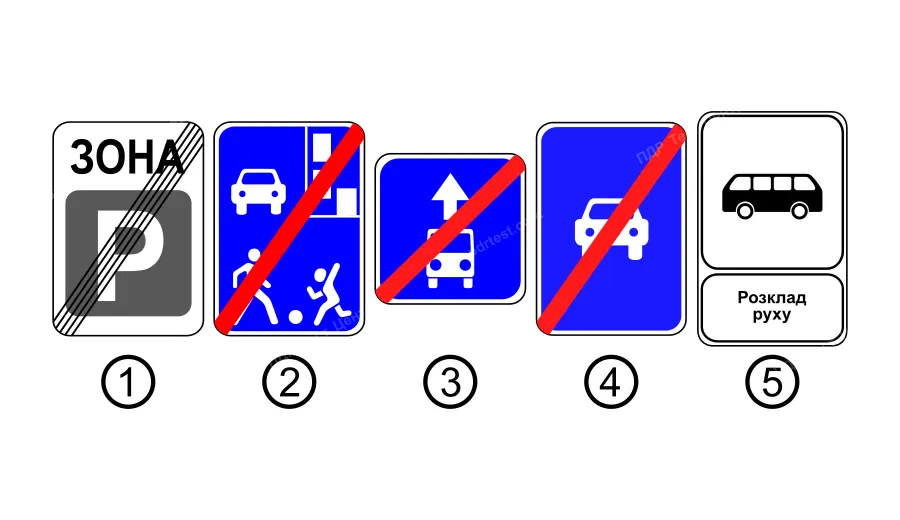
This exam question focuses on road signs that regulate traffic at public transport stop locations. For road safety, it is important to clearly understand the boundaries of the boarding area: where the bus is allowed to stop, and where stopping and parking restrictions may apply to other drivers. Such knowledge is required for the theoretical exam and helps to avoid conflicts with public transport and dangerous situations near stops in everyday life.
52.3. What is the maximum permitted speed for the blue bus?
UAЗ якою максимальною швидкістю дозволено рух синього автобуса?
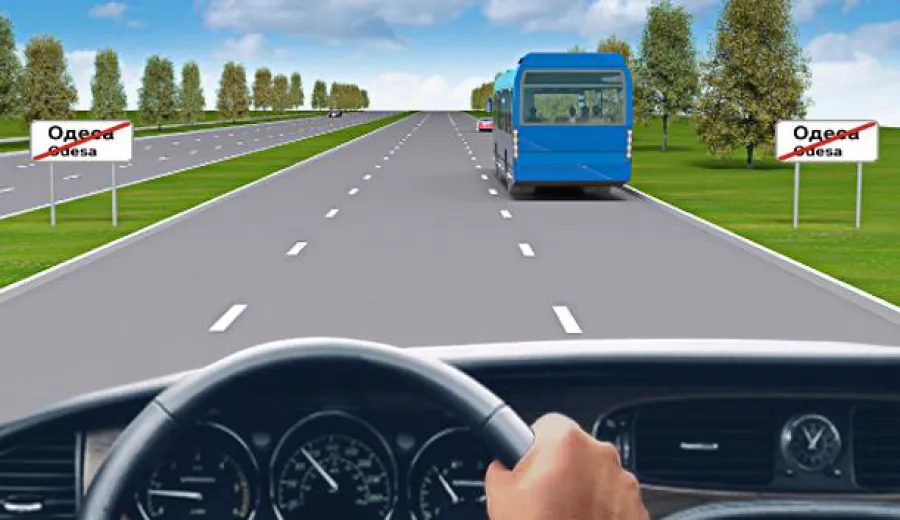
This exam question from the Traffic Rules of Ukraine tests knowledge of speed limits and their impact on road safety. Choosing the correct speed reduces the risk of accidents, especially for passenger transport, where braking distance, vehicle mass, and the responsibility for carrying people are higher. The theoretical exam often includes scenarios where you need to distinguish between general speed limits and special restrictions for certain categories of vehicles.
52.4. What is the maximum permitted speed for the red bus on a motorway?
UAЗ якою максимальною швидкістю дозволено рух червоному автобусу на автомагістралі?
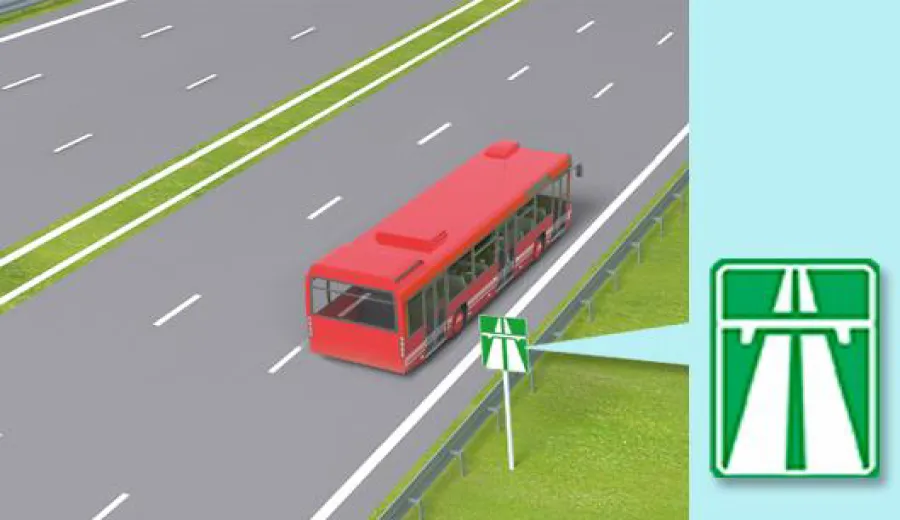
This exam question from the Traffic Rules of Ukraine concerns the safe choice of speed and special restrictions for different categories of vehicles outside populated areas. On high-speed roads, drivers often rely on the 'general' limits, but separate rules apply to buses, which are important to know for the theoretical exam and for real passenger transport safety.
52.5. What is the maximum permitted speed for buses (except minibuses) on roads marked with the 'Motor vehicle road' sign?
UAЗ якою максимальною швидкістю дозволено рух автобусів (за винятком мікроавтобусів) на дорогах, позначених знаком «Дорога для автомобілів»?
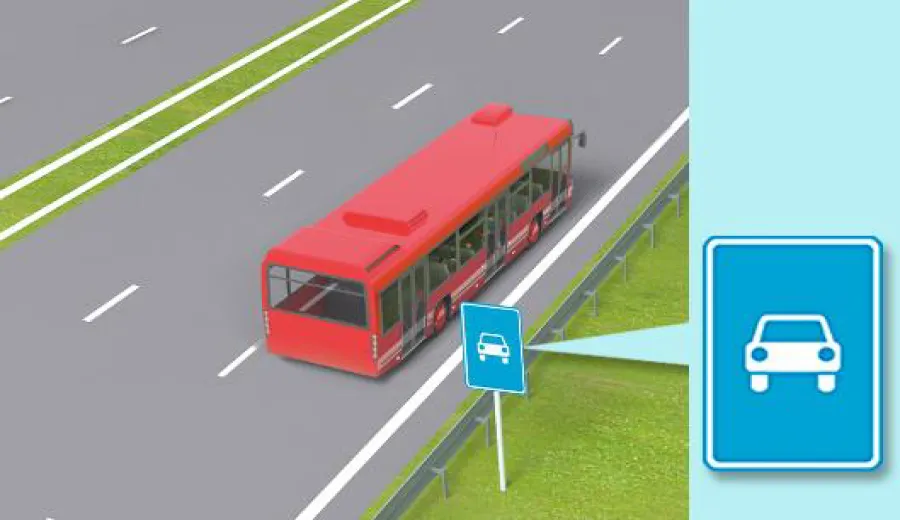
This exam question from the Traffic Rules of Ukraine tests knowledge of speed limits and the safe organization of traffic outside populated areas. For the theoretical exam, it is important to understand that the maximum speed depends not only on the type of road and road signs, but also on the category of vehicle: separate, stricter restrictions apply to buses, since their weight, braking distance, and responsibility for passengers increase safety requirements.
52.6. What is the maximum speed limit established for minibuses on a motorway?
UAЯка максимальна швидкість встановлена для руху мікроавтобусів на автомагістралі?
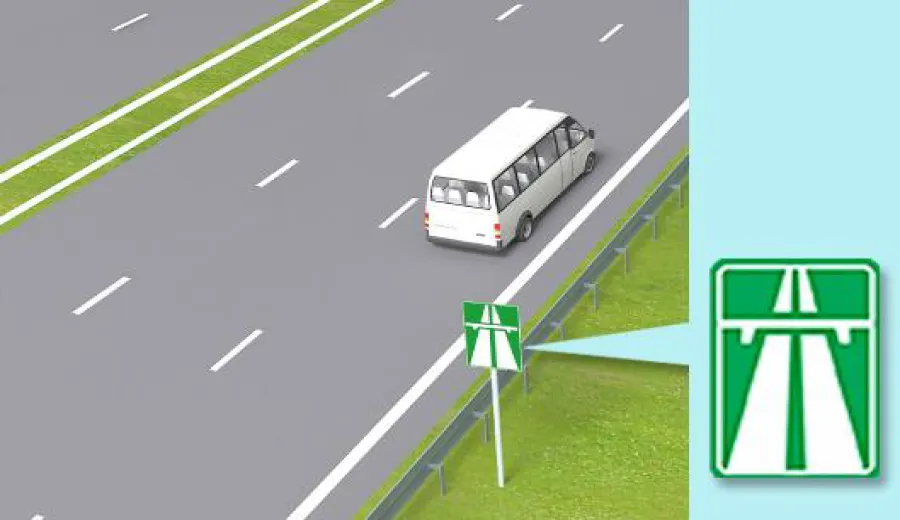
This exam question from the Traffic Rules of Ukraine concerns the safe choice of speed on intercity roads and, in particular, the driving mode on a motorway. Correctly determining the maximum speed is important not only for successfully passing the theoretical exam, but also for real safety: at high speeds, the braking distance increases, as do the risk of error and the severity of the consequences of an accident.
52.7. What is the maximum permitted speed for minibuses on roads with separate carriageways?
UAЗ якою максимальною швидкістю допускається рух мікроавтобусів на дорогах з окремими проїзними частинами?
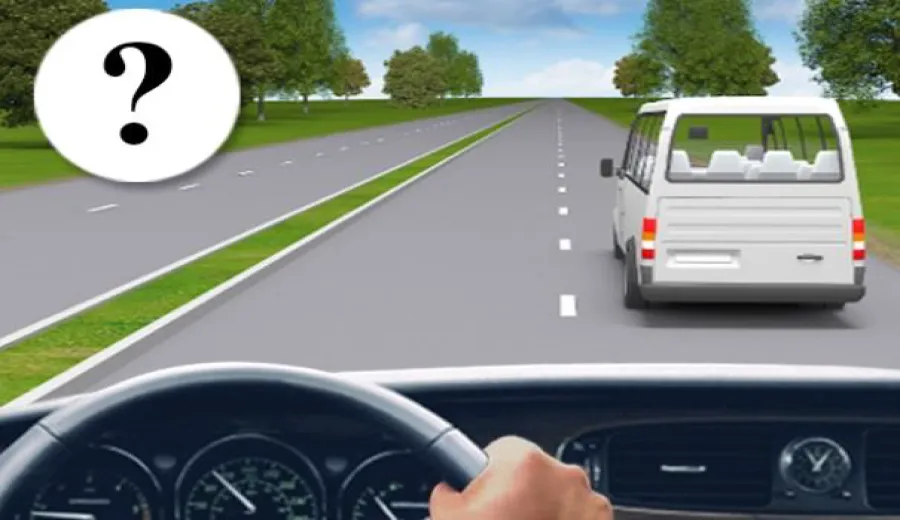
This exam question from the Traffic Rules of Ukraine concerns the safe choice of speed outside populated areas and the correct application of speed limits depending on the type of road. In the theoretical exam, such tasks check whether the driver can navigate speed restrictions and understands that on roads with a dividing strip, the permitted speed may be higher than on ordinary rural roads.
52.8. What is the maximum speed limit established for minibuses on this road outside populated areas?
UAЯка максимальна швидкість встановлена для мікроавтобусів на цій дорозі за межами населених пунктів?
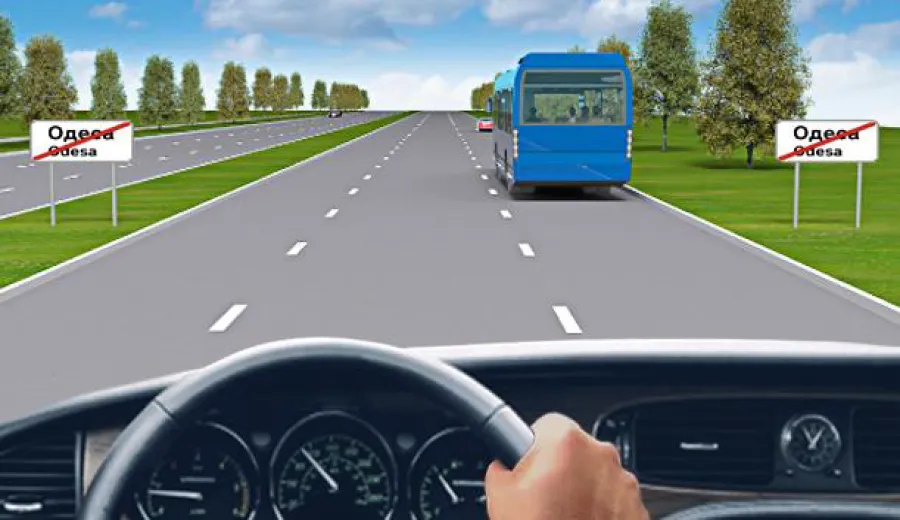
This exam question from the Traffic Rules of Ukraine concerns the safe selection of speed outside populated areas and the driver's ability to correctly apply speed limits depending on the type of vehicle and category of road. Such tasks directly affect road safety, as speeding on high-speed roads is one of the most common causes of serious accidents, and nuances of vehicle and road classification are regularly included in the theoretical exam.
52.9. Which of the drivers stopped in violation of the Traffic Rules on a road in a populated area, if it is known that the drivers of the tractor and the truck with a permitted maximum mass of over 3.5 tons stopped without the need for loading or unloading, and the bus driver stopped without the need for boarding or alighting passengers?
UAХто з водіїв зупинився з порушенням Правил дорожнього руху на дорозі в населеному пункті, якщо відомо, що водії трактора і вантажного автомобіля з дозволеною максимальною масою понад 3,5 т зупинилися без необхідності завантаження чи розвантаження, а водій автобуса - без необхідності посадки або висадки пасажирів?
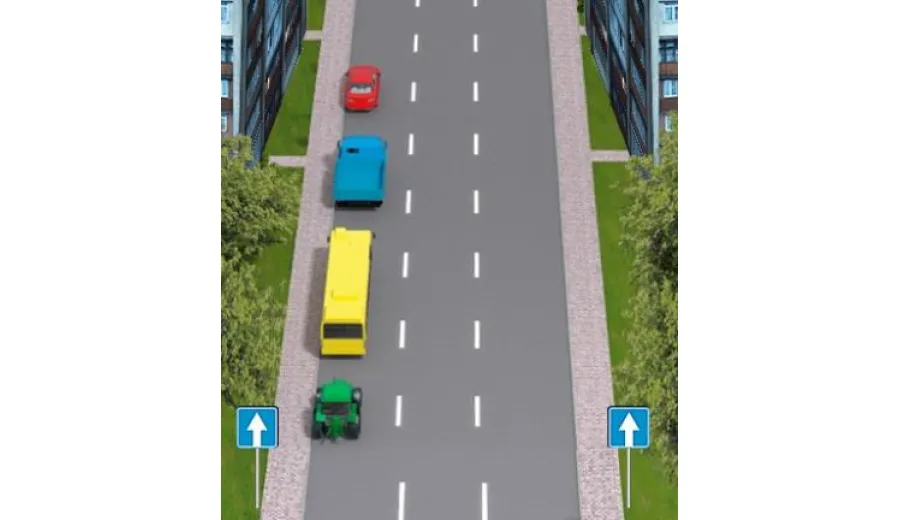
This exam question from the Traffic Rules of Ukraine tests attention to the rules for stopping in a populated area on a one-way road and the ability to distinguish general permissions from special restrictions for certain types of vehicles. The topic is directly related to road safety: improper stopping on the left side or in the far-left lane on a multi-lane road creates obstacles, reduces visibility, and increases the risk of accidents, which is critical for the theoretical exam.
52.10. Is the driver of a bus operating on a designated route allowed to turn right in the situation shown?
UAЧи дозволено поворот праворуч водієві автобуса, що рухається за встановленим маршрутом, у зображеній ситуації?
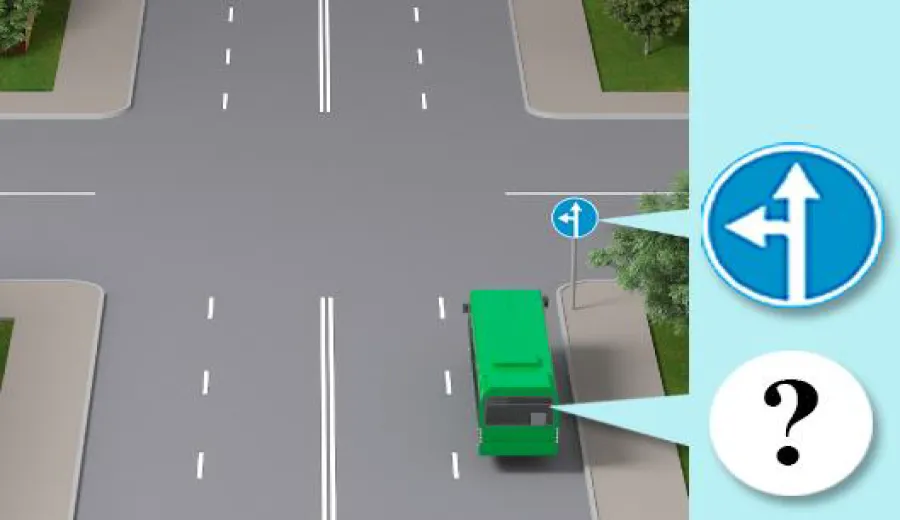
This exam question from the Traffic Rules of Ukraine concerns intersection safety and the correct interpretation of mandatory road signs. In real-life situations, attentiveness to signs and knowledge of exceptions for certain categories of vehicles help avoid conflicts, especially when both regular cars and public transport use the same lane.
52.11. What is the maximum permitted speed for minibuses on motor roads?
UAЗ якою максимальною швидкістю допускається рух мікроавтобусів на дорогах для автомобілів?
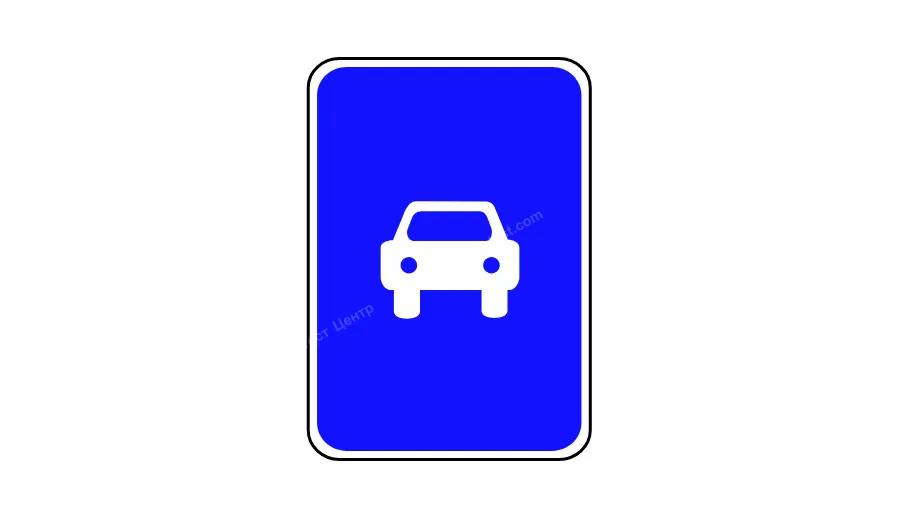
This exam question from the Traffic Rules of Ukraine tests the understanding of speed limits on high-speed interurban roads and the ability to correctly choose the permitted speed depending on the type of vehicle and the type of road. Such knowledge directly affects road safety: exceeding the speed limit on roads for automobiles increases the risk of traffic accidents, while driving too slowly can create dangerous situations due to differences in traffic flow speeds.
52.12. What is the maximum permitted speed for the white minibus transporting organized groups of children on this road?
UAЗ якою максимальною швидкістю дозволено рух білому мікроавтобусу, що перевозить організовані групи дітей, на цій дорозі?
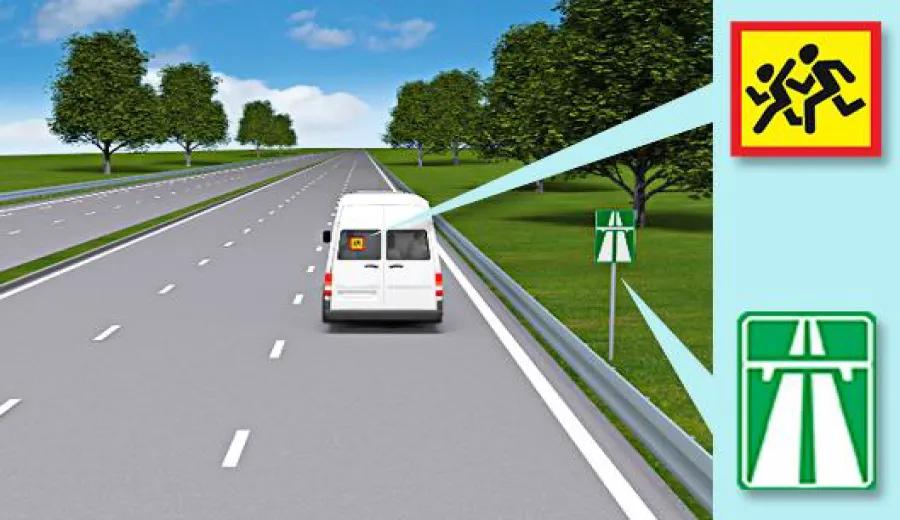
This exam question from the Traffic Rules of Ukraine tests knowledge of speed limits and passenger safety, particularly for children. In real traffic, the correct choice of maximum speed reduces the risk of accidents, since vehicles transporting organized groups of children are subject to stricter restrictions under the traffic rules than most other road users.
52.13. What is the maximum speed allowed for a yellow bus transporting an organized group of children on this section of road outside populated areas?
UAЗ якою максимальною швидкістю дозволено рух жовтого автобуса, що перевозить організовану групу дітей, на цій ділянці дороги за межами населених пунктів?
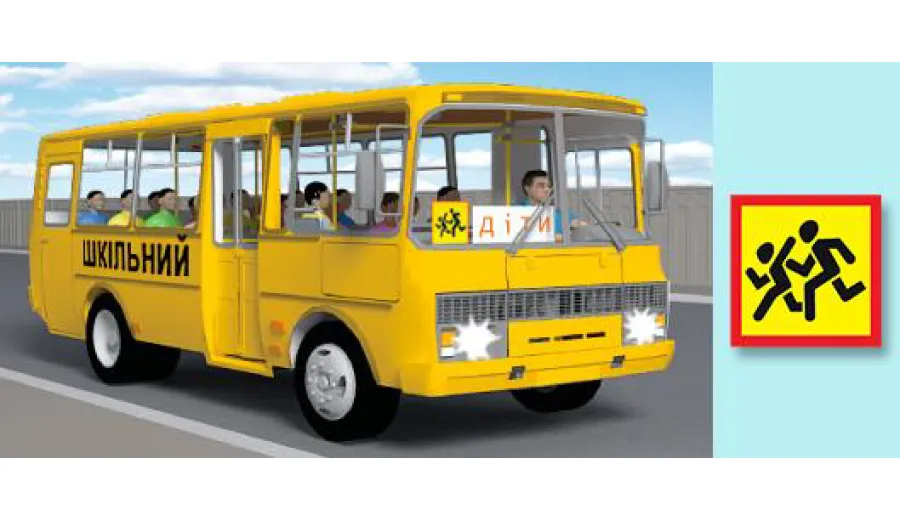
This exam question from the Traffic Rules of Ukraine concerns safety when driving outside populated areas and special speed limits for vehicles transporting passengers with increased vulnerability. The traffic rules set lower speed limits for certain categories of vehicles to reduce the risk of accidents and the consequences of possible crashes, especially when it comes to transporting children.
52.14. Is the driver of a bus operating on a designated route allowed to turn left in the situation shown?
UAЧи дозволено поворот ліворуч водієві автобуса, що рухається за встановленим маршрутом, у зображеній ситуації?
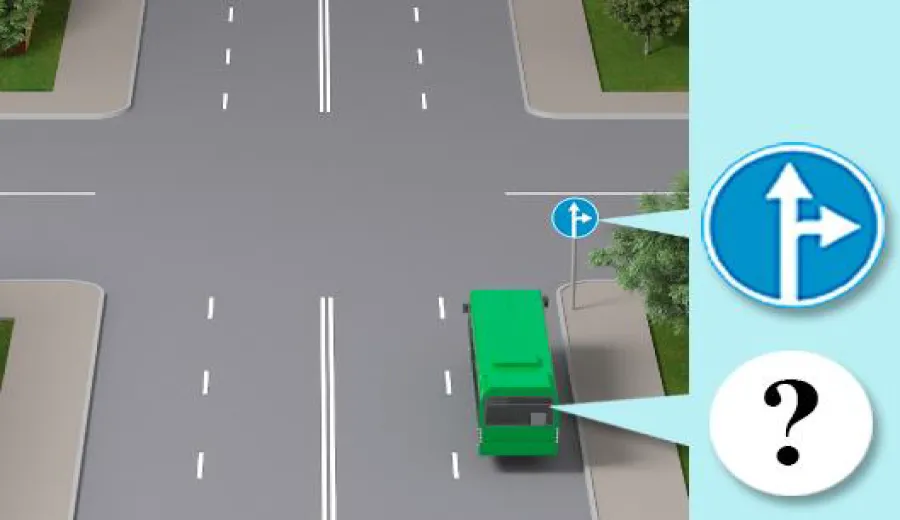
This exam question from the Traffic Rules of Ukraine tests the driver's attentiveness to regulatory road signs and the ability to correctly apply exceptions to traffic rules when passing through intersections. Such situations directly affect safety: incorrect interpretation of signs can lead to conflicting maneuvers, obstacles for public transport, and accident-prone situations.
52.15. Is a bus operating on a designated route allowed to turn right at the intersection shown?
UAЧи дозволено автобусу, який рухається за встановленим маршрутом, повернути праворуч на зображеному перехресті?
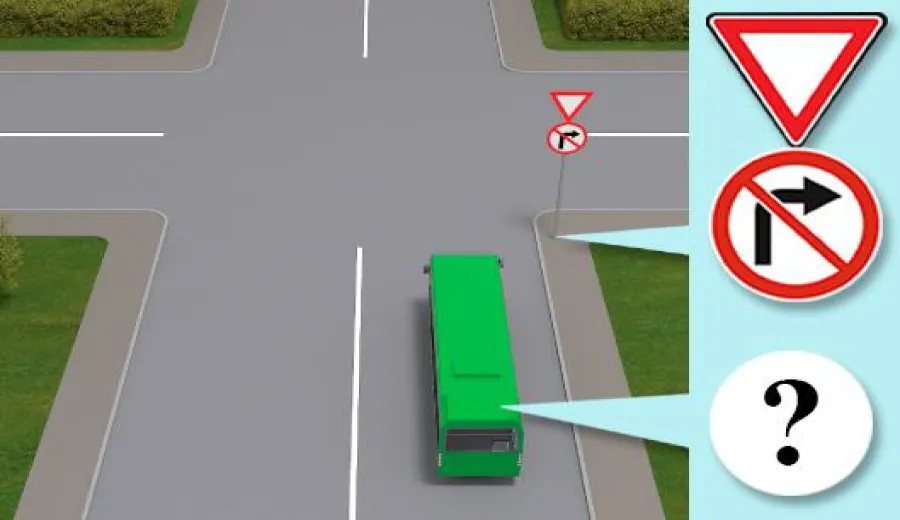
This exam question from the Traffic Rules of Ukraine concerns traffic safety at intersections and the correct application of road signs. In real situations, a driver must be able to distinguish between signs that determine priority and those that prohibit certain maneuvers, as well as know the exceptions for specific categories of vehicles. Such situations often occur in cities, where public transport routes pass through areas with restrictions for regular vehicles.
52.16. Is the driver of a bus operating on an established route allowed to turn left in the situation shown?
UAЧи дозволено водієві автобуса, що рухається за встановленим маршрутом, повернути ліворуч у зображеній ситуації?
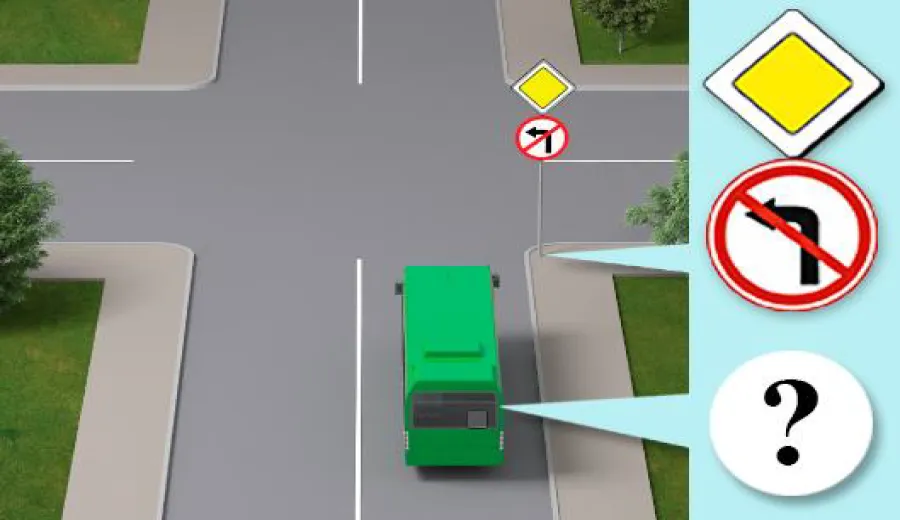
This exam question from the Traffic Rules of Ukraine concerns intersection safety and the correct understanding of road signs, particularly prohibitory and priority signs. In practice, such situations often occur in cities, where route vehicles operate on a schedule, and it is important for drivers not to confuse general prohibitions with exceptions provided by the traffic rules.
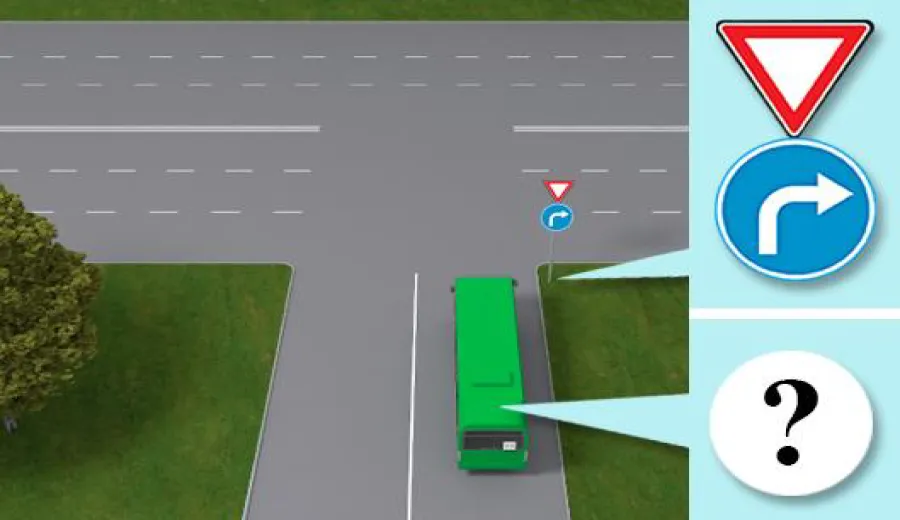
52.17. Is the driver of a bus operating on a designated route allowed to turn right in the situation shown?
UAЧи дозволено водієві автобуса, що рухається за встановленим маршрутом, повернути праворуч у зображеній ситуації?
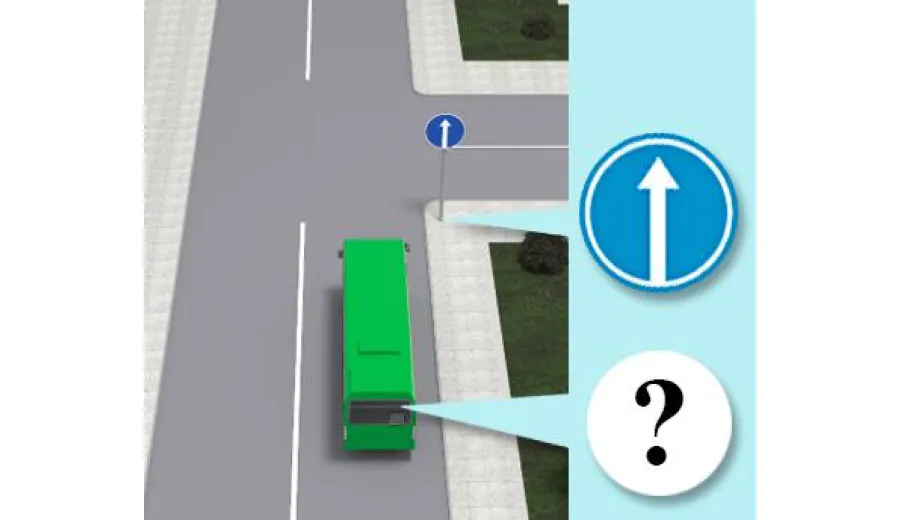
This exam question from the Traffic Rules of Ukraine tests attentiveness to road signs and the correct application of exceptions for certain categories of vehicles when passing through intersections. In practice, such situations have a direct impact on road safety: the driver must not only “see” the sign, but also understand to whom it applies and which maneuvers are permitted without violating the traffic rules.
52.18. Is the driver of a bus operating on a designated route allowed to turn left in the situation shown?
UAЧи дозволено водієві автобуса, що рухається за встановленим маршрутом, повернути ліворуч у зображеній ситуації?
This exam question from the Traffic Rules of Ukraine concerns traffic safety at intersections and the correct understanding of road signs, particularly mandatory and priority signs. In practice, such situations often occur in cities where route vehicles perform maneuvers according to the route scheme, so it is important for the driver not only to see the sign but also to know the exceptions provided by the traffic rules.
52.19. The driver of a vehicle equipped with a tachograph must:
UAВодій транспортного засобу, який обладнано тахографом, повинен:
Question without image
This exam question from the Traffic Rules of Ukraine concerns transport safety and monitoring the driver's work and rest schedule, which directly affects the risk of fatigue at the wheel. The tachograph records driving time, breaks, and other movement parameters, so its correct use is needed not "for formality," but for accurate accounting and the ability to control during the trip.
52.20. The duration of a driver's weekly rest period must be:
UAТривалість щотижневого відпочинку водія має становити:
Question without image
This exam question from the Traffic Rules of Ukraine concerns road safety through the control of driver fatigue. The work and rest schedule directly affects attentiveness and reaction speed, thereby reducing the risk of road accidents. The traffic rules establish a general principle: a driver is prohibited from driving while fatigued (subparagraph "v" of clause 2.9), so knowledge of the minimum rest standards is important for both the theoretical exam and real-life driving.
52.21. If two drivers operate a vehicle during a work shift, each driver must have a daily rest period of:
UAЯкщо протягом робочої зміни ТЗ керують два водії, кожний водій повинен мати щоденний відпочинок тривалістю:
Question without image
This is an exam question from the Traffic Rules of Ukraine concerning road safety through driver fatigue control and the proper organization of work and rest schedules. In practice, fatigue is often the cause of traffic accidents, which is why the theoretical exam includes regulations that help prevent driving while fatigued and maintain an appropriate level of attention behind the wheel, especially during long trips.
52.22. How should drivers use their break time?
UAЯк водії мають використовувати час перерви?
Question without image
This exam question focuses on road safety and the prevention of driver fatigue. In the traffic rules, it is important not only to know maneuvers or signs, but also to understand the requirements for the driver’s condition during a trip. Rest and breaks directly affect attentiveness, reaction speed, and the ability to drive a vehicle safely.
52.23. Is the break for rest and meals included in the driver's working time?
UAЧи зараховується перерва для відпочинку і харчування до робочого часу водія?
Question without image
This exam question focuses not on maneuvers or right of way, but on the driver's work and rest schedule, which directly affects road safety. Fatigue at the wheel is one of the common causes of traffic accidents, so when preparing for the theoretical exam, it is important to understand how working periods and recovery time are separated in professional transportation.
52.24. What is the minimum duration of rest and meal break for a driver after 4 hours of driving, if the period of daily (between-shift) rest does not occur?
UAЯка мінімальна тривалість відпочинку та харчування водія після 4 годин керування, якщо не настає період щоденного (міжзмінного) відпочинку?
Question without image
This exam question from the Traffic Rules of Ukraine concerns road safety by preventing driver fatigue. Prolonged driving without a break reduces attention and reaction speed, so the traffic rules prohibit driving while fatigued (paragraph 2.9 "g") and require the driver to be attentive and not distracted (paragraph 2.3 "b"). Such regulations directly affect driving practice and are typical for the theoretical exam.
52.25. When operating a bus engaged in international traffic, the total working time of the bus driver over two consecutive weeks is recorded by a tachograph. According to regulatory documents, it must not exceed:
UAПри управлінні автобусом, що бере участь у міжнародному русі, загальна тривалість робочого часу водія автобуса протягом двох тижнів поспіль реєструється тахографом. Відповідно до нормативних документів вона не має перевищувати:
Question without image
This exam question concerns road safety through the control of driver fatigue during international bus transportation. When a driver works too many hours in a row, the risk of mistakes increases, concentration decreases, and the braking distance grows due to slower reaction times. That is why, in international traffic, the work and rest schedule is recorded by a tachograph to monitor not only driving but also total working time and breaks.
52.26. After how many hours of driving must a bus driver take a rest break?
UAПісля скількох годин керування водій автобуса має зробити перерву для відпочинку?
Question without image
This exam question from the Traffic Rules of Ukraine concerns road safety by preventing driver fatigue, which directly affects alertness, reaction speed, and the risk of accidents. For bus drivers, this topic is especially important, as it involves passenger transportation and increased responsibility on the route. Therefore, the traffic rules and related regulations establish a clear regime of work and rest.
52.27. What is the minimum number of drivers assigned to bus routes longer than 500 km?
UAЯку мінімальну кількість водіїв направляють на автобусні маршрути протяжністю понад 500 км?
Question without image
This exam question from the Traffic Rules of Ukraine concerns the safety of passenger transportation on long-distance routes and the prevention of driver fatigue. The traffic rules explicitly require constant attentiveness at the wheel (clause 2.3 "b") and prohibit driving while fatigued or under the influence of factors that reduce reaction (clause 2.9 "v"). That is why, for extra-long bus routes, the organization of drivers' work must ensure maintained concentration and minimize the risk of road accidents.
52.28. How should the bolts/nuts fastening the wheel to the hub be tightened?
UAЯк затягувати болти/гайки кріплення колеса до маточини?
Question without image
This exam question from the Traffic Rules of Ukraine concerns road safety through the technical condition of the vehicle: secure wheel fastening directly affects handling and the risk of accidents. Improperly tightened bolts or nuts can cause wheel wobble, hub damage, and even wheel detachment while driving, so knowing the correct tightening sequence is an important part of preparing for the theoretical traffic rules exam.
52.29. Ukrainian residents are allowed to engage in international passenger transportation if they have at least the following experience in domestic transportation:
UAДо міжнародних перевезень пасажирів допускаються резиденти України, які мають досвід роботи на внутрішніх перевезеннях не менше:
Question without image
This exam question from the theoretical test concerns the safety and organization of passenger transportation, specifically the admission of carriers to work on international routes. In practice, such transportation requires a higher level of responsibility: compliance with work and rest regimes, the technical condition of the vehicle, proper documentation, as well as the ability to consistently provide safe service during long journeys between countries.
52.30. If two drivers operate a vehicle during a working shift, each driver must have a daily rest period of:
UAЯкщо протягом робочої зміни ТЗ керують два водії, кожний водій повинен мати щоденний відпочинок тривалістю:
Question without image
This exam question from the Traffic Rules of Ukraine concerns road safety through the control of driver fatigue and adherence to work and rest schedules during trips. Fatigue directly reduces attentiveness and reaction speed, so the traffic rules prohibit driving while fatigued and require the driver to maintain constant concentration, which is critically important for preventing accidents, especially on long routes and when working in a crew.
52.31. When operating a bus engaged in international traffic, the duration of the bus driver's working time during the week is recorded by a tachograph. According to regulatory documents, it must not exceed:
UAПри управлінні автобусом, що бере участь у міжнародному русі, тривалість робочого часу водія автобуса протягом тижня реєструється тахографом. Відповідно до нормативних документів вона не має перевищувати:
Question without image
This exam question from the Traffic Rules of Ukraine concerns road safety through the control of driver fatigue and compliance with work and rest schedules during international transportation. Time limits for driving are necessary to ensure that the driver remains attentive and does not create risks due to overfatigue, which is directly related to the traffic rules requirements regarding attentiveness and the prohibition of driving while fatigued.
52.32. A vehicle of category D1 is considered to be a motor vehicle that is structurally designed to carry no more than:
UAТранспортним засобом категорії D1 вважається механічний транспортний засіб, конструктивно призначений для перевезення не більше:
Question without image
This exam question from the Traffic Rules of Ukraine concerns the classification of vehicles by category, which directly affects a driver's eligibility to operate and the safety of passenger transportation. For buses and route vehicles, it is important to correctly understand how many passenger seats are allowed within a specific category, as this determines the requirements for a driver's license, training, and operating conditions.
52.33. How long must the daily (between shifts) rest period of a driver last during any 24-hour period, counting from the beginning of the working day (shift)?
UAСкільки має тривати щоденний (міжзмінний) відпочинок водія протягом будь-якого 24-годинного періоду, рахуючи від початку робочого дня (зміни)?
Question without image
This exam question from the Traffic Rules of Ukraine concerns road safety through compliance with the driver's work and rest schedule. Fatigue at the wheel directly affects attention and reaction speed, so theoretical exams often include regulations that govern how long a driver must rest between shifts to reduce the risk of traffic accidents.
52.34. How many times per week may the daily driving time of a driver operating a bus engaged in international traffic be extended to 10 hours?
UAСкільки разів протягом тижня щоденний час перебування за кермом водія при управлінні автобусом, що бере участь у міжнародному русі, може бути збільшено до 10 годин?
Question without image
This exam question focuses on road safety through compliance with the driver's work and rest schedule. For international bus transportation, fatigue control is critical: an overtired driver reacts worse to changes in the environment, increases the risk of traffic accidents, and violates requirements related to responsible driving. In the context of the Traffic Rules of Ukraine, this directly correlates with the prohibition against driving in a fatigued state (paragraph 2.9 "b" of the Traffic Rules).
52.35. The daily driving time for a driver operating a bus engaged in international traffic, recorded by a tachograph, must not exceed:
UAЩоденний час перебування за кермом водія при керуванні автобусом, що бере участь у міжнародному русі, зареєстрований за допомогою тахографа, не має перевищувати:
Question without image
This exam question focuses on road safety and the prevention of driving while fatigued, which is one of the most common causes of traffic accidents in passenger transport. The Traffic Rules of Ukraine require road users to know and comply with traffic regulations (para. 1.3) and explicitly prohibit a driver from operating a vehicle when fatigue reduces attention and reaction speed (para. 2.9 "g"). On international routes, control over compliance with work and rest schedules is strengthened, so driving time is recorded by a tachograph and is subject to inspection.
52.36. A tachograph is an on-board device installed on buses engaged in international traffic, which records:
UAТахограф – це бортовий прилад, який встановлюється на автобусах, що беруть участь у міжнародному русі, та який реєструє:
Question without image
This is an exam question from the Traffic Rules of Ukraine concerning the safety of international passenger transportation and the control of compliance with the driving and working hours of the driver. In international traffic, it is important not only how fast the bus is moving, but also whether the driver is working beyond the allowed limits, since fatigue directly increases the risk of road accidents. That is why the traffic rules require the use of special recording devices that capture key trip indicators.
52.37. Buses engaged in international traffic must be obligatorily equipped with:
UAАвтобуси, які беруть участь у міжнародному русі, мають бути обов'язково обладнані:
Question without image
This exam question concerns road safety and the monitoring of drivers’ work and rest periods during international bus transportation. On long-distance routes, driver fatigue is one of the main risks, so the law requires technical devices that objectively record driving time, breaks, and rest. Such regulations directly affect whether a vehicle is allowed on an international route and are often checked during road inspections.
52.38. Outside populated areas on roads not marked with sign 5.3 'Motor vehicle road', the permitted maximum speed for buses, except minibuses, shall not exceed:
UAПоза населеними пунктами на дорогах, не позначених знаком 5.3 «Дорога для автомобілів», дозволена максимальна швидкість автобусів, крім мікроавтобусів, не перевищує:
Question without image
This exam question from the Traffic Rules of Ukraine concerns the safe choice of speed outside populated areas and how speed limits depend on the type of vehicle and category of road. Adhering to speed regulations for buses is especially important on rural sections, where higher speeds increase braking distance and risks for passengers, as well as complicate control during maneuvers.
52.39. Outside populated areas on roads marked with sign 5.3 'Motor vehicle road', the maximum permitted speed for buses, except minibuses, does not exceed:
UAПоза населеними пунктами на дорогах, позначених знаком 5.3 «Дорога для автомобілів», дозволена максимальна швидкість автобусів, крім мікроавтобусів, не перевищує:
Question without image
This is an exam question from the Traffic Rules of Ukraine about speed limits outside populated areas and passenger transport safety. Adhering to established limits for buses is especially important due to their greater mass, longer braking distance, and responsibility for passengers, so the traffic rules set separate restrictions for them, which may differ from those for passenger cars.
52.40. The driver of a vehicle equipped with a tachograph must:
UAВодій транспортного засобу, який обладнано тахографом, повинен:
Question without image
This exam question concerns road safety and the monitoring of the driver's work and rest schedule during commercial transportation. The tachograph is a control device that records speed and work periods, so its proper use directly affects compliance with traffic rules, reduces driver fatigue, and helps prevent accidents. In the context of the Traffic Rules of Ukraine, this topic is related to the general duty of the driver to know and comply with regulatory requirements, as well as to ensure the serviceability and completeness of the vehicle before departure.
52.41. The driver of a vehicle equipped with a tachograph must:
UAВодій транспортного засобу, який обладнано тахографом, повинен:
Question without image
This exam question from the Traffic Rules of Ukraine concerns road safety through the proper technical condition and correct operation of vehicle equipment. The tachograph is a control device that records the driver's work modes and driving parameters, so any errors in use or incorrect settings can distort data and create risks of violating legal requirements during transportation. Topics related to the driver's responsibility for the serviceability and correct use of standard equipment are often included in the theoretical exam.
52.42. The weekly driving duration for a driver, including overtime work, must not exceed:
UAТривалість керування для водія на тиждень з урахуванням понаднормових робіт не повинна перевищувати:
Question without image
This exam question focuses on road safety and the impact of fatigue on driving. Overfatigue reduces attention, impairs reaction speed, and increases the risk of traffic accidents, which is why the Traffic Rules of Ukraine explicitly prohibit driving in a fatigued state (paragraph 2.9, subparagraph "v"). Theoretical exams often include regulations related to drivers' work and rest schedules, as these directly support the requirements of traffic rules to prevent driving in a dangerous condition.
52.43. The carriage of passengers by buses, depending on the mode of their organization, may be:
UAПеревезення пасажирів автобусами залежно від режиму їх організації можуть бути:
Question without image
This exam question focuses on the organization of passenger transportation by buses and how different operating modes affect the order of movement, boarding and alighting of passengers, and interaction with other road users. For the theoretical exam, it is important to understand not only the general traffic rules but also the basic terminology and logic of route transportation, as these form typical traffic situations in the city and on intercity routes.
52.44. What is the minimum number of drivers assigned to bus routes longer than 500 km?
UAЯку мінімальну кількість водіїв направляють на автобусні маршрути протяжністю понад 500 км?
Question without image
This exam question focuses on the safety of passenger transportation and the prevention of driver fatigue during long-distance trips. Such tasks are included in the theoretical exam so that future drivers understand: adhering to work and rest schedules is just as important as complying with traffic rules, since fatigue directly affects reaction time, attentiveness, and the risk of accidents.
52.45. The duration of a driver's work per week, including overtime, must not exceed:
UAТривалість керування водія на тиждень, включно з надурочними роботами, не повинна перевищувати:
Question without image
This exam question concerns road safety by preventing driver fatigue. Excessive driving duration directly impairs attentiveness and reaction speed, so when preparing for the theoretical exam, it is important to know not only the traffic rules but also the regulations governing drivers’ work and rest periods.
52.46. The normal duration of a driver's working time must not exceed:
UAНормальна тривалість робочого часу водія не повинна перевищувати:
Question without image
This exam question from the Traffic Rules of Ukraine concerns road safety through the control of driver fatigue. The work and rest schedule directly affects attentiveness, reaction speed, and the ability to timely assess the road situation. That is why the traffic rules prohibit driving in a fatigued state (paragraph 2.9) and require the driver to be attentive and not to be distracted while driving (paragraph 2.3), which forms the basis for safe driving.
52.47. What is included in the concept of a driver's rest?
UAЩо належить до поняття відпочинок водія?
Question without image
This exam question from the Traffic Rules of Ukraine concerns road safety through the correct understanding of driver work and rest regimes. In the traffic rules, precise terms are needed not "just for show," but to distinguish real rest from any pauses during a trip, since fatigue directly affects attention, reaction speed, and the risk of accidents both during the theoretical exam and in real driving.
52.48. When approaching a signal-controlled intersection in a vehicle driven by a driver with one of the categories D, D1, what must the driver always take into account?
UAУ разі під'їзду до регульованого перехрестя транспортним засобом, яким керує водій з однією з категорій D, D1, що завжди потрібно ураховувати водієві?
Question without image
This exam question from the Traffic Rules of Ukraine concerns safety at signal-controlled intersections and the responsibility of the driver of a large vehicle to anticipate the behavior of other road users. For a bus (categories D, D1), it is important not only to correctly follow the traffic light requirements themselves, but also to understand how the vehicle’s size affects visibility and the perception of signals by those driving behind or alongside. Such situations often arise in heavy traffic, when other drivers may rely on the actions of the bus instead of monitoring the signal themselves.
52.49. How should a jack be properly positioned?
UAЯк правильно встановлювати домкрат?
Question without image
This exam question concerns the safe operation of a vehicle during a forced stop, wheel replacement, or minor roadside repairs. Although the Traffic Rules of Ukraine mainly regulate driver behavior while driving, the theoretical exam often also checks basic safety principles that prevent injuries and vehicle damage when using a jack.
52.50. How should the bolts/nuts fastening the wheel to the hub be tightened?
UAЯк затягувати болти/гайки кріплення колеса до маточини?
Question without image
This exam question from the Traffic Rules of Ukraine concerns road safety through the technical condition of the vehicle. Secure fastening of the wheel directly affects handling and braking, and mistakes during tightening can lead to thread damage, self-unscrewing of the fastener, or even loss of the wheel while driving. That is why the traffic rules and technical operation regulations require the driver to check the condition of components that affect safety before driving.
52.51. What is the maximum permitted speed for buses (except minibuses) on all roads outside populated areas?
UAЗ якою максимальною швидкістю дозволено рух автобусів (за винятком мікроавтобусів) на всіх дорогах за межами населених пунктів?
Question without image
This is a driving exam question from the Traffic Rules of Ukraine concerning the safe choice of speed and compliance with speed limits outside populated areas. Correctly determining the maximum speed for a specific type of vehicle directly affects braking distance, controllability, and accident risk, which is why such standards are regularly checked in the theoretical exam.
52.52. Indicate the maximum permissible length of coupled vehicles when towing route vehicles.
UAВкажіть максимально допустиму довжину зчеплених при буксируванні маршрутних транспортних засобів.
Question without image
This exam question from the Traffic Rules of Ukraine concerns safety during towing, when one vehicle temporarily pulls another. Excessive length of coupled vehicles complicates maneuvering, increases the "tail" during turns, creates risks at intersections and during overtaking, and also requires more space for safe stopping. That is why the traffic rules set clear limits for such situations, especially when it comes to transporting passengers.
52.53. What length must a route vehicle have to be required to follow special rules?
UAЯкої довжини маршрутний транспортний засіб повинен рухатися за спеціальними правилами?
Question without image
This is an exam question from the Traffic Rules of Ukraine about the safety of large-sized vehicles and dimensional restrictions. Such regulations are necessary so that long vehicles do not create dangerous situations on narrow streets, intersections, and in areas with limited visibility, and also to ensure their movement only where the road infrastructure allows it.
52.54. After how many hours of driving must the driver take a rest break?
UAПісля скількох годин керування водій повинен зробити перерву для відпочинку?
Question without image
This exam question from the Traffic Rules of Ukraine tests knowledge about road safety in the context of driving while fatigued and the driver's self-control on the road. Fatigue reduces attentiveness and reaction speed, increases the risk of mistakes and accidents, so the traffic rules require planning rest and prohibit driving in a state of overfatigue.
52.55. What is the minimum duration of rest and meal break for a driver after 4 hours of driving, if the period of daily (inter-shift) rest does not occur?
UAЯка мінімальна тривалість відпочинку та харчування водія після 4 годин керування, якщо не настає період щоденного (міжзмінного) відпочинку?
Question without image
This exam question from the Traffic Rules of Ukraine concerns road safety during prolonged driving and the prevention of driver fatigue. Fatigue directly affects attention, reaction speed, and the ability to assess the road situation, so breaks for rest and meals are an important element of a safe trip and preparation for the theoretical exam.
52.56. In case of malfunction or damage of the tachograph, the driver of the vehicle must:
UAУ разі несправності або пошкодження тахографа водій транспортного засобу повинен:
Question without image
This exam question from the Traffic Rules of Ukraine concerns road safety and the lawful control of drivers’ work and rest periods during transportation. The tachograph records driving time, breaks, and rest, and this data is important both for the carrier and for roadside inspections. Therefore, even when the device fails, record-keeping cannot “stop,” since driver fatigue directly affects the risk of road accidents.
52.57. The driver of a vehicle equipped with a tachograph must:
UAВодій транспортного засобу, який обладнано тахографом, повинен:
Question without image
This exam question from the Ukrainian Traffic Rules concerns road safety through the control of drivers’ work and rest periods and the technical condition of vehicle equipment. In this context, the tachograph is a monitoring device that helps record driving time, breaks, and other work modes, thus directly affecting the prevention of fatigue and related accidents. That is why the theoretical exam checks not only knowledge of signs or maneuvers, but also the driver’s understanding of their duties regarding onboard equipment.
52.58. The driver of a vehicle equipped with a tachograph must:
UAВодій транспортного засобу, який обладнано тахографом, повинен:
Question without image
This exam question focuses on the safety and legality of operating a vehicle during transportation, particularly on monitoring the driver's work and rest periods. In the traffic rules, it is important not only to drive the vehicle correctly, but also to fulfill the duties regarding the proper use of special equipment that affects traffic safety and compliance with regulations during a trip.
52.59. What is a control device (tachograph)?
UAЩо таке контрольний пристрій (тахограф)?
Question without image
This examination question from the Traffic Rules of Ukraine concerns the control of transport safety and driver discipline while operating a vehicle. In road traffic practice, a tachograph is needed not "for statistics," but for the official recording of trip parameters and compliance with work and rest regimes, which directly affects the prevention of accidents due to fatigue and speeding.
52.60. What should be the length of a route that goes beyond the boundaries of a populated area for two drivers to be assigned to it?
UAЯка повинна бути довжина маршруту, який виходить за межі населеного пункту, щоб на нього направляли двох водіїв?
Question without image
This is an examination question in the field of road safety and the organization of intercity transportation: it serves as a reminder that on long trips it is important to observe work and rest schedules to prevent driver fatigue. For the theoretical exam, knowledge of such regulations helps to understand how traffic rules and related normative acts together affect safe driving outside the city.
52.61. The duration of the driver's weekly rest period must be:
UAТривалість щотижневого відпочинку водія повинна бути:
Question without image
This exam question focuses on road safety and the prevention of driving while fatigued. Insufficient rest directly affects attention, reaction speed, and the driver’s ability to properly assess the traffic situation, which is why the topic of work and rest schedules regularly appears on the theoretical exam. The Traffic Rules of Ukraine are based on the principle that driving while fatigued is dangerous and prohibited, and the driver must remain attentive throughout the entire trip.
52.62. If two drivers operate the vehicle during a work shift, each driver must have a daily rest period of:
UAЯкщо протягом робочої зміни ТЗ керують два водії, кожен водій повинен мати щоденний відпочинок тривалістю:
Question without image
This is an exam question from the Traffic Rules of Ukraine concerning road safety through driver fatigue control and compliance with work and rest schedules. The traffic rules explicitly enshrine the principle that driving while fatigued is dangerous and prohibited, as it reduces attention, increases reaction time, and raises the risk of accidents. Therefore, theoretical exams often include standards that guarantee the driver sufficient uninterrupted time for recovery.
52.63. What should be the duration of the daily (inter-shift) rest period for a driver during any 24-hour period, counting from the beginning of the working day (shift)?
UAЯка повинна бути тривалість щоденного (міжзмінного) відпочинку водія протягом будь-якого 24-годинного періоду, рахуючи від початку робочого дня (зміни)?
Question without image
This exam question from the Traffic Rules of Ukraine concerns road safety by preventing driving in a state of fatigue. The work and rest schedule directly affects the driver's attention and reaction speed, so when preparing for the theoretical exam, it is important to understand the minimum requirements for between-shift recovery, which help avoid dangerous situations on the road.
52.64. How should drivers use their break time?
UAЯк водії повинні використовувати час перерви?
Question without image
This exam question focuses on road safety through compliance with the driver's work and rest schedule. Quality rest while on the road directly affects attentiveness, reaction speed, and the ability to drive without risks, which is why such regulations are important both for successfully passing the theoretical exam and for real safety on the route.
52.65. Is the break for rest and meals included in the driver's working time?
UAЧи входить перерва для відпочинку і харчування в робочий час водія?
Question without image
This exam question from the theoretical test concerns the organization of a driver's work and road safety: the correct regime of work and rest directly affects attentiveness, fatigue, and the risk of road accidents. Although the Traffic Rules of Ukraine mostly regulate behavior on the road, it is important for the driver to understand related requirements that determine when they are actually working and when they have a legal period for recuperation.
52.66. Is the transportation of organized groups of children allowed during hours of darkness?
UAЧи дозволено перевезення організованих груп дітей у темну пору доби?
Question without image
This exam question from the Traffic Rules of Ukraine concerns passenger safety and, in particular, the heightened requirements for transporting organized groups of children. Such trips carry increased responsibility, as they involve simultaneously transporting a significant number of minors, and at night the risks on the road rise due to poorer visibility and more challenging navigation conditions.