
8.1.1. To drivers of which vehicles is movement allowed in this situation?
UAВодіям яких транспортних засобів дозволено рух у даній ситуації?
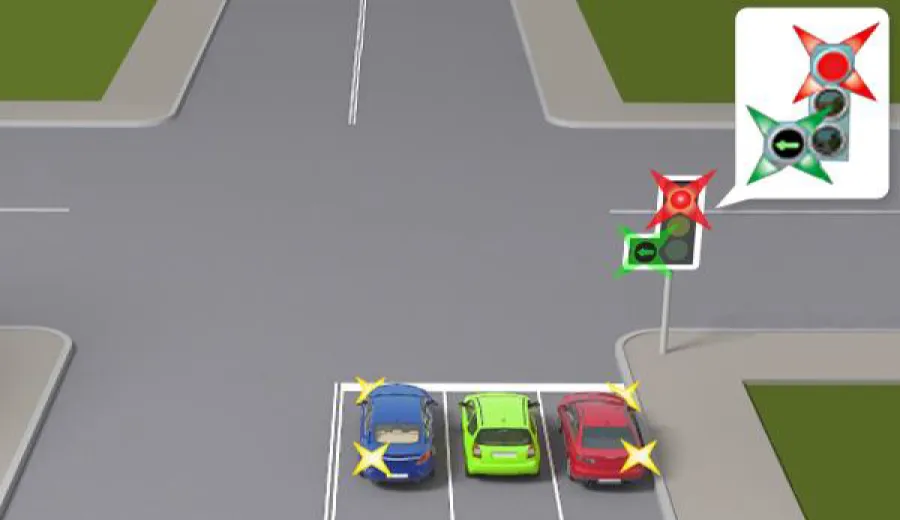
This exam question from the Traffic Rules of Ukraine concerns road safety at controlled intersections, where the order of passage is determined by traffic light signals. In real conditions, mistakes in interpreting the additional sections of the traffic light often lead to conflicting trajectories and accidents, which is why theoretical exams regularly include tasks to assess understanding of who is allowed to proceed and in which direction.
8.1.2. You have performed a right turn correctly in this situation if:
UAВи правильно виконали поворот праворуч у цій ситуації, якщо:
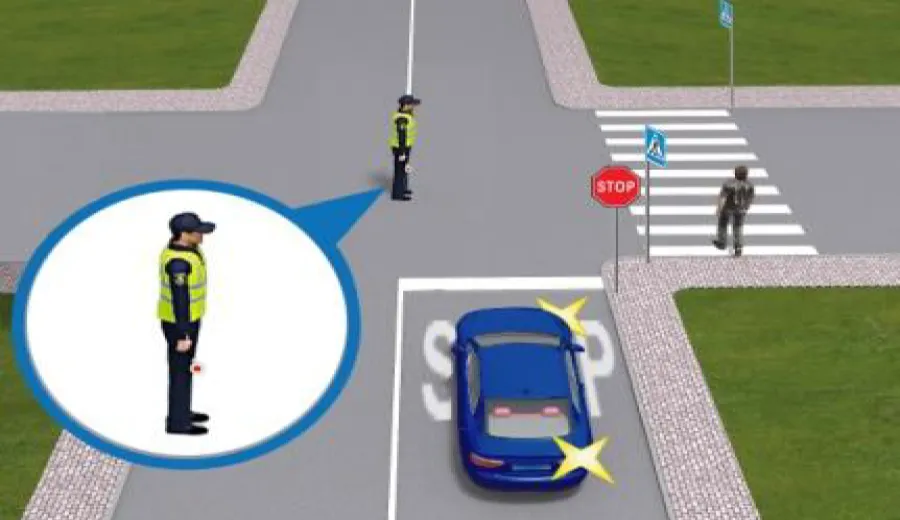
This is an exam question from the Traffic Rules of Ukraine about the safe passage of intersections where traffic is directed by a traffic controller. In real situations, drivers often make mistakes by relying on a priority sign or stop line, although in the presence of a controller, the order of movement is determined specifically by their gestures. Proper understanding of the priority of signals directly affects safety: a permitted maneuver does not cancel the obligation to monitor pedestrians and not to create obstacles for them.
8.1.3. Are you allowed to turn right in this situation?
UAЧи дозволено Вам повернути праворуч у даній ситуації?
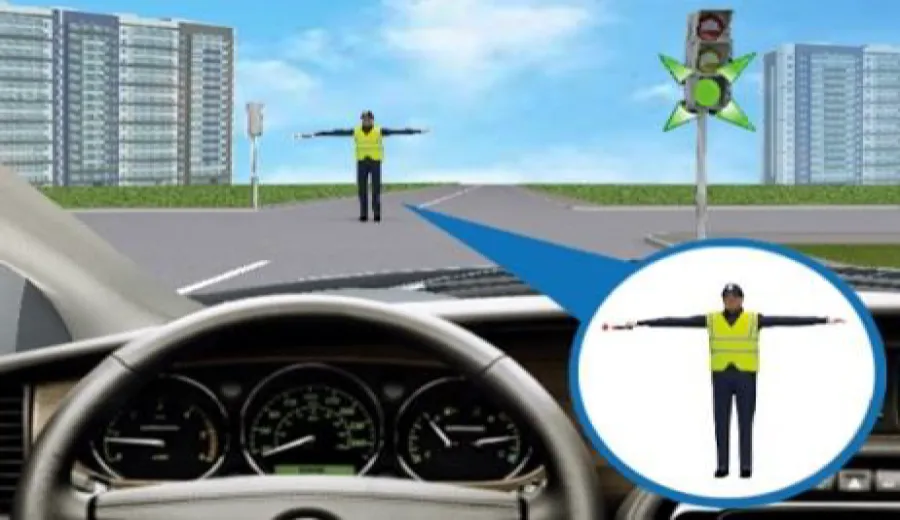
This is an exam question from the Traffic Rules of Ukraine concerning the safety of passing intersections and the ability to correctly obey traffic control signals. In real-life situations, a driver often sees both a traffic light and a traffic controller at the same time, so the key task for safe maneuvering is to quickly determine whose signal takes precedence and what actions are permitted for you in your direction.
8.1.4. Who is permitted to proceed in this situation?
UAКому дозволено рух у даній ситуації?
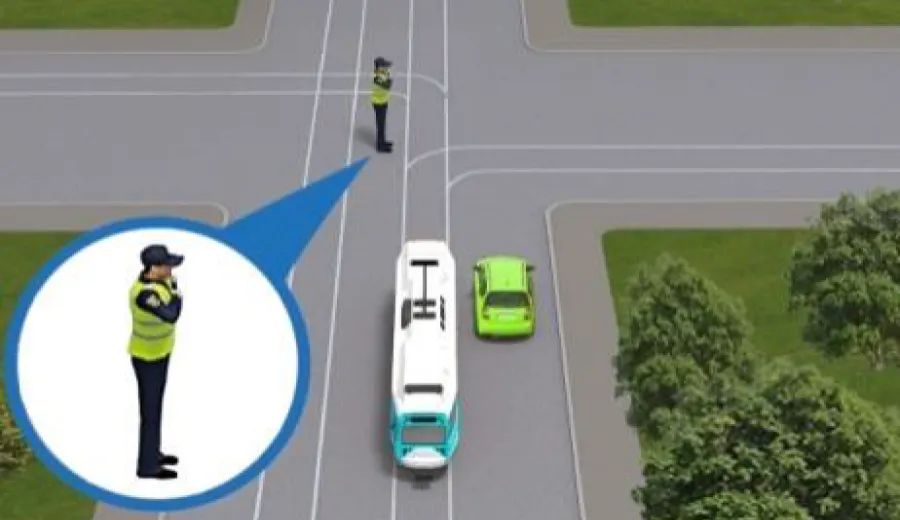
This exam question from the Traffic Rules of Ukraine tests the ability to safely navigate a controlled intersection where the order of movement is determined not by signs or traffic lights, but by the signals of a traffic controller. Such situations often occur during roadworks, emergency traffic light outages, or in areas with increased traffic intensity, so correct understanding of the controller’s gestures directly affects safety and your result on the theoretical exam.
8.1.5. Are you permitted to proceed in this situation?
UAЧи дозволено Вам рух у даній ситуації?
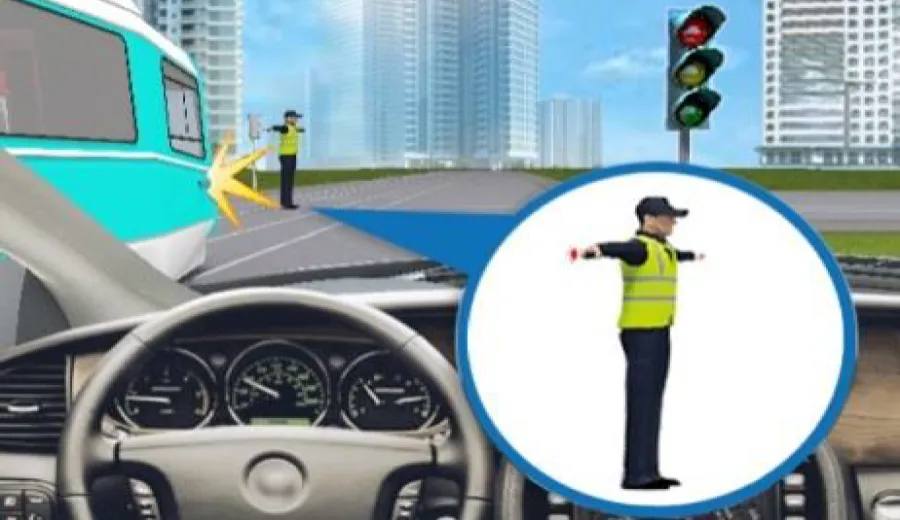
This is an exam question from the Ukrainian Traffic Rules about safely passing intersections in situations where the traffic light is not working and traffic is being directed by a traffic controller. Such tasks are especially important for the theoretical exam, as in real traffic drivers often make mistakes due to the "habit" of relying on the traffic light or because of the appearance of a tram, which seems to have priority by default. In reality, the main rule here is simple: the signals of the traffic controller take precedence, and only then everything else.
8.1.6. Must the driver of the blue car, when turning right, give way to pedestrians?
UAЧи повинен водій синього автомобіля, повертаючи праворуч, дати дорогу пішоходам?
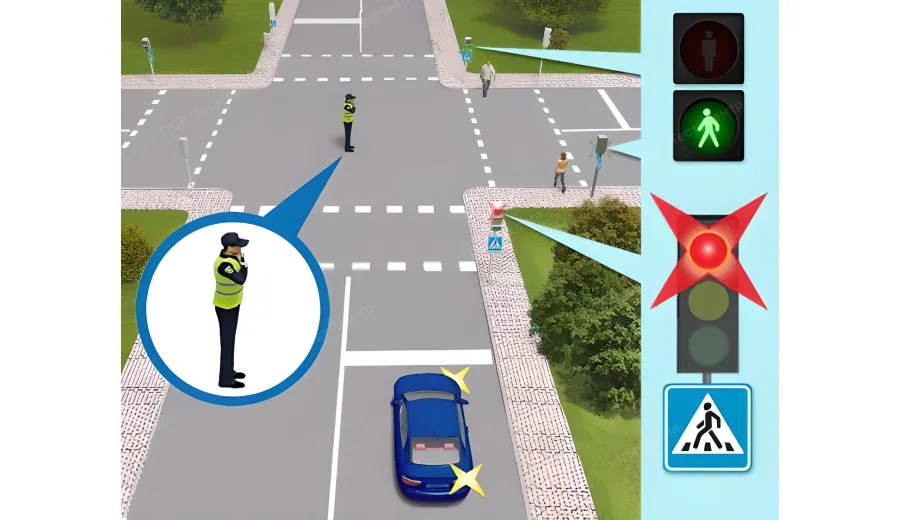
This is an exam question from the Traffic Rules of Ukraine about safety at regulated intersections and the interaction between drivers and pedestrians during maneuvers. In real conditions, turns at intersections most often create conflict points, so the theoretical exam includes situations where it is necessary to correctly determine who is permitted to move and who has the right of way.
8.1.7. Are you allowed to proceed in this situation?
UAЧи дозволено Вам рух у даній ситуації?
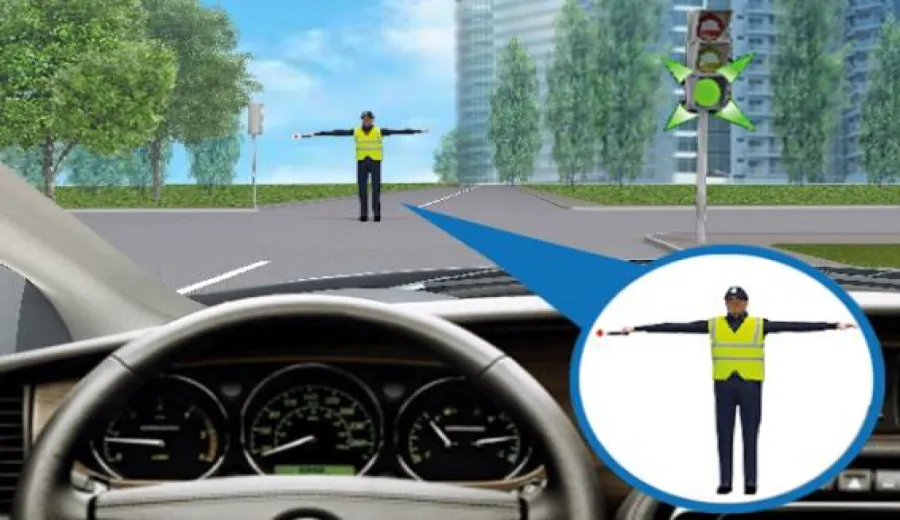
This is an exam question from the Traffic Rules of Ukraine about the safe passage of controlled intersections in situations where both a traffic light and a traffic controller are present. Such cases often occur during accidents, roadworks, or changes in traffic organization, so it is important to be able to correctly determine whom to obey on the theoretical exam, even if one of the signals "permits" movement.
8.1.8. Are you allowed to turn left in this situation?
UAЧи дозволено Вам повернути ліворуч у даній ситуації?
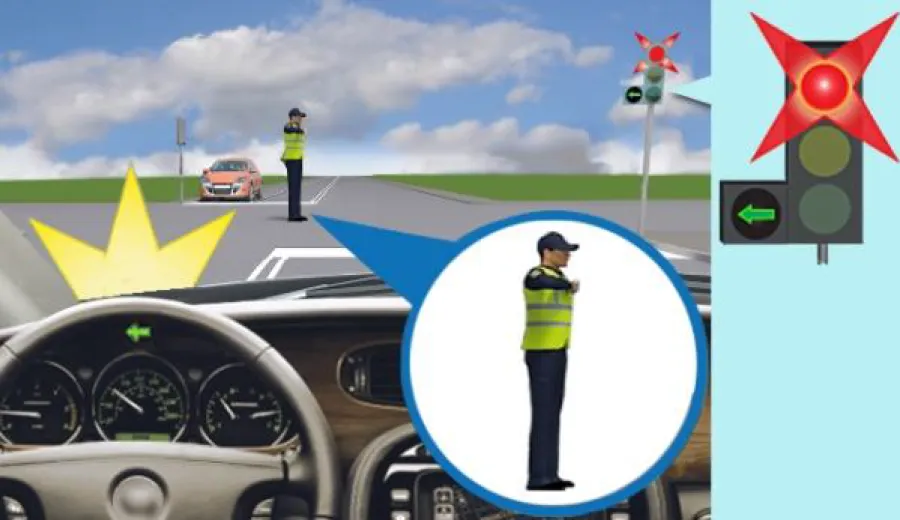
This is an exam question from the Traffic Rules of Ukraine concerning the safety of passing intersections in situations where traffic is regulated not by a traffic light or signs, but by a traffic controller. Such cases are often included in the theoretical exam because they test the driver's ability to quickly determine the permitted directions of movement based on the controller's gestures and to avoid making a dangerous maneuver that contradicts the requirements of the traffic rules.
8.1.9. In which directions is movement permitted in this situation?
UAУ яких напрямках дозволено рух у даній ситуації?
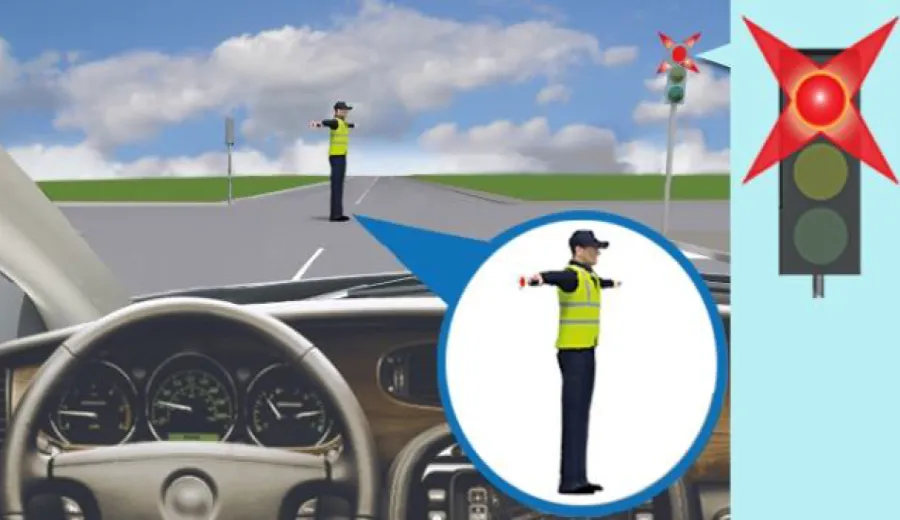
This exam question from the Traffic Rules of Ukraine tests the ability to safely pass an intersection when traffic is regulated not by a traffic light, but by the gestures of a traffic controller. In real-life situations, correctly interpreting the controller’s signals helps avoid conflicts, violations, and accidents, since decisions at intersections must be made quickly and without mistakes.
8.1.10. Are you allowed to turn right in this situation?
UAЧи дозволено Вам повернути праворуч у даній ситуації?
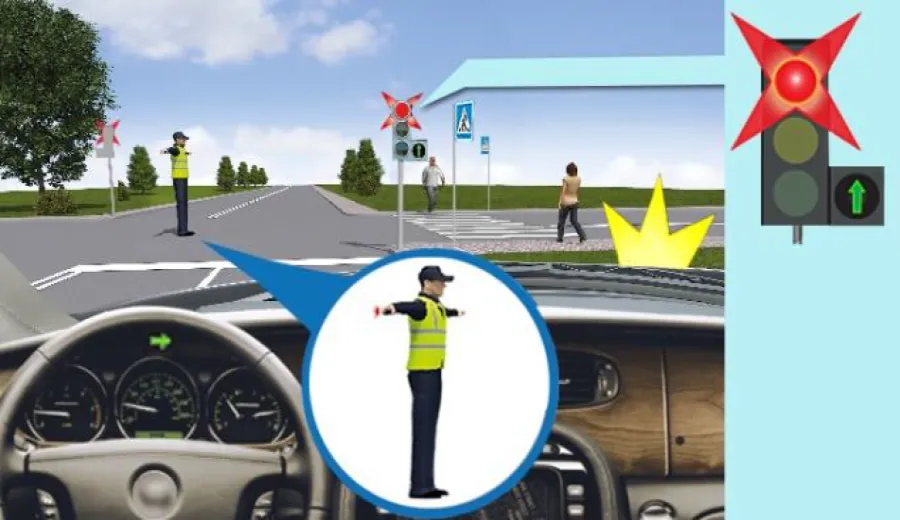
This exam question from the Traffic Rules of Ukraine tests the ability to safely navigate regulated intersections when both a traffic light is operating and a traffic controller is present at the intersection. Such situations often occur during traffic jams, accidents, or mass events, and mistakes in prioritizing signals can lead to conflicts with pedestrians and create a hazardous situation.
8.1.11. Are you allowed to proceed in the direction indicated by the arrow on the additional traffic light section?
UAЧи дозволено Вам рух у напрямку, вказаному стрілкою в додатковій секції світлофора?
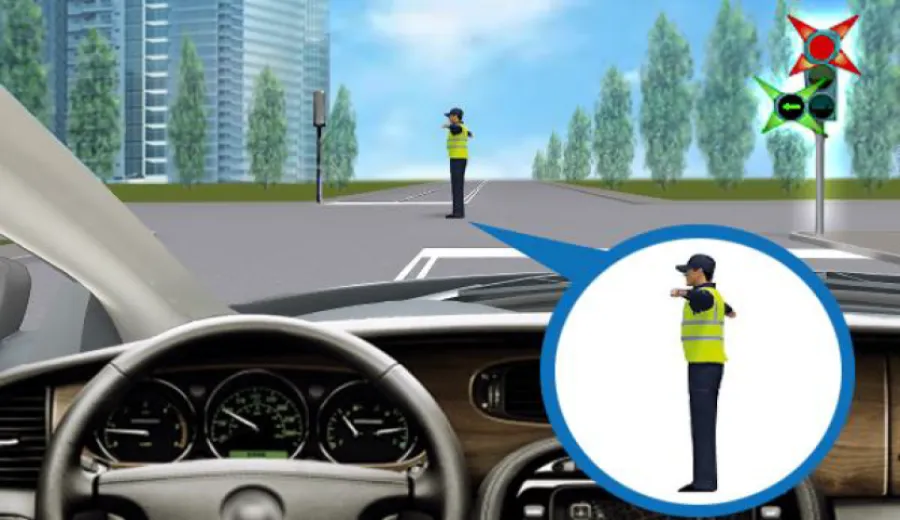
This exam question from the Traffic Rules of Ukraine concerns road safety when passing intersections where several means of regulation operate simultaneously: a traffic light with an additional section and a traffic controller. In practice, such situations occur near large intersections or during complicated traffic, and a mistake in prioritizing signals can lead to conflicting trajectories and traffic accidents.
8.1.12. An audible signal additionally activated with the pedestrian traffic light:
UAЗвуковий сигнал, який додатково увімкнений до сигналу світлофора, що регулює рух пішоходів:
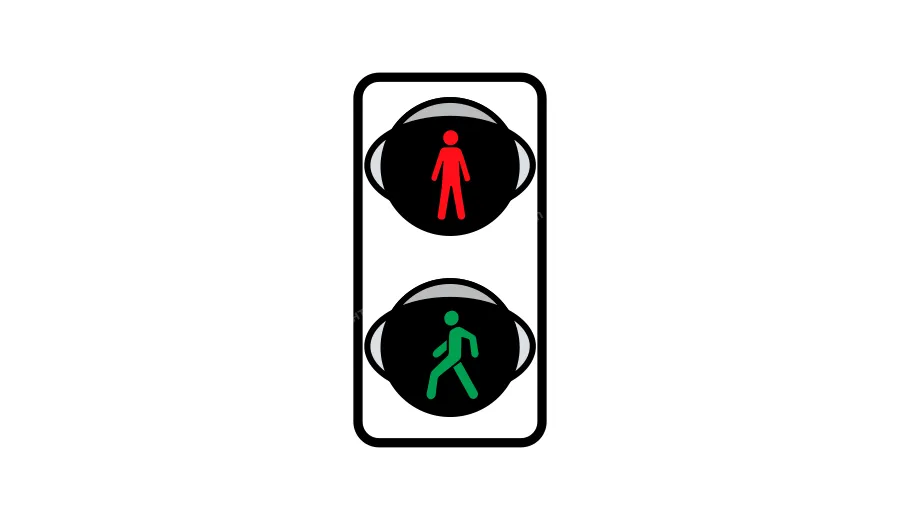
This exam question from the Traffic Rules of Ukraine concerns pedestrian safety and the correct interpretation of traffic light signals at pedestrian crossings. It checks whether the candidate for the theoretical exam understands that traffic control devices must be accessible to all road users, particularly people with visual impairments, and how exactly this is implemented in the traffic regulations.
8.1.13. To which road users does this traffic light apply?
UAНа яких учасників дорожнього руху поширює свою дію даний світлофор?
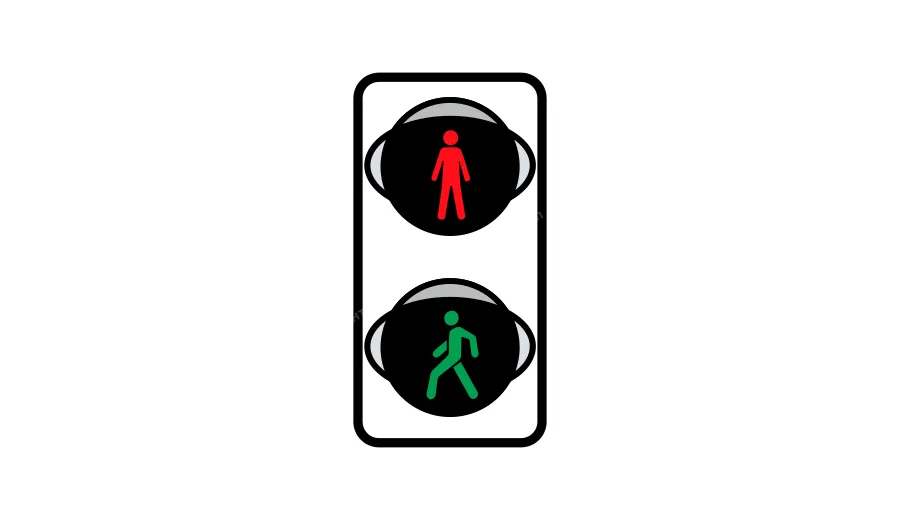
This exam question from the Traffic Rules of Ukraine concerns traffic light signals and safety at controlled pedestrian crossings. Correct understanding of whom a particular traffic light is intended for directly affects safety: pedestrians rely on it to know when they can begin crossing, while drivers must understand that a pedestrian traffic light does not replace the vehicle traffic light and does not grant permission for vehicles to move.
8.1.14. Which traffic signal is used to regulate traffic at railway crossings?
UAЯкий світлофор застосовується для регулювання руху через залізничні переїзди?
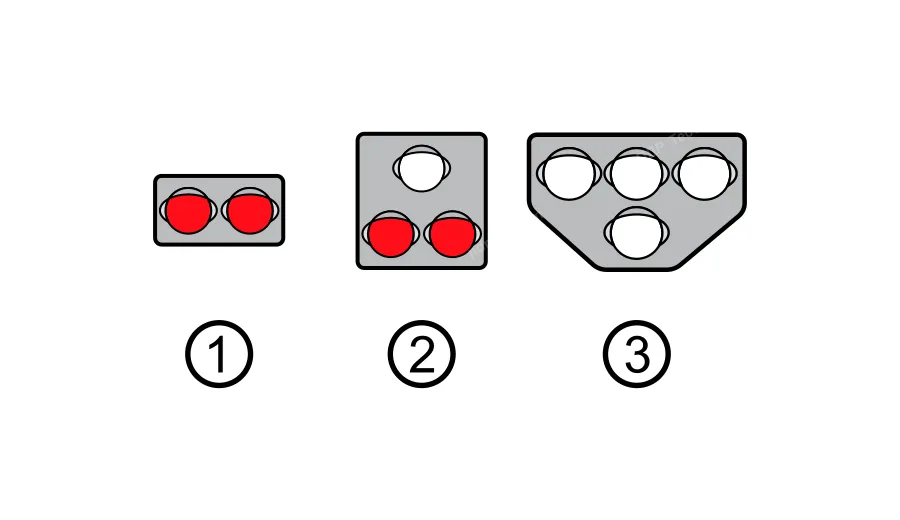
This exam question from the Traffic Rules of Ukraine concerns safety at railway crossings and the driver's ability to correctly interpret special signals, on which life and accident prevention directly depend. The theoretical exam often includes questions about the differences between 'railway crossing' traffic lights and other types of signaling, since a mistake here means entering the tracks under prohibition or without proper assessment of the situation.
8.1.15. At which traffic light is the signal illuminated that allows the tram to turn right?
UAНа якому світлофорі горить сигнал, що дозволяє трамваю повернути праворуч?
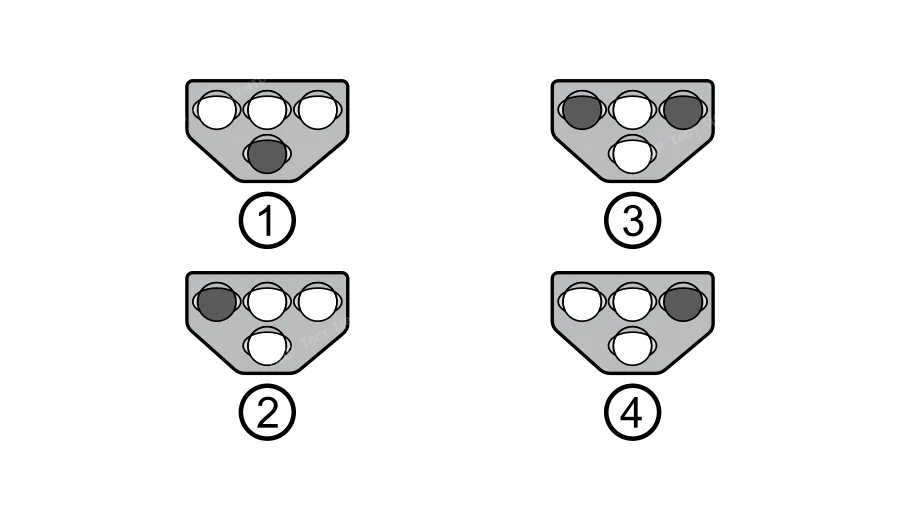
This is an exam question from the Traffic Rules of Ukraine concerning the safe passage through intersections and the correct interpretation of traffic signals for rail vehicles. In real traffic, a mistake in 'reading' a tram traffic light can lead to a conflict of trajectories at the intersection, since the tram moves according to separate traffic rules and has limited maneuvering capabilities.
8.1.16. In this situation, movement is permitted for:
UAУ цій ситуації рух дозволено:
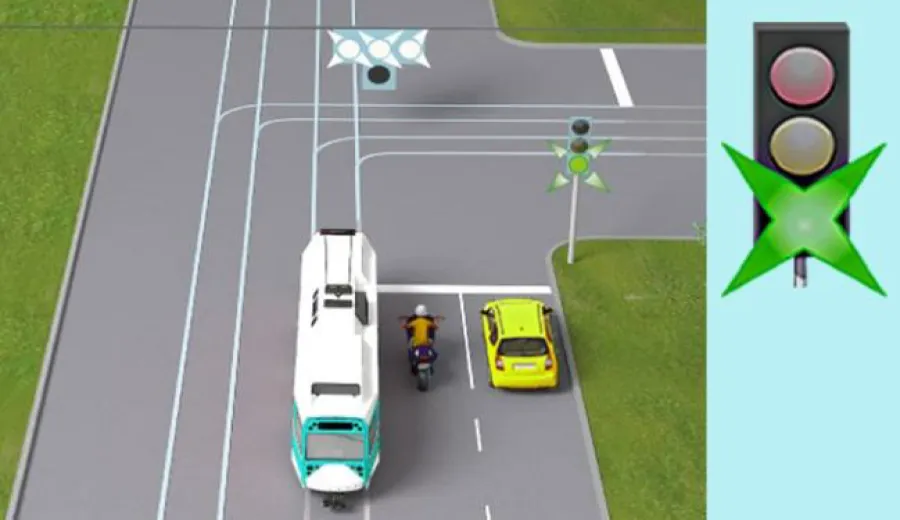
This exam question from the Traffic Rules of Ukraine tests the ability to safely navigate a controlled intersection where different traffic lights may apply to different road users. Such situations are important for road safety, as misinterpreting signals can lead to entering the intersection under prohibition and creating conflict points with trams or oncoming traffic.
8.1.17. Is the movement of the tram allowed in this situation?
UAЧи дозволено рух трамвая в цій ситуації?
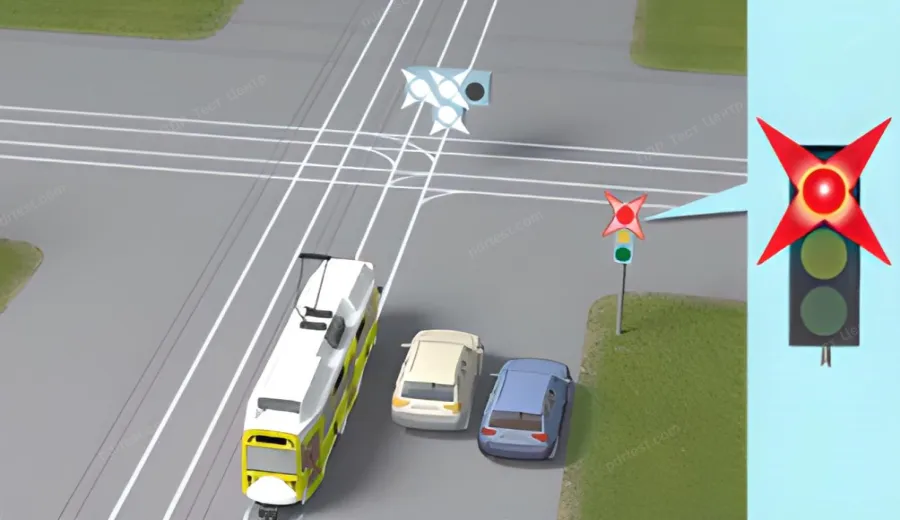
This exam question from the Traffic Rules of Ukraine tests the ability to safely navigate intersections where the movement of different participants may be regulated by different traffic lights. Such situations are important for practice, as mistakes in interpreting signals lead to traffic rule violations and trajectory conflicts, especially involving trams, which move on rails and have limited maneuverability.
8.1.18. Which vehicles are allowed to proceed in this situation?
UAЯким автомобілям дозволено рух у даній ситуації?
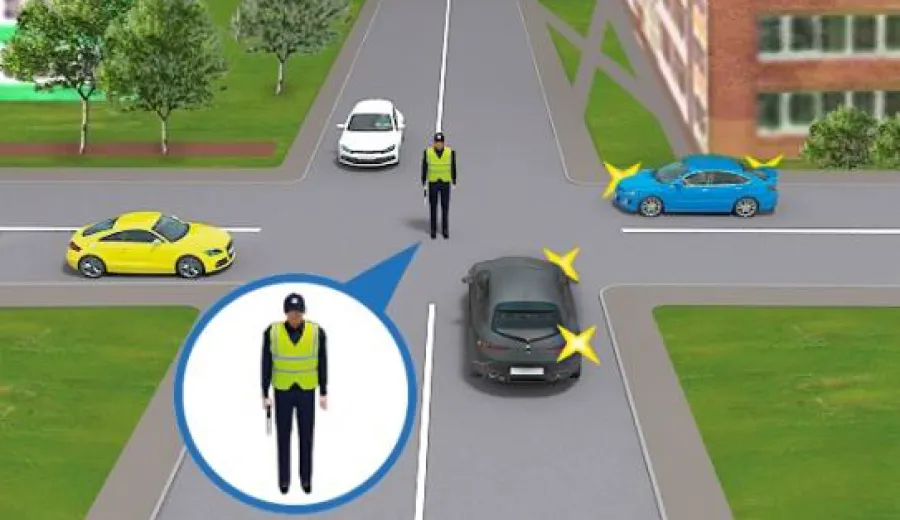
This exam question from the Traffic Rules of Ukraine checks knowledge of the rules for passing a controlled intersection and the ability to interpret traffic controller signals. Such situations are critically important for road safety, as a mistake in interpreting gestures at intersections can lead to conflicting trajectories and accidents, even when the traffic light is not working or its function is replaced by a traffic controller.
8.1.19. In which directions are you permitted to proceed?
UAУ яких напрямках Вам дозволено рух?
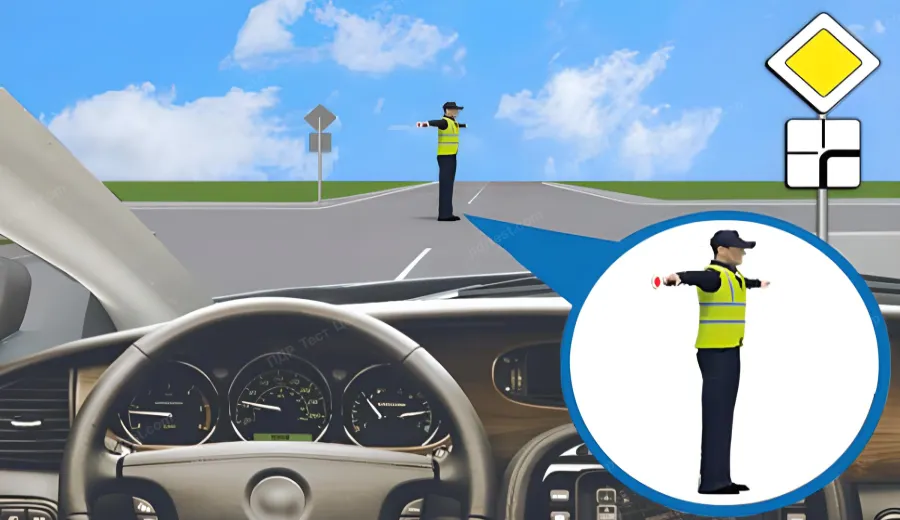
This exam question from the Traffic Rules of Ukraine tests your ability to safely navigate a controlled intersection when both priority road signs and a traffic controller are present. For the theoretical exam, it is important to remember the basic principle of the traffic rules: at an intersection where a police officer (traffic controller) is directing traffic, it is their signals that determine who can go and in which direction, while priority signs are not decisive at that moment.
8.1.20. Which vehicles are allowed to proceed at this traffic controller's signal?
UAЯким транспортним засобам дозволено рух на даний жест регулювальника?
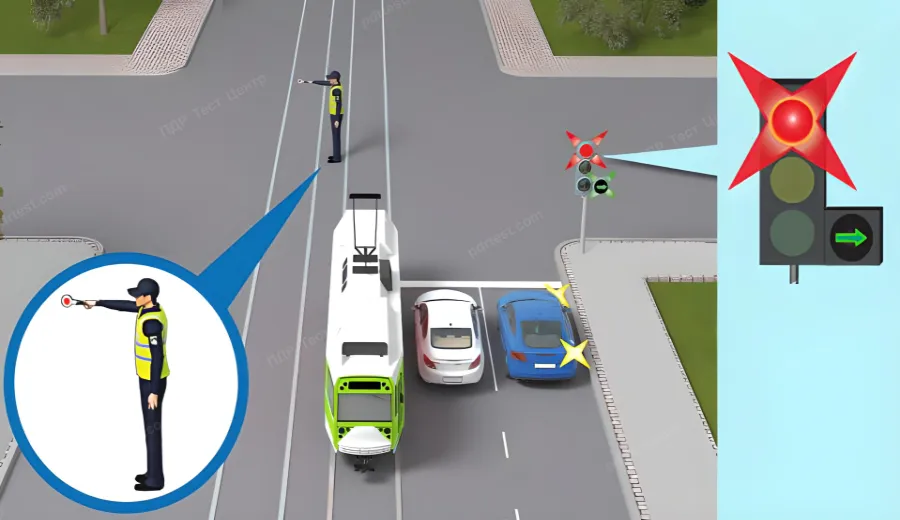
This is an exam question from the Traffic Rules of Ukraine (PDR) concerning safety at intersections and correct interaction with a traffic controller. In real traffic, the signals of a traffic controller are often used during traffic jams, road repairs, or when the traffic light is working unstably, so understanding the gestures directly affects safe and conflict-free passage. For the theoretical exam, it is important to remember a basic principle: in such situations, the rules regarding regulatory signals take precedence over the usual prompts from traffic lights or signs.
8.1.21. In which direction are you allowed to proceed in the situation shown?
UAУ якому напрямку Вам дозволено рух в показаній ситуації?
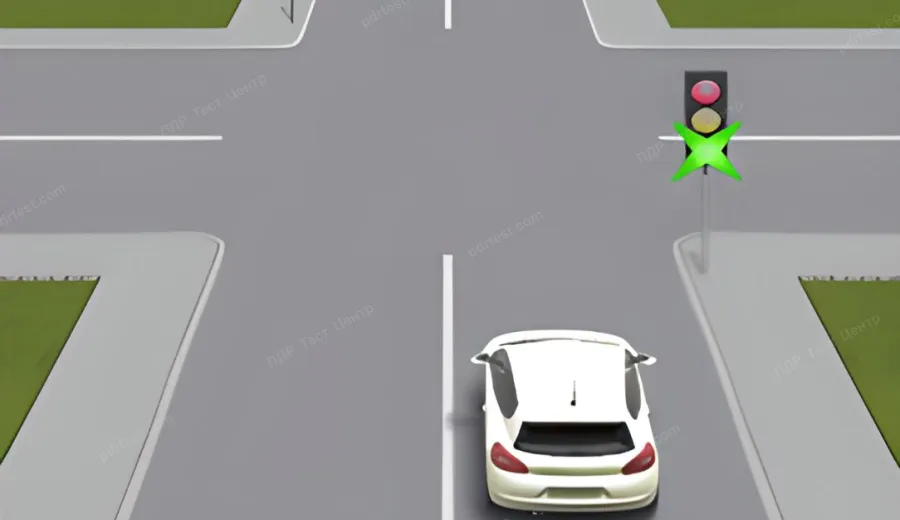
This is an exam question from the Traffic Rules of Ukraine about the safe passage of intersections and the correct understanding of traffic light signals. In real traffic, it is the traffic light signals at a controlled intersection that determine whether a driver has the right to continue driving, and a mistake in interpreting the permitted directions leads to dangerous maneuvers and typical "shortcuts" on the theoretical exam.
8.1.22. How should you act in this situation?
UAЯк Ви повинні вчинити в даній ситуації?
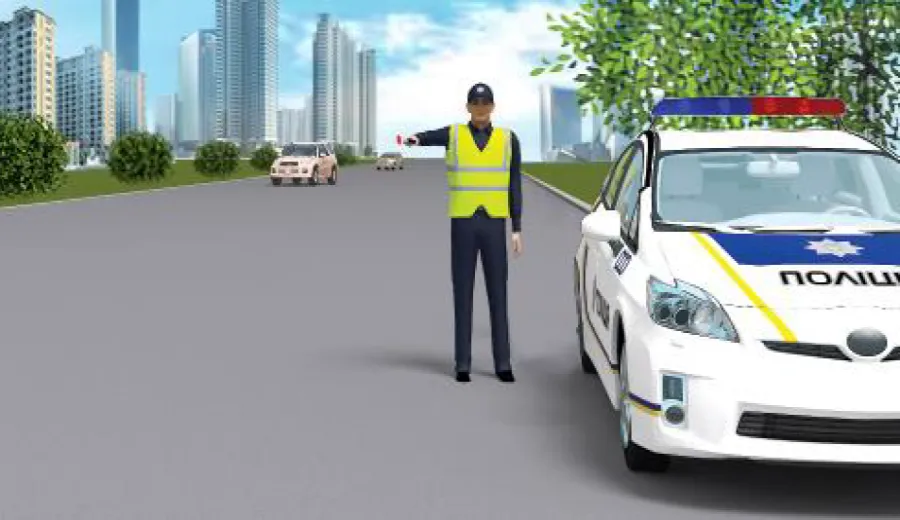
This exam question from the Traffic Rules of Ukraine concerns road safety and the correct actions a driver should take in response to a lawful request from a police officer. In real-life situations, such scenarios often occur on busy road sections, and a mistake during stopping can create a hazardous situation or obstacles for other road users. Therefore, this topic is important not only for the theoretical exam but also for everyday driving practice.
8.1.23. How should you act in this situation if a police officer signals you to stop?
UAЯк Ви повинні діяти в цій ситуації, якщо співробітник поліції подає Вам сигнал про зупинку?
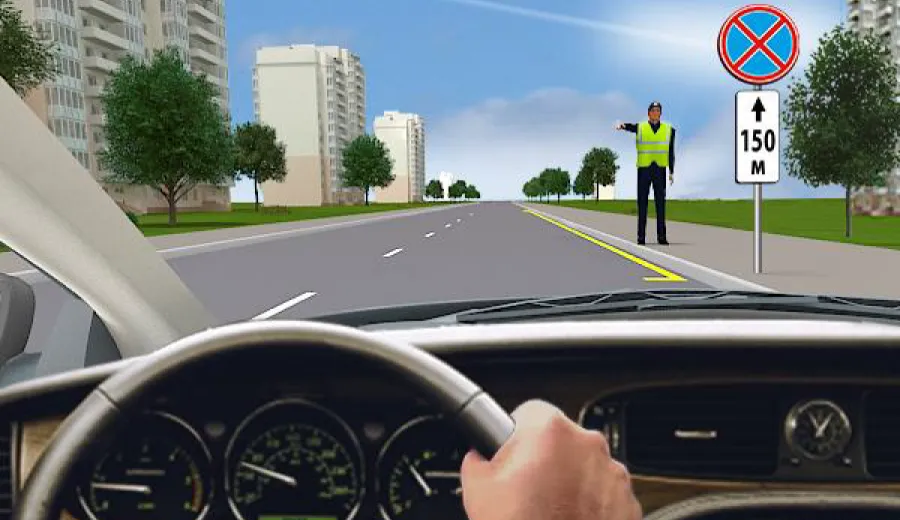
This exam question from the Traffic Rules of Ukraine checks the understanding of priorities in traffic control and the safe behavior of a driver when stopping at the request of the police. In real situations, a driver may see prohibitory signs and a yellow road marking line, which usually do not allow stopping, but at the same time receive a signal from a police officer. The ability to correctly determine whose requirements take precedence directly affects safety and the outcome of the theoretical exam.
8.1.24. Which road users are permitted to proceed in this situation?
UAЯким учасникам дорожнього руху дозволено рух у даній ситуації?
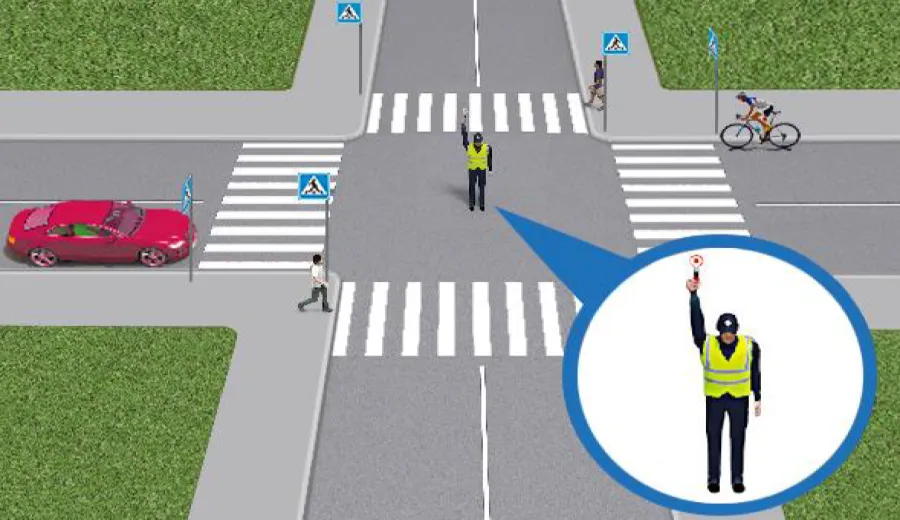
This exam question from the Traffic Rules of Ukraine concerns safety at intersections and the correct response to traffic controller signals. In real-life situations, the gestures of the traffic controller are often used for the temporary stopping of traffic flows and the safe change of movement directions, so a mistake in interpreting them can lead to trajectory conflicts, traffic accidents, or hitting a pedestrian.
8.1.25. With this signal of the traffic controller, movement is permitted:
UAНа даний сигнал регулювальника рух дозволено:
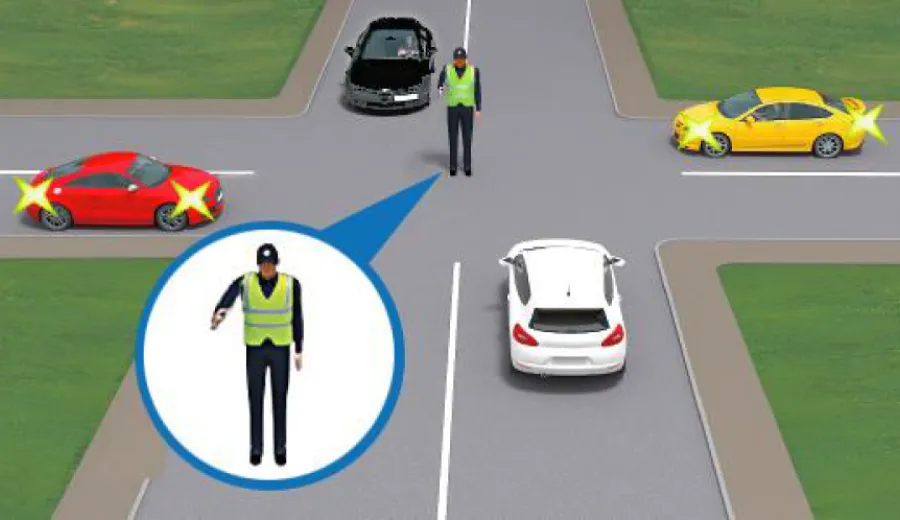
This exam question from the Traffic Rules of Ukraine tests the ability to safely pass intersections where traffic is regulated not by traffic lights or priority signs, but by the signals of a traffic controller. Such situations are especially dangerous at complex or equivalent intersections, as the driver must quickly determine from which directions movement is permitted and from which it is completely prohibited, in order to avoid trajectory conflicts and accidents.
8.1.26. Are you allowed to proceed in this situation?
UAЧи дозволено Вам рух у даній ситуації?
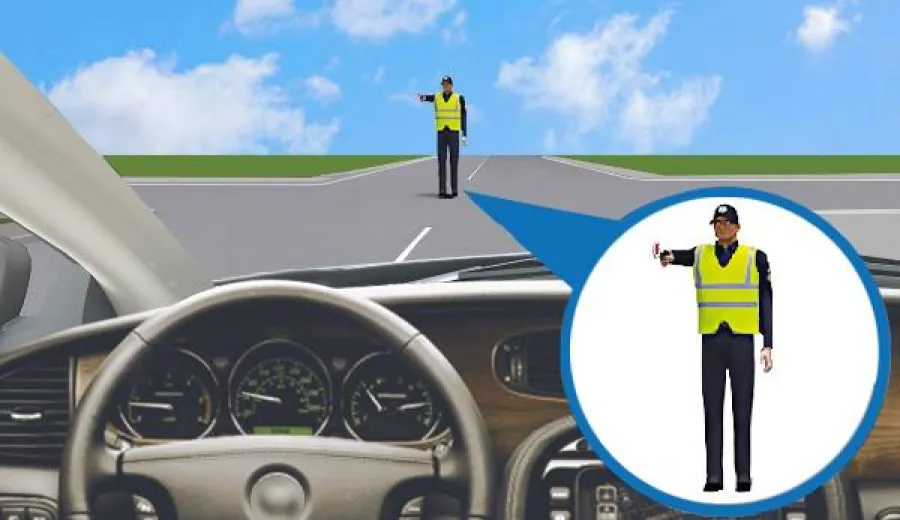
This exam question from the Traffic Rules of Ukraine tests the ability to safely pass an intersection when traffic is being manually regulated. In such situations, the driver must primarily rely on the signals of the traffic controller, as they determine the order of movement and take precedence over traffic lights and most road signs. Understanding the gestures of the traffic controller directly affects safety, since a mistake can lead to driving into oncoming traffic or creating an obstacle for other road users.
8.1.27. In response to this signal of the traffic controller, movement is permitted for:
UAНа даний сигнал регулювальника рух дозволено:
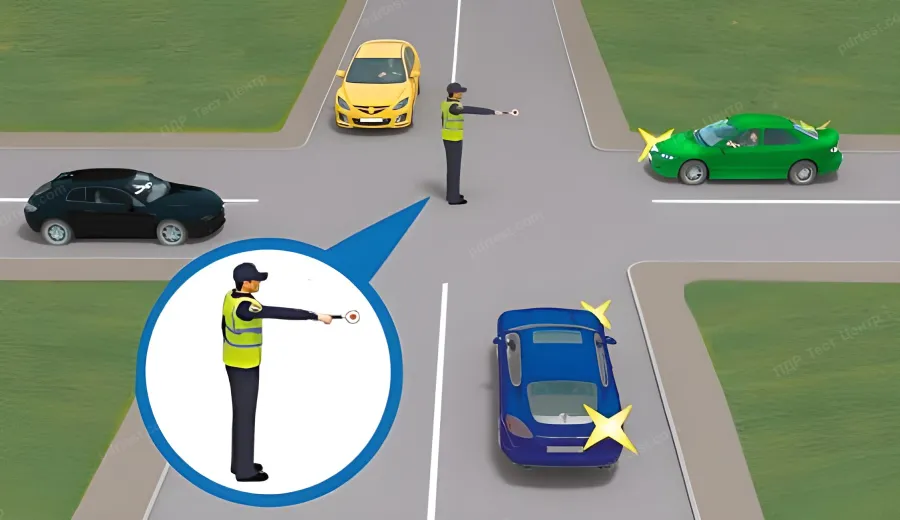
This exam question from the Traffic Rules of Ukraine tests the ability to safely pass through intersections where traffic is controlled not by traffic lights or signs, but by a traffic controller. Such situations often occur during traffic jams, road repairs, or accidents, and a correct understanding of the controller's gestures directly affects safety and helps avoid conflicts at intersections during the theoretical exam.
8.1.28. Are you allowed to proceed in this situation?
UAЧи дозволено Вам рух у даній ситуації?
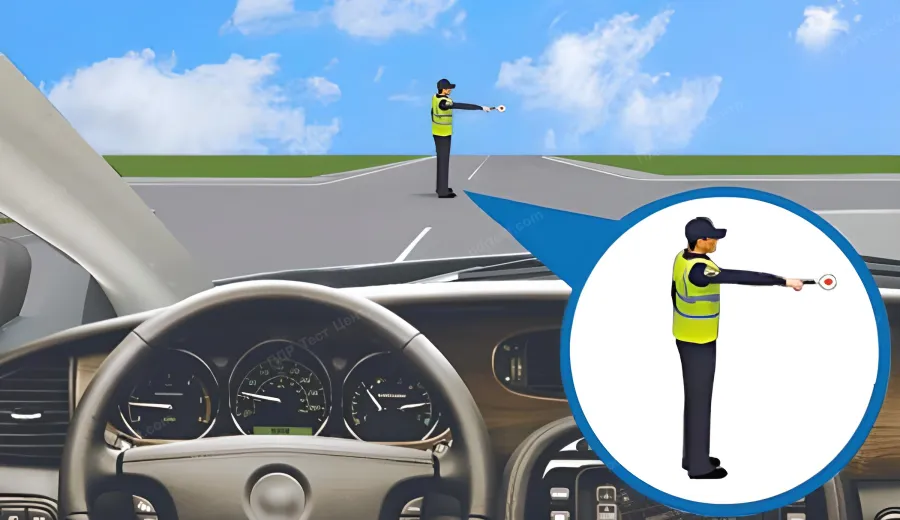
This exam question from the Traffic Rules of Ukraine tests the ability to safely pass regulated intersections and correctly interpret the signals of a traffic controller. In real traffic, mistakes in interpreting a police officer’s gestures often lead to conflicts and accidents, which is why typical situations where it is important to determine whether the driver has the right to continue moving are included in the theoretical exam.
8.1.29. Are you permitted to proceed in this situation?
UAЧи дозволено Вам рух у даній ситуації?
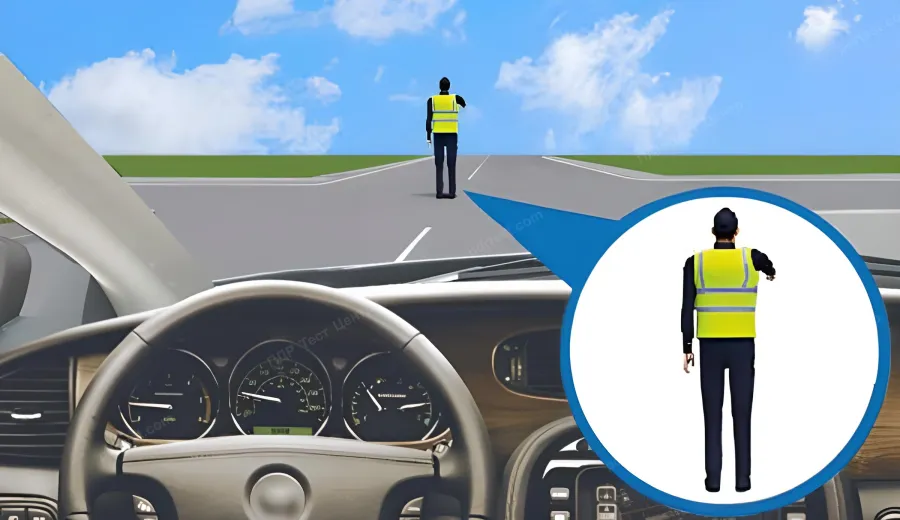
This exam question from the Traffic Rules of Ukraine tests the ability to act safely at an intersection when traffic is controlled not by a traffic light, but by the signals of a traffic controller. Such situations are especially important for road safety, as misinterpreting the gestures can lead to conflicting trajectories and accidents even at low speeds.
8.1.30. In which of the places are pedestrians permitted to cross the carriageway in this situation?
UAУ якому з місць пішоходам дозволено перехід проїзної частини в даній ситуації?
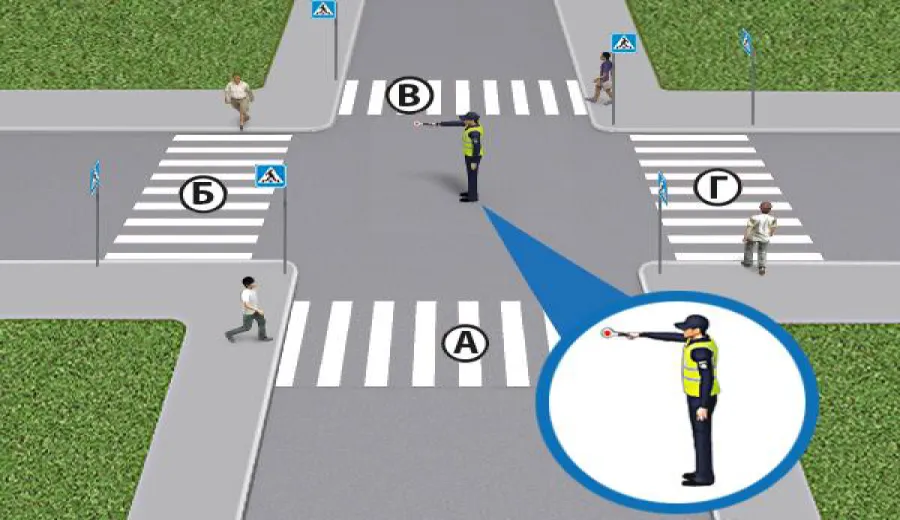
This exam question from the Traffic Rules of Ukraine tests a pedestrian’s ability to act safely at an intersection where traffic is controlled not by a traffic light, but by a traffic controller. Such situations often cause mistakes on the theoretical exam, because the presence of markings and designated “zebra” crossings does not automatically grant permission to cross: the controller’s signals take priority, and not knowing their meaning creates a real risk of conflict with vehicles.
8.1.31. With this signal of the traffic controller, movement is permitted for:
UAНа даний сигнал регулювальника рух дозволено:
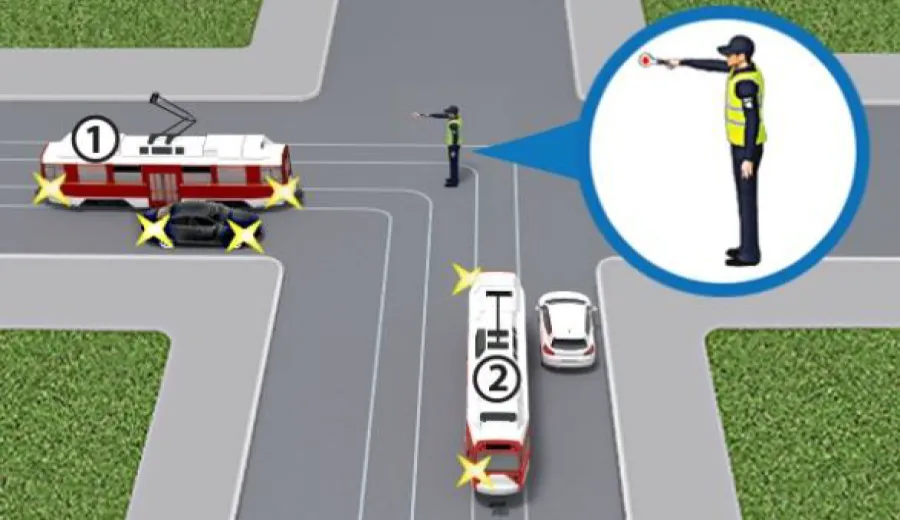
This is an exam question from the Traffic Rules of Ukraine about the safe passage through a controlled intersection, where priority is determined not by signs or the “right-hand rule,” but by the signals of the traffic controller. Such situations often occur in cities (especially with tram tracks), so for the theoretical exam it is important to quickly relate which side you are approaching the controller from and which maneuver is allowed for you specifically.
8.1.32. For this signal of the traffic controller, the tram is allowed to move:
UAНа даний сигнал регулювальника трамваю дозволено рух:
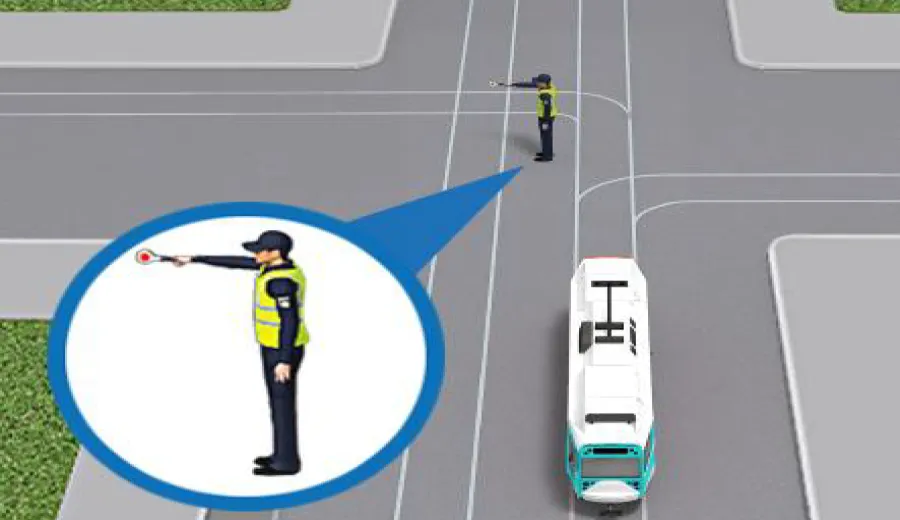
This exam question from the Traffic Rules of Ukraine concerns the safe passage through intersections in situations where traffic is regulated by a traffic controller. Such tasks often appear on the theoretical exam, as the signals of the traffic controller take precedence over traffic lights and road signs, and a misunderstanding of them can lead to trajectory conflicts and traffic accidents.
8.1.33. In which direction are you allowed to continue driving in this situation?
UAУ якому напрямку Ви можете продовжити рух у даній ситуації?
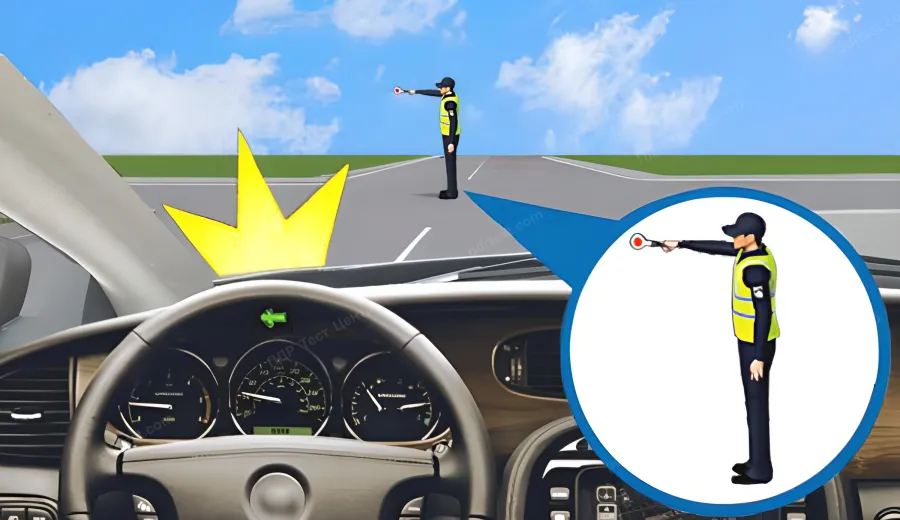
This exam question from the Traffic Rules of Ukraine tests the ability to safely pass through an intersection when traffic is controlled by a traffic controller. In such situations, it is critically important to correctly "read" the controller's gesture and act predictably for other road users, because a mistake in the direction of movement or inconsistency with the given signal can create preconditions for a traffic accident. That is why similar tasks often appear on the theoretical exam as a test of the driver's practical thinking.
8.1.34. In which direction are you allowed to proceed on this signal of the traffic controller?
UAУ якому напрямку Ви можете продовжити рух на даний сигнал регулювальника?
This is an exam question from the Traffic Rules of Ukraine concerning the safety of passing intersections and road sections where traffic is regulated by a traffic controller. In such situations, mistakes in interpreting gestures can lead to conflicting trajectories, dangerous maneuvers, and accidents, which is why questions about the controller’s signals and permitted directions of movement are often included in the theoretical exam.
8.1.35. Are you allowed to proceed straight in this situation?
UAЧи дозволено Вам рух прямо в даній ситуації?
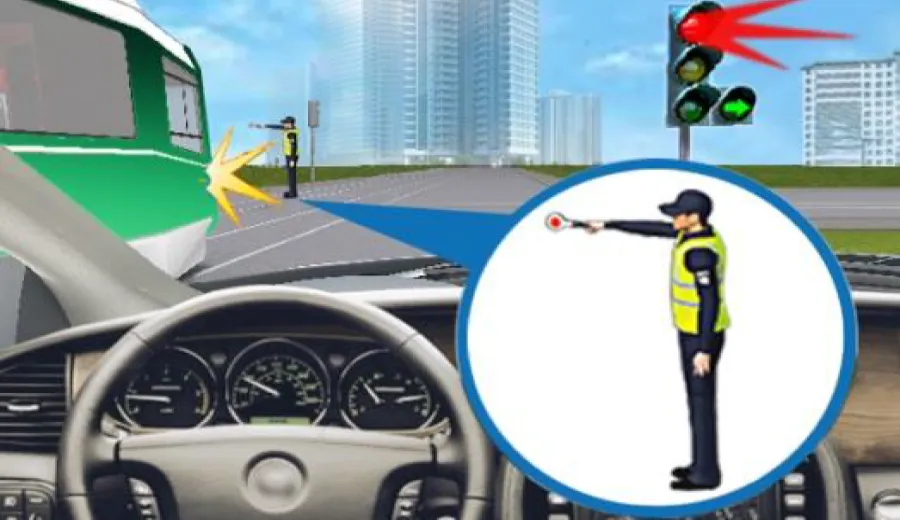
This is an exam question from the Traffic Rules of Ukraine concerning the safe passage through a controlled intersection where both a traffic light and a traffic controller are operating simultaneously. In such situations, the driver must quickly determine which signal takes precedence to avoid trajectory conflicts with trams and other road users. The topic is directly related to road safety and the correct fulfillment of the requirements of persons regulating traffic.
8.1.36. Which vehicles are allowed to proceed at this traffic controller's signal?
UAЯким автомобілям дозволено рух на даний жест регулювальника?
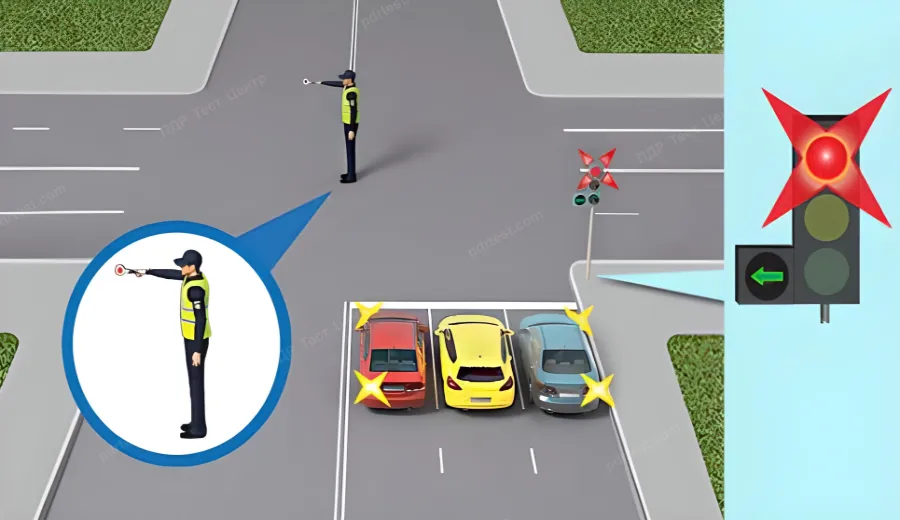
This exam question from the Traffic Rules of Ukraine tests the ability to safely cross an intersection when both a traffic light is operating and a traffic controller is present. Mistakes most often occur in such situations because drivers sometimes rely only on the traffic light and forget about the priority of the controller's gestures, which directly affects road safety and the avoidance of conflicting trajectories.
8.1.37. For regulating the movement of which vehicles is this traffic light used?
UAДля регулювання руху яких транспортних засобів застосовується даний світлофор?
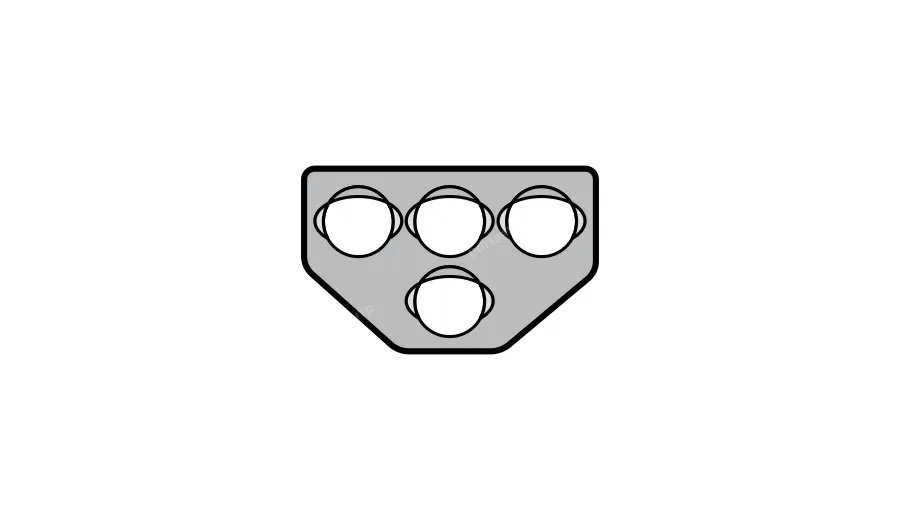
This exam question from the Traffic Rules of Ukraine tests the understanding of special traffic lights and how they regulate the movement of rail vehicles. Such signals are important for road safety at intersections and sections with multi-lane traffic, where the tram driver needs to receive a clear command right at the tracks, without relying on a distant “regular” traffic light.
8.1.38. Is the driver of the red car allowed in this situation to overtake the truck on the left side?
UAЧи дозволено водієві червоного автомобіля в даній ситуації виконати випередження вантажного автомобіля з лівого боку?
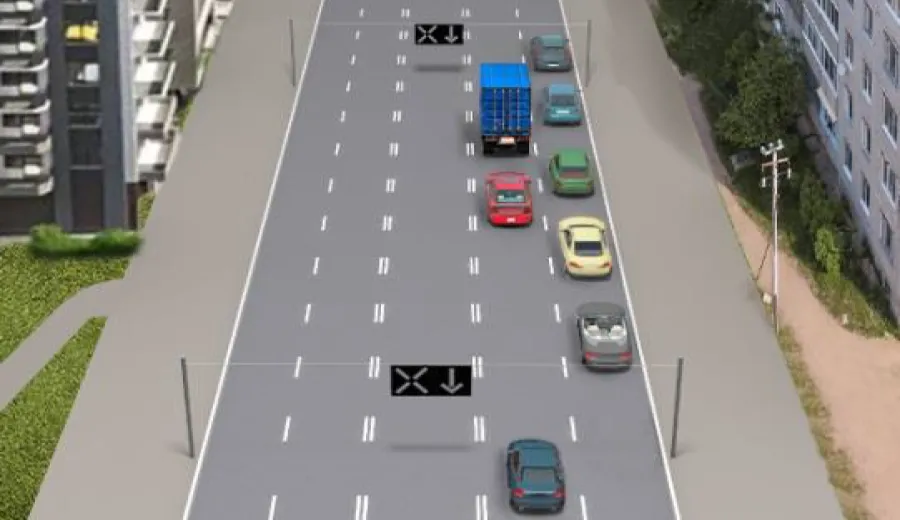
This exam question from the Traffic Rules of Ukraine concerns the safe execution of maneuvers on a multi-lane road where one of the lanes operates in a reversible mode. Such sections require special attention, as a mistake during lane changing can lead to entering oncoming traffic. For the theoretical exam, it is important to understand that a reversible lane is not an “ordinary” left lane for overtaking or passing, and its use is strictly tied to the signals of a special traffic light.
8.1.39. When driving through this intersection, drivers must be guided by:
UAПроїжджаючи дане перехрестя, водії повинні керуватися:
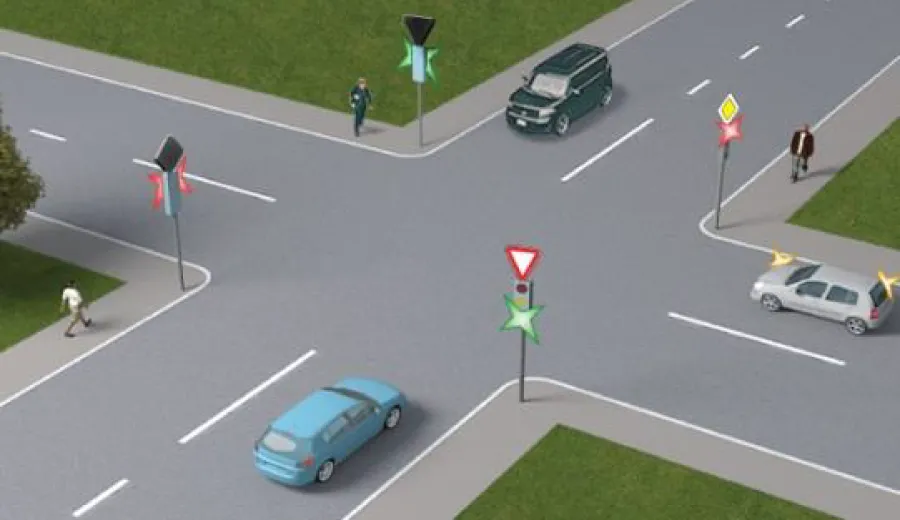
This exam question from the Traffic Rules of Ukraine tests the driver's ability to correctly determine what regulates traffic at an intersection when both a traffic light and priority signs are present. The topic is directly related to road safety: a mistake in choosing the 'main' means of regulation leads to conflict situations, dangerous maneuvers, and accidents, especially during heavy city traffic.
8.1.40. In which directions are you allowed to proceed in this situation?
UAУ яких напрямках Вам дозволено рух в даній ситуації?
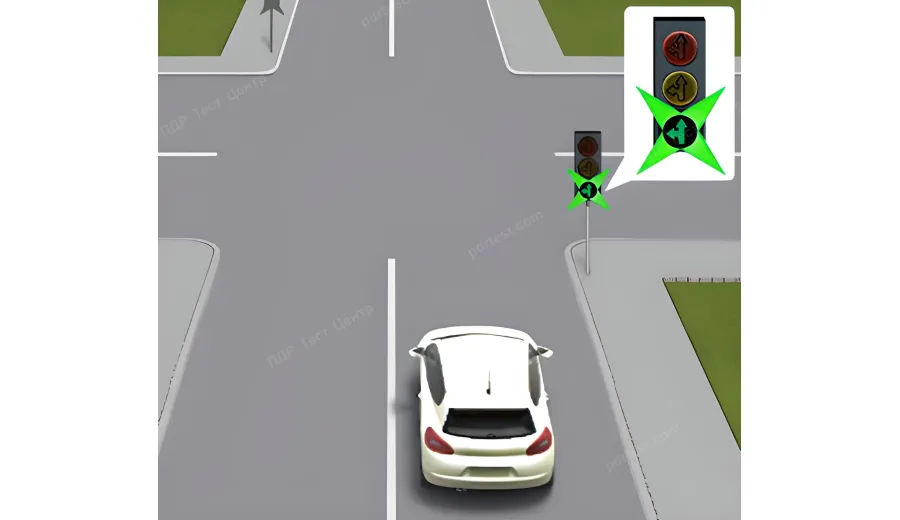
This exam question from the Traffic Rules of Ukraine tests the driver's ability to safely navigate a signal-controlled intersection and correctly interpret traffic light signals. The topic directly affects road safety, as mistakes in choosing the permitted direction at a signal often lead to conflicts with oncoming traffic and pedestrians.
8.1.41. How should you act in this situation if a police officer signals you to stop?
UAЯк Ви повинні вчинити в цій ситуації, якщо поліцейський подає Вам сигнал про зупинку?
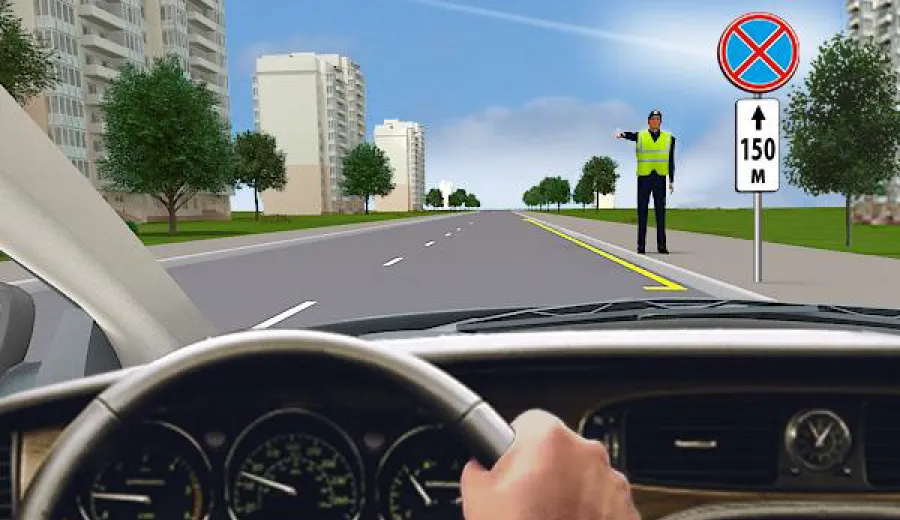
This is an exam question from the Traffic Rules of Ukraine about road safety and the obligation to comply with the lawful demands of a police officer while driving a vehicle. In real-life situations, a driver must be able to respond correctly to a stop signal: not to create danger, not to provoke an emergency situation, and not to ignore the instructions of an authorized person. That is why such tasks often appear in the theoretical exam and test a basic understanding of priorities in the traffic rules.
8.1.42. How should drivers of vehicles act in this situation?
UAЯк повинні вчинити водії транспортних засобів у даній ситуації?
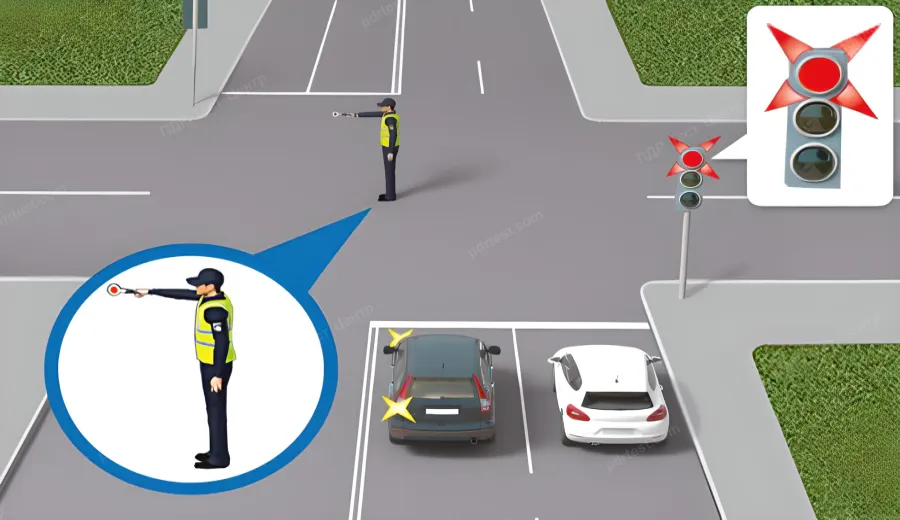
This exam question from the Traffic Rules of Ukraine tests the driver's ability to act correctly at a controlled intersection when both a traffic light is operating and a traffic controller is present. Such situations are especially important for road safety, as a mistake in determining the priority of signals can lead to driving 'contrary' to the traffic rules and creating a hazardous situation.
8.1.43. How should you act in this situation?
UAЯк Ви повинні вчинити в даній ситуації?
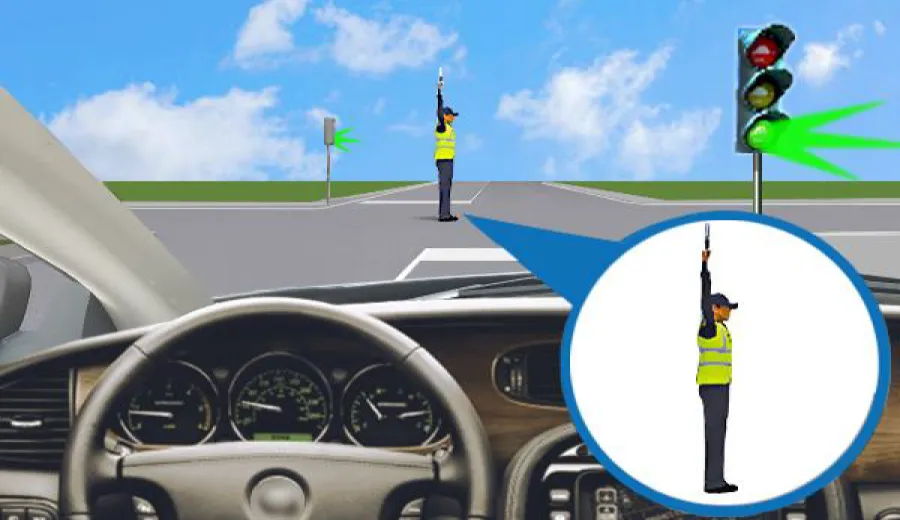
This exam question from the Traffic Rules of Ukraine tests the driver's ability to act correctly at a controlled intersection when several means of traffic organization are operating simultaneously. Such situations are directly related to road safety: a mistake in signal priority can lead to trajectory conflicts, sudden braking, and accidents, even if it seems that movement is "allowed" by the green light.
8.1.44. At this intersection, drivers and pedestrians must follow:
UAНа даному перехресті водії та пішоходи повинні керуватися:
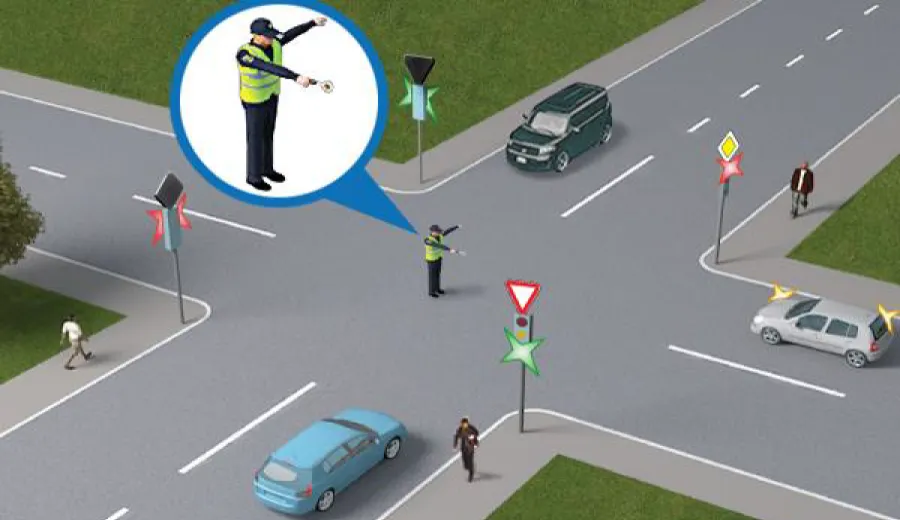
This exam question from the Traffic Rules of Ukraine tests a basic safety principle at intersections: how to act when different means of traffic control are operating simultaneously. In real-life situations, a driver or pedestrian may see a traffic light, signs, road markings, and a traffic controller, and a mistake in determining the priority of signals leads to conflicts, dangerous maneuvers, and accidents.
8.1.45. Is the driver of the car allowed to proceed in this situation?
UAЧи дозволено в даній ситуації рух водієві автомобіля?
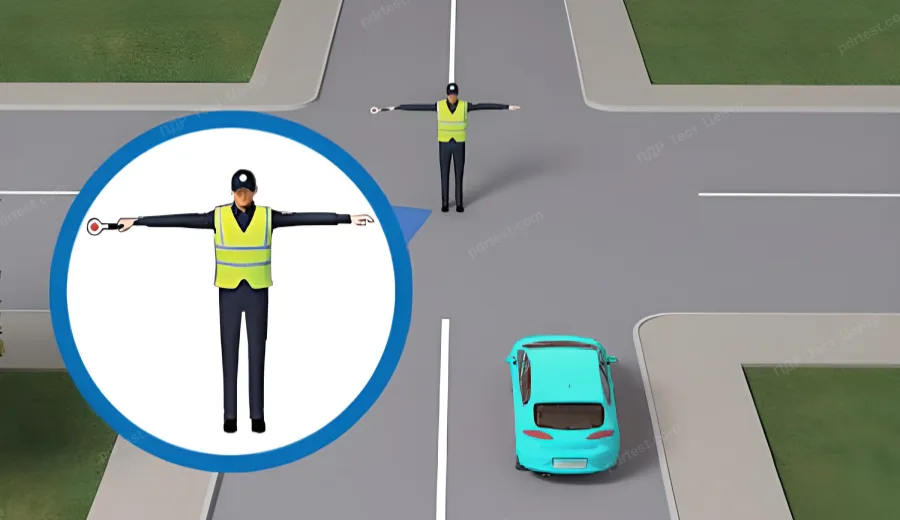
This exam question from the Traffic Rules of Ukraine concerns the safety of crossing intersections when traffic is regulated not by a traffic light or signs, but by a person in uniform. Such situations occur on the road during traffic jams, accidents, roadworks, or temporary traffic light outages, so for the theoretical exam it is important to clearly understand how the traffic rules work when the regulator's commands take priority.
8.1.46. Which vehicles are allowed to proceed in this situation?
UAЯким автомобілям дозволено рух у даній ситуації?
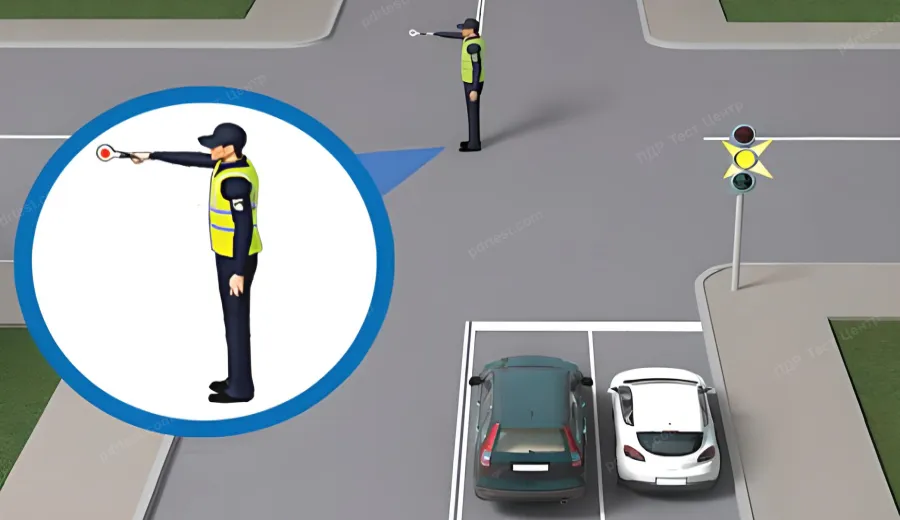
This exam question from the Traffic Rules of Ukraine tests the ability to safely pass an intersection when both a traffic light is operating and a traffic controller is present on the road. In such situations, mistakes most often occur due to an “automatic” reliance on the traffic light signal, although the traffic rules require first assessing who is actually regulating the traffic and which signals have priority. This directly affects safety and the results of the theoretical exam, because the topics of passing intersections and regulation signals are fundamental.
8.1.47. What should drivers be guided by when passing this intersection?
UAЧим повинні керуватися водії під час проїзду даного перехрестя?
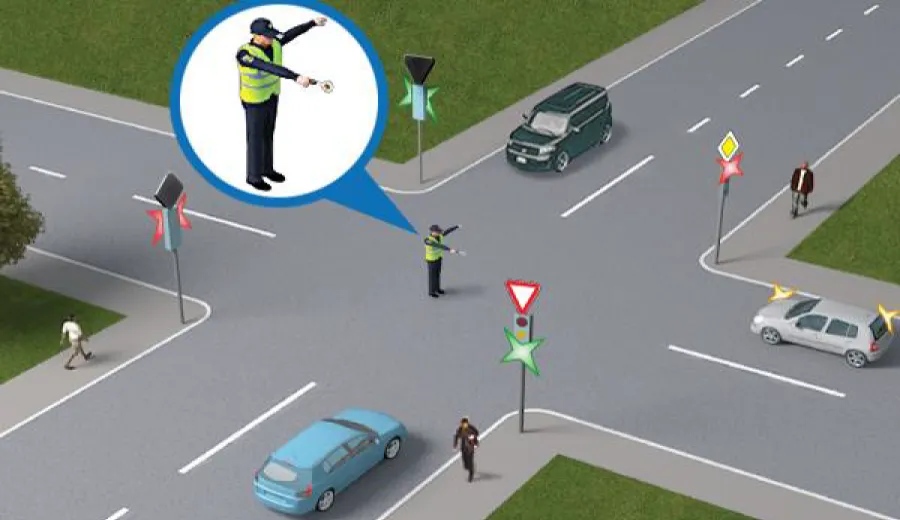
This is an exam question from the Traffic Rules of Ukraine (PDR) concerning safety and the correct procedure for passing intersections in situations where several means of traffic control are present simultaneously: road signs, traffic lights, and a traffic controller. Such cases often occur during traffic jams, road repairs, or increased traffic control, so understanding the hierarchy of signals directly affects the prevention of accidents and conflicts between drivers.
8.1.48. What does this signal of the traffic controller mean?
UAЩо означає даний сигнал регулювальника?
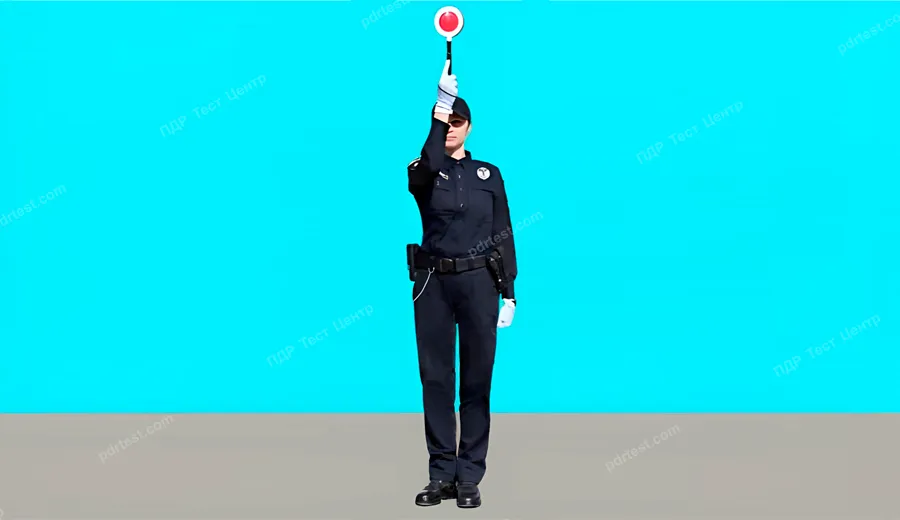
This exam question from the Traffic Rules of Ukraine tests knowledge of the signals given by a traffic controller and their role in ensuring road safety at intersections. When traffic is directed by an authorized person, their gestures and positions are decisive for drivers and pedestrians, as in real situations this allows for the quick organization of traffic flows and helps prevent conflicts and accidents.
8.1.49. Which driver violated the Traffic Rules by stopping at the prohibitory signal of the traffic light?
UAХто з водіїв порушив Правила дорожнього руху, зупинившись на заборонний сигнал світлофора?
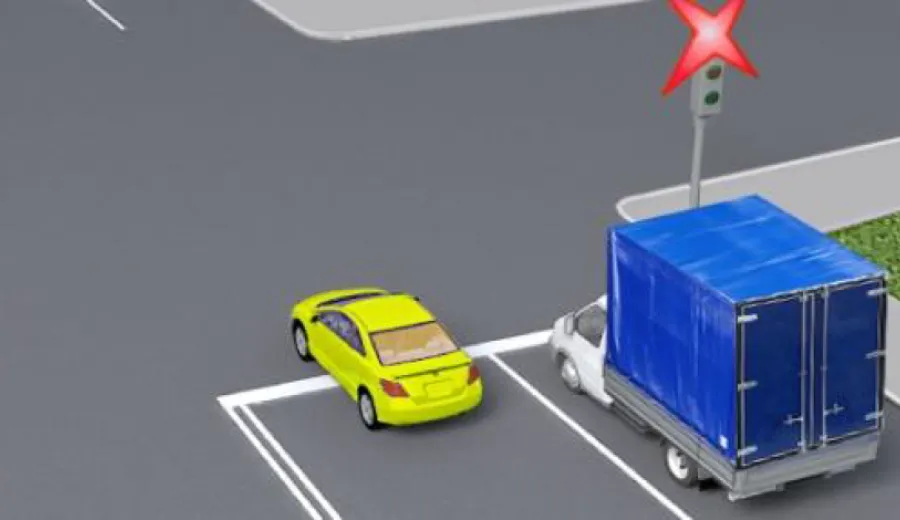
This is an exam question from the Traffic Rules of Ukraine concerning safety at regulated intersections and the correct procedure for stopping at a traffic light's prohibitive signal. In real traffic, it is important not only to stop at a red light, but to do so at the designated place, so as not to obstruct pedestrians or enter into conflicting paths with other vehicles.
8.1.50. Is the driver of the grey car allowed to enter the reversible lane as shown in the illustration?
UAЧи дозволено водієві сірого автомобіля в'їхати на реверсивну смугу так, як показано на малюнку?
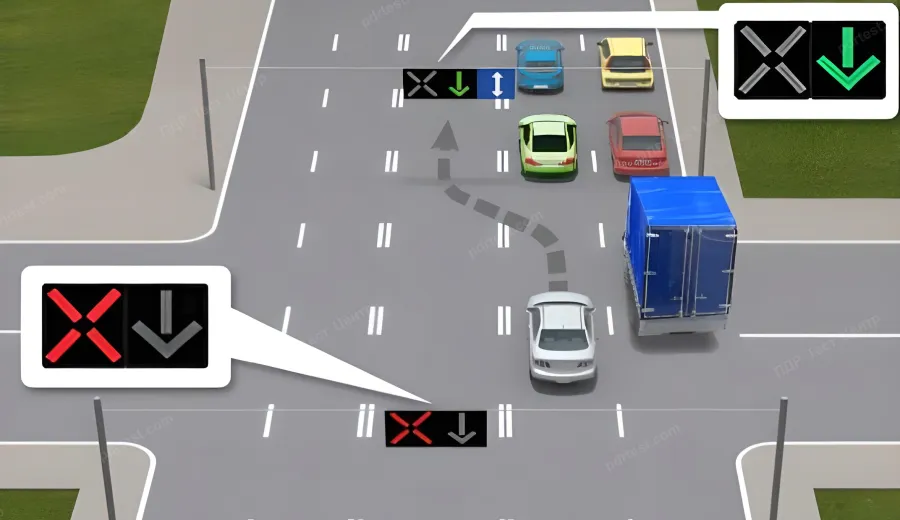
This is an exam question from the Traffic Rules of Ukraine concerning safety on roads with reversible lanes, where the direction may change depending on the time of day and traffic load. Such sections require maximum attention, as a mistake when entering a reversible lane can lead to a head-on collision. That is why the traffic rules specifically regulate when and under what conditions it is permitted to occupy a lane with reversible traffic.
8.1.51. Are you allowed to proceed in this situation?
UAЧи дозволено Вам рух у цій ситуації?
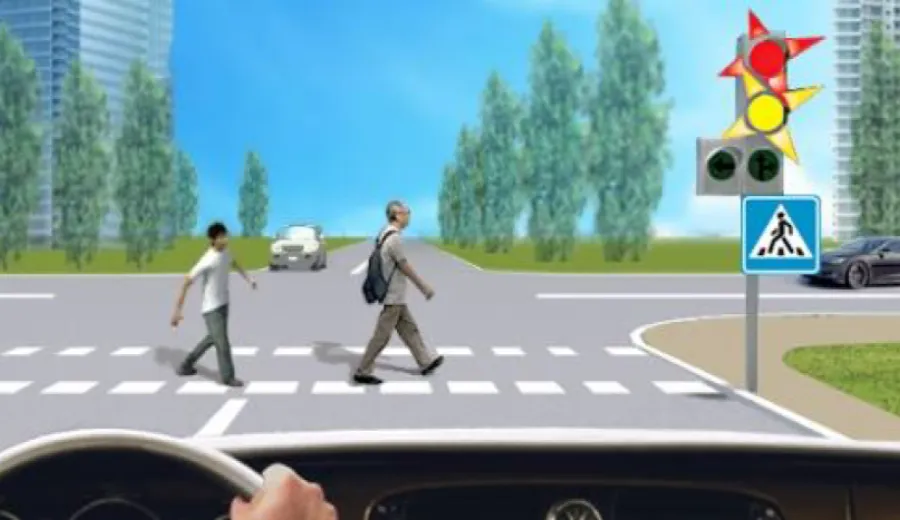
This exam question from the Traffic Rules of Ukraine tests the driver's attentiveness to traffic light signals and the ability to act safely at controlled intersections with pedestrian crossings. Such situations are typical in the theoretical exam, as mistakes in interpreting signals or ignoring pedestrians directly create a risk of traffic accidents.
8.1.52. Is the driver of a car allowed to proceed in the direction of the arrow illuminated in the additional section of the traffic light?
UAЧи дозволено водієві автомобіля рух у напрямку стрілки, ввімкненої в додатковій секції світлофора?
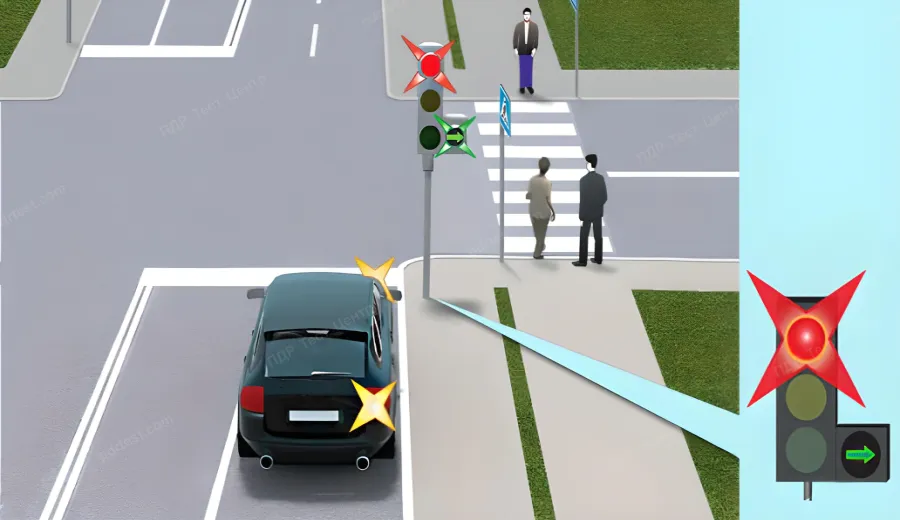
This exam question from the Traffic Rules of Ukraine tests the understanding of traffic light signals with an additional section and the safe passage through intersections. In real-life situations, this often occurs when turning right (or left), where the main signal prohibits movement, but a green arrow is illuminated in the additional section. This is where drivers most often make mistakes, perceiving the arrow as 'full permission,' forgetting about the priority of other road users and pedestrians, which directly affects road safety.
8.1.53. Which drivers of vehicles are allowed to proceed in this situation?
UAВодіям яких транспортних засобів дозволено рух у даній ситуації?
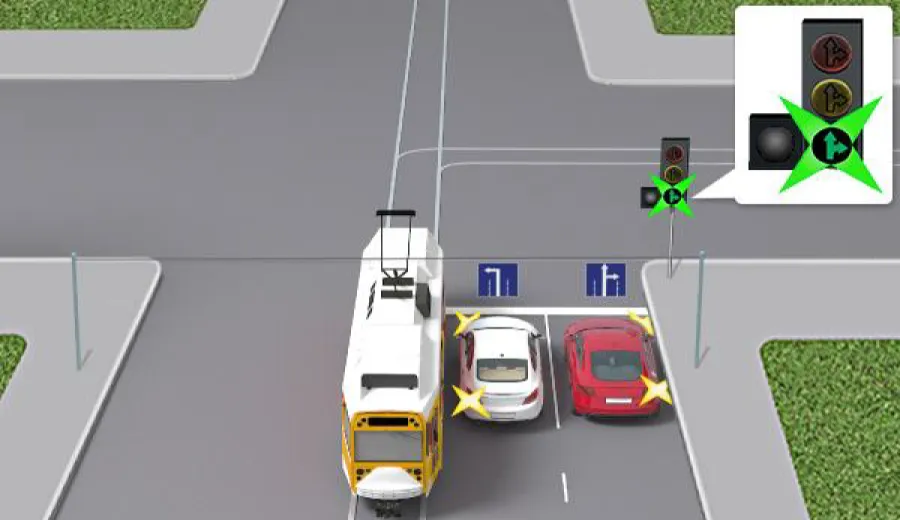
This exam question from the Traffic Rules of Ukraine tests the ability to safely navigate controlled intersections where both traffic lights with additional sections and informational-directional lane signs are in effect. In practice, such situations often cause mistakes on the theoretical exam and in real traffic, because drivers confuse the 'general green' with permission for any maneuver and do not take into account that the arrows on the traffic light restrict the directions of movement.
8.1.54. In which direction are you permitted to proceed in the depicted situation?
UAУ якому напрямку Вам дозволено рух в зображеній ситуації?
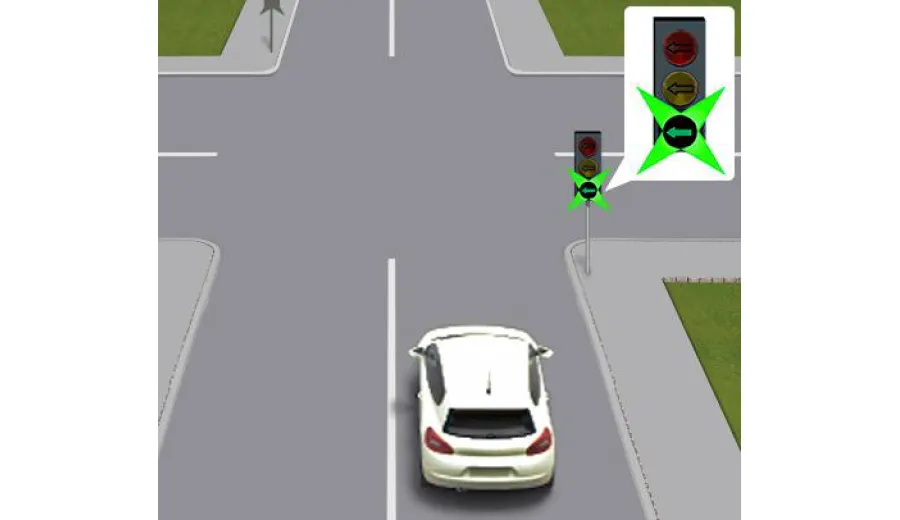
This exam question from the Traffic Rules of Ukraine tests the ability to safely navigate regulated intersections and correctly interpret traffic light signals. Such situations directly affect road safety, as misinterpreting the “arrow” can lead to conflicts with oncoming vehicles or pedestrians.
8.1.55. Which drivers of vehicles are permitted to proceed in this situation?
UAВодіям яких транспортних засобів дозволено рух у даній ситуації?
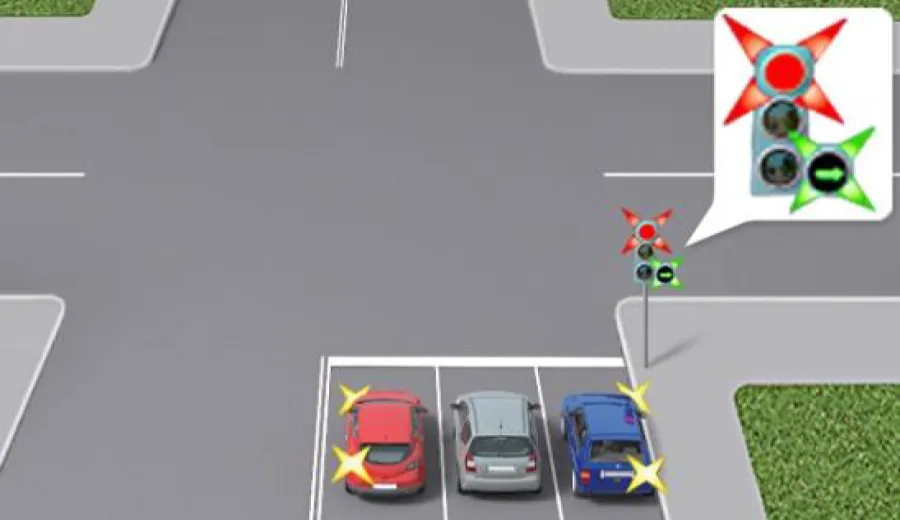
This is an exam question from the Traffic Rules of Ukraine about the safe passage of regulated intersections and the correct understanding of traffic light signals with an additional section. Such situations often occur in the city: the main signal may prohibit movement, but the additional section simultaneously allows a maneuver in a specific direction. For the theoretical exam, it is important to remember that priority is given not to “intuition,” but to the exact meaning of each signal, because a mistake at an intersection creates a risk of an accident and conflict with vehicles coming from other directions.
8.1.56. In which direction are you permitted to proceed in this situation?
UAУ якому напрямку Вам дозволено рух у даній ситуації?
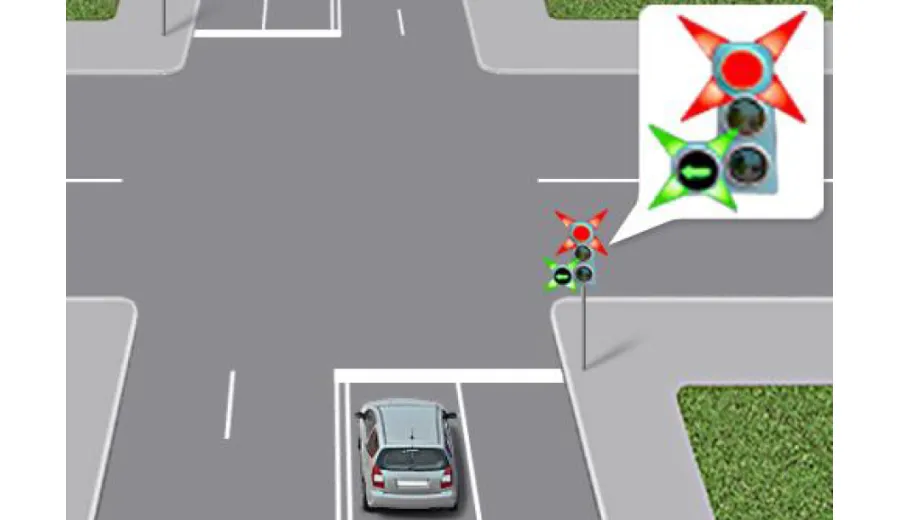
This exam question from the Traffic Rules of Ukraine tests knowledge of the rules for passing regulated intersections and the correct interpretation of traffic light signals. Such situations directly affect road safety, as the driver must not only understand where they are allowed to go, but also when they are required to yield to other road users.
8.1.57. May the driver of the car start moving in this situation?
UAЧи може водій автомобіля в даній ситуації розпочати рух?
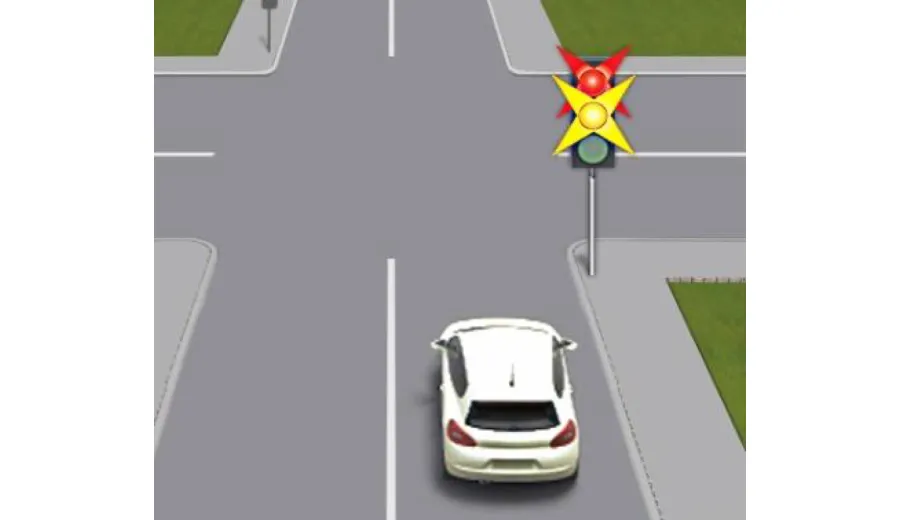
This exam question from the Traffic Rules of Ukraine concerns safety at regulated intersections and the correct response to traffic light signals. In real traffic, such situations are critical: starting prematurely on a prohibited signal creates a risk of accidents, conflicts with vehicles finishing crossing the intersection, and danger to pedestrians.
8.1.58. What is the meaning of the simultaneous illumination of the red and yellow signals of a traffic light?
UAЯке значення мають одночасно ввімкнені червоний і жовтий сигнали світлофора?
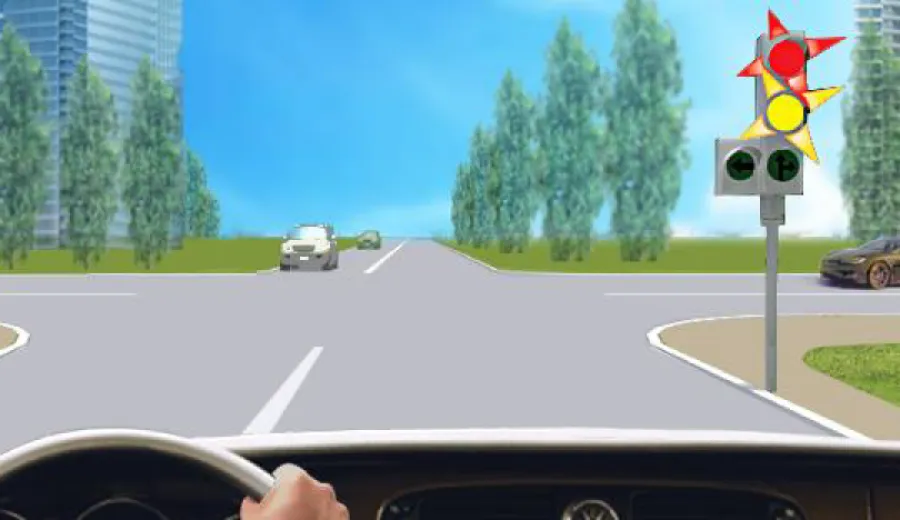
This exam question tests the understanding of traffic light signals as one of the key elements of road safety. Correct interpretation of signal combinations is necessary to avoid conflicts at intersections, prevent pedestrian collisions, and false starts, which often cause accidents during changes in traffic light phases.
8.1.59. Black contour arrows on the red and yellow signals do not change the meaning of these signals and indicate:
UAЧорні контурні стрілки на червоному і жовтому сигналах не змінюють значення цих сигналів та інформують:
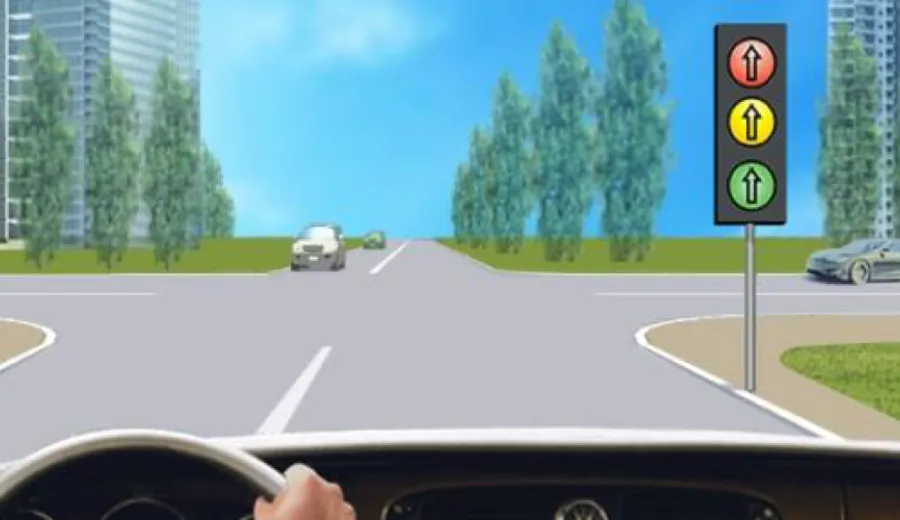
This exam question from the Traffic Rules of Ukraine concerns the safe passage through controlled intersections and the correct interpretation of traffic light signals. In the theoretical exam, it is often checked whether the driver understands the difference between prohibitive/warning signals and informational elements on them, since a mistake here can lead to entering an intersection in violation of traffic regulations.
8.1.60. Is the driver of the car allowed to turn left at this intersection when the green traffic light is on?
UAЧи дозволено водієві автомобіля поворот ліворуч на даному перехресті в разі ввімкнення зеленого сигналу світлофора?
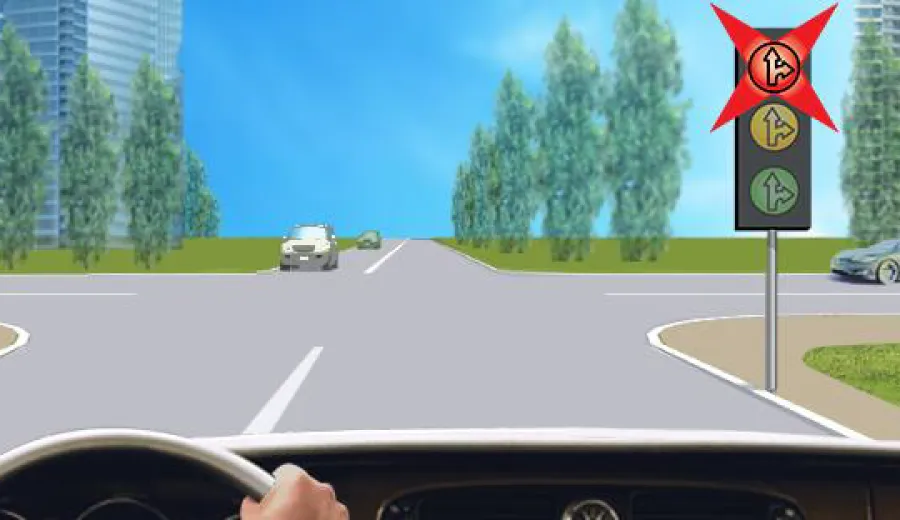
This exam question from the Traffic Rules of Ukraine concerns the safety of passing through regulated intersections and the correct interpretation of traffic light signals. In real-life situations, mistakes in understanding “directional” traffic lights and arrows on their sections often lead to conflict situations, dangerous maneuvers, and violations; therefore, this topic regularly appears on the theoretical exam.
8.1.61. Black contour arrows on an illuminated red traffic signal indicate:
UAЧорні контурні стрілки на ввімкненому червоному сигналі світлофора інформують:
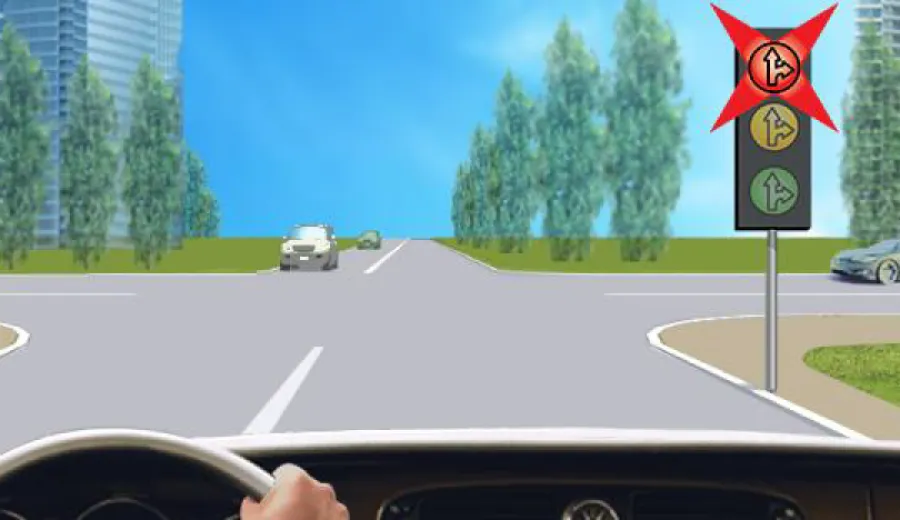
This exam question from the Traffic Rules of Ukraine concerns safety at controlled intersections and the correct understanding of traffic light signals. Theoretical exams often include situations where drivers confuse the meaning of signals due to additional elements on the lenses, so it is important to remember the basic traffic rule: the red signal always prohibits movement.
8.1.62. How should you make a left turn in this situation?
UAЯк Вам виконати поворот ліворуч у даній ситуації?
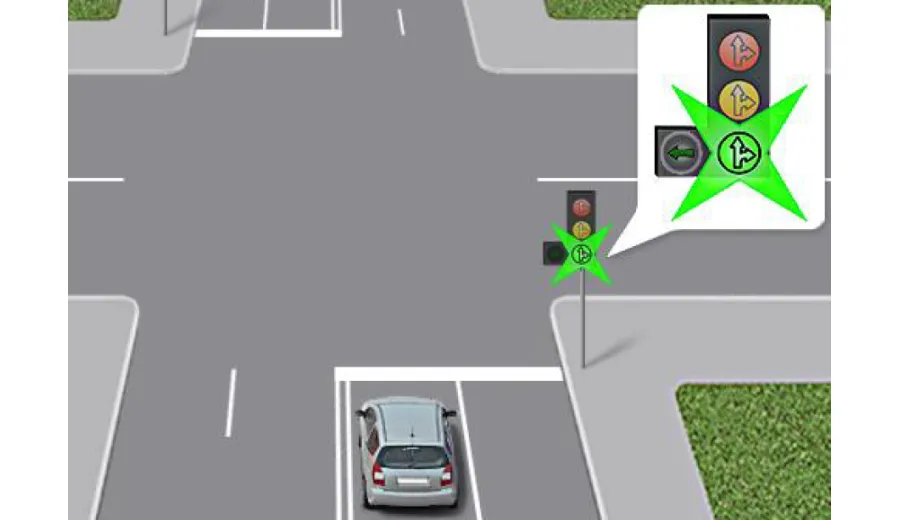
This is an exam question from the Traffic Rules of Ukraine about the safe passage of regulated intersections and the correct interpretation of traffic light signals with an additional section. In practice, such situations often cause violations: drivers mistakenly perceive the main green signal as permission for any maneuver, although directions of movement may be limited by arrows and separately regulated by the additional section. Understanding these rules directly affects safety, as an incorrect left turn creates a conflict with oncoming traffic.
8.1.63. Which of the traffic lights is used to regulate the movement of vehicles on streets, roads, or carriageway lanes where the direction of traffic can be reversed?
UAЯкий зі світлофорів застосовується для регулювання руху транспортних засобів на вулицях, дорогах або смугах проїзної частини, напрямок руху на яких може змінюватися на протилежний?
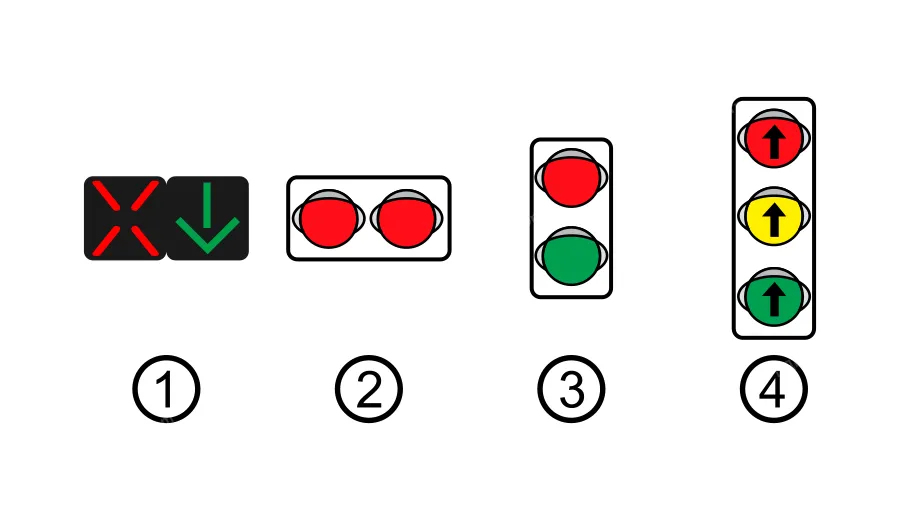
This exam question from the Traffic Rules of Ukraine concerns road safety in areas where traffic organization changes depending on the time of day or congestion. Most often, this refers to lanes that during peak hours may operate in one direction, and at other times — in the opposite direction, so it is important for the driver to quickly and correctly interpret the signals that control movement specifically on the lane, and not the entire intersection.
8.1.64. Is the driver of the red car allowed in this situation to overtake the truck on the left side?
UAЧи дозволено водієві червоного автомобіля в даній ситуації виконати випередження вантажного автомобіля з лівого боку?
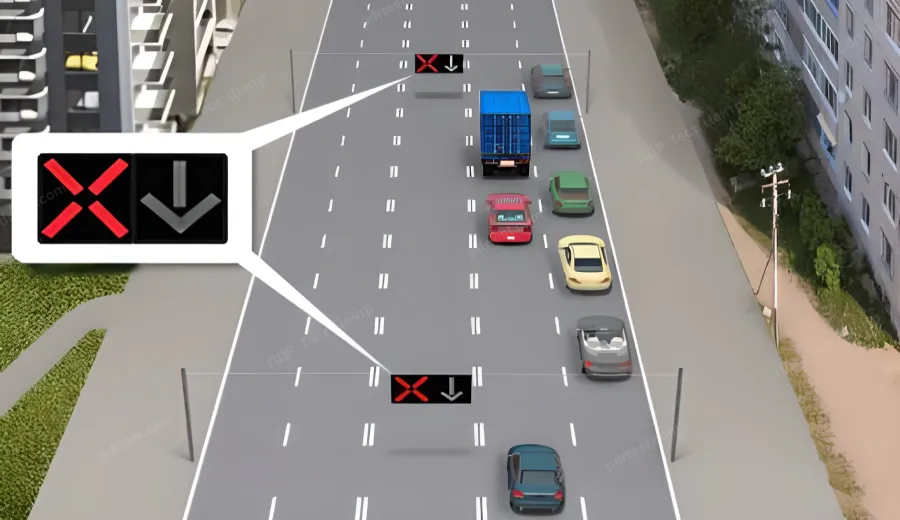
This exam question from the Traffic Rules of Ukraine concerns road safety on roads with reversible lanes, where the direction of traffic can change. Such sections are especially dangerous during maneuvers, particularly overtaking, because a mistake in choosing a lane can lead to entering oncoming traffic. That is why situations requiring correct interpretation of reversible traffic light signals and road markings are often included in the theoretical exam.
8.1.65. Under what condition may the driver of the car make a right turn in this situation?
UAЗа якої умови водій автомобіля може виконати поворот праворуч у даній ситуації?
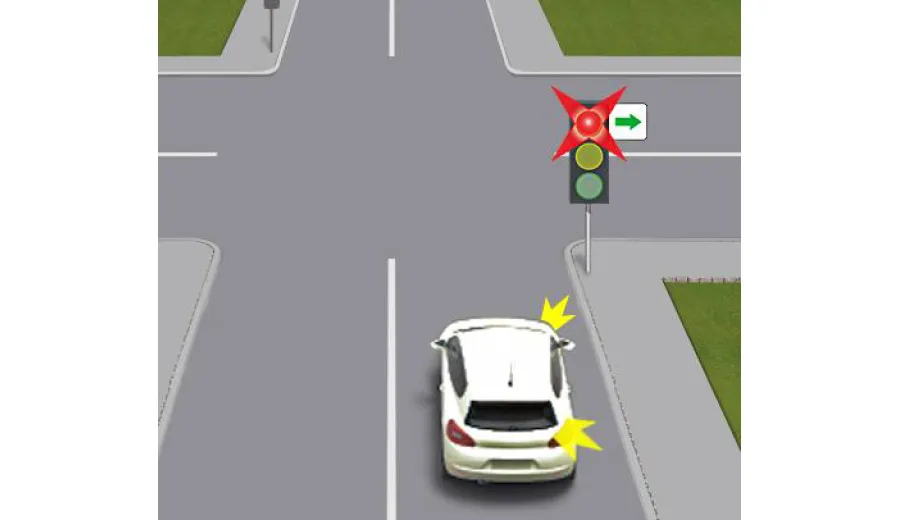
This is an exam question from the Traffic Rules of Ukraine concerning the safe passage through controlled intersections and the correct interpretation of traffic light signals. In real traffic, mistakes made while turning right at a traffic light often lead to conflicts with cross traffic and with pedestrians at the crosswalk, so this topic is directly related to road safety and accident prevention.
8.1.66. In which direction is the driver of the car allowed to proceed in this situation?
UAУ якому напрямку водієві автомобіля дозволено рух у даній ситуації?
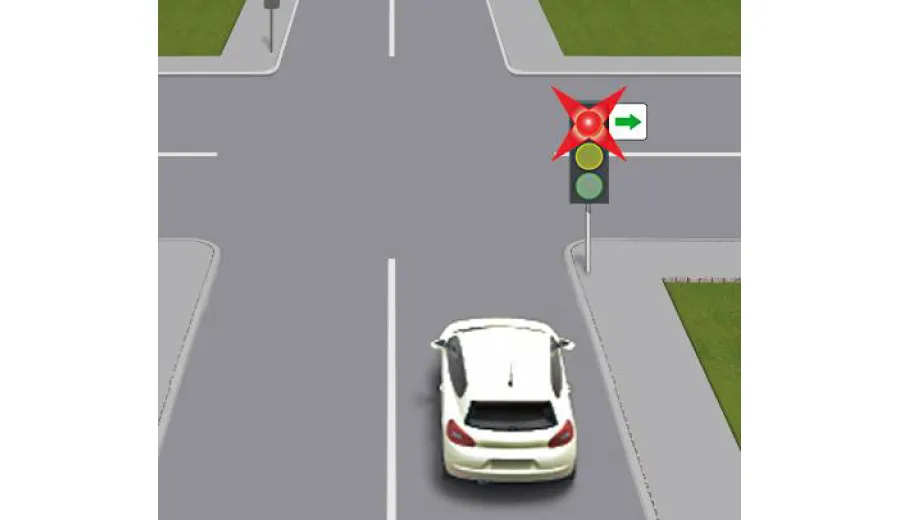
This is an exam question from the Traffic Rules of Ukraine concerning the safe passage through intersections and the correct understanding of traffic light signals, particularly exceptions to the general prohibition of movement on a red light. In real conditions, such situations often cause mistakes and conflicts: drivers either stop unnecessarily where a turn is allowed, or, conversely, start moving without yielding, creating danger for other vehicles and pedestrians.
8.1.67. What do two red alternately flashing signals of this traffic light mean?
UAЩо означають два червоні поперемінно миготливі сигнали даного світлофора?
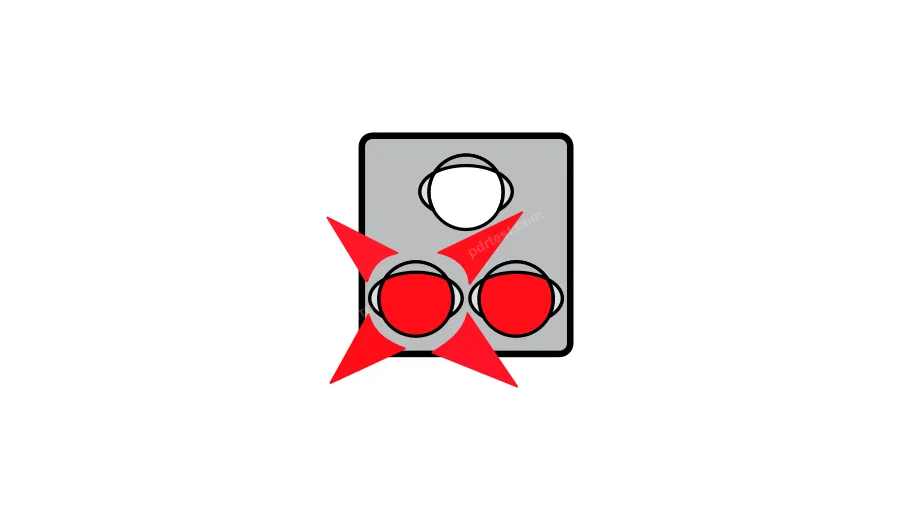
This exam question from the Traffic Rules of Ukraine tests the understanding of traffic light signals in high-risk situations, where a mistake can lead to a traffic accident. Most often, such signals are used before railway crossings, drawbridges, or at locations where special vehicles exit, so knowing their meaning is critically important for safety and for successfully passing the theoretical exam.
8.1.68. An illuminated red traffic signal means that:
UAУвімкнений червоний сигнал світлофора означає, що:
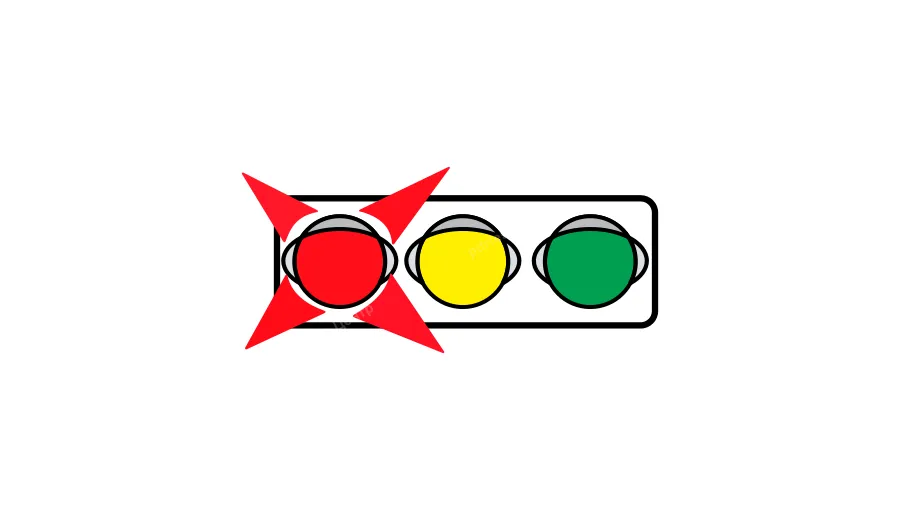
This exam question from the Traffic Rules of Ukraine concerns road safety and the correct interpretation of traffic light signals when passing intersections and controlled road sections. Understanding the meaning of light signals directly affects accident prevention, as they determine when a driver must stop and when it is safe to proceed without endangering other road users.
8.1.69. In which case is it prohibited to enter the reversible lane?
UAУ якому випадку заборонено в'їжджати на реверсивну смугу?
Question without image
This is an exam question from the Traffic Rules of Ukraine about safety on sections with reversible lane control, where the direction on a specific lane can change depending on traffic intensity. A mistake when entering such a lane creates a risk of a head-on collision, so the theoretical test often includes rules that clearly define when the lane is open and when it is closed.
8.1.70. Which group of road signs informs road users about the location of populated areas, various objects, and territories where special rules apply?
UAЗнаки якої групи інформують учасників дорожнього руху про розташування населених пунктів, різних об'єктів, територій, де діють спеціальні правила?
Question without image
This exam question from the Traffic Rules of Ukraine checks whether the driver can navigate the system of road signs and correctly perceive information on the road. Understanding which signs indicate populated areas, objects, and zones with special traffic conditions directly affects safety: the driver prepares in advance for changes in traffic mode, restrictions within the territory, and chooses the correct route.
8.1.71. According to the Traffic Rules, a traffic controller is considered to be...
UAЗгідно з Правилами дорожнього руху регулювальником вважається...
Question without image
This exam question from the Traffic Rules of Ukraine concerns road safety and the proper interaction of road users with individuals who control traffic manually. In real-life situations (accidents, road repairs, traffic jams, road closures, railway crossings, or ferry crossings), it is the commands of an authorized person that determine who should go, stop, or change direction, so the ability to quickly recognize a traffic controller directly affects safety and the avoidance of violations.
8.1.72. What types of road markings are there?
UAЯких видів буває дорожня розмітка?
Question without image
This exam question from the Traffic Rules of Ukraine concerns the basic means of organizing and ensuring road safety. Road markings help drivers and pedestrians quickly orient themselves within lanes, directions of movement, stopping places, and hazardous areas, and often emphasize or clarify the requirements of road signs. For the theoretical exam, it is important to understand what types of markings exist and where exactly they are used.
8.1.73. In which place must the driver stop their vehicle when a prohibitory traffic light signal is on or the traffic controller raises their hand upwards?
UAУ якому місці водій повинен зупинити свій транспортний засіб у разі ввімкнення заборонного сигналу світлофора або підняття регулювальником руки вгору?
Question without image
This is an exam question from the Traffic Rules of Ukraine about safe stopping before an intersection or pedestrian crossing when movement is prohibited by a traffic light signal or a traffic controller's signal (in particular, a raised hand). The correct choice of stopping place directly affects safety: if you stop "in the wrong place," the driver may end up on the crossing, enter the intersection, block visibility, or create an obstacle for pedestrians and cross traffic.
8.1.74. Signs of which group indicate mandatory directions of movement or allow certain road users to use the carriageway or its specific sections, as well as introduce or cancel certain restrictions?
UAЗнаки якої групи вказують обов'язкові напрямки руху або дозволяють деяким учасникам рух по проїзній частині чи на окремих її ділянках, а також запроваджують або скасовують деякі обмеження?
Question without image
This exam question from the Traffic Rules of Ukraine concerns road signs and their impact on safety and traffic organization. Understanding the purpose of different groups of signs helps a driver quickly interpret road requirements: where it is necessary to drive only in a certain direction, who is allowed to drive in a particular lane or section, and where restrictions are introduced or lifted. For the theoretical exam, it is important not only to recognize the sign, but also to clearly know which group it belongs to and what legal consequences it has for the driver.
8.1.75. How should the driver of a vehicle act if a police officer gives a signal to stop?
UAЯк повинен вчинити водій транспортного засобу, якщо від поліцейського надійшла вимога про зупинку?
Question without image
This is an exam question from the Traffic Rules of Ukraine about driver interaction with the police and safe stopping on the road. The topic is directly related to traffic discipline: properly complying with a stop requirement reduces the risk of accidents, does not create obstacles for other participants, and helps avoid dangerous maneuvers on the roadway, especially on high-speed sections and in dense traffic.
8.1.76. By what means may police officers give a requirement to stop a vehicle?
UAЗа допомогою чого поліцейські можуть подавати вимогу про зупинку транспортного засобу?
Question without image
This exam question from the Traffic Rules of Ukraine concerns road safety and the interaction between drivers and the police on the road. For the theoretical exam, it is important not only to know when to stop, but also to be able to recognize a lawful stop signal in various situations: in the city, on the highway, during the day and at night, when the signal is given by a police officer on foot or from a patrol car.
8.1.77. Signs of which group introduce or cancel restrictions on traffic on the carriageway?
UAЗнаки якої групи запроваджують або скасовують обмеження в русі на проїзній частині?
Question without image
This exam question from the Traffic Rules of Ukraine concerns road signs as one of the main tools for organizing and ensuring road safety. In everyday driving, it is the signs that quickly inform the driver about which actions on the carriageway are permitted, restricted, or prohibited, so a correct understanding of their groups directly affects safe maneuvering, speed selection, the possibility of overtaking, stopping, or entering a section of road.
8.1.78. A green flashing traffic signal means that:
UAЗелений миготливий сигнал світлофора означає, що:
Question without image
This exam question from the Traffic Rules of Ukraine concerns the safety of passing intersections and the correct interpretation of traffic light signals. In real traffic, it is precisely during phase changes (when the “green” is ending) that mistakes most often occur: some drivers try to “make it” abruptly, while others start braking at the wrong time. Understanding the meaning of the flashing green helps avoid driving through a prohibitive signal and reduces the risk of accidents.
8.1.79. In what way can a driver be informed about the switching of the green traffic light signal?
UAЯким способом водій може бути проінформований про перемикання зеленого сигналу світлофора?
Question without image
This exam question focuses on traffic safety at intersections and locations regulated by traffic lights. It is important for a driver to understand in advance when the permissive signal is ending, in order not to make risky decisions at the moment of switching and to have enough time either to safely complete the crossing or to stop before the stop line. Such knowledge directly affects the avoidance of emergency situations and common mistakes on the theoretical exam.
8.1.80. What should you, as a driver, be guided by if the signals given by the traffic controller contradict the traffic light signals?
UAЧим Ви як водій повинні керуватися, якщо сигнали, які подає регулювальник, суперечать сигналам світлофора?
Question without image
This examination question from the Traffic Rules of Ukraine tests the driver's ability to correctly determine the priority of traffic control means at intersections and other locations where a traffic light, road signs, road markings, and a traffic controller may operate simultaneously. Proper understanding of the hierarchy of signals directly affects road safety, as a mistake in priorities can lead to conflict situations and accidents, even when the traffic light formally gives a 'permissive' signal.
8.1.81. What is the purpose of the signal given by the traffic controller using a whistle?
UAДля чого служить сигнал регулювальника, що подається свистком?
Question without image
This is an exam question from the Traffic Rules of Ukraine (PDR) concerning road safety during manual traffic control at intersections and road sections where traffic lights are absent or not functioning. In such situations, the signals of the traffic controller are crucial, as the timely understanding of their meaning determines whether drivers and pedestrians can safely stop or continue moving without conflict.
8.1.82. If the traffic controller's signal differs from the traffic light signal, will you follow the signals of the traffic controller?
UAЯкщо сигнал регулювальника відрізняється від сигналу світлофора, Ви будете керуватись сигналами регулювальника:
Question without image
This is an exam question from the Traffic Rules of Ukraine concerning the safe organization of traffic at controlled intersections, where both a traffic light and a police officer directing traffic may be present at the same time. In real-life situations, such cases arise during traffic jams, accidents, roadworks, or traffic light outages, so the ability to correctly determine signal priority directly affects safety and helps avoid violations.
8.1.83. The traffic light signal differs from the traffic controller's signal. Will you follow the traffic light signal?
UAСигнал світлофора відрізняється від сигналу регулювальника. Ви будете користуватись сигналом світлофора:
Question without image
This exam question from the Traffic Rules of Ukraine tests knowledge of the priorities for controlling traffic at regulated intersections, which directly affects road safety. In real situations, a traffic light may operate simultaneously with a traffic controller (for example, during traffic jams, accidents, or changes in traffic organization), and the driver must clearly understand which signal takes precedence in order to avoid conflicts and accidents.
8.1.84. The signal given by the traffic controller differs from the requirements of road signs. In this case, road signs have priority:
UAСигнал, який показує регулювальник відрізняється від вимог дорожніх знаків. Дорожні знаки є пріоритетними в цьому випадку:
Question without image
This exam question from the Traffic Rules of Ukraine concerns road safety at intersections and the correct choice of the "main" source of instructions in a real situation. On the road, there may simultaneously be a traffic light, road signs, and a traffic controller, and a mistake in determining the priority of signals directly affects the risk of an accident, especially during temporary manual traffic control.