
35.1. While waiting for the traffic light signal permitting movement, it is necessary to:
UAВ очікуванні сигналу світлофора, що дозволяє рух, необхідно:
Question without image
This is an exam question from the Traffic Rules of Ukraine about safe stopping and preparing to start moving at an intersection when the driver is waiting for a permissive traffic light signal. Such situations occur every day, and correct actions while waiting reduce the risk of 'nudging' the car forward in heavy traffic, help maintain control over the vehicle, and avoid creating unnecessary dangers for other road users.
35.2. A safe following distance when driving a passenger car on a dry road can be considered the distance that the vehicle will cover in no less than:
UAБезпечною дистанцією під час руху сухою дорогою на легковому автомобілі можна вважати відстань, яку автомобіль пройде не менше ніж за:
Question without image
This is an exam question from the Traffic Rules of Ukraine (PDR) about road safety and the correct choice of distance when driving in traffic. Maintaining a safe distance reduces the risk of rear-end collisions, especially when the car in front suddenly brakes or stops. In the theoretical exam, such questions check whether the driver understands that the distance should “buy” time for reaction, the start of braking, and the operation of the braking system.
35.3. Reduction of the braking distance of a vehicle is achieved by:
UAЗменшення гальмового шляху транспортного засобу досягається:
Question without image
This exam question from the Traffic Rules of Ukraine concerns the safe operation of a vehicle during deceleration and stopping. On the road, it is crucial not only to press the brakes, but also to maintain tire grip with the surface: this determines the length of the braking distance, the risk of skidding, and the ability to avoid obstacles. That is why the topic of effective braking is key for preparing for the theoretical exam and for everyday road safety.
35.4. When driving in conditions of poor visibility, you must choose a speed so that the stopping distance is:
UAПід час руху в умовах поганої видимості потрібно вибирати швидкість, виходячи з того, що зупинний шлях має бути:
Question without image
This is an exam question from the Traffic Rules of Ukraine about the safe choice of speed in conditions of poor or insufficient visibility (fog, rain, snowfall, dusk, nighttime). Its essence is directly related to road safety: the driver must drive in such a way that, in the event of a sudden obstacle (stopped vehicle, pedestrian, turn, narrowing), they have enough time to come to a complete stop within the section of the road that is actually visible ahead.
35.5. What is meant by the driver's reaction time?
UAЩо мається на увазі під часом реакції водія?
Question without image
This exam question from the Traffic Rules of Ukraine concerns road safety and how a driver manages to prevent a collision in a real traffic situation. When a hazard or obstacle suddenly appears on the roadway, not only the condition of the brakes or the speed of the vehicle becomes crucial, but also how quickly the driver perceives the threat, makes a decision, and begins to act. This time interval directly affects the stopping distance and often determines whether a few meters will be enough to avoid an accident.
35.6. In which cases should the lateral clearance be increased?
UAУ яких випадках слід збільшити боковий інтервал?
Question without image
This is an exam question from the Traffic Rules of Ukraine concerning road safety and the driver's ability to correctly choose the side clearance while driving. The side interval is needed not "for comfort," but to avoid touching or side collisions with other vehicles, pedestrians, the roadside, or obstacles, even if someone deviates slightly from their trajectory. That is why theoretical exams often include situations where the risk of such deviation increases.
35.7. When driving on deep snow on a dirt road, you should:
UAРухатися по глибокому снігу на ґрунтовій дорозі слід:
Question without image
This exam question from the Traffic Rules of Ukraine concerns safe driving in difficult winter road conditions, when traction with the surface is unstable and braking distance and the risk of skidding increase significantly. Driving through deep snow on a dirt road requires the driver to act as smoothly as possible, follow a predictable trajectory, and use a mode that helps maintain control of the vehicle and avoids provoking wheel slip or getting stuck. These very skills are tested in the theoretical exam, as they directly affect road safety.
35.8. Does the anti-lock braking system eliminate the possibility of skidding or sliding when cornering?
UAЧи виключає антиблокувальна гальмівна система можливість виникнення занесення або знесення під час проходження повороту?
Question without image
This is a driving exam question from the Traffic Rules of Ukraine concerning vehicle safety when cornering and the influence of auxiliary systems on stability and controllability. It highlights an important practical point for the theoretical exam: electronic systems like ABS increase the chances of maintaining control during braking, but cannot “overcome” a lack of tire grip on the surface and do not make cornering automatically safe.
35.9. While driving straight at a speed of 50 km/h, you suddenly find yourself on a small slippery section of the road. What should you do?
UAРухаючись прямо зі швидкістю 50 км/год., ви раптово потрапили на невелику слизьку ділянку дороги. Що слід зробити?
Question without image
This is an exam question from the Traffic Rules of Ukraine about driving safety on slippery surfaces and the correct actions a driver should take in the event of a sudden loss of traction. In real conditions, a short section of ice or “black” ice is dangerous because the friction force drops sharply, and any sudden impact on the vehicle can disrupt the fragile balance and provoke a skid or spin. That is why theoretical exams often include situations that test not “active” reactions, but the ability to avoid harming vehicle control.
35.10. Which external lighting devices will provide you with the best road visibility when driving at night during a heavy snowstorm?
UAУвімкнення яких зовнішніх світлових приладів забезпечить вам найкращу видимість дороги під час руху вночі за сильної хуртовини?
Question without image
This exam question from the Traffic Rules of Ukraine concerns driving safety at night and in conditions of limited visibility, when the correct choice of lighting mode directly affects whether you can see the edge of the roadway, obstacles, and whether you remain visible to others. During a snowstorm, the main problem is the reflection of light from snowflakes, which reduces contrast and can create a "white wall" effect in front of the vehicle.
35.11. In which of the following cases should the driver assess the situation behind?
UAУ якому з перелічених випадків водієві слід оцінювати обстановку позаду?
Question without image
This is an exam question from the Traffic Rules of Ukraine about road safety and driving culture: a driver must monitor the situation not only ahead, but also to the sides and behind. Any reduction in speed changes the conditions for those driving behind you, so attentiveness and risk anticipation help avoid common accidents, particularly rear-end collisions due to insufficient distance or unexpected braking.
35.12. Where should the left foot of the driver be positioned when driving a car with a manual transmission (with the clutch engaged)?
UAДе повинна бути розташована ступня лівої ноги водія при керуванні автомобілем з механічною коробкою передач (з увімкненим зчепленням)?
Question without image
This exam question from the Traffic Rules of Ukraine concerns the basic technique of driving a car and is directly related to road safety: the correct position of the feet helps avoid mistakes in driving, prevents distraction, and preserves the technical condition of the vehicle. Although the traffic rules do not have a specific clause that directly regulates the position of the foot, the logic of the question is based on the general duties of the driver to be attentive and to control the technical condition of the vehicle (in particular, the requirements of the section on driver responsibilities, clause 2.3).
35.13. If you get behind the wheel of a car after another driver, what should be the sequence of your actions?
UAЯкщо Ви сідаєте за кермо автомобіля після іншого водія, яка повинна бути послідовність Ваших дій?
Question without image
This is an exam question from the Traffic Rules of Ukraine about the safe preparation of a driver before starting to drive when another person takes the wheel. Proper adjustment of the driver’s seat directly affects visibility, steering accuracy, reaction speed, and fatigue level, and therefore the overall safety of road traffic. In practice, spending a few minutes adjusting the seat, steering wheel, and mirrors reduces the risk of mistakes during maneuvers and helps fulfill the requirement to remain attentive and not be distracted from driving.
35.14. Where can you find information about the permissible mass of a trailer equipped with brakes for your passenger car?
UAДе Ви знайдете дані про допустиму масу причепа, обладнаного гальмами, для Вашого легкового автомобіля?
Question without image
This is an exam question from the Traffic Rules of Ukraine concerning the safe towing of trailers and the proper control of weight and loads. In real traffic, exceeding the permissible trailer weight (especially one equipped with brakes) affects the braking distance, handling, and stability of the vehicle, and may also lead to traffic violations and driver liability.
35.15. When driving through a tunnel, you are approaching the end of a traffic jam. How should you behave?
UAПри проїзді через тунель ви наближаєтеся до кінця затору. Як Вам вести себе?
Question without image
This exam question from the Traffic Rules of Ukraine concerns traffic safety in tunnels and the correct use of warning signals in situations where the traffic flow suddenly slows down or stops. In a tunnel, the risk of rear-end collisions and chain accidents is significantly higher due to limited visibility, the effect of “sudden darkness/light,” and the difficulty for drivers behind to quickly assess that a traffic jam has formed ahead.
35.16. You want to overtake cyclists. What should you take into account when assessing the lateral clearance?
UAВи хочете обігнати велосипедистів. Що Ви повинні врахувати при оцінці бокового інтервалу?
Question without image
This is an exam question from the Traffic Rules of Ukraine about road safety when overtaking vulnerable road users. Its point is that a “safe interval” is not a fixed value: the driver must assess the actual conditions so as not to create danger for the cyclist during the maneuver, as the cyclist is less stable and may unpredictably swerve due to road irregularities, gusts of wind, slippery surfaces, or when avoiding an obstacle.
35.17. You want to cross the main road. Visibility in both directions is severely limited due to parked vehicles. How will you act?
UAВи хочете перетнути головну дорогу. Видимість в обох напрямках сильно обмежена через припарковані транспортні засоби. Як Ви будете діяти?
Question without image
This is an exam question from the Traffic Rules of Ukraine about the safe passage of uncontrolled intersections and driver behavior in conditions of limited visibility. When the view is blocked by parked vehicles, the danger is that traffic on the main road or a pedestrian may appear suddenly, leaving almost no time to react. For the theoretical exam, it is important to understand: even if it seems that the maneuver can be performed quickly, the risk of an accident increases sharply precisely because of the "invisible" section of the road.
35.18. A safe distance between passenger cars moving at a speed of 50 km/h on dry asphalt can be considered:
UAБезпечною дистанцією між легковими автомобілями, які рухаються зі швидкістю 50 км на годину на сухому асфальті, можна вважати:
Question without image
This is an exam question from the Traffic Rules of Ukraine about road safety and preventing collisions in traffic. A properly chosen following distance directly affects the ability to avoid a crash when the vehicle ahead suddenly brakes or stops. In the theoretical exam, such tasks check whether the driver understands that the following distance depends on speed, road surface condition, and visibility, and is not set “once and for all” by a single small number.
35.19. How does a driver perceive the speed of their vehicle after prolonged driving on a flat road at high speed?
UAЯк сприймається водієм швидкість його автомобіля у випадку тривалого руху рівнинною дорогою з великою швидкістю?
Question without image
This is an exam question from the Traffic Rules of Ukraine (PDR) concerning the safety of high-speed driving and how human psychophysiology affects vehicle control. For a driver, it is important not only to know the permitted limits but also to understand that the sense of speed can be deceptive, especially on a flat, straight road during prolonged driving. Such a perception error directly increases the risk of speeding, lengthens the braking distance, and makes it harder to control the car, which contradicts the basic principles of traffic regulations.
35.20. While driving which vehicle can increasing speed help to eliminate rear axle skidding?
UAПід час руху на якому автомобілі збільшення швидкості може сприяти усуненню занесення задньої осі?
Question without image
This is an exam question from the Traffic Rules of Ukraine about safe driving on a slippery road and preventing loss of control. It concerns a situation when, during a turn or maneuvering, the rear axle starts to skid, and the driver must choose actions with the steering wheel and accelerator pedal that will help stabilize the trajectory. Such knowledge directly affects safety: an incorrect reaction (sharp steering movements, braking, or untimely acceleration) can quickly lead to a spin or collision.
35.21. What should the driver do to quickly restore brake effectiveness after driving through a water obstacle?
UAЩо має зробити водій, щоб швидко відновити ефективність гальм після проїзду через водну перешкоду?
Question without image
This is an exam question from the Traffic Rules of Ukraine about road safety and the predictability of vehicle control after driving through a puddle, ford, or other water obstacle. Water on the braking mechanisms temporarily reduces friction between the pads and the disc or drum, which increases the braking distance and makes the car's response to the pedal feel "spongy." For the theoretical exam, it is important to understand: the problem is not only weaker braking, but also the risk of a sudden change in effectiveness if the driver tries to brake too hard immediately after getting the brakes wet.
35.22. When braking with the engine on a steep descent, the driver should select the gear based on the following conditions:
UAПід час гальмування двигуном на крутому спуску водій має вибирати передачу, виходячи з умов:
Question without image
This is an exam question from the Traffic Rules of Ukraine concerning safe driving on a steep or long descent, when a car naturally tends to accelerate under the force of gravity. In such conditions, it is important not to overload the service braking system, as frequent and prolonged pressing of the brake pedal can lead to overheating of the mechanisms and reduced braking efficiency. That is why the traffic rules pay great attention to speed control and the use of engine braking.
35.23. How should a driver act in case of loss of tire-road grip due to hydroplaning?
UAЯк має діяти водій у разі втрати зчеплення коліс з дорогою через утворення «водяного клина»?
Question without image
This is an exam question from the Ukrainian Traffic Rules about driving safety on wet surfaces and the phenomenon of aquaplaning (“water wedge”), when a film of water forms between the tire and the asphalt. In such a situation, traction drops sharply, the car responds worse to steering, and any sudden actions can lead to skidding. For the theoretical exam, it is important to understand that this is a typical “hazard to traffic” that requires an immediate reduction in speed.
35.24. What is the danger of prolonged braking with the clutch (gear) disengaged on a steep descent?
UAЧим небезпечне тривале гальмування з вимкненим зчепленням (передачею) на крутому спуску?
Question without image
This is an exam question from the Traffic Rules of Ukraine about safety when driving on steep and long descents, where a vehicle rapidly gains speed under the force of gravity. The topic is important for the theoretical exam because it is directly related to the driver's ability to maintain control over the vehicle and correctly choose a safe speed in difficult conditions, as required by the traffic regulations.
35.25. When driving in fog, the distance to objects appears:
UAПід час руху в умовах туману відстань до предметів видається:
Question without image
This exam question from the Traffic Rules of Ukraine concerns driving safety in difficult weather conditions when visibility is limited. In fog, contrast and clarity of outlines decrease, light is scattered, and road landmarks are perceived worse. Because of this “haze,” a driver may incorrectly assess the road situation, which directly affects the choice of speed, following distance, and braking timing.
35.26. What is meant by stopping distance?
UAЩо мається на увазі під зупинним шляхом?
Question without image
This is an exam question on the topic of road safety and choosing a safe speed/distance: it helps to understand the actual distance a vehicle needs to come to a complete stop after a hazard appears. For the theoretical exam, it is important not to confuse similar concepts, because in real conditions, it is the correct assessment of stopping that determines whether the driver will have time to avoid a collision or crash.
35.27. What criteria should drivers follow when choosing speed according to visibility in the direction of travel?
UAЯкими критеріями мають керуватися водії, обираючи швидкість у відповідності до видимості за напрямком руху?
Question without image
This is an exam question from the Traffic Rules of Ukraine about the safe choice of speed depending on the road situation. It is directly related to road safety, since most information a driver receives is through vision, and therefore visibility determines whether the driver will have time to notice a danger, react, and stop without a collision. In real traffic, visibility is often reduced due to fog, rain, snowfall, dusk, glare from headlights, as well as closed turns, hill crests, parked cars, or large vehicles that block the view.
35.28. In which case is a passenger car more stable against overturning when cornering?
UAУ якому випадку легковий автомобіль більш стійкий проти перекидання на повороті?
Question without image
This is an exam question from the Ukrainian Traffic Rules about safety when driving through curves and the lateral stability of a vehicle. In real driving, a vehicle experiences lateral forces on a curve, which can lead to sideways skidding or even rollover if the driver does not take into account speed, road surface conditions, and the distribution of mass in the vehicle. That is why such topics often appear on the theoretical exam: they test not only memory but also understanding of how physics affects vehicle behavior.
35.29. What should the driver do to prevent skidding when driving through a sharp turn?
UAЩо слід зробити водієві, щоб запобігти виникненню заносу під час проїзду крутого повороту?
Question without image
This exam question from the Traffic Rules of Ukraine tests the basic principles of safe vehicle control on curves, where the risk of losing tire grip with the road increases sharply. On a sharp turn, especially on wet or slippery surfaces, any sudden actions (braking or accelerating) can provoke a skid due to the effects of lateral forces and centrifugal influence. That is why, for the theoretical exam, it is important to understand not only the wording but also the logic: first prepare the car for the turn, and then drive smoothly and steadily through the curve.
35.30. At what moment should you gradually release the parking brake when starting to move uphill?
UAУ який момент слід поступово відпускати стоянкове гальмо, починаючи рух на підйомі?
Question without image
This is an exam question from the Traffic Rules of Ukraine concerning the safe start of movement on an incline, when a car, under the force of gravity, may involuntarily roll backward. In real conditions, even a slight rollback creates an obstacle and danger for other road users, so the driver's correct actions are directly related to basic safety requirements, attentiveness, and preventing the creation of a hazardous situation on the road.
35.31. While driving on which section of the road is the effect of a strong side wind the most dangerous?
UAПід час руху якою ділянкою дороги дія сильного бокового вітру найбільш небезпечна?
Question without image
This is an exam question from the Traffic Rules of Ukraine about road safety and the impact of road conditions on vehicle control. Strong crosswinds are dangerous because they act on the side surface of the vehicle, worsen directional stability, and can suddenly push the car off its trajectory. The risk is especially high for vehicles with large "sail area" (buses, vans, tarpaulin trucks, tall vehicles), which the wind can sway or even overturn.
35.32. Does the choice of lateral clearance depend on the speed of movement?
UAЧи залежить вибір бокового інтервалу від швидкості руху?
Question without image
This exam question from the Traffic Rules of Ukraine concerns road safety when driving alongside other vehicles and objects. In real conditions, a car does not travel perfectly straight: the trajectory is affected by road surface irregularities, the lateral elasticity of the tires, gusts of wind, and play in the steering mechanism. The higher the speed, the more noticeable the lateral deviations become and the less time there is for correction, so the driver needs a greater "margin of space" on the side.
35.33. How does the driver's field of vision change as the speed increases?
UAЯк змінюється поле зору водія зі збільшенням швидкості руху?
Question without image
This exam question from the Traffic Rules of Ukraine concerns road safety and the psychophysiology of the driver: how the perception of the road environment changes as speed increases. In practice, this directly affects the risk of not noticing a pedestrian, sign, traffic light, or a car from the side, as well as the ability to make timely decisions. That is why the theoretical exam includes topics related not only to formal requirements, but also to the real capabilities of a person behind the wheel.
35.34. Which driving style will ensure the lowest fuel consumption?
UAЯкий стиль водіння забезпечить найменшу витрату палива?
Question without image
This exam question from the Traffic Rules of Ukraine concerns driving culture and a safe, predictable manner of driving, which affects not only fuel consumption but also the risk of accidents. In everyday driving, the greatest excess fuel consumption occurs where the driver frequently changes speed: starts abruptly, "revs" the engine, and brakes at the last moment. Such a style makes movement less controlled, increases the load on the engine and braking system, and creates unnecessary dangers for other road users.
35.35. How does the braking distance of a passenger car change when driving with a trailer not equipped with a braking system?
UAЯк змінюється довжина гальмівного шляху легкового автомобіля під час руху з причепом, не оснащеним гальмівною системою?
Question without image
This is an exam question from the Traffic Rules of Ukraine about braking safety and controlling a road train, that is, a passenger car connected to a trailer. In practice, risks most often arise during deceleration: the stopping distance increases, it becomes harder to maintain directional stability, and mistakes in choosing speed or distance can lead to a collision.
35.36. What should a driver do if it starts to drizzle while driving on a dry asphalt concrete road?
UAЯк слід вчинити водієві, якщо під час руху сухою дорогою з асфальтобетонним покриттям почав накрапати дощ?
Question without image
This is an exam question from the Traffic Rules of Ukraine about safe speed and adapting driving style to sudden changes in road conditions. The onset of rain on dry asphalt concrete is often the most insidious moment: dust, sand, wear products, and traces of oil become wet and form a slippery film, which sharply reduces tire grip on the road. In such conditions, the braking distance increases, the risk of skidding and loss of control rises, and visibility can quickly deteriorate due to droplets on the glass and glare from the wet surface.
35.37. To stop a skid caused by braking, the driver must first:
UAДля припинення занесення, викликаного гальмуванням, водій у першу чергу має:
Question without image
This exam question from the Traffic Rules of Ukraine concerns road safety and vehicle control in critical situations when a vehicle loses directional stability. Skidding during braking is dangerous because the car begins to slide and may spin, enter the oncoming lane, or leave the roadway. Therefore, topics related to regaining control and the driver's correct initial actions are often included in the theoretical exam.
35.38. At night and in cloudy weather, the speed of an oncoming vehicle appears:
UAУ темну пору доби та в похмуру погоду швидкість зустрічного автомобіля видається:
Question without image
This exam question from the Traffic Rules of Ukraine tests safe driving in conditions of limited visibility: at night and during cloudy weather. In such situations, the driver receives less visual information about the road environment, sees the outlines of vehicles and landmarks worse, and the headlights remain the most noticeable. Because of this, the risk of mistakes increases during oncoming passing, bypassing obstacles, and especially during maneuvers in the oncoming lane.
35.39. The braking distance is considered to be:
UAГальмовим шляхом вважається:
Question without image
This exam question from the Traffic Rules of Ukraine concerns basic concepts of traffic safety and the correct assessment of distance during braking. Understanding the exact distance a vehicle travels from the start of braking to a complete stop directly affects the choice of safe speed and interval, especially on wet surfaces, snow, or ice. That is why such definitions regularly appear in the theoretical exam and form the foundation for further topics on safe distance.
35.40. Can sudden braking on icy roads increase the risk of being involved in a traffic accident?
UAРізке гальмування під час ожеледиці може підвищити ризик потрапляння у ДТП?
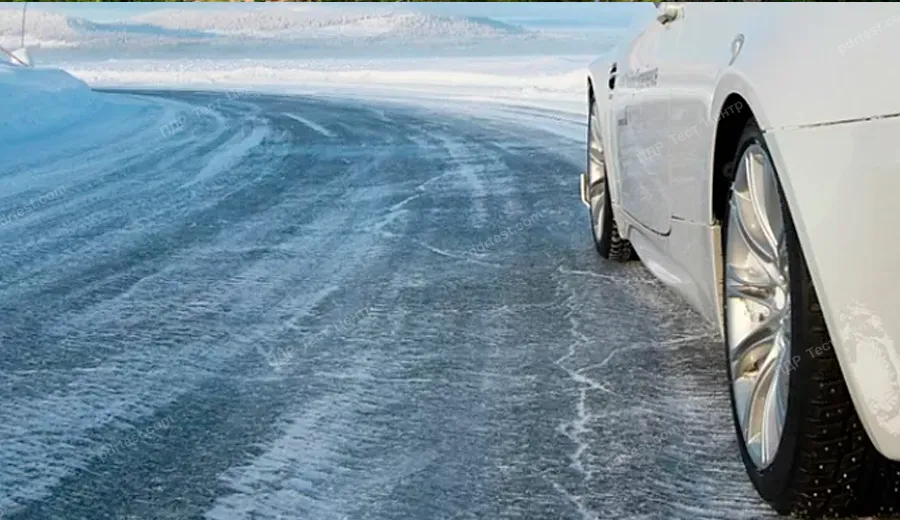
This exam question from the Traffic Rules of Ukraine concerns winter driving safety and driver behavior on slippery surfaces. In icy conditions, the coefficient of tire-road adhesion decreases sharply, so any sudden actions with the pedals or steering increase the likelihood of losing control of the vehicle. In practice, this manifests as increased braking distance, wheel skidding, and the risk of a skid, which directly affects accident rates.
35.41. Is it necessary to remove snow from the roof of the vehicle before starting to drive in winter?
UAЧи потрібно зчистити сніг із даху авто перед початком руху взимку?
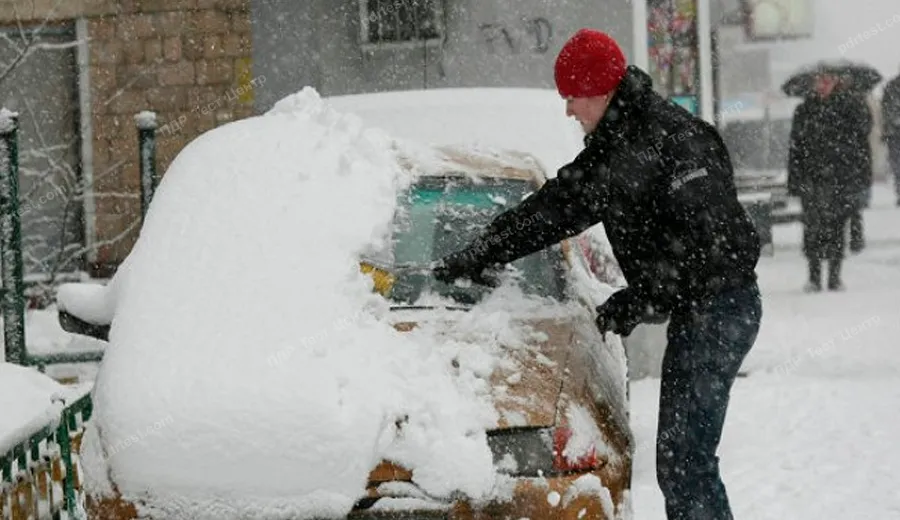
This exam question from the Traffic Rules of Ukraine concerns road safety in winter and the driver's responsibilities before starting to drive. In winter conditions, snow and ice on the vehicle body become a risk factor: during acceleration, braking, or at speed, they can shift or be blown off by the airflow, impair the driver's visibility, or create an obstacle for other vehicles. For the theoretical exam, it is important to understand that even 'ordinary' snow on the roof can turn into a dangerous mass, especially when the car warms up and water or an ice crust forms under the snow layer.
35.42. If there is an urgent need to make a trip during snowfall, what is recommended for the driver to have with them?
UAЯкщо виникла нагальна необхідність здійснити поїздку під час снігопаду, що рекомендовано мати з собою водієві?
Question without image
This exam question from the Traffic Rules of Ukraine checks not so much “knowledge of items in the trunk,” as understanding the principle of safety when driving in difficult weather conditions. Snowfall increases the risk of loss of visibility, skidding, getting stuck in snowdrifts, and prolonged forced stops, so the driver must be prepared for self-help and autonomous waiting for assistance on the road. Such preparation is directly related to safe driving and reducing the consequences of unforeseen situations during the theoretical traffic rules exam.
35.43. Does driving at night require the driver to be more focused and attentive than driving during the daytime?
UAВодіння вночі вимагає від водія більшої зосередженості та концентрації уваги, ніж водіння в денний час?
Question without image
This exam question from the Traffic Rules of Ukraine concerns road safety when driving at night and in conditions of insufficient visibility. At night, the driver receives less information about the road situation: the view is limited by the headlights, it is more difficult to notice pedestrians, cyclists, obstacles, and road surface irregularities, and being dazzled by oncoming lights further reduces perception quality. Therefore, the risks of making mistakes and getting into accidents increase even when traffic intensity seems lower than during the day.
35.44. For drivers with more than 2 years of driving experience, is the maximum permissible blood alcohol concentration 0.3‰?
UAДля водіїв із досвідом водіння понад 2 роки максимально допустима доза алкоголю у крові становить 0,3 проміле?
Question without image
This exam question from the Ukrainian Traffic Rules concerns road safety and driving a vehicle under the influence of alcohol. Even minimal doses of alcohol impair attention, judgment of the traffic situation, and increase reaction time, which is why the traffic rules take a strict approach: the driver must drive soberly, without any “allowances” for experience or driving record.
35.45. Is it safe for the driver of the vehicle to proceed in this situation?
UAЧи безпечно рухатись водієві автомобіля в даному випадку?
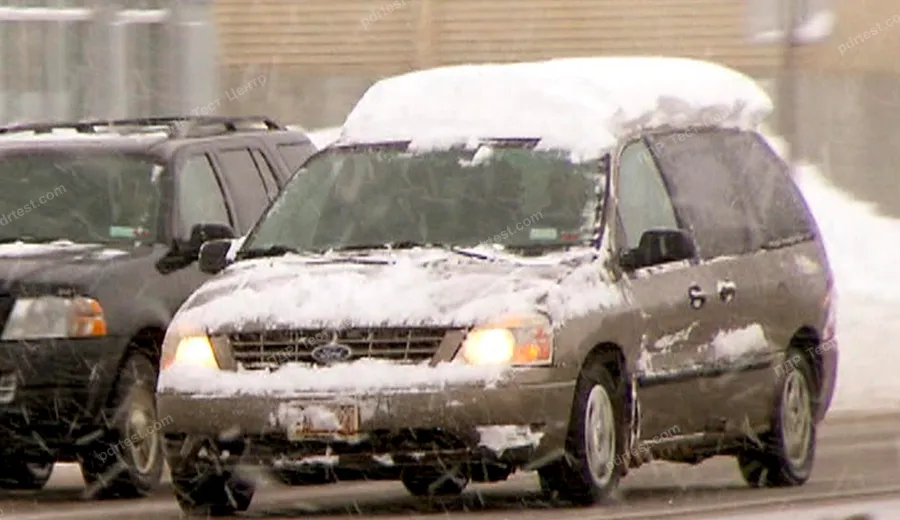
This is an exam question from the Traffic Rules of Ukraine about road safety in winter conditions and the driver’s obligation not to create danger or obstacles for other road users. It reminds that before driving, it is important to assess not only the condition of the vehicle’s components, but also the bodywork and elements that affect the visibility and conspicuity of the car on the road.
35.46. Is driving at night safer than driving during the day because there are relatively fewer vehicles on the road?
UAВодіння вночі є безпечнішим, ніж водіння в денний час, оскільки на дорозі відносно невелика кількість автомобілів?
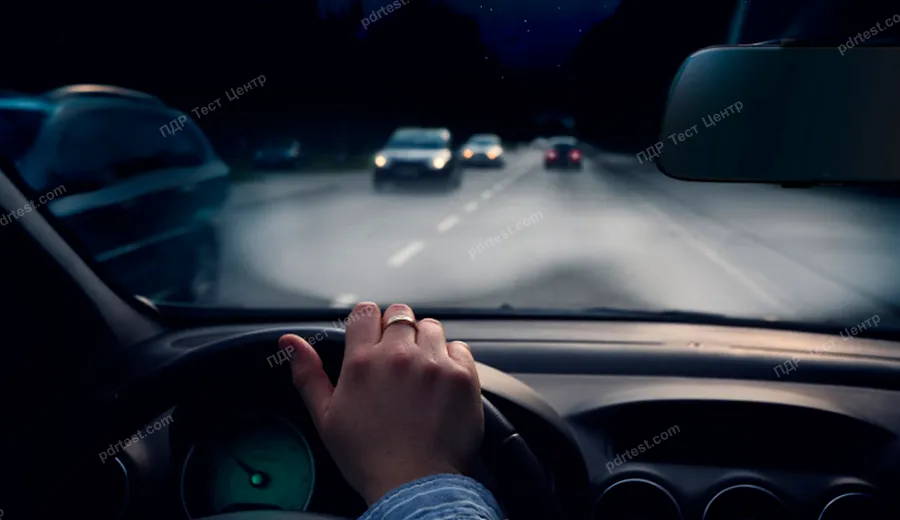
This exam question from the Traffic Rules of Ukraine concerns road safety during nighttime and debunks the common myth that "night driving is safer because there are fewer cars." In practice, the level of risk is determined not only by traffic intensity, but primarily by visibility, the driver's ability to recognize danger in time, and reaction speed. At night, these factors worsen: the road situation is harder to read, headlight glare occurs more often, and fatigue and drowsiness reduce concentration, making trips potentially more dangerous even on an "empty" road.
35.47. The distance to an oncoming vehicle in fog always appears greater, and its speed appears lower than it actually is:
UAДистанція до зустрічного автомобіля в тумані завжди здається більшою, а швидкість меншою, ніж насправді:
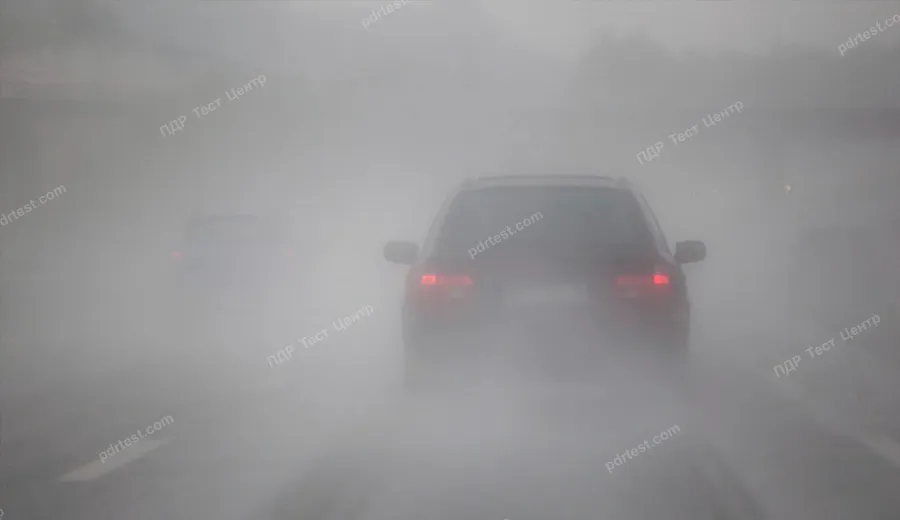
This exam question from the Traffic Rules of Ukraine concerns road safety in difficult weather conditions and checks whether the driver understands how fog affects visual perception and the risk of collision. In conditions of poor visibility, errors in judging distance and speed are especially dangerous, because decisions (braking, refusing a maneuver, choosing a gap) need to be made faster, and there is actually less reaction time than it seems.
35.48. Before setting off on a trip at night, special attention should be paid to:
UAПеред тим, як вирушати у поїздку вночі, особливу увагу слід приділити:
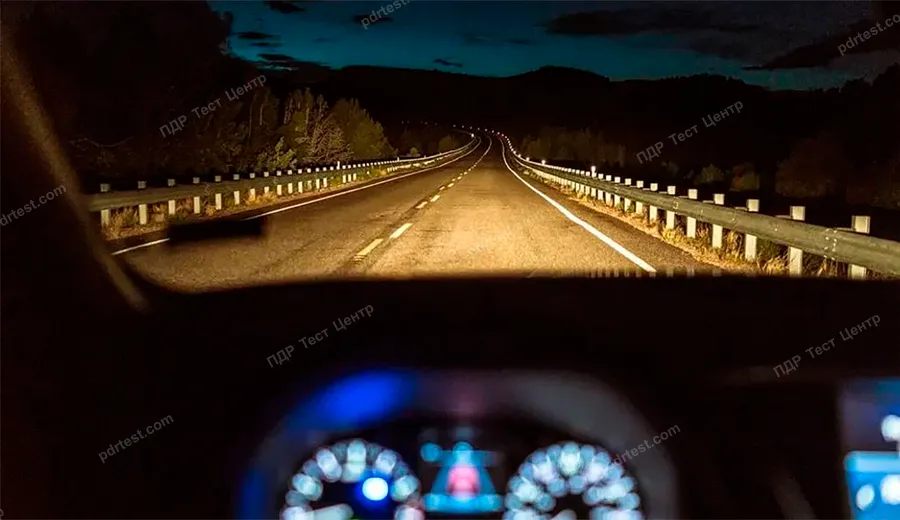
This is an exam question from the Traffic Rules of Ukraine about road safety at night and in conditions of insufficient visibility, when a sharp decrease in visibility becomes a key risk. At night, the driver perceives the road mainly within the beam of the headlights, while other road users assess your car by its position lights, brake lights, and turn indicators. Therefore, properly functioning lighting directly affects both your ability to notice danger in time and the visibility of your car to others.
35.49. Is it sufficient to clean only the windshield of the vehicle in order to start driving in winter?
UAДля того щоб розпочати рух взимку достатньо очистити лобове скло автомобіля:

This is an exam question from the Traffic Rules of Ukraine about basic winter safety and visibility: before starting to drive, the driver must be able to see the road and be clearly visible to others. In winter, snow and ice on the car quickly reduce the transparency of the windows, impair the operation of lighting devices, and can create sudden dangerous situations, so the topic is directly related to accident prevention and responsible trip preparation.
35.50. While driving in winter, all driver’s actions should be as smooth as possible:
UAПід час руху взимку всі рухи водія мають бути якомога плавнішими:
Question without image
This is an exam question from the Traffic Rules of Ukraine about safe driving behavior in winter conditions, when the road surface is often slippery and tire traction is reduced. For road safety in winter, it is critically important to avoid sudden actions, as they can easily cause wheel spin, wheel lock, and skidding, as well as increase the risk of accidents due to longer braking distances. That is why theoretical exams often include situations that test the understanding of the basic logic: 'control is more important than haste.'
35.51. You may use audible warning signals in a populated area at any time if you consider it necessary:
UAВи можете подавати звукові сигнали в населеному пункті будь-коли, якщо вважаєте це необхідним:
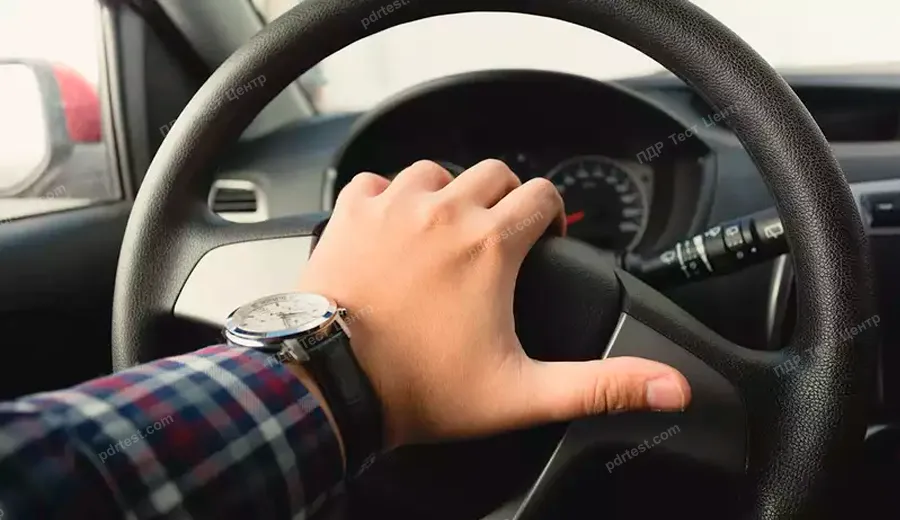
This exam question from the Traffic Rules of Ukraine concerns road safety and driving culture in the city, where excessive noise and sharp sound stimuli can distract drivers and pedestrians and provoke dangerous situations. In populated areas, there are many intersections, crosswalks, and vulnerable road users, so the traffic rules restrict the use of the horn, leaving it only as a tool for warning of real danger.
35.52. Must you finish signaling with the direction indicator immediately while performing the turning maneuver?
UAВи повинні закінчити подавання сигналу світловим покажчиком повороту безпосередньо під час виконання маневру повороту?
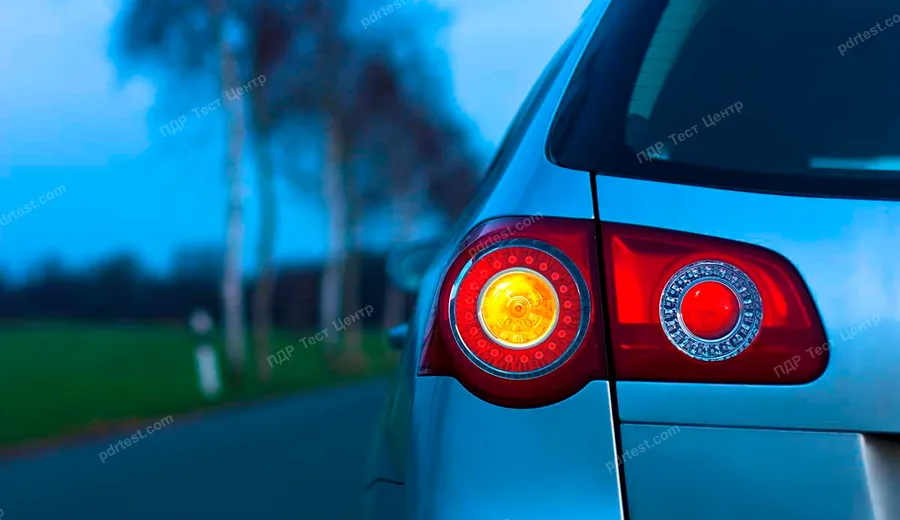
This exam question from the Traffic Rules of Ukraine concerns road safety and proper communication between drivers during maneuvers. Turn signals are not just a formality; they are needed so that other road users can clearly understand your intentions in real time, especially at intersections, when changing lanes, or making a U-turn. Incorrectly turning off the indicator can create the false impression that the driver has changed their mind about performing the maneuver, and may provoke dangerous actions from others.
35.53. Why is it dangerous to leave the roof of a vehicle uncleared of snow in winter?
UAЧому небезпечно залишати дах автомобіля не очищеним від снігу взимку?
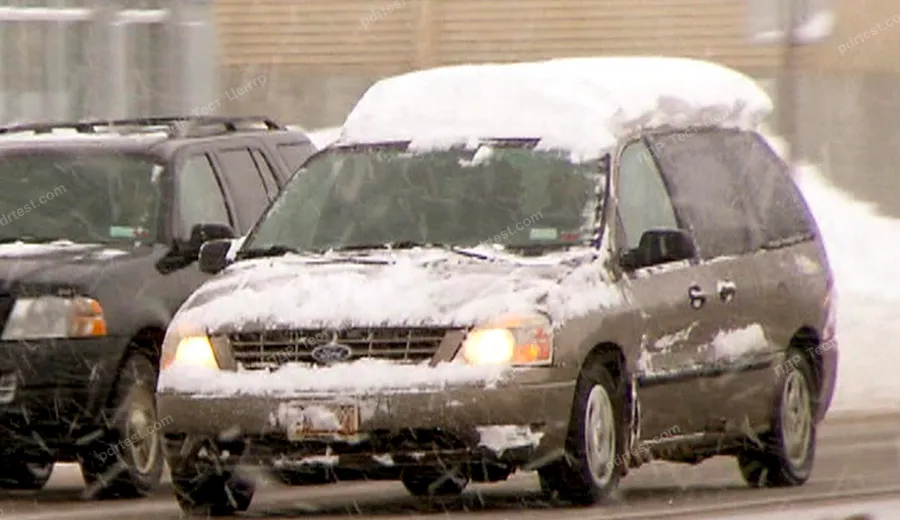
This is an exam question from the Traffic Rules of Ukraine about winter safety and the driver's responsibility for the condition of the vehicle before departure. It emphasizes that even a “trifle” like snow on the roof can turn into a real danger for traffic: it can impair visibility, cause sudden maneuvers or braking, and create an obstacle for other road users. Such situations are often included in the theoretical exam because they are directly related to accident prevention.
35.54. The higher the speed of movement, the greater the distance to the vehicle moving ahead should be?
UAЧим вищою є швидкість руху, тим більшою повинна бути дистанція до транспортного засобу, що рухається попереду?
Question without image
This exam question from the Traffic Rules of Ukraine concerns road safety in traffic flow and the prevention of rear-end collisions. It tests the understanding of a simple but critically important pattern: as speed increases, a vehicle covers more meters during the driver's reaction time, and the braking distance becomes longer, so more space is needed to stop. That is why the correct choice of distance directly affects the safety of maneuvers and the ability to avoid collisions.
35.55. Do you agree that when the speed is doubled, the braking distance increases approximately fourfold:
UAЧи погоджуєтесь Ви з тим, що при збільшенні швидкості у два рази, гальмовий шлях збільшується приблизно у чотири рази:
Question without image
This exam question from the Traffic Rules of Ukraine concerns road safety and the actual ability of a vehicle to stop in time. It highlights a key principle: as speed increases, the demands for controlling the situation on the road, as well as for distance and driver attentiveness, increase sharply. For the theoretical exam, it is important to understand that the danger at high speed lies not only in having less time to react, but also in the significantly greater distance required for a complete stop.
35.56. For the purpose of safe driving, must the driver anticipate changes in the traffic situation?
UAЗ метою безпечного керування транспортним засобом водій повинен прогнозувати зміни дорожньої обстановки:
Question without image
This exam question from the Traffic Rules of Ukraine concerns safe driving and the driver's "proactive" thinking. The road situation is constantly changing: someone is changing lanes, a pedestrian may suddenly step onto the roadway, the traffic light signal switches, and the surface becomes slippery due to rain or ice. That is why, to avoid accidents, it is important not only to react to events but also to anticipate their development in advance, maintaining a margin of time and distance for safe action.
35.57. The permitted blood alcohol level for a driver in Ukraine must not exceed:
UAДозволений рівень алкоголю в крові водія в Україні не повинен перевищувати:
Question without image
This exam question from the Traffic Rules of Ukraine concerns road safety and driver responsibility: driving after consuming alcohol directly increases the risk of accidents due to impaired attention, coordination, and reaction speed. For the theoretical exam, it is important to understand not "by eye," but according to the clear criterion applied during police checks and medical examinations.
35.58. Drivers with more than 10 years of driving experience may use a mobile phone while driving, holding it in their hand:
UAВодії із досвідом водіння понад 10 років можуть під час руху користуватись телефоном, тримаючи його в руці:

This is an exam question from the Traffic Rules of Ukraine concerning road safety and driver distraction while driving. Using a phone held in the hand at the wheel reduces control over the vehicle, forces the driver to operate with one hand, and takes attention away from the road, which increases the risk of accidents even in simple situations in traffic, at intersections, or near pedestrian crossings.
35.59. How should you act if you encounter aggressive driving behavior from drivers ahead?
UAЯк Ви повинні вчинити, якщо зіштовхнулися з агресивною манерою водіння водіїв, що рухаються попереду?
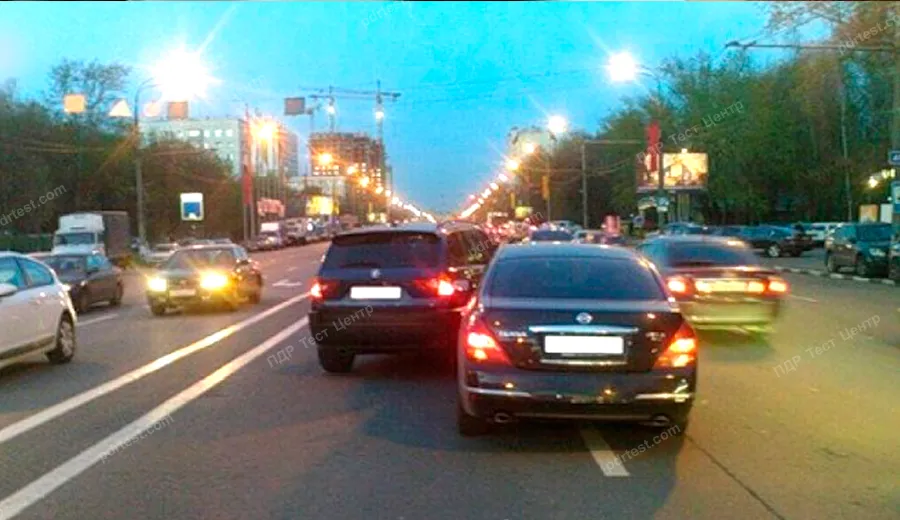
This is an exam question from the Traffic Rules of Ukraine about safe interaction with other road users when their behavior becomes unpredictable and dangerous. Aggressive driving ahead (sudden lane changes, dangerous maneuvers, abrupt braking) increases the risk of an accident, so the correct response should be aimed not at "retaliation" or conflict, but at reducing the likelihood of a collision and maintaining control over the situation.
35.60. Is this vehicle moving in reverse?
UAЦей автомобіль здійснює рух заднім ходом?
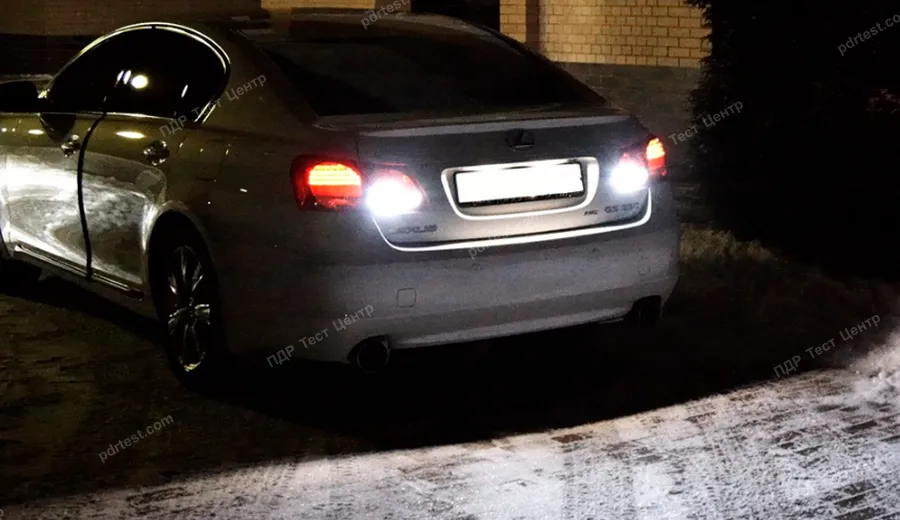
This exam question from the Traffic Rules of Ukraine checks attentiveness to the light signals of vehicles and understanding of how they warn other road users about the driver's intentions. The topic is directly related to maneuvering safety, as reversing is potentially more dangerous due to limited visibility and requires increased caution from the driver and anticipation from others.
35.61. A wild animal suddenly appeared on the road. What are your actions?
UAНа дорозі раптово з'явилася дика тварина, Ваші дії:

This is an exam question from the Traffic Rules of Ukraine about road safety in a situation of sudden danger on the roadway. The appearance of a wild animal is a typical example of an unpredictable obstacle, where a driver's mistake can lead to loss of control, entering the oncoming lane, or colliding with other road users. Therefore, during the theoretical exam, special attention is paid to the ability to choose the least risky action.
35.62. If, due to heavy rain within a populated area, you are unable to continue driving, you must:
UAЯкщо через сильну зливу в межах населеного пункту, Ви не можете продовжувати рух, необхідно:
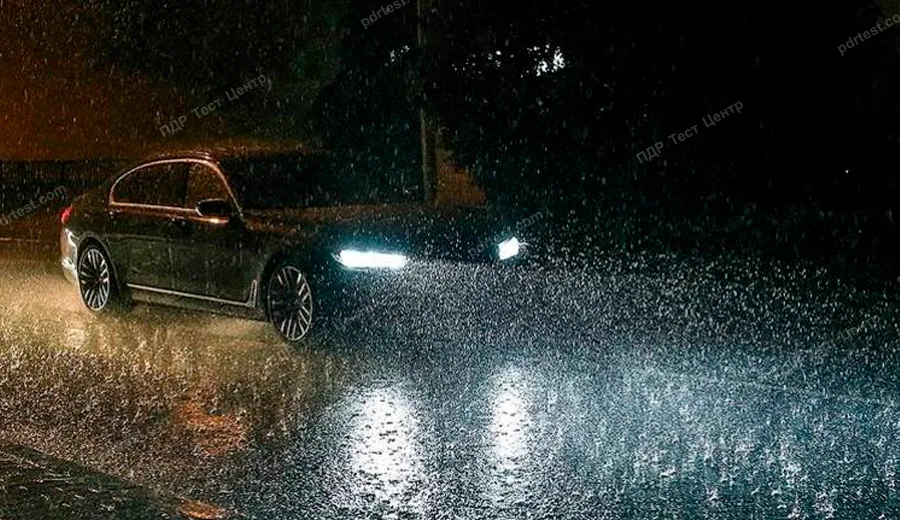
This is an exam question from the Traffic Rules of Ukraine about driving safety in difficult weather conditions, when heavy rain sharply reduces visibility and road traction. In such situations, the main task of the driver is not to continue driving "blindly," but to act in a way that does not create additional danger for themselves, passengers, or other road users.
35.63. Is it allowed to sharply increase speed while driving in rainy weather?
UAЧи можна різко збільшувати швидкість під час руху в дощову погоду?
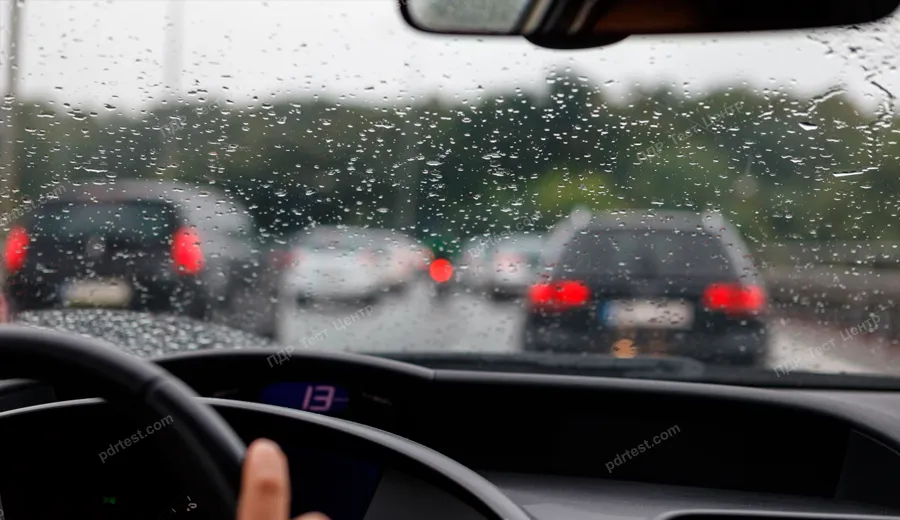
This exam question from the Traffic Rules of Ukraine checks the understanding of safe speed and how weather conditions affect the grip and controllability of a vehicle. During rain, a water film and puddles appear on the road, causing tires to have poorer contact with the surface, increasing the risk of skidding, sliding, and aquaplaning. Therefore, any sudden actions, including rapid acceleration, are dangerous in such conditions.
35.64. Is it necessary to reduce speed before and after passing this road sign?
UAЧи потрібно зменшити швидкість до та після проїзду цього дорожнього знаку?
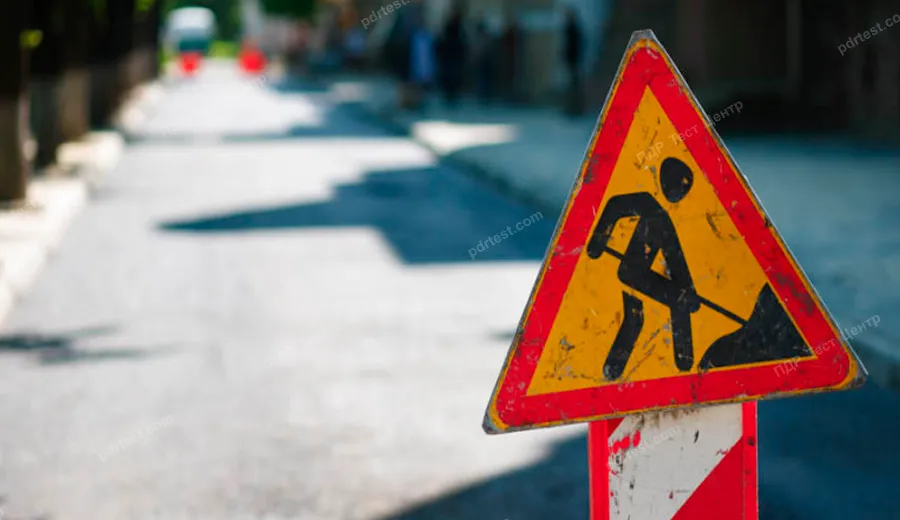
This is an exam question from the Traffic Rules of Ukraine about safe speed and driver behavior in conditions of increased danger. Road repair sections are often accompanied by narrowing of the roadway, uneven surfaces, temporary traffic patterns, lack of markings, the presence of people, and road construction equipment. That is why the correct choice of speed near such places directly affects the safety of all road users and is a typical topic for the theoretical exam.
35.65. You are approaching an intersection, your actions:
UAВи наближаєтесь до перехрестя, Ваші дії:
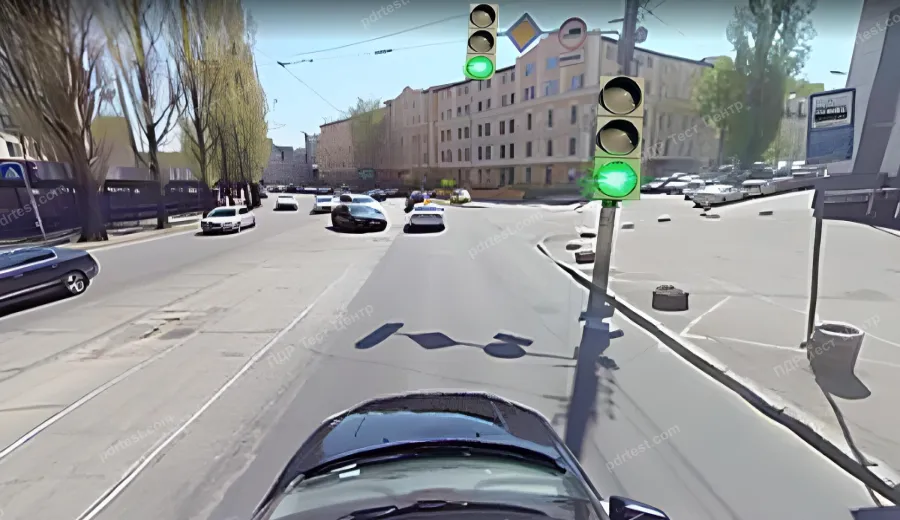
This is an exam question from the Traffic Rules of Ukraine about safe driver behavior when approaching an intersection, where the traffic situation changes most rapidly. It emphasizes the principle of predictability and readiness for risks: the driver must not only “see” the current situation but also anticipate imminent changes to avoid conflicts and accidents. This approach directly affects the successful completion of the theoretical exam, as it demonstrates an understanding of the logic of traffic rules rather than mechanical memorization of signals.
35.66. You have set off on a rather long trip. After some time, you begin to feel tired. What should you do?
UAВи вирушили в доволі далеку поїздку. Через деякий час ви починаєте відчувати втому. Що Вам слід зробити?
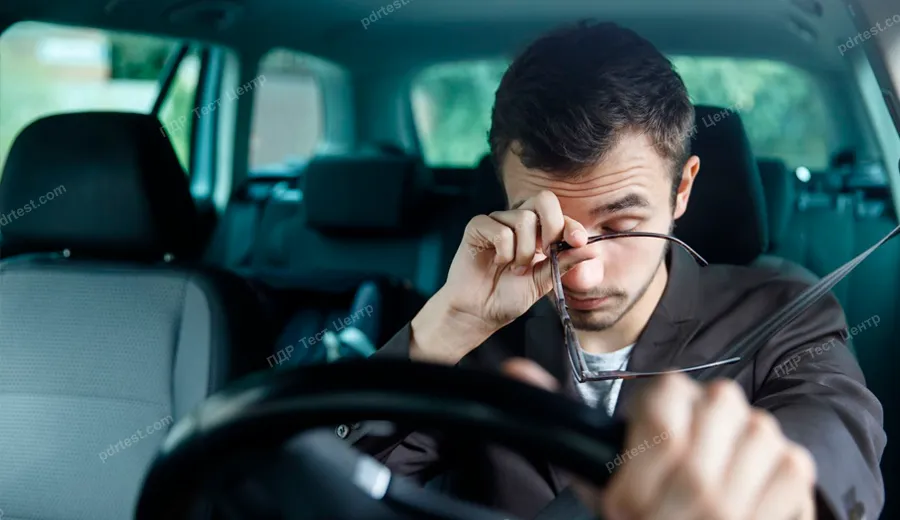
This is an exam question about road safety and driver self-control during long trips. According to the Traffic Rules of Ukraine, fatigue and drowsiness are equated with a dangerous condition because they imperceptibly reduce attention, slow down reaction time, and impair coordination. At high speeds and outside populated areas, even a brief loss of concentration can lead to an accident, so it is important to understand for the theoretical exam that you must not "endure" fatigue while driving.
35.67. If you feel very tired while driving, you:
UAЯкщо Ви відчуваєте сильну втому за кермом, Ви:
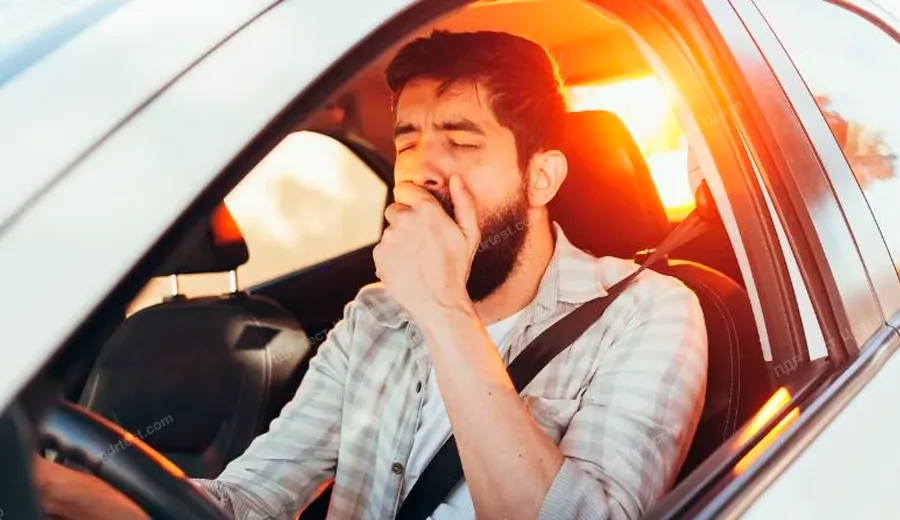
This exam question from the Traffic Rules of Ukraine concerns road safety and responsible driving when the driver's physical condition no longer allows for driving without risk. Fatigue and drowsiness directly impair attention, reaction, and coordination, increasing the likelihood of leaving your lane, missing signs, and making dangerous delayed maneuvers. That is why the theoretical exam checks not only knowledge of signs or markings, but also the ability to properly assess your own condition and stop driving in time.
35.68. What is the best way to avoid colliding with other vehicles, people, or animals when entering the carriageway from the shoulder?
UAЯкий найкращий спосіб уникнути наїзду на інші транспортні засоби, людей чи тварин під час виїзду на проїзну частину з узбіччя?
Question without image
This is an exam question from the Traffic Rules of Ukraine about safe starting and entering the roadway from the shoulder. The situation is dangerous because the main flow of traffic is approaching from behind, and there may be pedestrians, cyclists, or animals nearby. To avoid collisions, the driver should not "guess" the situation, but clearly control the space around the vehicle, especially behind and to the sides, where conflict situations most often arise.
35.69. If you have recently obtained the right to drive a vehicle and driving at night causes you fear or uncertainty, it is best to:
UAЯкщо ви нещодавно отримали право на керування транспортним засобом і поїздки за кермом вночі викликають у Вас страх або невпевненість, найкраще:
Question without image
This is an exam question from the Traffic Rules of Ukraine about driving safety at night and in conditions of limited visibility. For a novice driver, night driving is objectively more difficult: the field of view is narrowed, it is harder to recognize road markings, pedestrians, signs, and road irregularities in time, and there is also the added factor of being blinded by the headlights of oncoming vehicles. That is why the traffic rules emphasize the driver's attentiveness and the choice of such a speed that allows constant control of the vehicle and the ability to stop within the visible road area.
35.70. During long trips, the best way to prevent drowsiness is:
UAПід час тривалих поїздок найкращий спосіб запобігти сонливості це:

This exam question from the Traffic Rules of Ukraine concerns road safety during long trips and one of the most dangerous risk factors on the road — driver fatigue and drowsiness. Falling asleep at the wheel often happens unnoticed, and even a few seconds of "switching off" means driving without control, which sharply increases the likelihood of an accident, especially outside populated areas and at higher speeds.
35.71. Seat belts are the most effective means of preventing injury for the driver and passengers:
UAРемені безпеки є найефективнішим засобом попередження травмування для водія та пасажирів:
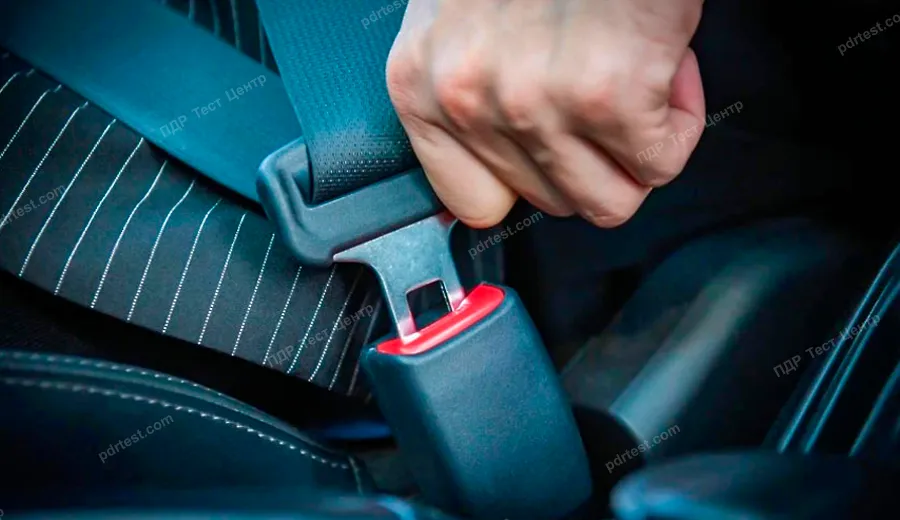
This exam question from the Traffic Rules of Ukraine concerns passive safety in a vehicle and how simple actions by the driver and passengers reduce the consequences of road accidents. In real driving conditions, the risk of sudden braking or collision always exists, even at low speeds in the city, so the topic of seat belts is directly related to road safety and injury prevention.
35.72. In which case is the use of the audible warning signal while driving in a populated area appropriate:
UAУ якому випадку подання звукового сигналу під час руху в населеному пункті є доречним:
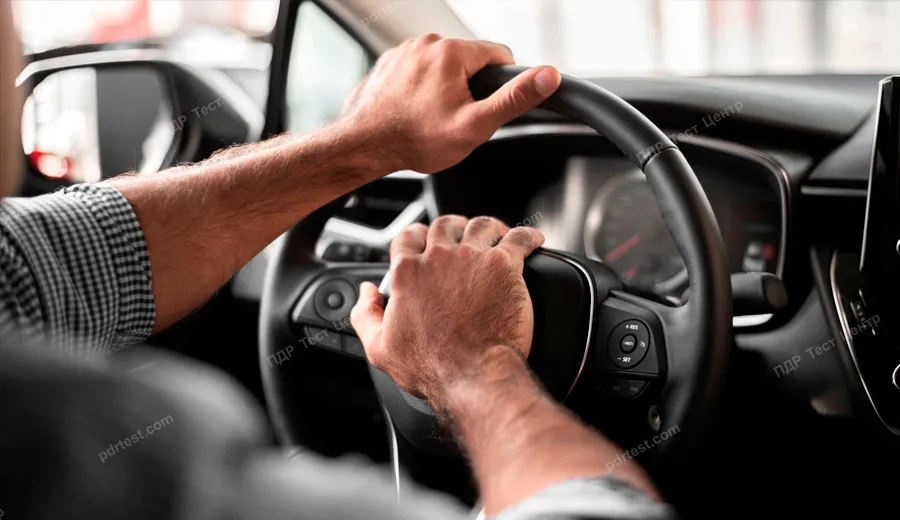
This exam question from the Traffic Rules of Ukraine concerns road safety within populated areas and the proper use of warning signals. In the city, the horn is not a “regular” means of interaction between drivers: it creates unnecessary noise and can frighten pedestrians, so the traffic rules restrict its use while driving.
35.73. If an oncoming vehicle is approaching you with high beam headlights on, you must:
UAЯкщо назустріч вам наближається транспортний засіб з увімкненим дальнім світлом фар, Ви повинні:
Question without image
This is an exam question from the Traffic Rules of Ukraine about safe driver behavior at night during an oncoming encounter, when there is a risk of being blinded by headlights. The topic is directly related to road safety: a brief loss of normal vision due to bright light reduces the ability to assess speed, distance, and keep the car within its lane, thereby increasing the likelihood of entering the oncoming lane or hitting an obstacle.
35.74. Proper adjustment of head restraints can significantly reduce the risk of injury:
UAПравильне налаштування підголівників може значно зменшити ризик травмування:
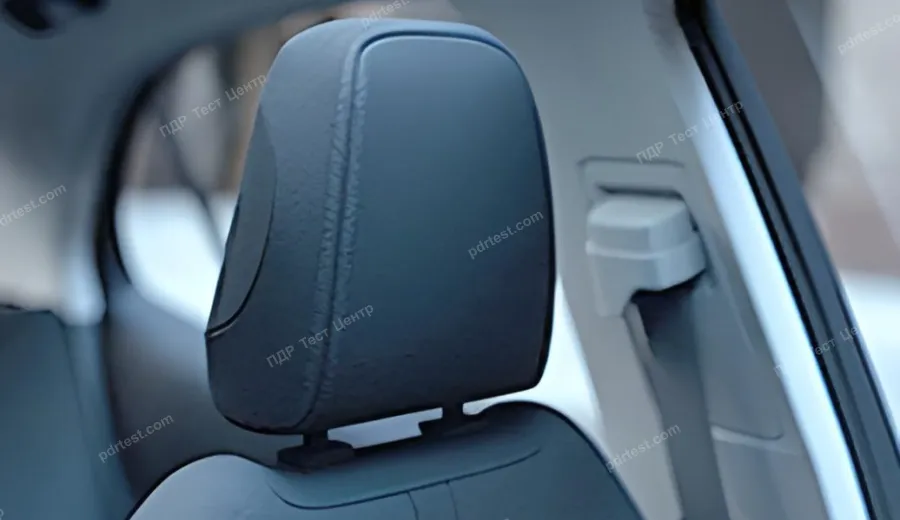
This exam question from the Traffic Rules of Ukraine concerns passive safety in a car and reducing the consequences of traffic accidents. A properly adjusted headrest helps protect the head and neck, especially during a rear-end collision, when inertia causes the head to jerk backward sharply and the so-called whiplash injury of the cervical spine may occur. Understanding this topic is important not only for the theoretical exam but also for everyday safe driving.
35.75. What do white or clear lights at the rear of a vehicle indicate:
UAЩо означають білі або прозорі вогні в задній частині автомобіля:
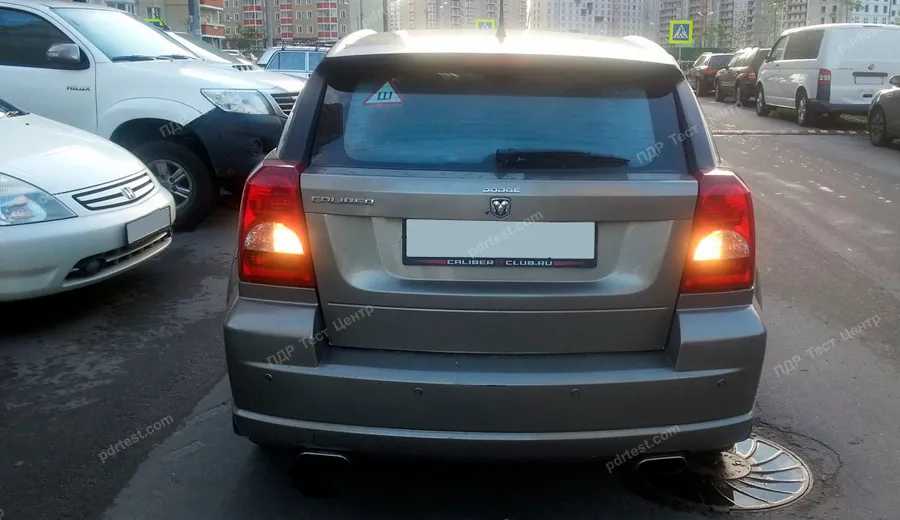
This is an exam question from the Traffic Rules of Ukraine concerning road safety and the correct identification of a vehicle’s light signals. In real-life situations, rear lights often indicate a driver’s intention to perform a maneuver, and misinterpreting the signal can lead to hitting a pedestrian, a collision in a parking lot, or a dangerous situation in a courtyard.
35.76. Insufficient tire pressure increases the braking distance of a vehicle:
UAНедостатній тиск в шинах збільшує гальмівний шлях автомобіля:
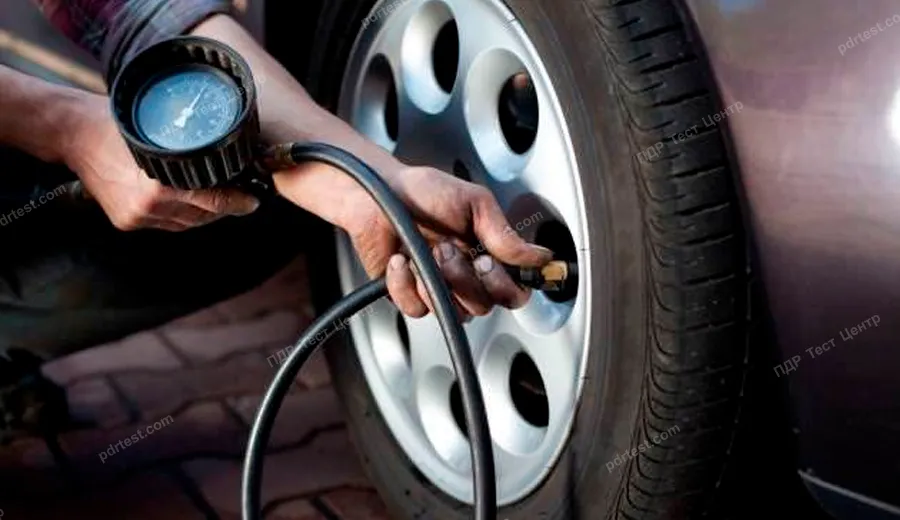
This exam question from the Traffic Rules of Ukraine concerns road safety in relation to the technical condition of the vehicle and its impact on braking efficiency. In real conditions, even properly functioning brakes do not guarantee a short stopping distance if the wheels have poor traction with the road, so monitoring tire pressure is directly related to safe following distance and predictable handling, especially on wet, slippery, or uneven surfaces.
35.77. Insufficient tire pressure contributes to fuel economy:
UAНедостатній тиск в шинах сприяє економії пального:
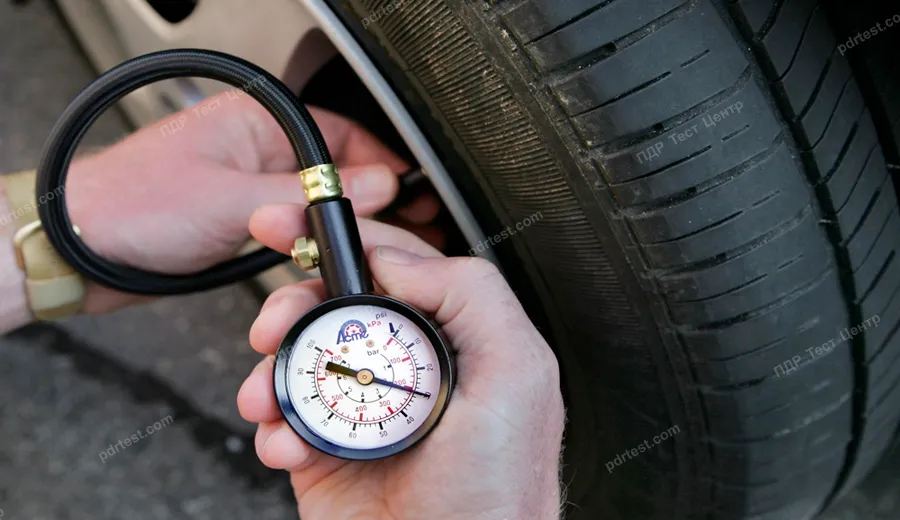
This exam question from the Traffic Rules of Ukraine concerns the technical condition of a vehicle and its simultaneous impact on both road safety and fuel efficiency. In real-world conditions, even minor deviations in the maintenance of wheels and tires affect handling, traction, and braking, and are therefore critically important for the driver during daily vehicle operation as well as for the theoretical exam.
35.78. The greatest danger of large-sized vehicles is that they:
UAНайбільша небезпека великогабаритних транспортних засобів у тому, що вони:
Question without image
This is an exam question from the Traffic Rules of Ukraine about road safety when interacting with trucks, buses, and road trains. Its purpose is to ensure that future drivers understand: the greatest risks near large vehicles are often not related to speed or “worse” brakes, but to the fact that the driver of such a vehicle physically cannot see part of the space around them. It is precisely due to limited visibility that the likelihood of dangerous situations increases during overtaking, driving in dense traffic, on multi-lane roads, and when maneuvering.
35.79. When another vehicle begins a lane change into your lane from the lane on the right, what should you do?
UAКоли інший автомобіль розпочав маневр перестроювання у вашу смугу зі смуги праворуч, Ваші дії:
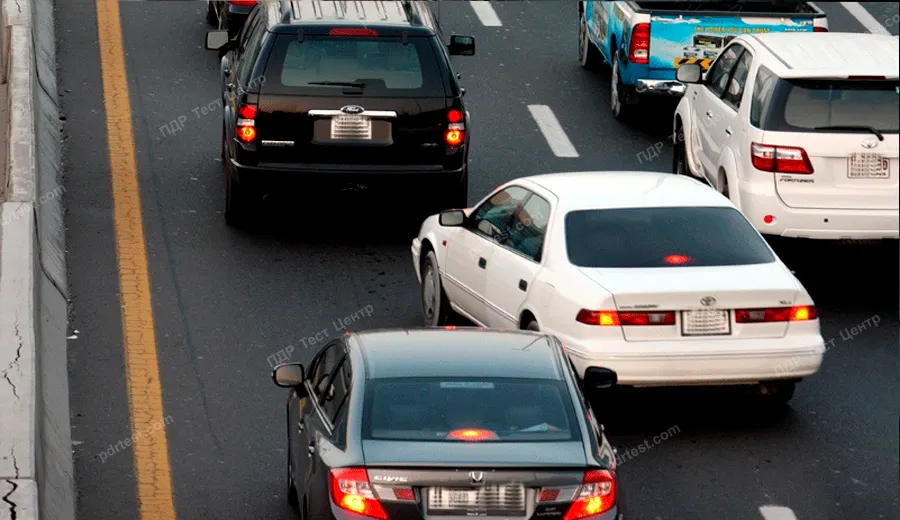
This is an exam question from the Traffic Rules of Ukraine about safe interaction in traffic flow when there is a conflict of trajectories during lane changes. In real conditions, even if you have the right of way, it is important to act in a way that does not create danger and reduces the risk of a side collision. Such situations often occur in heavy traffic, so understanding them directly affects your result on the theoretical exam and your daily safety.
35.80. If the driver of the white car suddenly starts a lane change maneuver into your lane from the lane on the left, what should you do?
UAЯкщо водій білого автомобіля різко розпочав маневр перестроювання у вашу смугу зі смуги ліворуч, Ваші дії:
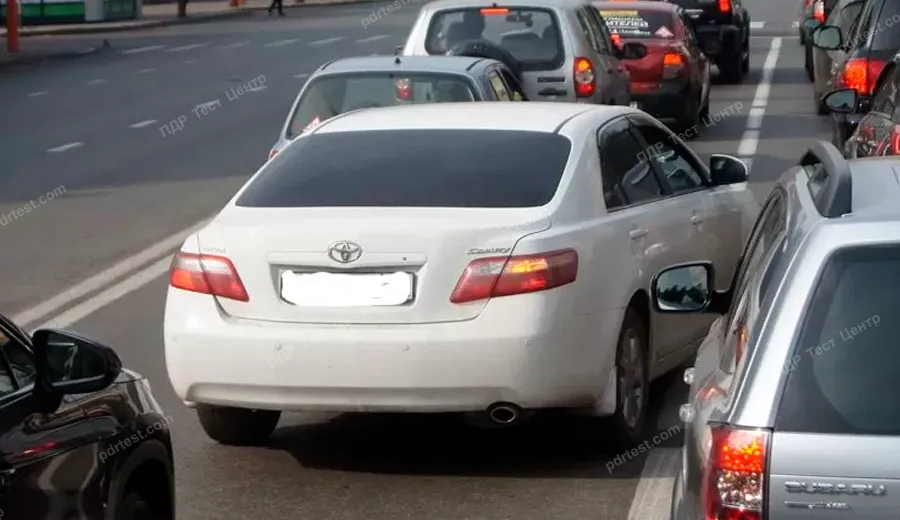
This is an exam question from the Traffic Rules of Ukraine about road safety in traffic flow and the correct response to sudden danger when another driver creates a conflict of trajectories while driving in adjacent lanes. In such situations, the theoretical exam tests not the “ability to defend your right of way,” but the ability to choose actions that actually reduce the risk of an accident and correspond to the basic principle of traffic rules: not to create danger and to respond to changes in the situation in advance.
35.81. What is the best way to make sure there are no vehicles or cyclists in your blind spot?
UAЯкий найкращий спосіб переконатися, що у вашій сліпій зоні немає транспортних засобів чи велосипедистів?
Question without image
This is an exam question from the Traffic Rules of Ukraine about safe maneuvering and monitoring the traffic situation around the vehicle. The topic is directly related to the risks of "blind spots," where motorcycles, cyclists, or cars in the adjacent lane may be located. It is precisely because of these invisible areas that dangerous situations most often occur during lane changes, turns, or when pulling out, so questions about the correct ways to check visibility are regularly included in the theoretical driving test.
35.82. Your head and chest are restrained from hitting the dashboard or windshield during a collision by:
UAВашу голову та груди від удару об приладову панель або лобове скло під час зіткнення тримає:
Question without image
This exam question from the Traffic Rules of Ukraine concerns passive safety in a car and how to protect the driver and passengers during sudden braking or an accident. In a real crash, the car may stop instantly, but the human body continues moving forward due to inertia, so the greatest risk is associated with the head and chest striking interior elements. That is why the traffic rules pay special attention to restraint systems in the seat and their mandatory use.
35.83. Checking your blind spots is especially important:
UAПеревірка Ваших «сліпих зон» особливо важлива:
Question without image
This is an exam question from the Traffic Rules of Ukraine about maneuvering safety and monitoring the traffic situation around the vehicle. Its essence is that “blind spots” are one of the most common causes of road accidents: a motorcyclist, cyclist, or another car may end up in them, and they are not visible in the mirrors. Therefore, for real safety, it is not enough for the driver to just look in the mirrors and turn on the turn signal — an additional check of the space nearby with a quick turn of the head before changing trajectory is necessary.
35.84. Pedestrians must refrain from crossing the carriageway if a vehicle with flashing beacons is approaching:
UAПішоходи повинні утриматись від переходу проїзної частини, якщо наближається транспортний засіб з проблисковими маячками:
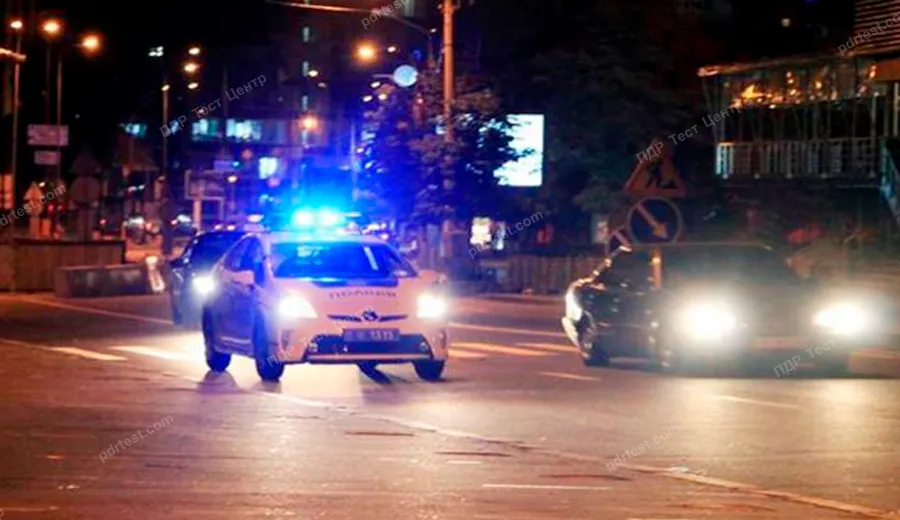
This exam question from the Traffic Rules of Ukraine concerns pedestrian safety and the priority of special vehicles during their emergency movement. In real-life situations, the ability to quickly recognize flashing beacons and respond correctly reduces the risk of being hit and helps avoid creating obstacles for emergency services that may be responding to a call.
35.85. What should you do if, while driving at night, an oncoming vehicle is approaching with high beam headlights on and is dazzling you?
UAЩо робити, якщо під час руху вночі зустрічний автомобіль рухається із увімкненим дальнім світлом фар та засліплює Вас?
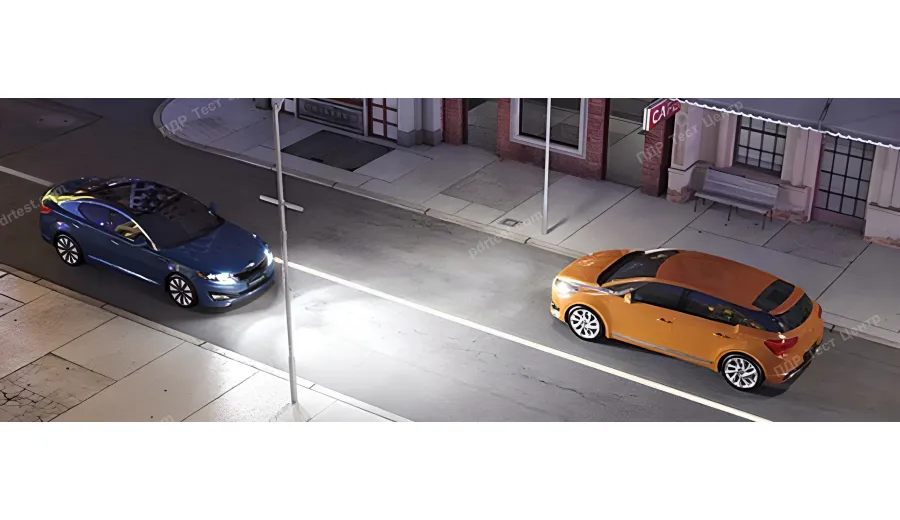
This is an exam question from the Traffic Rules of Ukraine about driving safety at night and the correct actions a driver should take when blinded by oncoming headlights. Such a situation is a sudden change in the road environment: if you look directly at the source of the bright light, you may temporarily lose orientation, fail to keep your lane, and create the risk of a head-on collision or running off the road. Therefore, the theoretical exam tests not 'tricks,' but the basic skill of maintaining control over your trajectory, even when visibility suddenly worsens.
35.86. If there is an oncoming vehicle in your lane, is it permitted to use the audible warning device in a populated area?
UAЯкщо на вашій смузі є зустрічний транспортний засіб чи дозволено подати звуковий сигнал в населеному пункті?
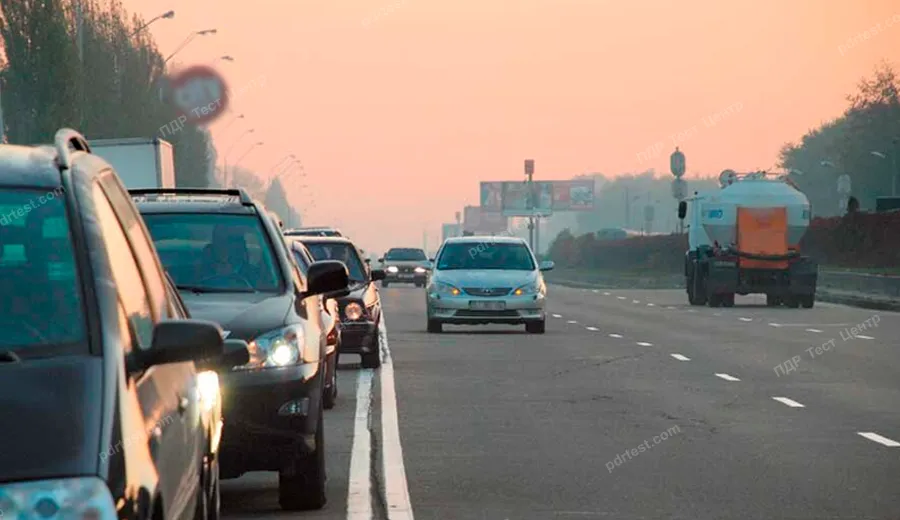
This is an exam question from the Traffic Rules of Ukraine about road safety and the proper use of warning devices in a populated area. It emphasizes that the horn on the road is a tool for preventing danger, not a way to express emotions, and the theoretical exam tests understanding of exceptions to general prohibitions.
35.87. The use of the air conditioner while driving affects the operation of the vehicle, namely:
UAВикористання кондиціонера під час руху впливає на роботу автомобіля, а саме на:
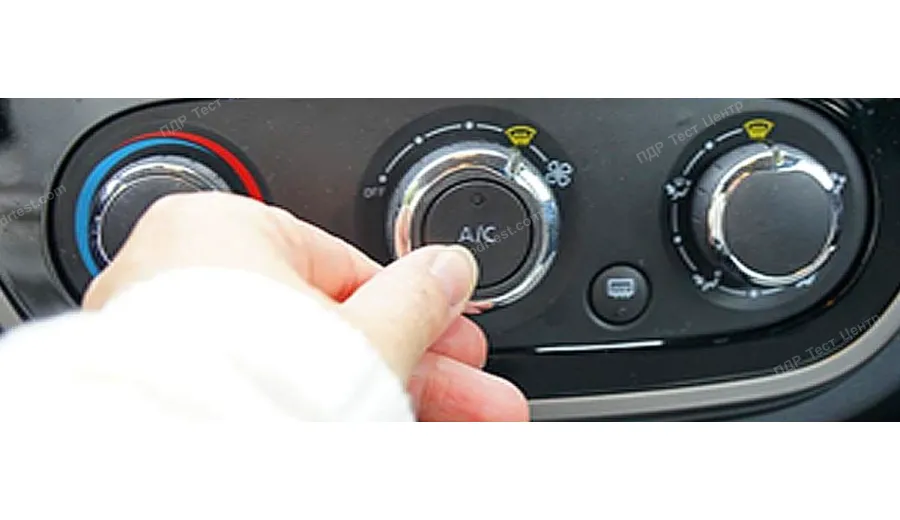
This exam question from the Traffic Rules of Ukraine concerns the practical operation of a vehicle and the impact of additional equipment on its performance. In real driving conditions, the driver must take into account that comfort systems, such as the air conditioner or climate control, do not operate “for free” for the engine: they create an additional load, which indirectly affects fuel consumption and environmental friendliness, and therefore is important for everyday safe and rational driving.
35.88. Does the use of the air conditioner while driving affect fuel consumption?
UAЧи впливає використання кондиціонера під час руху авто на витрату палива?
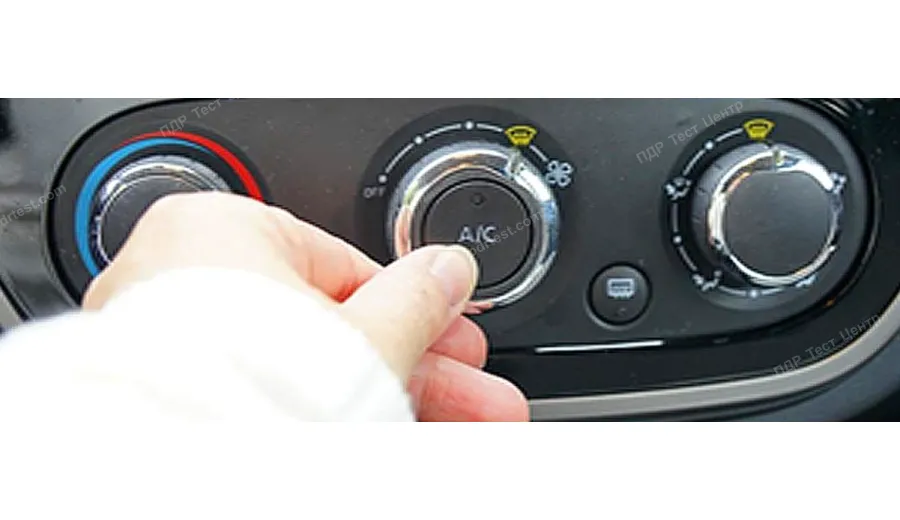
This exam question from the Traffic Rules of Ukraine concerns not so much maneuvering or road signs, but rather basic knowledge about vehicle operation while driving and the impact of additional equipment on engine performance. For safe and responsible driving, it is important to understand that any additional load changes the operating mode of the power unit, and therefore affects fuel consumption and environmental indicators, which are indirectly related to the requirements of traffic regulations.
35.89. For proper anticipation of the traffic situation and safe further driving, you should focus your attention and gaze more on:
UAЗ метою належного прогнозування дорожньої обстановки і безпечного подальшого руху, Ви повинні більше розподілити увагу погляд на:
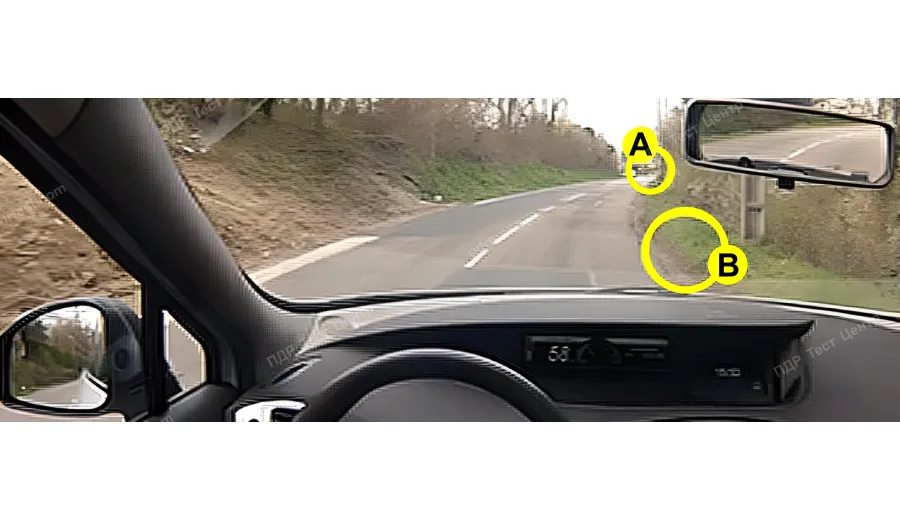
This is an exam question from the Traffic Rules of Ukraine about proper attention distribution and forecasting the traffic situation while driving in conditions of limited visibility. In real driving, the ability to 'lead your gaze' to where danger may soon arise directly affects safety, speed selection, and readiness to brake, which are regularly checked in the theoretical exam.
35.90. Are you permitted to overtake in this traffic situation?
UAЧи дозволено Вам здійснити обгін у даній дорожній ситуації?
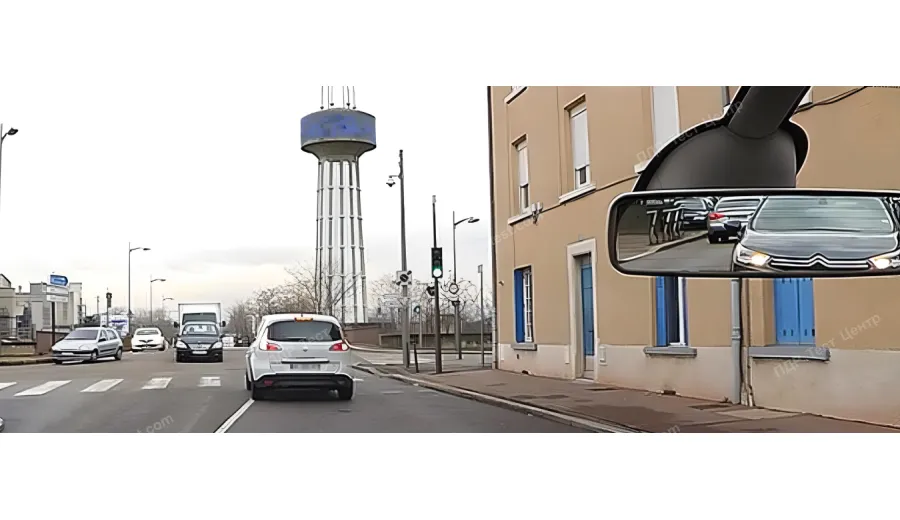
This is an exam question from the Traffic Rules of Ukraine concerning the safe execution of maneuvers in high-risk areas where the paths of vehicles and pedestrians intersect simultaneously. Overtaking is one of the most dangerous maneuvers, as it involves entering the oncoming traffic lane and requires sufficient visibility and space to complete the action without conflicts with other road users.
35.91. A child should be seated in the car from the side of:
UAСадити дитину в авто потрібно з боку:
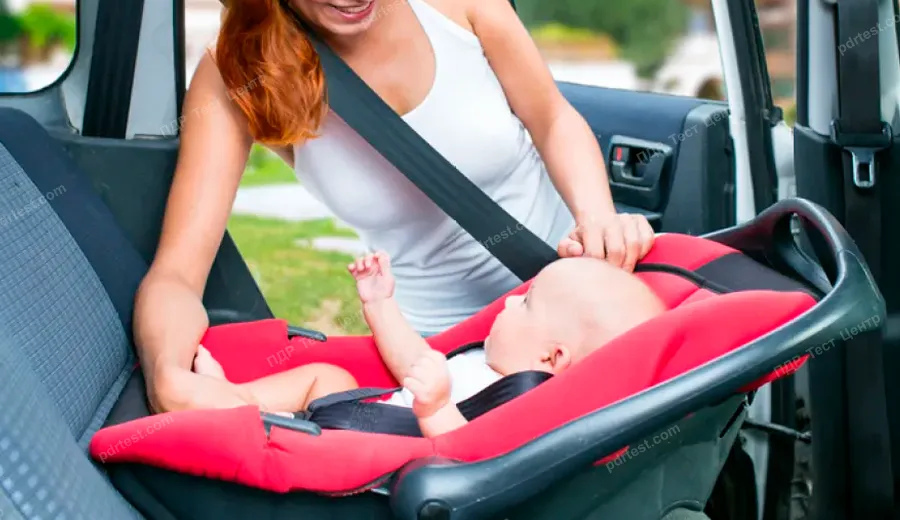
This exam question from the Traffic Rules of Ukraine checks the basic culture of safe passenger boarding and is directly related to reducing risks near a stationary vehicle. In real traffic, the greatest danger arises when doors are opened towards the flow of cars or when a child may step into the direction of moving vehicles. Therefore, the traffic rules pay special attention to which side and under what conditions boarding and alighting are allowed.
35.92. Is it necessary to reduce speed in this case?
UAЧи потрібно у даному випадку зменшити швидкість?
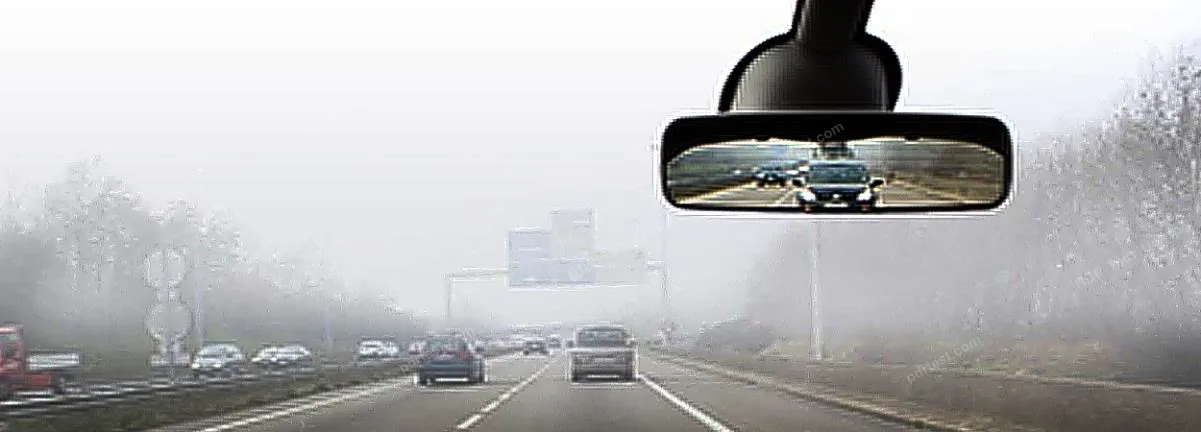
This exam question from the Traffic Rules of Ukraine tests a basic safe driving skill: the ability to adjust speed according to actual road conditions. In fog, twilight, rain, or snowfall, the driver sees less and therefore has less time to react and brake, so the correct choice of speed directly affects the risk of an accident.
35.93. Did the driver correctly adjust the seat and steering wheel position before starting to drive in this case?
UAЧи правильно в даному випадку водій відрегулював положення сидіння та рульового колеса перед початком руху?
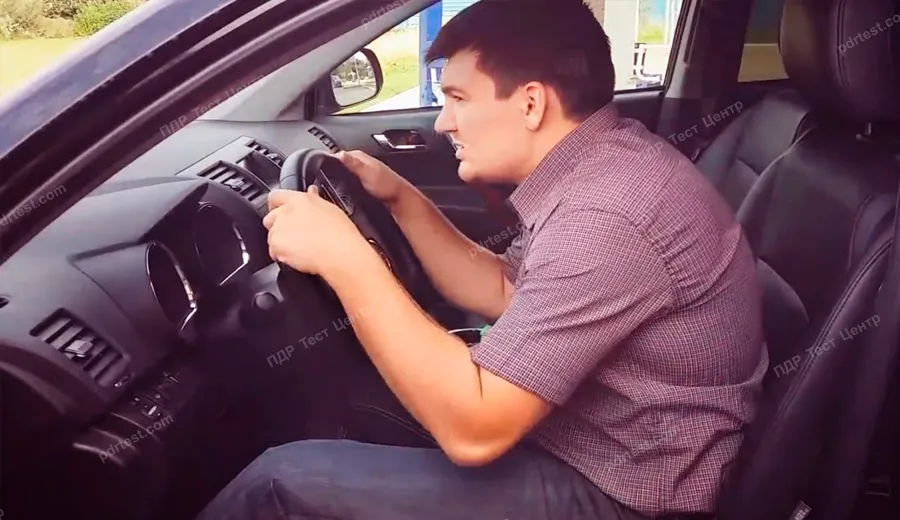
This is an exam question from the Traffic Rules of Ukraine (PDR) concerning road safety even before the trip begins: whether the driver has prepared the workplace in such a way as to confidently control the vehicle and not create danger. Proper seating at the wheel directly affects reaction speed, accuracy of hand and foot movements, visibility, and fatigue level, and therefore is important both for daily driving and for the theoretical exam.
35.94. Is the driver's seating position comfortable and correct?
UAЧи комфортна та правильна посадка водія?
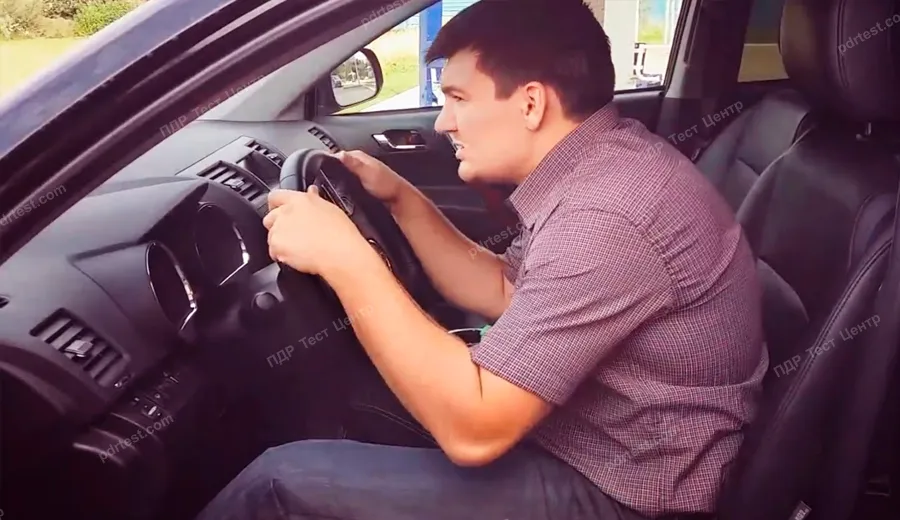
This exam question from the Traffic Rules of Ukraine concerns road safety through the proper preparation of the driver for driving. The seating position behind the wheel affects not only comfort, but also the ability to react quickly, operate the steering wheel and pedals accurately, and maintain control in a critical situation. That is why the theoretical exam addresses not the “convenience” of the posture, but its compliance with the requirements of safe driving and driver discipline.
35.95. Is it necessary to increase the wiper speed when overtaking a truck during light rain?
UAЧи необхідно збільшити потужність склоочисника у разі випередження вантажного автомобіля під час невеликого дощу?
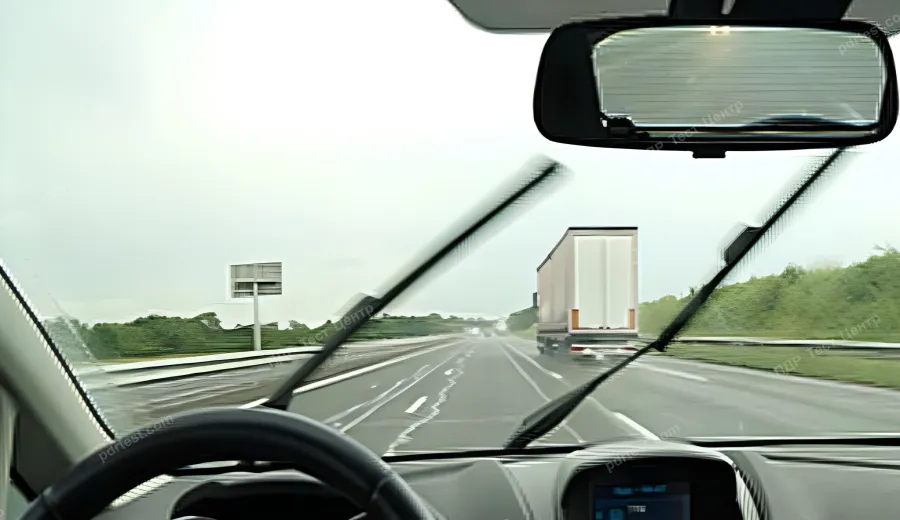
This is an exam question from the Traffic Rules of Ukraine about road safety in precipitation conditions and maintaining sufficient visibility during a maneuver. Even light rain makes the surface wet, and dirt and water from the road easily get onto the windshield, so proper use of wipers directly affects situation control and safe driving.
35.96. The potential danger zone for you as the driver of this vehicle is:
UAЗоною потенційної небезпеки для Вас, як водія даного транспортного засобу, є:
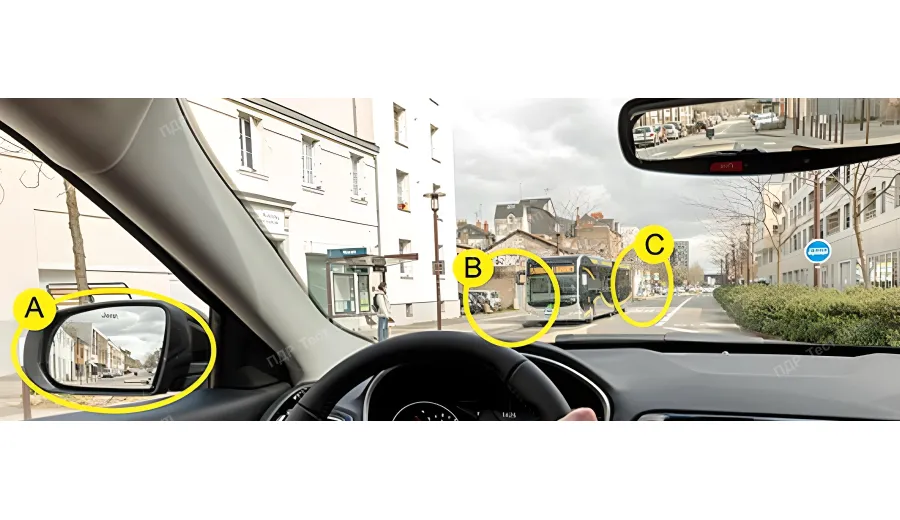
This is an exam question from the Traffic Rules of Ukraine about road safety and the driver’s ability to anticipate places where danger may arise suddenly. In real-life conditions, accidents often happen not because of “obvious” obstacles, but due to limited visibility, when another road user appears at the last moment. That is why, during training and on the theoretical exam, the skill of risk prediction is tested, not just memorization of traffic rules.
35.97. Is the seat belt mandatory for pregnant women?
UAРемінь безпеки є обов’язковим для вагітних?
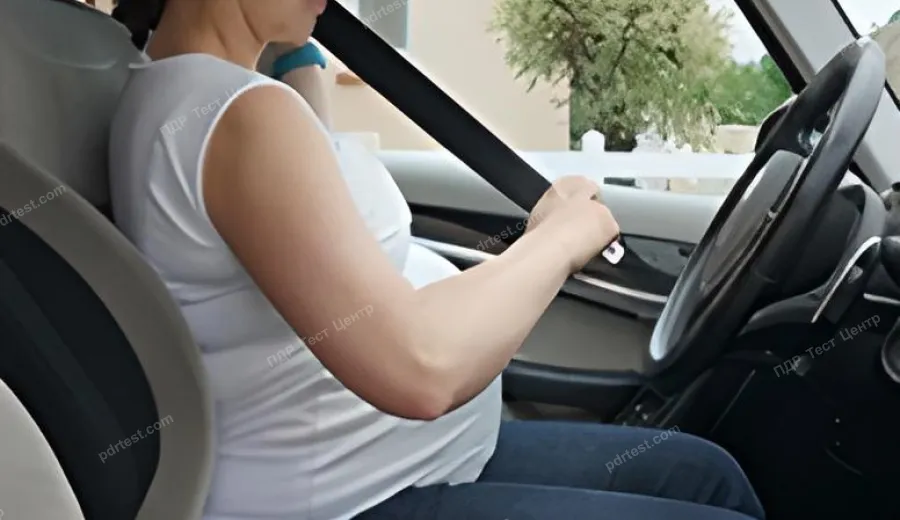
This exam question from the Traffic Rules of Ukraine concerns passive safety in a vehicle and the responsibilities of road users when transporting passengers. The use of seat belts directly affects the severity of the consequences in a traffic accident, which is why this rule is fundamental and applied as broadly as possible, with clearly defined exceptions.
35.98. The driver of a vehicle, approaching pedestrians who are crossing the roadway outside a pedestrian crossing, must:
UAВодій транспортного засобу, наближаючись до пішоходів, які перетинають автомобільну дорогу за межами наземного пішохідного переходу, повинен:
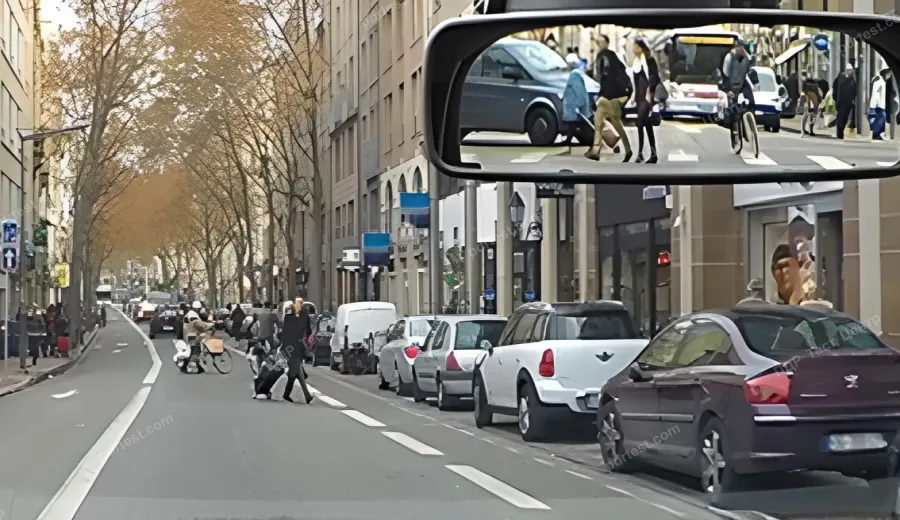
This is an exam question from the Traffic Rules of Ukraine about road safety in situations where pedestrians appear on the roadway outside of a designated pedestrian crossing. Even if a pedestrian is crossing in an unauthorized place, the driver's priority is to avoid a collision and prevent an emergency situation, since a pedestrian may suddenly change direction or pace, stop, or fail to notice the vehicle.
35.99. In wet weather or rain, the braking distance of a vehicle increases:
UAУ мокру погоду або в дощ гальмовий шлях транспортного засобу збільшується:
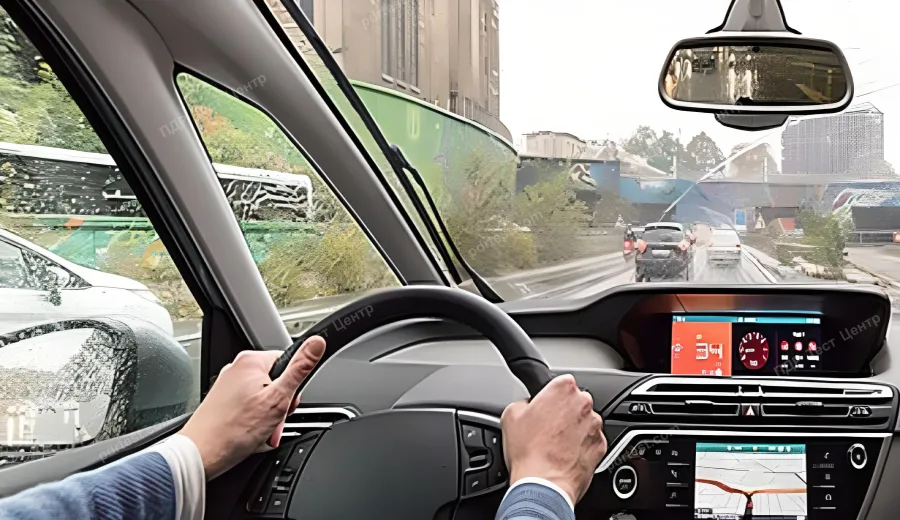
This exam question from the Traffic Rules of Ukraine concerns road safety in challenging weather conditions and tests the understanding of how the state of the road surface affects vehicle control and stopping. In rain and on wet asphalt, a water film forms between the tire and the road, which reduces traction and decreases braking efficiency. The consequence is simple and critically important for both the theoretical exam and real driving: to stop, the vehicle requires a greater distance.
35.100. The driver of a truck, without considering the traffic situation, started to move. You must:
UAВодій вантажного автомобіля, не враховуючи дорожньої обстановки почав рух, Ви повинні:
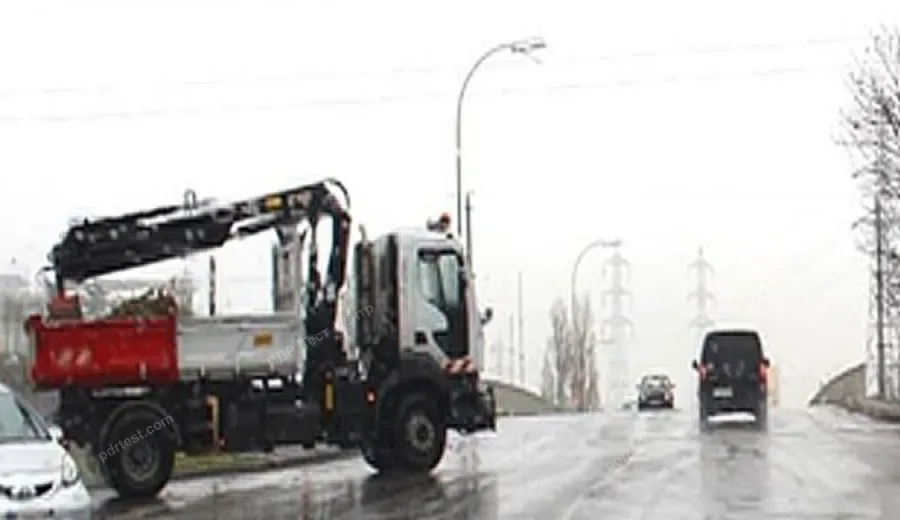
This is an exam question from the Traffic Rules of Ukraine about road safety at the moment when another road user begins a maneuver and creates a potential hazard. In such situations on the road, what matters is not “formal right of way,” but a timely reaction that prevents an accident: early braking, maintaining distance, and readiness to stop the vehicle completely.
35.101. Is it necessary in this case to reduce speed or stop if you are driving straight on the main road?
UAЧи потрібно в даному випадку зменшити швидкість або зупинитися, якщо Ви рухаєтесь прямо по головній дорозі:
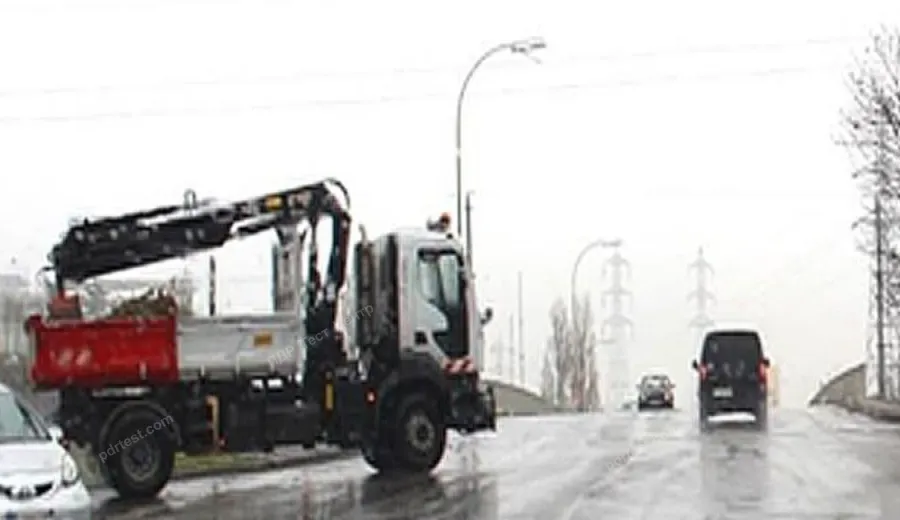
This exam question from the Traffic Rules of Ukraine checks not the “right of way,” but the safety logic of driving: whether the driver can respond in time to a real danger in their lane. On the road, situations often occur when another road user violates traffic rules or has already created an obstacle, and then the main thing is not priority, but preventing an accident.
35.102. While driving, is a driver allowed to use their smartphone for navigation (GPS):
UAПід час руху водію транспортного засобу дозволяється використовувати свій смартфон для використання навігації (GPS):
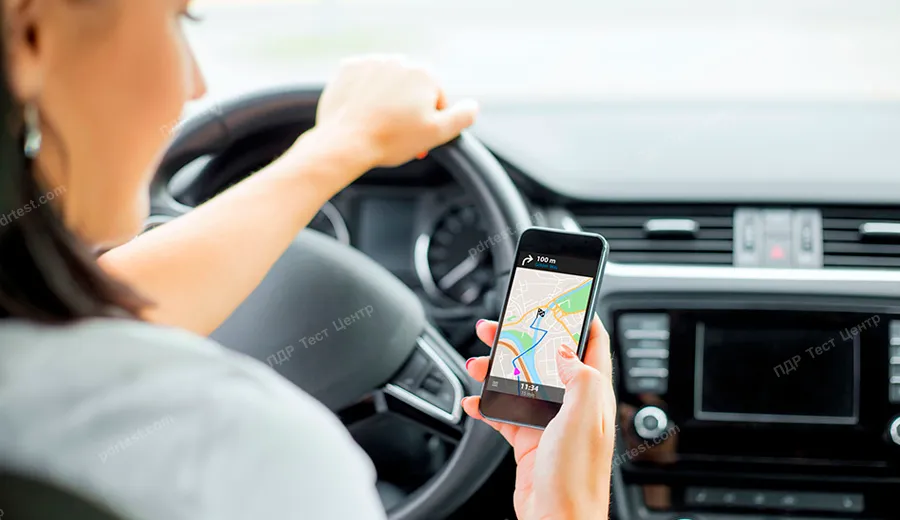
This exam question from the Traffic Rules of Ukraine concerns road safety and driver distraction while driving. Using a smartphone on the move is a typical cause of loss of attention, so the traffic rules directly restrict interaction with communication devices to ensure the driver maintains control of the vehicle and constantly assesses the road situation.
35.103. The driver of a vehicle, in order to pick up (drop off) passengers, must:
UAВодій транспортного засобу для здійснення посадки (висадки) пасажирів повинен:
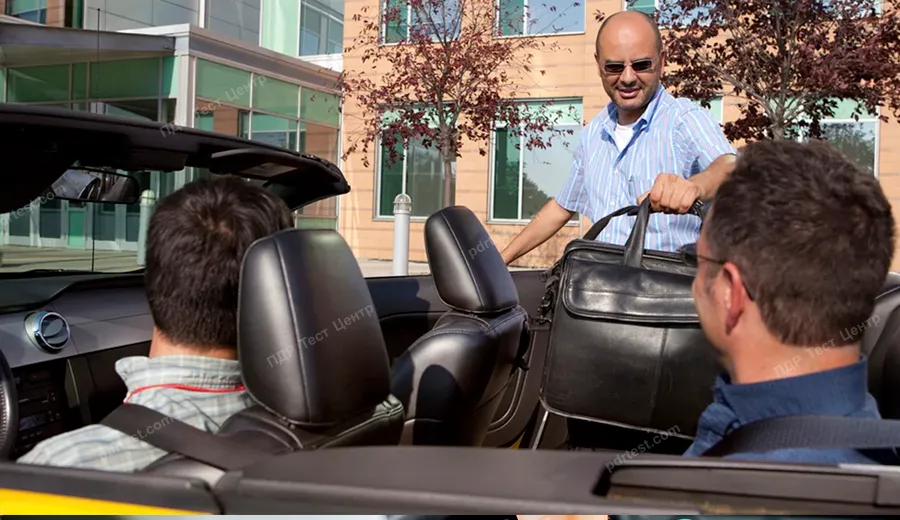
This exam question from the Traffic Rules of Ukraine concerns safety during the boarding and alighting of passengers and the proper organization of stopping on the road. In real-life situations, even a brief stop can create a dangerous situation: a passenger opens a door towards the direction of traffic, a cyclist or motorcyclist may be riding along the edge of the carriageway nearby, and other drivers may not have time to react. Therefore, the traffic rules require the driver to control the stopping place and the actions of passengers, minimizing the risk of stepping into traffic.
35.104. Did the driver fasten the seat belt correctly in this case?
UAЧи правильно в даному випадку водій транспортного засобу закріпив ремінь безпеки?
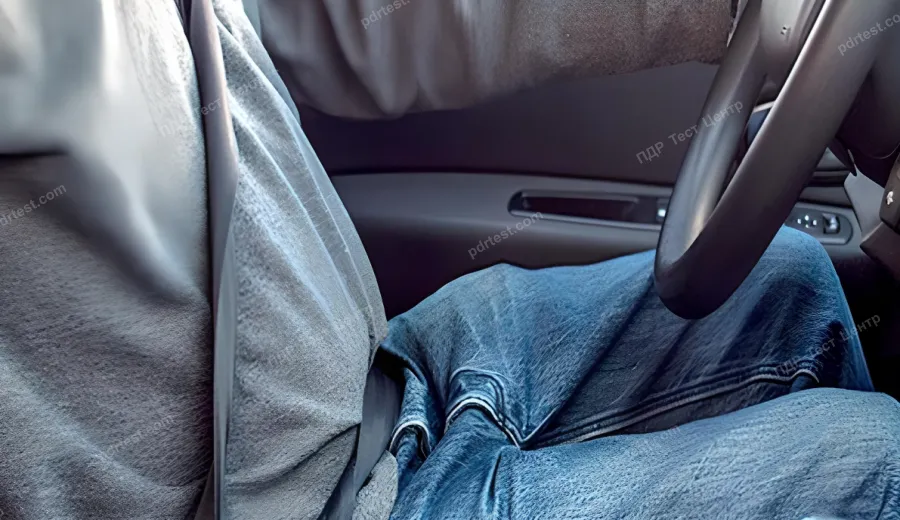
This exam question from the Ukrainian Traffic Rules concerns passive safety in a car and how proper use of seat belts affects the risk of injury during sudden braking or an accident. According to the traffic rules, it is important not only to fasten the buckle, but also to ensure the correct positioning of the seat belt strap on the body so that it actually performs its protective function and does not create additional danger.
35.105. In the given situation, as you approach the intersection, you must:
UAУ наведеній ситуації Ви, наближаючись до перехрестя, повинні:
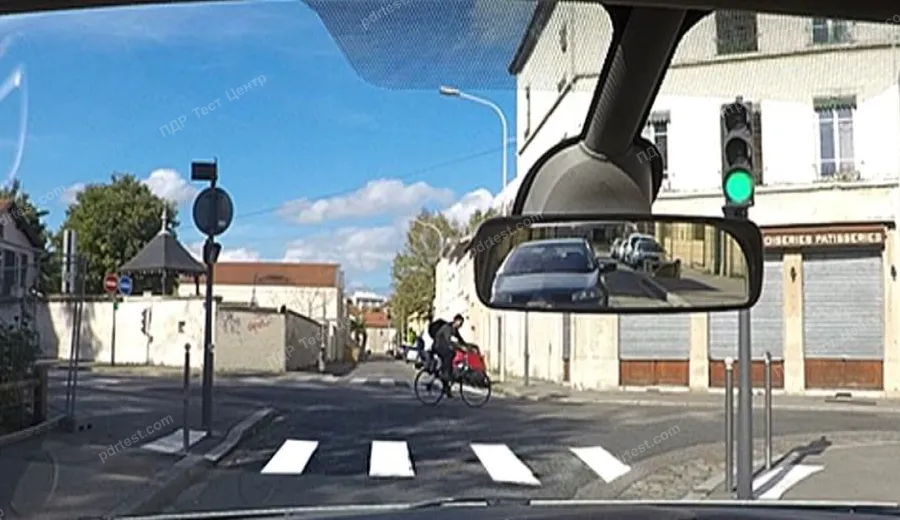
This exam question from the Traffic Rules of Ukraine concerns road safety when passing through regulated intersections and the driver's ability to assess the situation not only by the traffic light signal, but also by the actual participants already within the intersection. In both practice and the theoretical exam, such situations test attentiveness and the priority of safety over the 'formal' right to start moving.
35.106. Can a seat belt effectively protect a reclining passenger?
UAЧи може ремінь безпеки ефективно спрацювати захистити лежачого пасажира?
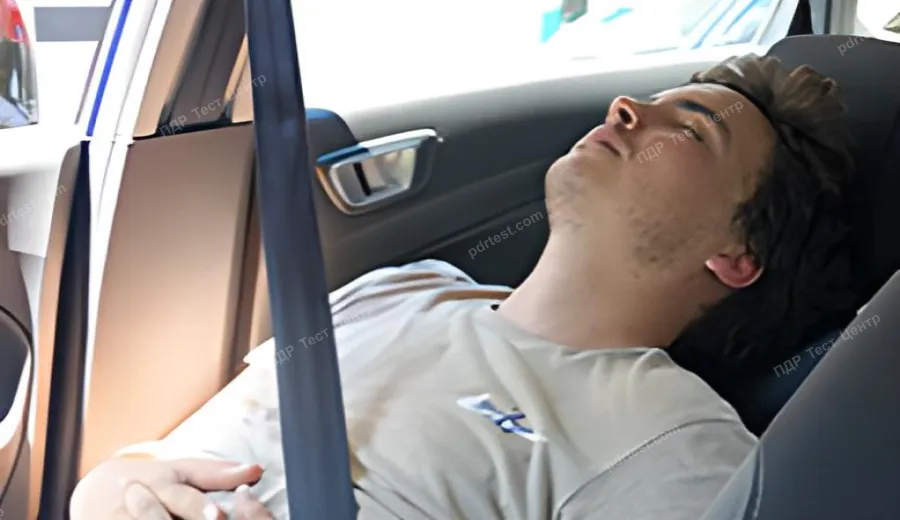
This exam question from the Traffic Rules of Ukraine concerns passive safety and the rules for using seat belts, which directly affect the risk of injury during sudden braking or a traffic accident. In the theoretical exam, such tasks test understanding not only of the formal requirement to "be buckled up," but also of how the seat belt actually works and why it is effective only when the body is in the correct position.
35.107. If during a long journey it becomes necessary to change the driver, it is necessary to adjust, among other things:
UAЯкщо під час тривалої подорожі виникла необхідність змінити водія, необхідно налаштувати, у тому числі:
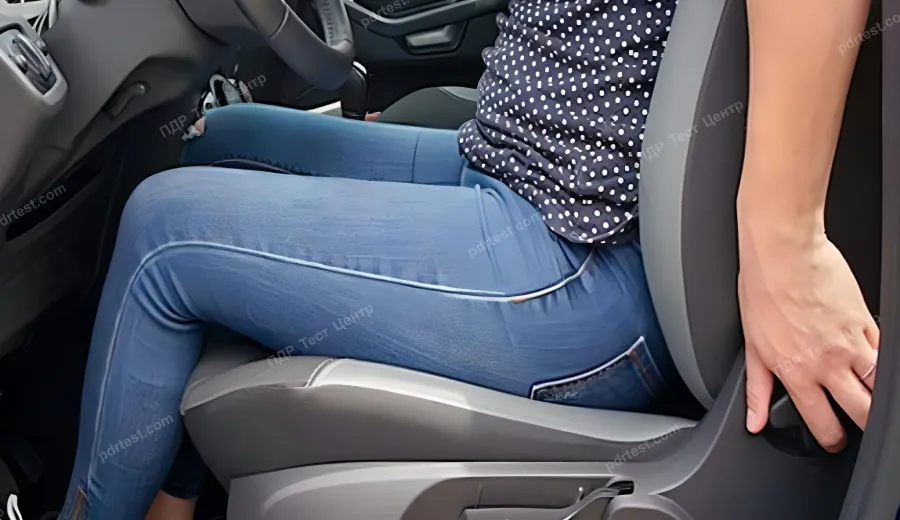
This is an exam question from the Traffic Rules of Ukraine concerning basic driving safety during long trips and changing drivers. When another person takes the wheel, their seating position, visibility, and access to controls change, which increases the risk of errors in maneuvers, braking, and lane changes. That is why the traffic rules require that, before continuing to drive, conditions are ensured for safe control of the vehicle and awareness of the road situation.
35.108. How should the driver of a vehicle act in case of sun glare?
UAЯк має діяти водій транспортного засобу у разі сонячного засліплення?

This exam question from the Traffic Rules of Ukraine concerns driving safety in conditions of sudden reduced visibility, when the driver is temporarily unable to adequately monitor the road situation. Sun glare is dangerous because reference points such as road markings, the edge of the carriageway, pedestrians, and obstacles "disappear," and any abrupt steering or ill-considered maneuver can lead to entering the oncoming lane or leaving the road.
35.109. In the event of an accident, will this driver be protected by the seat belt?
UAУ разі аварії цей водій буде захищений ременем безпеки?
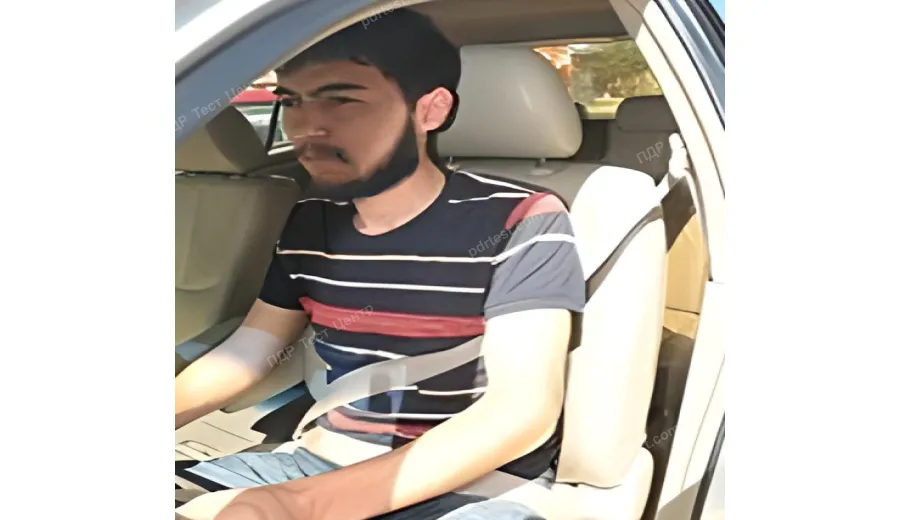
This exam question from the Traffic Rules of Ukraine concerns passive safety in a car and how proper use of a seat belt affects the risk of injury during sudden braking or an accident. In the theoretical exam, such tasks test not only formal knowledge of the requirements but also understanding of their practical meaning: the belt is meant to restrain the torso and prevent a person from moving sharply forward toward the steering wheel, dashboard, or windshield.
35.110. Can a prolonged conversation between a passenger and the driver interfere with the driver's control of the vehicle?
UAЧи буде тривала розмова пасажира з водієм заважати водієві керувати транспортним засобом?
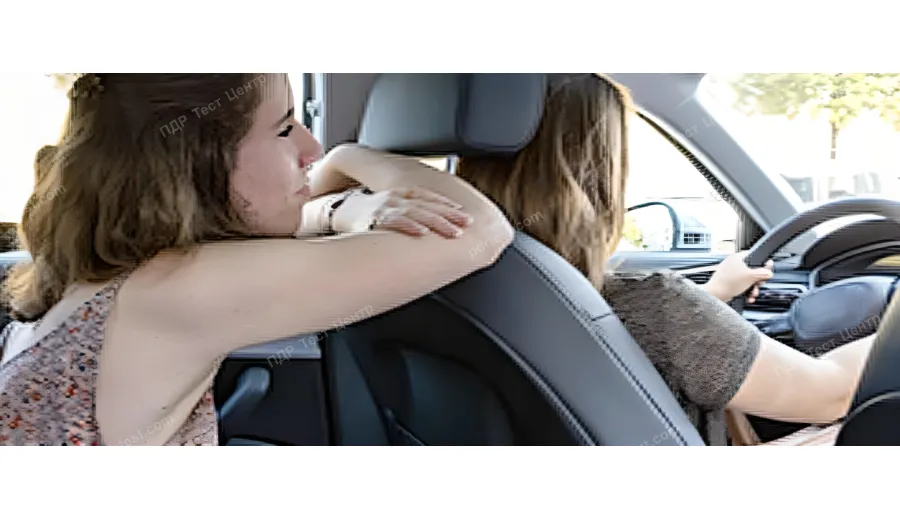
This exam question from the Traffic Rules of Ukraine concerns road safety and factors that distract the driver while driving. In real-life conditions, even a simple conversation can reduce the level of attention, narrow the perception of the traffic situation, and increase reaction time, which is especially dangerous at intersections, during lane changes, overtaking, or driving in heavy traffic.
35.111. When approaching an intersection where the traffic light is operating in flashing yellow mode, the driver of a passenger car must:
UAНаближаючись до перехрестя, де світлофор працює в режимі миготіння жовтого сигналу водій легкового автомобіля повинен:
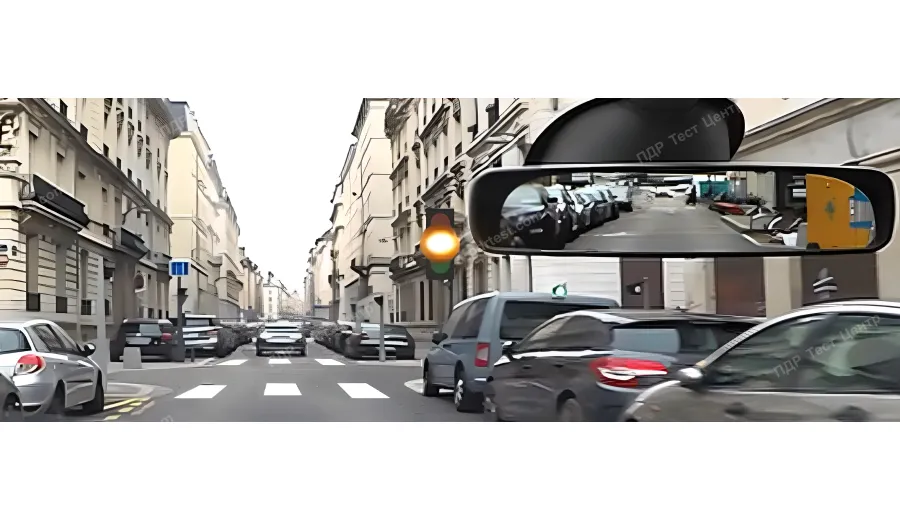
This exam question from the Traffic Rules of Ukraine tests the driver's attentiveness in conditions of increased danger and the ability to choose a safe speed. A flashing yellow signal does not provide a “green corridor,” but only warns of a dangerous location, so the key skill for the theoretical exam is to reduce speed in advance and leave yourself the opportunity to stop safely if the situation on the road changes.
35.112. The braking distance changes depending on:
UAГальмівний шлях змінюється в залежності від:
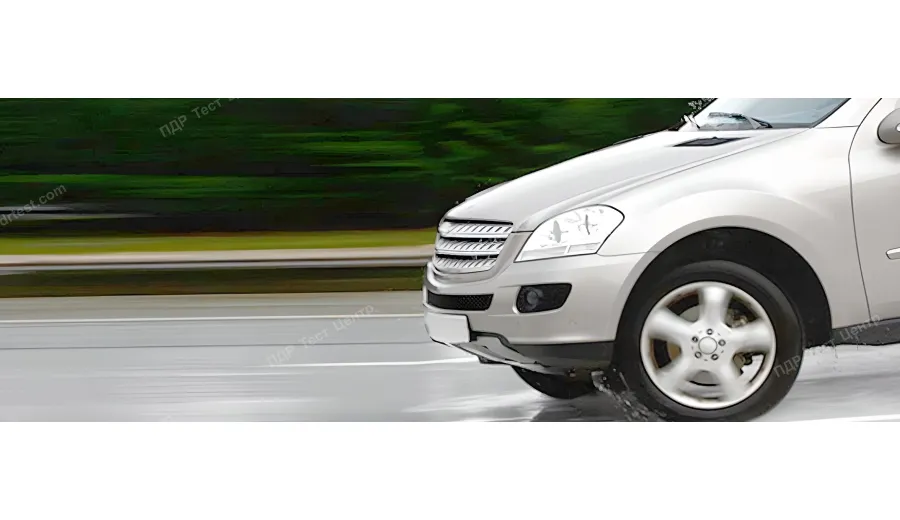
This exam question from the Traffic Rules of Ukraine concerns road safety and the driver's ability to predict whether there is enough distance to stop under real conditions. Understanding what affects braking directly influences the choice of safe speed, maintaining distance, and preventing accidents, especially on wet roads, snow, or ice.
35.113. Fuel consumption depends on:
UAВитрата палива залежить від:
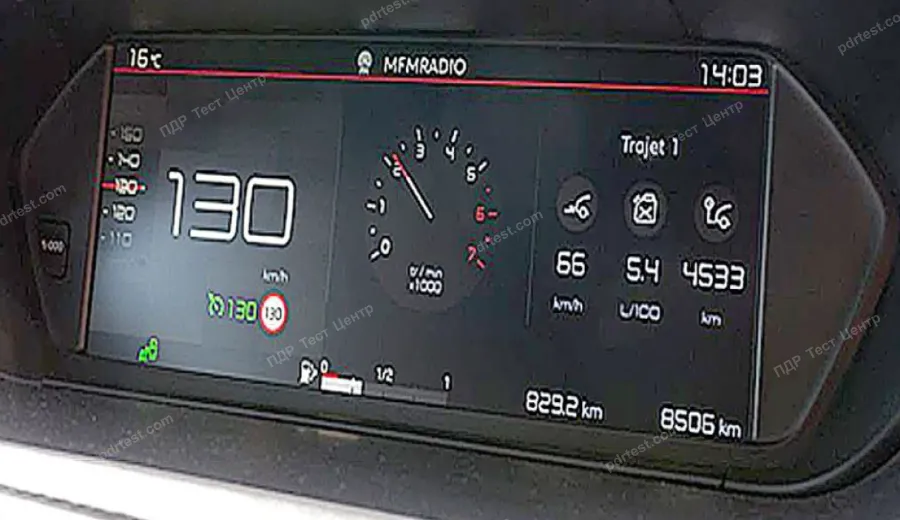
This exam question from the Traffic Rules of Ukraine concerns the efficiency and safe operation of a vehicle while driving. Although it is directly about fuel, the logic of the question is related to how the driver operates the vehicle in real conditions: choosing speed, controlling the load, and monitoring the technical condition. In the theoretical exam, such tasks assess the understanding of cause-and-effect relationships between the driver’s actions, vehicle parameters, and the consequences for safety and expenses.
35.114. Can maintaining a safe distance help prevent a collision without performing any maneuvers?
UAДотримання безпечної дистанції може допомогти запобігти зіткненню без здійснення будь-яких маневрів?
Question without image
This exam question from the Traffic Rules of Ukraine concerns the basics of road safety while driving in traffic flow and preventing traffic accidents. Its meaning is that the correct choice of distance to the vehicle ahead directly affects the ability to react to danger in time, reduce speed, or stop without abrupt actions and without risk to other road users. Such situations often occur on city streets and highways, so the topic is critical for the theoretical exam.
35.115. You have stopped at the request of a police officer. Will you turn on the hazard warning lights?
UAВи зупинились на вимогу поліцейського. Ви увімкнете аварійну світлову сигналізацію?
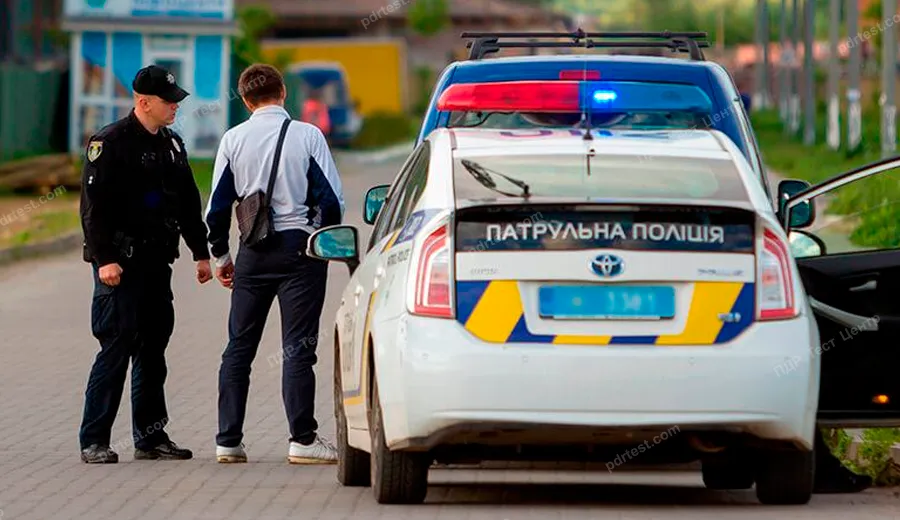
This exam question from the Traffic Rules of Ukraine concerns safety during the stopping of a vehicle and the correct way to give warning signals to other road users. When a driver is forced to change the usual driving pattern and stops outside the “logic of the flow,” it is important to make the car as visible as possible to reduce the risk of a collision or dangerous approach, especially in conditions of heavy traffic, dusk, or poor visibility.
35.116. A driver who intends to overtake you previously prevented you from overtaking. In this case, you:
UAВодій, який має намір Вас обігнати, раніше перешкоджав Вам виконати обгін. У цьому випадку Ви:
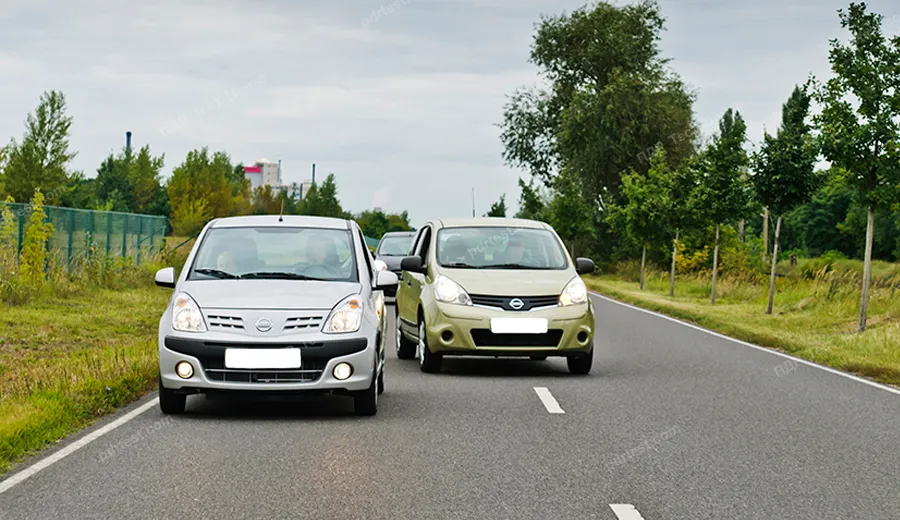
This is an exam question from the Traffic Rules of Ukraine about safe interaction between drivers during overtaking maneuvers and preventing road conflicts. It reminds that road safety is more important than “mutual claims” on the road: even if another driver previously behaved incorrectly, responding in kind increases the risk of an accident, particularly a head-on collision in the oncoming lane.
35.117. A person undergoing driver training must have a medical certificate of the established form with them?
UAОсоба, яка навчається водінню, повинна мати при собі медичну довідку встановленого зразка?
Question without image
This exam question from the Traffic Rules of Ukraine concerns the organization of training drives and the admission of a person to driving during practical lessons. The topic is important for road safety, as training is only permitted when the future driver is actually fit to drive and does not pose risks to themselves or other road users.
35.118. While driving in a populated area, you see that the driver ahead has created a dangerous situation. In order to prevent a traffic accident, are you allowed to use the audible warning signal?
UAРухаючись у населеному пункті, Ви бачите як водій, що рухається попереду, створив аварійну ситуацію. Для того, щоб запобігти ДТП Ви можете подати звуковий сигнал:
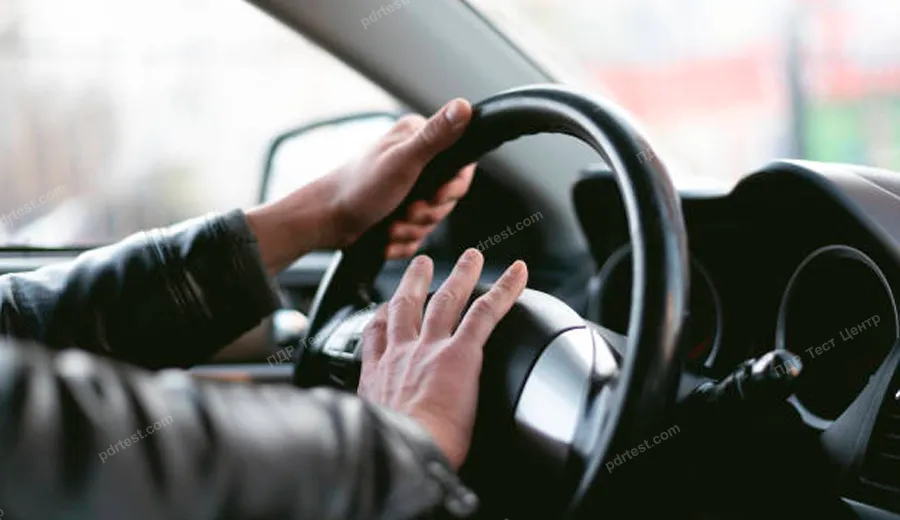
This is an exam question from the Traffic Rules of Ukraine about road safety and the correct use of warning signals within populated areas. It emphasizes that the sound signal should be a tool for preventing danger, not a "remark" to other drivers, since unnecessary noise and unjustified signals distract road users and can provoke mistakes.
35.119. When getting into the car, you suddenly felt dizzy and very tired. The journey to your destination will take no more than 10 minutes. You:
UAСідаючи в автомобіль, Ви раптом відчули запаморочення та сильну втому. Дорога до місця призначення займе не більше 10 хв. Ви:
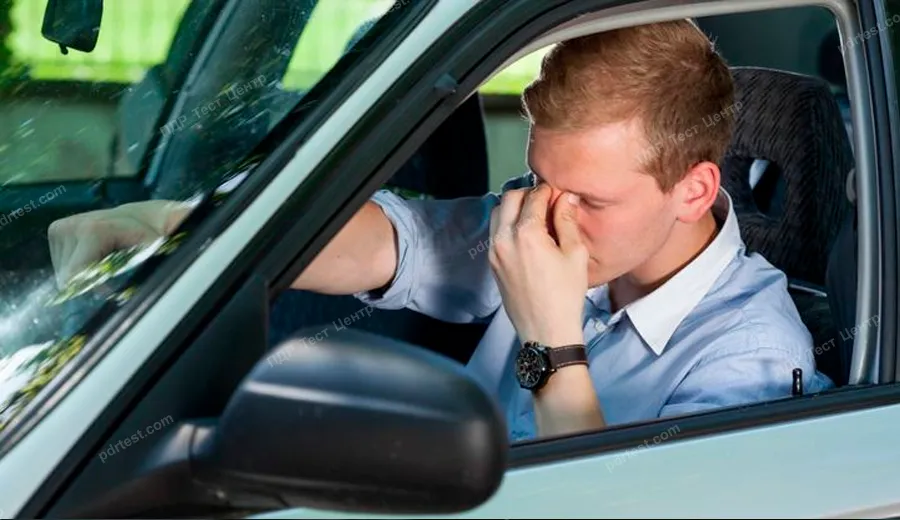
This is an exam question from the Traffic Rules of Ukraine about road safety and the driver's responsibility before setting off. It reminds that driving a car requires full concentration, proper coordination, and quick reaction, and any signs of deteriorating well-being can turn even a short trip into a dangerous situation for the driver, passengers, and other road users.
35.120. After taking a sedative medication, you felt dizziness and decreased attention. In such a case, it is allowed to drive a vehicle under the condition:
UAПісля приймання заспокійливого лікарського засобу, Ви відчули запаморочення та зниження уваги. У такому випадку дозволено керувати транспортним засобом за умови:

This exam question from the Traffic Rules of Ukraine concerns road safety and the driver's responsibility for their own psychophysiological condition. On the road, not only the technical condition of the vehicle is important, but also the driver’s ability to react quickly, adequately assess the situation, and make decisions without delay. Dizziness and decreased attention after taking sedative medications directly increase the risk of mistakes and traffic accidents.
35.121. A person under the age of 18 may obtain the right to drive a category B vehicle under the condition:
UAОсоба, яка не досягла 18-річного віку може отримати право на керування транспортним засобом категорії В за умови:
Question without image
This exam question from the Ukrainian Traffic Rules concerns road safety through age restrictions for drivers and access to operating vehicles. The legislator sets a minimum age not “for formality,” but to reduce risks on the road: driving a car requires mature skills, responsibility, and knowledge of traffic rules, which is especially important when preparing for the theoretical exam.
35.122. From which of these vehicles may a passenger exit before it comes to a complete stop?
UAЗ якого з цих транспортних засобів пасажир може вийти до моменту повної зупинки?
Question without image
This is an exam question from the Traffic Rules of Ukraine (PDR) concerning passenger safety during boarding and alighting, and is one of the basic rules checked by the theoretical exam. Exiting a vehicle while it is moving, even at minimal speed, creates a high risk of falling, injury, being struck by other vehicles, or hitting road elements, which is why the traffic rules do not allow actions such as "almost stopped" or "rolling slowly."
35.123. When driving past a school, what must you do first of all?
UAПроїжджаючи повз школу, що в першу чергу необхідно зробити?
Question without image
This is a driving exam question from the Traffic Rules of Ukraine about road safety in high-risk areas, particularly near children's institutions. Areas near schools are zones where pedestrians may appear suddenly, and children's behavior is often unpredictable. Therefore, for the driver, the key is not "formal" action, but creating a margin of time and distance for a safe reaction, up to a complete stop.
35.124. The consumption of even a small dose of alcohol:
UAВживання навіть невеликої дози алкоголю:
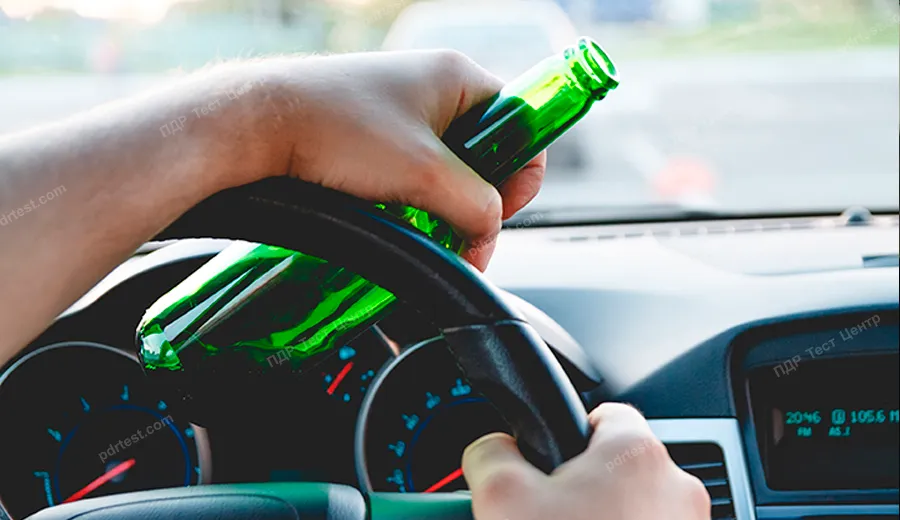
This exam question from the Traffic Rules of Ukraine concerns road safety and sober driving. During a trip, the driver continuously perceives signals from the road, assesses the situation, anticipates the actions of other participants, and performs maneuvers. Even a brief delay between "noticing a danger" and "starting to act" can increase the stopping distance and make an accident inevitable, which is why the topic of alcohol's influence is directly related to the risk of accidents.
35.125. Traffic accidents caused by drivers under the influence of alcohol usually have:
UAАварії, вчинені водіями у стані алкогольного сп’яніння, як правило мають:
Question without image
This exam question from the Traffic Rules of Ukraine concerns road safety and the causes that most often lead to severe traffic accidents. The topic is directly related to driving under the influence and how alcohol affects a driver's ability to drive safely: it reduces attention, impairs coordination, slows reaction time, and distorts the assessment of speed and distance. For the theoretical exam, it is important to understand not only the prohibition but also the consistent link between drunk driving and more serious accident consequences.
35.126. To drive a vehicle safely, you need to concentrate and be able to monitor everything happening on the road. To do this, you need to:
UAЩоб керувати транспортним засобом безпечно, потрібно зосередитися і вміти стежити за всім, що відбувається на дорозі. Для цього вам потрібно:
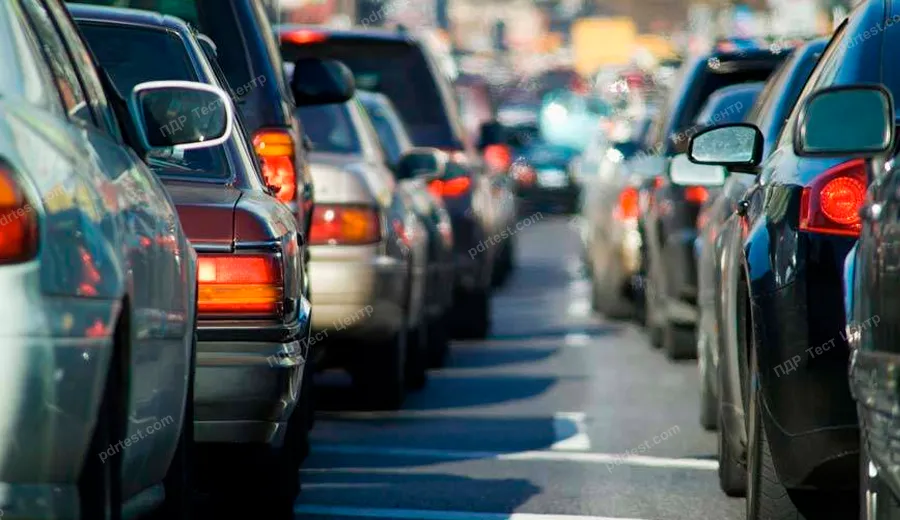
This exam question from the Traffic Rules of Ukraine concerns the basic principles of safe driving: attentiveness, constant monitoring of the situation, and creating a "reserve of time and space" for reaction. In real traffic, dangers arise not only ahead, but also to the sides and behind, so the driver must continuously analyze the road situation, anticipate the actions of other participants, and avoid driving "at the last second." This approach is key to successfully passing the theoretical exam and driving safely every day.
35.127. When approaching a sharp curve, you notice traces of gravel on the road. You should:
UAПри під’їзді до крутого повороту Ви помітили сліди гравію на дорозі. Вам слід:
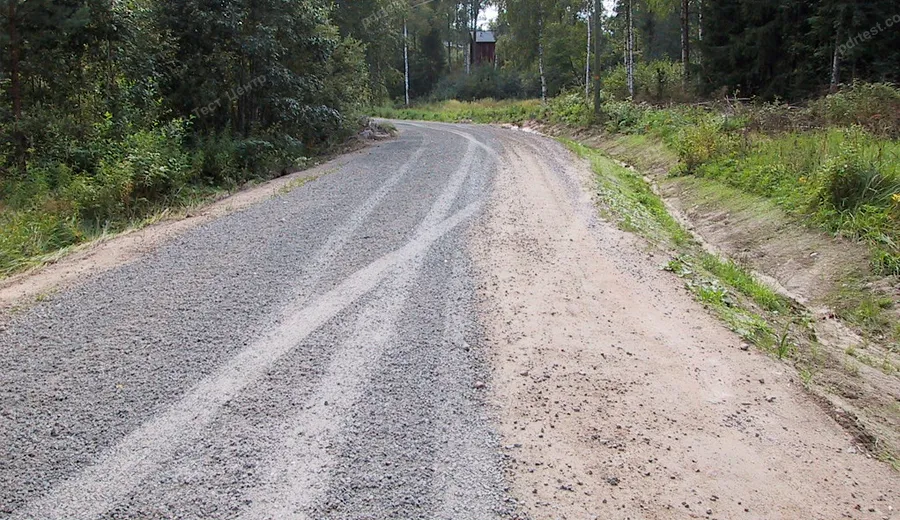
This is an exam question from the Ukrainian Traffic Rules about safe speed and vehicle control in conditions of reduced traction. Traces of gravel before a sharp turn indicate a change in the road surface, which increases the risk of skidding or sliding, so the driver's correct tactics directly affect road safety and the ability to avoid an accident.
35.128. If you notice a rider on the road, you should:
UAЯкщо Ви помітили вершника на дорозі, Вам слід:
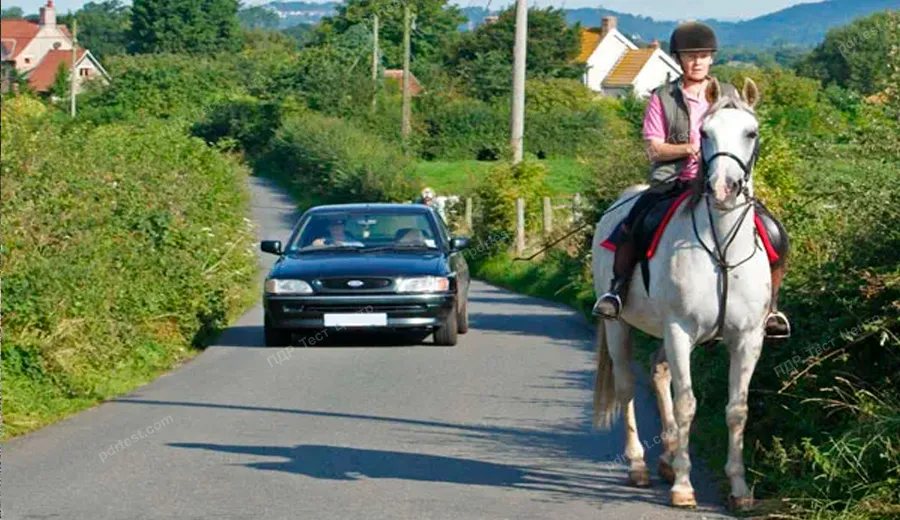
This exam question from the Traffic Rules of Ukraine concerns road safety when interacting with vulnerable road users, specifically riders on horseback. Unlike mechanical vehicles, animals can behave unpredictably, so it is important for the driver to act calmly, reduce risks in advance, and avoid provoking dangerous situations with abrupt actions. Such knowledge directly affects the outcome in the sections of the theoretical exam that test the ability to assess the road situation and choose a safe strategy.
35.129. A friend lends you a vehicle that seats ten people including the driver. Is a category B driving license sufficient for you to drive such a vehicle?
UAДруг позичає вам транспортний засіб, який вміщує десять осіб разом з водієм. Чи достатньо Вам посвідчення на право керування транспортним засобом категорії B, щоб керувати таким транспортним засобом?
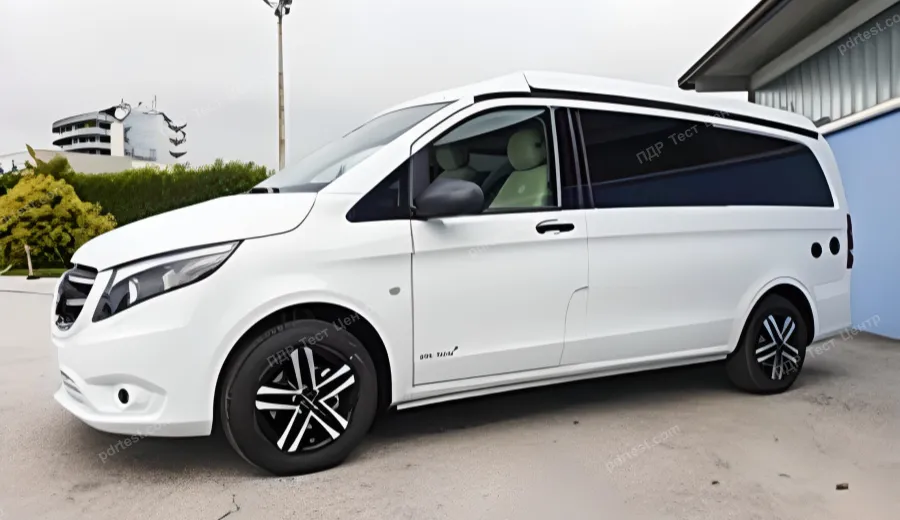
This exam question from the Traffic Rules of Ukraine concerns road safety and the legality of operating a vehicle: a driver is allowed to drive only those vehicle categories that match the technical specifications of the car. In the theoretical exam, such tasks test attentiveness to formal criteria (number of seats, weight, purpose of the vehicle), since a mistake in the license category is equivalent to driving without the proper authorization.
35.130. While driving in a traffic jam, you slow down as you approach a cyclist. Drivers behind you are honking, demanding that you move faster and overtake the cyclist. What should you do?
UAРухаючись у заторі Ви сповільнюєте рух, наближаючись до велосипедиста. Водії позаду сигналять, вимагаючи від Вас рухатись швидше та обігнати велосипедиста. Ваші дії:
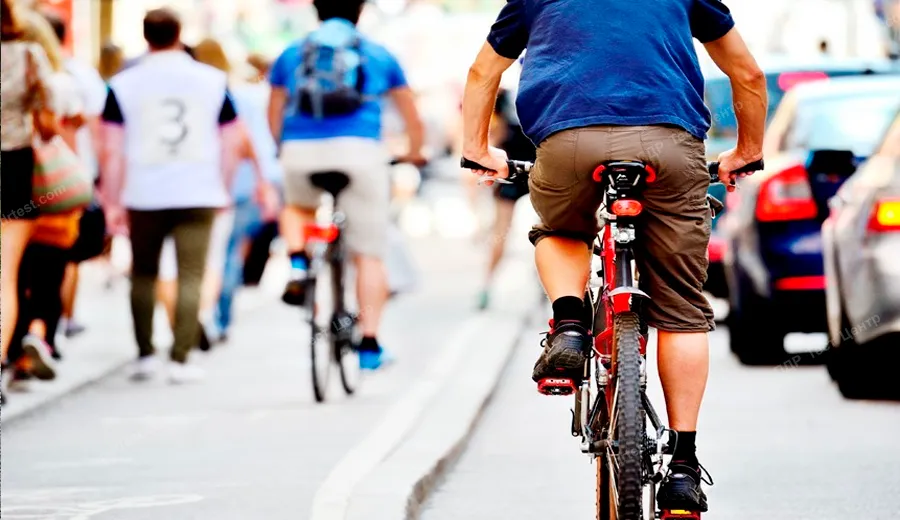
This is an exam question from the Traffic Rules of Ukraine about safety when driving in dense traffic and interacting with vulnerable road users, particularly cyclists. The situation is typical for traffic jams: other drivers may pressure you with horn signals, but this does not cancel the obligation to drive calmly, attentively, and safely. In the theoretical exam, it is checked whether the driver can prioritize safety over "hurry" and avoid making risky decisions under the influence of emotions or external demands.
35.131. When opening the door of a vehicle from the side of the carriageway, what should you pay attention to?
UAВідкриваючи двері транспортного засобу зі сторони проїжджої частини, на що слід звернути увагу?
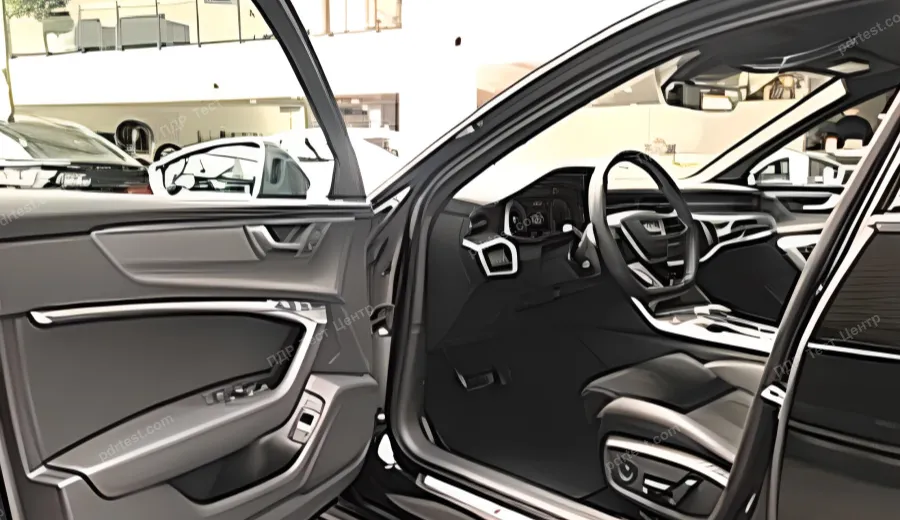
This exam question from the Traffic Rules of Ukraine concerns road safety during stopping or parking, when a driver or passenger opens a door on the side of the roadway. This action may seem minor, but it often provokes collisions with motorcyclists, cyclists, or cars moving nearby, and also creates a sudden obstacle for other road users. The theoretical exam checks whether you understand that “opening a door” is also a potentially dangerous maneuver, which should only be performed after assessing the situation.
35.132. When driving past children playing near the edge of the road, you should:
UAПроїжджаючи поруч з дітьми, які граються біля краю дороги, Вам слід:
Question without image
This is an exam question from the Traffic Rules of Ukraine about road safety in high-risk situations when children are present near the roadway. Such situations are among the most dangerous in cities and residential areas because children's behavior is often unpredictable: they may suddenly run out after a ball, change direction, or fail to assess the actual speed of a vehicle. For the theoretical exam, it is important to understand that the driver must act proactively, creating extra time and distance to avoid a collision.
35.133. When you see children on the road or near it:
UAКоли Ви бачите дітей на дорозі або поруч з нею:
Question without image
This is an exam question from the Traffic Rules of Ukraine concerning road safety and the correct behavior of a driver in high-risk situations when children are on or near the roadway. Children are the most unpredictable pedestrians: they can suddenly change direction, run onto the road while playing, fail to assess the speed of a vehicle, or not notice danger due to inattention and their small stature. Therefore, in real-life conditions, the driver must act proactively, not wait until the situation becomes critical.
35.134. When driving through areas with a large number of pedestrians, the driver must:
UAРухаючись ділянками, де велика кількість пішоходів, водію необхідно:

This exam question from the Traffic Rules of Ukraine concerns road safety in areas with heavy pedestrian traffic. Such locations (near schools, bus stops, markets, pedestrian crossings in city centers) always carry an increased risk because people's behavior can change suddenly, and children and elderly pedestrians often act unpredictably. For the driver, the main thing is not to "rush through," but to allow enough time and distance for a safe reaction without abrupt maneuvers.
35.135. When you see elderly people on the road or near it, you must:
UAКоли Ви бачите людей похилого віку на дорозі або біля неї, Вам необхідно:

This exam question from the Traffic Rules of Ukraine concerns road safety and the correct driver response to the appearance of vulnerable road users. In real-life situations, elderly pedestrians may move slowly, make unexpected steps toward the roadway, or misjudge the speed of a vehicle, so the main goal of the driver is to reduce the risk of collision in advance and have enough time to brake.
35.136. If you notice a pedestrian showing signs of alcohol intoxication walking along the edge of the carriageway, you must:
UAЯкщо Ви помітили пішохода з ознаками алкогольного сп’яніння, який рухається по краю проїзної частини, необхідно:
This is a driving exam question from the Traffic Rules of Ukraine about road safety in a high-risk situation, when a potentially unpredictable participant appears near the vehicle's trajectory. A pedestrian showing signs of intoxication often has a reduced ability to assess danger, may lose balance, or suddenly change direction and end up in the lane of traffic. Therefore, the key task for the driver is not to "rush through," but to maintain control and have time to react. Such situations in the theoretical exam test the ability to recognize risks in advance and act safely.
35.137. When approaching a pedestrian crossing where there are no pedestrians, you:
UAНаближаючись до пішохідного переходу, на якому немає пішоходів, Ви:
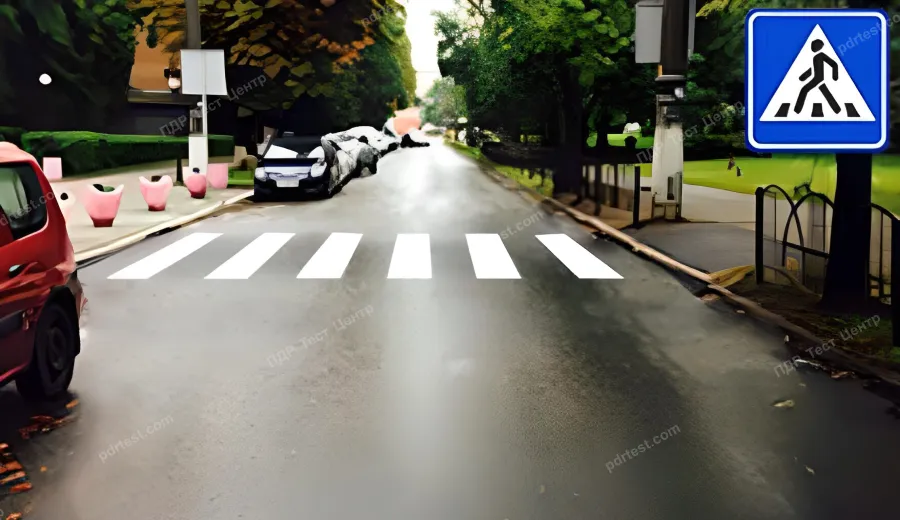
This exam question focuses on road safety when passing pedestrian crossings. Even when the "zebra" appears empty, the area near the crossing is considered high-risk: a pedestrian may suddenly appear from behind parked cars, public transport stops, or other visual obstacles. That is why the traffic rules require the driver not to simply "drive as usual," but to control their speed and be ready to react immediately.
35.138. When driving past parked vehicles, you must:
UAПроїжджаючи повз припарковані транспортні засоби необхідно:
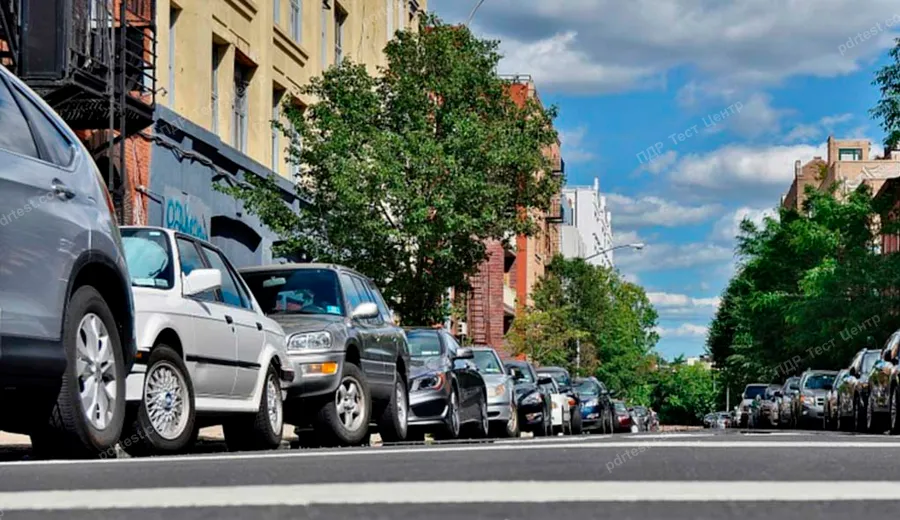
This exam question from the Traffic Rules of Ukraine tests basic skills for safe driving in urban conditions, where visibility is limited by parked vehicles. Such a situation is a typical cause of traffic accidents due to "blind spots" near the right edge of the roadway: pedestrians, children, cyclists, or animals may suddenly appear from behind the cars, and there is also a risk of doors being unexpectedly opened. For the theoretical exam, it is important to understand that a driver must not only comply with formal requirements but also anticipate dangers that arise from the behavior of other road users.
35.139. While driving, you encounter aggressive driving behavior from the vehicle ahead. You must:
UAПід час руху ви зіткнулись із агресивною манерою водіння транспортного засобу, що їде попереду. Ви повинні:
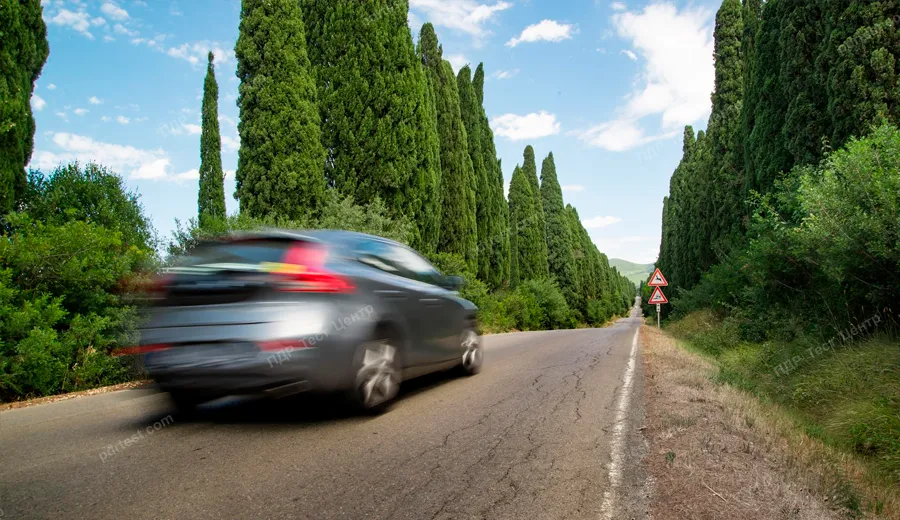
This is an exam question from the Traffic Rules of Ukraine about safe driver behavior in a real road situation, when a vehicle ahead is moving with a dangerous, aggressive driving style. Such drivers often act unpredictably, so the main risk is not "slowness" or "obstruction," but sudden braking, sharp lane changes, and provocations. For the theoretical exam, it is important to understand: safety is achieved not by competing on the road, but by calm, predictable reactions and control of the situation.
35.140. While driving at night, it is necessary to:
UAПід час руху вночі необхідно:
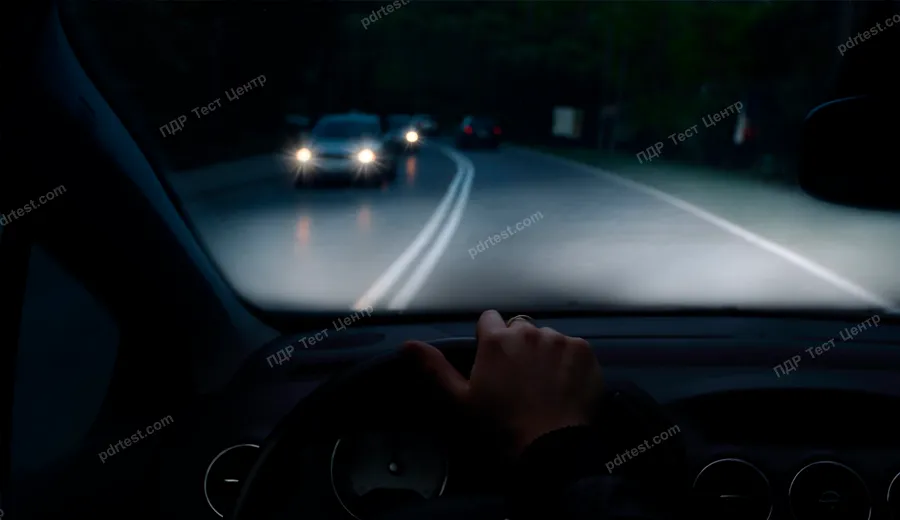
This is an exam question from the Traffic Rules of Ukraine concerning road safety during nighttime, when visibility is reduced and it is harder to accurately judge speed and distance to other road users. At night, the headlight illumination zone is limited, there is a risk of being dazzled by oncoming lights, fatigue sets in more quickly, so the risk of collision or running into something due to delayed reaction increases even with lower traffic intensity.
35.141. Which of the following statements best describes you as a safe driver?
UAЯке з наведених тверджень найбільш вдало описує Вас як безпечного водія?
Question without image
This is an exam question from the Ukrainian Traffic Rules about driver culture and safe behavior, where the key principle is personal responsibility on the road. In the traffic rules, safety is not reduced to "confidence" or luck, but depends on whether the driver creates danger or obstacles for others, whether they can anticipate risks, and drive in a way that minimizes the consequences of possible mistakes in traffic flow.
35.142. If visibility suddenly deteriorates during heavy rain, you should:
UAЯкщо під час сильного дощу видимість раптово погіршується, Вам слід:
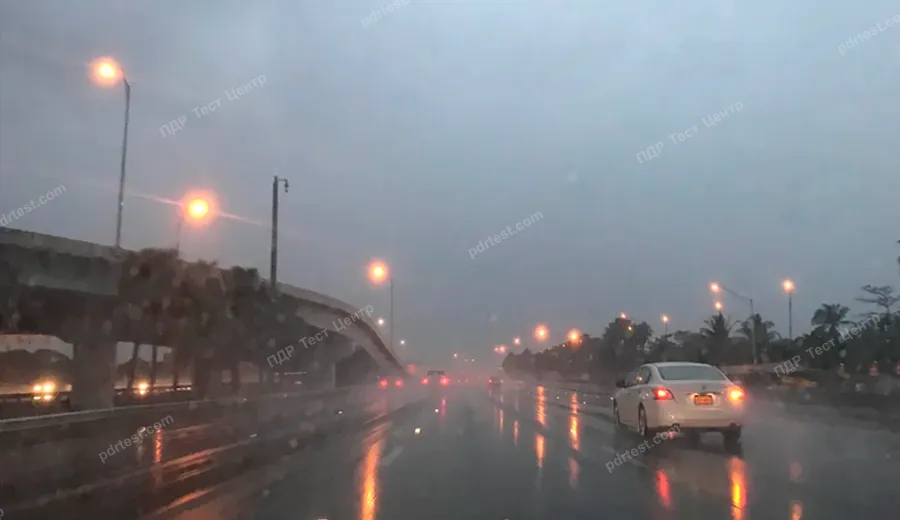
This is an exam question from the Traffic Rules of Ukraine about driving safety in difficult weather conditions, when heavy rain suddenly reduces visibility and changes the tire grip on the road. In such situations, the driver should not act "as usual," but adapt their driving style to the road conditions: wet pavement increases braking distance, while water spray and splashes reduce visibility and reaction time. That is why this topic is important for the theoretical exam and real driving, as mistakes in speed or distance most often result in traffic accidents.
35.143. What should you keep in mind if you are planning a long trip:
UAЩо необхідно пам’ятати, якщо Ви плануєте тривалу поїздку:

This exam question focuses on road safety during long trips and the impact of fatigue on attention, reaction, and the ability to drive a vehicle safely. In the context of the Traffic Rules of Ukraine, driver fatigue is one of the most dangerous factors, as it leads to mistakes, "microsleep," and loss of control, especially on rural roads and during monotonous driving. That is why studying the traffic rules in this section is important not only for the theoretical exam but also for real daily practice.
35.144. You want to overtake a cyclist. What should you take into account when assessing the lateral clearance?
UAВи хочете обігнати велосипедиста. Що Ви повинні врахувати при оцінці бокового інтервалу?
Question without image
This is an exam question from the Traffic Rules of Ukraine concerning safety when overtaking vulnerable road users and the correct choice of a safe lateral clearance. The theoretical test checks whether the driver understands that the clearance must genuinely ensure safety, not just be a formal number: a cyclist may lose balance, deviate from their path, or suddenly swerve to avoid an obstacle, so the risk of side contact must always be anticipated in advance.
35.145. How does a driver perceive the speed of their vehicle when driving for a long time on a flat road at high speed?
UAЯк сприймається водієм швидкість його автомобіля у випадку тривалого руху рівнинною дорогою з великою швидкістю?
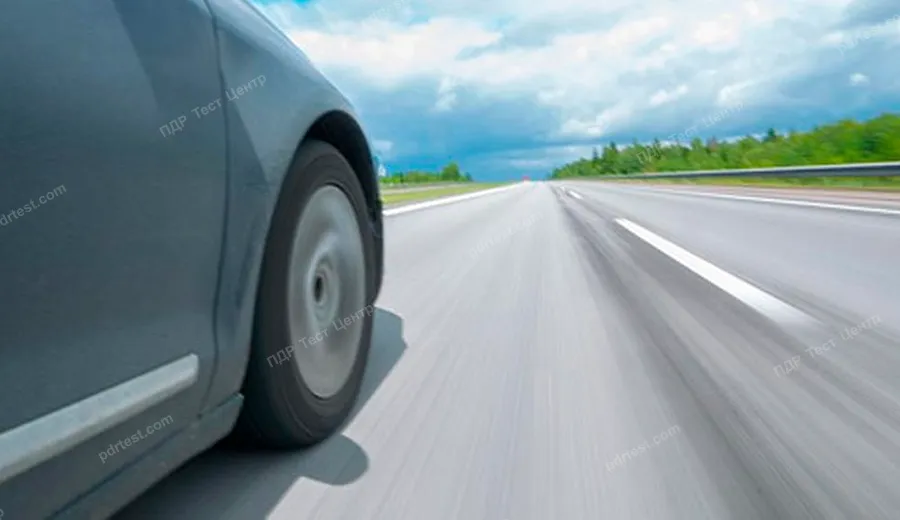
This exam question from the Traffic Rules of Ukraine concerns road safety and the human factor: how a driver subjectively perceives speed during prolonged monotonous driving. On a flat, straight road, especially in open areas, the number of external reference points and events in the traffic flow decreases, so the brain "gets used" to the pace, and the sense of dynamics becomes dulled. As a result, the risk of unintentionally exceeding the speed limit and delayed reaction to danger increases.
35.146. Which driving style will ensure the lowest fuel consumption?
UAЯкий стиль водіння забезпечить найменшу витрату палива?
Question without image
This exam question from the Traffic Rules of Ukraine concerns the basics of safe and economical driving. It tests the understanding of how the manner of changing speed affects not only fuel consumption but also safety: sudden acceleration and braking increase the risk of creating obstacles for other road users, while predictable driver behavior helps maintain control of the vehicle and avoid dangerous situations.
35.147. At night and in cloudy weather, the speed of an oncoming vehicle appears:
UAУ темну пору доби та в похмуру погоду швидкість зустрічного автомобіля видається:
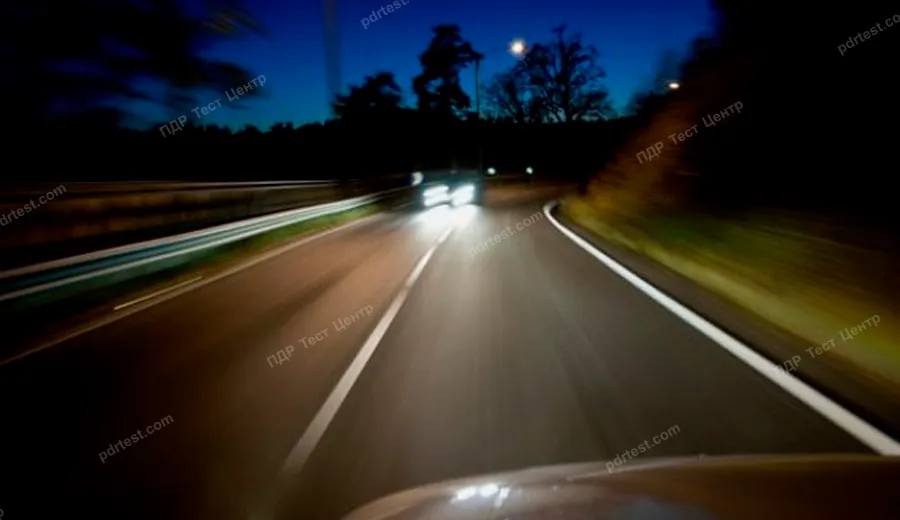
This exam question from the Traffic Rules of Ukraine concerns road safety in conditions of limited visibility, when it is more difficult for a driver to correctly assess the traffic situation. At night and in cloudy weather, the risk of errors in perceiving distance and closing speed increases, which can lead to dangerous decisions during maneuvers. That is why the traffic rules require special attention and caution, since the cost of a mistake here is most often associated with head-on collisions.
35.148. Relative to which road marking line is it safest to control the position of your vehicle during an oncoming passing maneuver at night?
UAВідносно якої лінії дорожньої розмітки найбільш безпечно контролювати положення свого автомобіля при зустрічному роз’їзді в темний час доби?
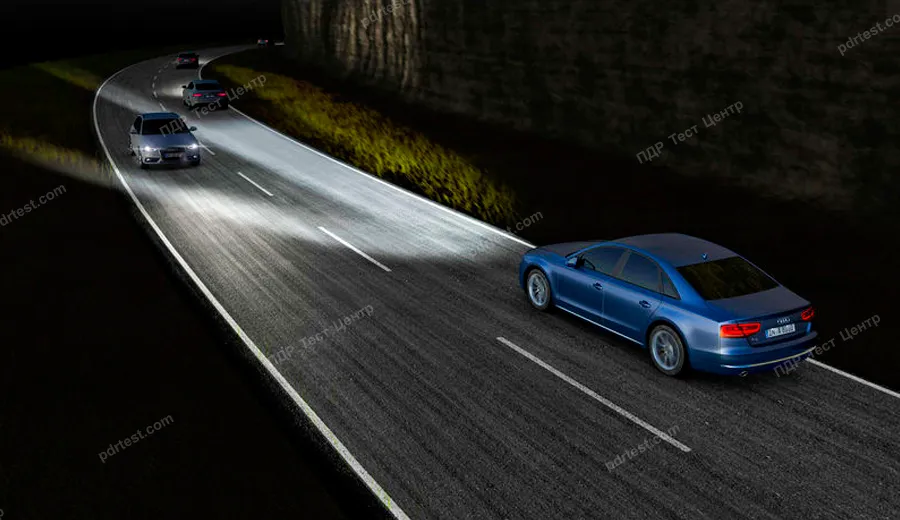
This is an exam question from the Traffic Rules of Ukraine about safety when driving at night, when oncoming headlights can dazzle and it becomes more difficult for the driver to maintain a stable trajectory. In such conditions, it is important to have a reliable visual reference point that is clearly visible in your own headlights and helps you avoid drifting towards oncoming traffic, maintaining a safe distance.
35.149. The braking distance on the road immediately after rain:
UAГальмівний шлях на дорозі одразу після дощу:
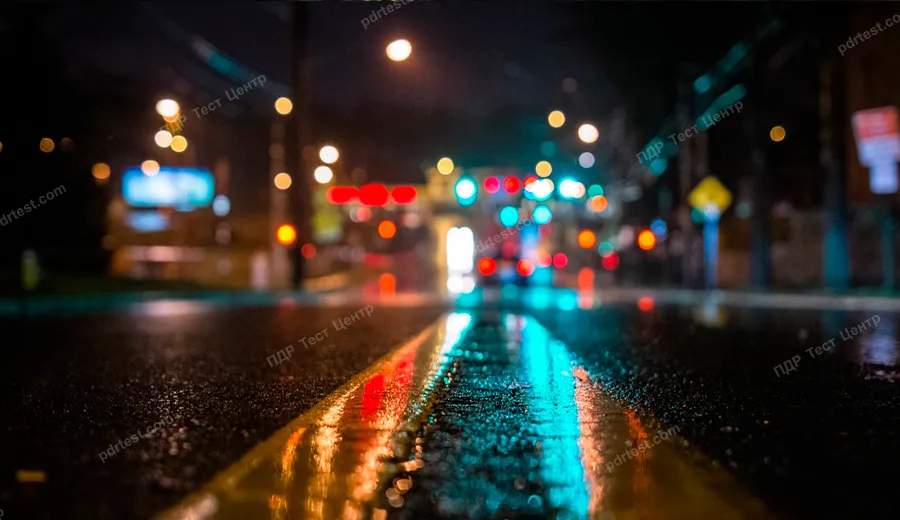
This is an exam question from the Traffic Rules of Ukraine about road safety in conditions of changed road situations, when the surface becomes wet and slippery. In such situations, the driver must understand how braking efficiency changes in order to timely adjust speed, following distance, and driving style to avoid accidents.
35.150. While driving in traffic flow, a driver in the adjacent lane suddenly changed lanes into your lane, forcing you to brake. What should you do in this situation?
UAПід час руху в транспортному потоці водій, що рухався по сусідній смузі, різко перелаштувався на Вашу смугу руху, змусивши Вас загальмувати. Що необхідно Вам зробити в даній ситуації?
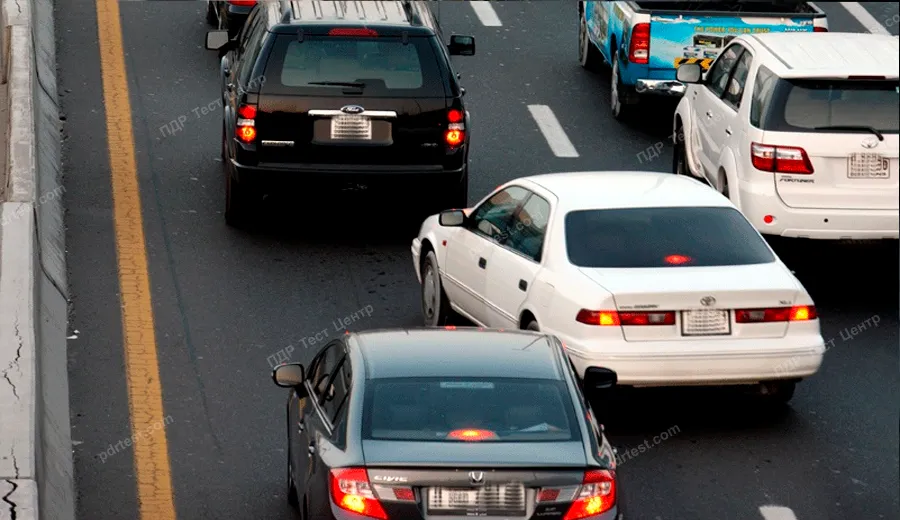
This is an exam question from the Traffic Rules of Ukraine about safety in traffic flow and the correct response to dangerous maneuvers by other drivers. It emphasizes a basic principle of traffic regulations: in a conflict situation on the road, the main goal is not to “teach a lesson” to the violator, but to maintain control over your vehicle, avoid creating new dangers, and minimize the risk of an accident for yourself and other road users.
35.151. The worse the visibility, the lower the driving speed should be:
UAЧим гірша видимість, тим меншою має бути швидкість руху:
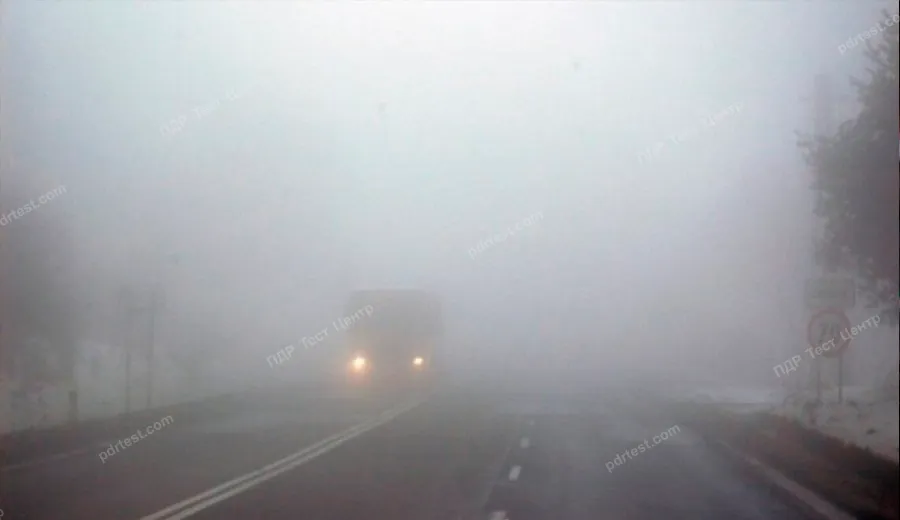
This exam question from the Traffic Rules of Ukraine concerns the safety of speed regulation in real road conditions, when a driver's decisions are influenced by fog, rain, snowfall, twilight, or unlit areas. In such situations, the key principle is that speed should not be 'the maximum permitted,' but rather safe, so that the driver maintains control of the vehicle and has enough time to avoid hazards.
35.152. The worse the visibility, the higher the driving speed should be:
UAЧим гірша видимість, тим більшою має бути швидкість руху:
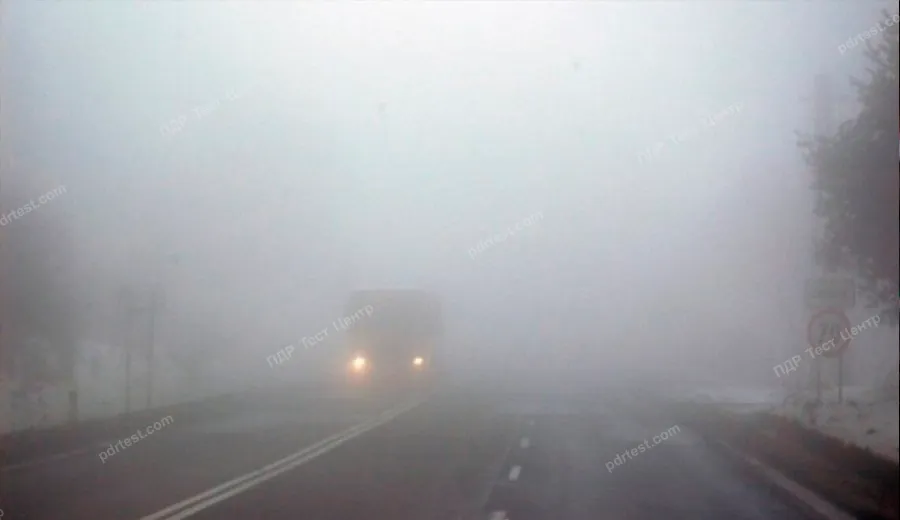
This exam question from the Traffic Rules of Ukraine concerns road safety and the choice of a safe speed depending on the traffic situation. It checks the basic understanding that speed must correspond to the actual road conditions, not just the permitted limits: in fog, rain, snowfall, twilight, or when blinded by headlights, the driver sees less, and therefore the risk of noticing danger too late increases sharply.
35.153. Is the driver allowed to open the doors of the vehicle before it comes to a complete stop?
UAЧи дозволено водієві відчиняти двері транспортного засобу до його повної зупинки?
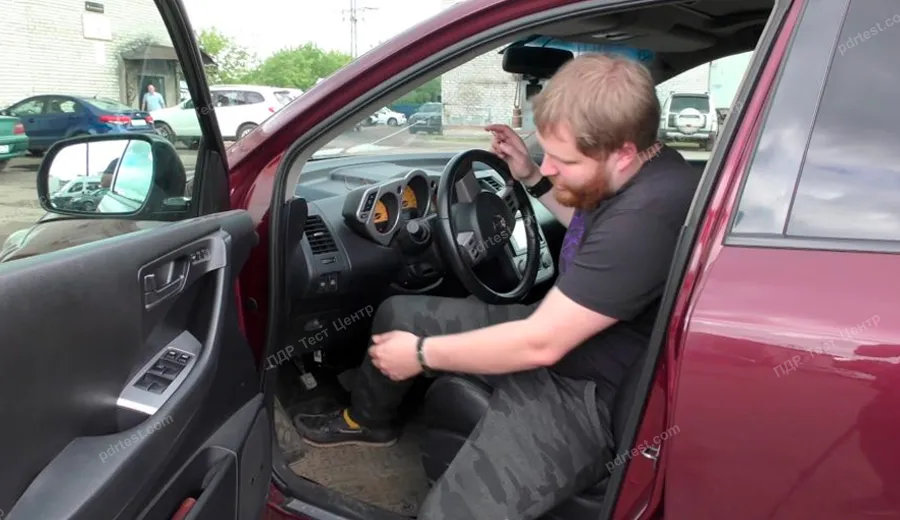
This is an exam question from the Traffic Rules of Ukraine (PDR) concerning road safety during stopping and exiting a vehicle. Even a brief action by the driver can create a sudden obstacle in the lane or near the roadside, which is why the traffic rules pay special attention to this. Such situations are especially dangerous for cyclists, motorcyclists, and pedestrians who may be moving nearby and do not expect doors to open suddenly.
35.154. Is it permitted for passengers to open the doors of a vehicle before it has stopped?
UAЧи дозволено пасажирам відчиняти двері транспортного засобу до його зупинки?
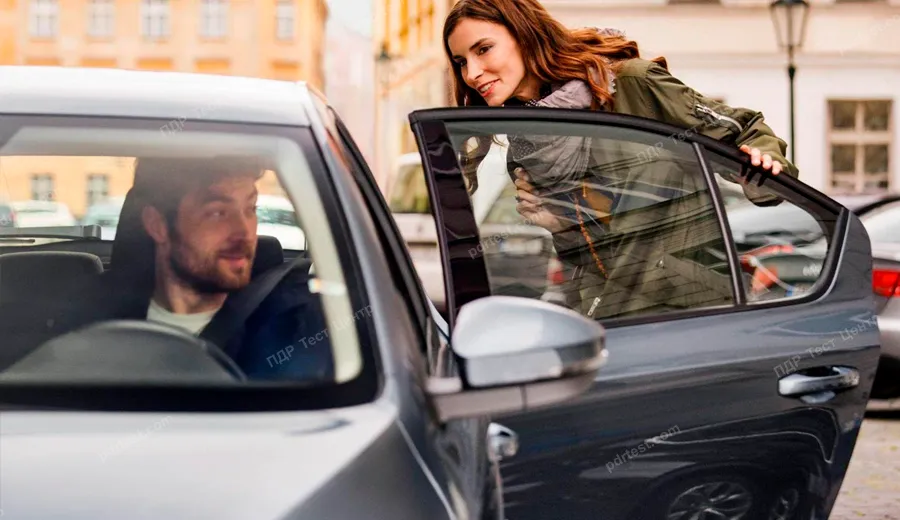
This exam question from the Traffic Rules of Ukraine tests the basic principles of safety during passenger boarding and alighting. Premature opening of doors creates a direct risk of a traffic accident: the doors may end up in the path of other vehicles, motorcycles, or cyclists, and the passenger may step onto the roadway before the vehicle has come to a complete stop.
35.155. How should you act in a situation when approaching a bus that is boarding or disembarking organized groups of children?
UAЯк ви повинні вчинити в ситуації, наближаючись до автобуса, який виконує посадку або висадку організованих груп дітей?
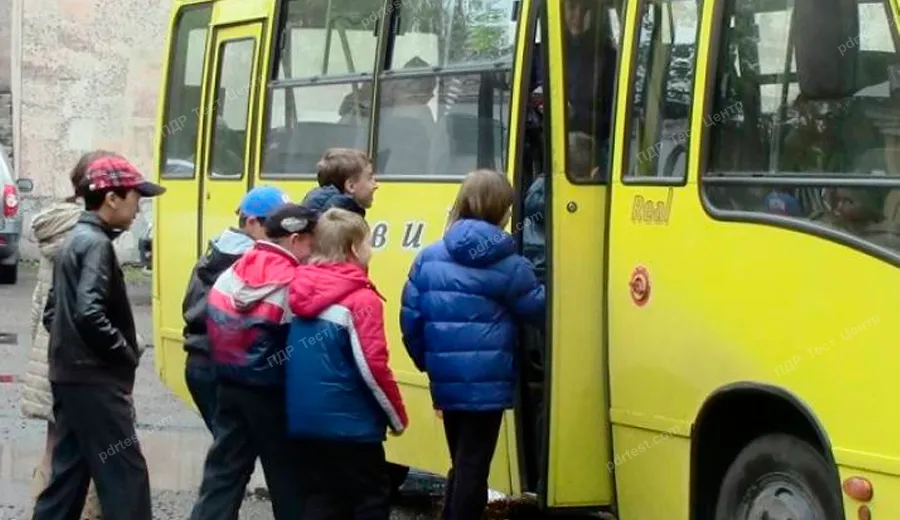
This is an exam question from the Traffic Rules of Ukraine about safety near places where pedestrians, especially children, may suddenly appear on the roadway. Such situations are considered high-risk: a child may run out from behind the bus, change direction, or fail to assess the speed of a vehicle, so the driver is required to take precautionary actions in advance, not just "formally" maintain a safe distance.
35.156. In this situation, the greatest attention should be focused on zone:
UAУ даній ситуації найбільшу увагу слід зосередити на зоні:
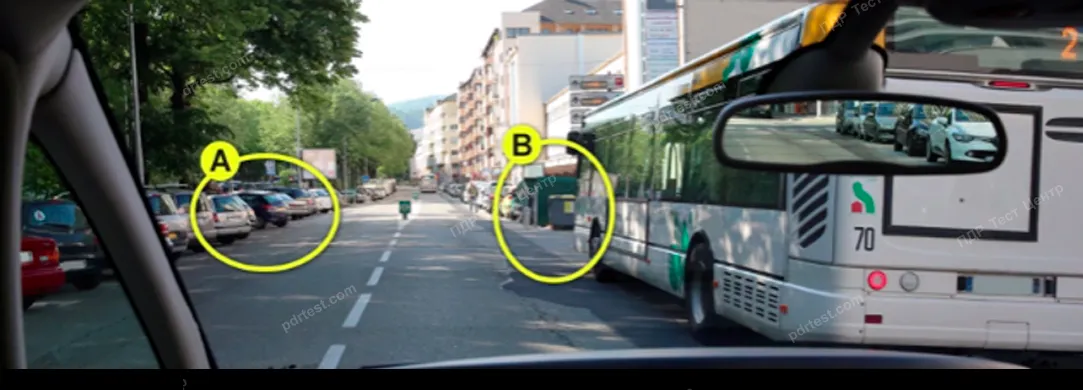
This is an exam question from the Traffic Rules of Ukraine about road safety in conditions of limited visibility near a public transport stop. In real traffic, a driver often makes mistakes by focusing only on what is visible ahead, although the greatest danger can arise from the "blind zone" next to a stopped bus. That is why such situations regularly appear on the theoretical exam and test the ability to anticipate hidden risks.
35.157. The greatest danger in this case is concentrated in:
UAНайбільша небезпека у даному випадку зосереджена у:
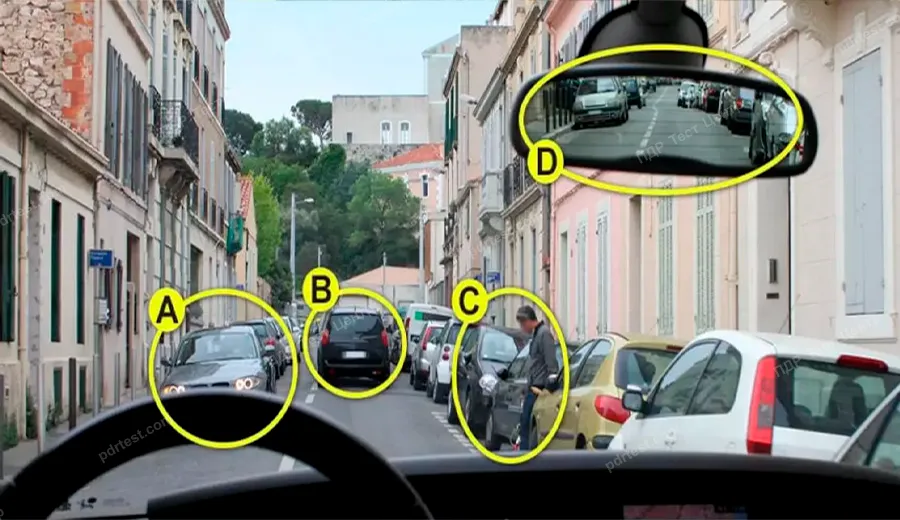
This is an exam question from the Traffic Rules of Ukraine about road safety in conditions of limited visibility and the sudden appearance of pedestrians. It teaches the driver to anticipate risks where people may unexpectedly step onto the roadway from behind parked cars, greenery, or other objects that block the view, and where the reaction time is minimal. Such situations are typical for the theoretical exam because they test not just 'mechanical' knowledge, but the understanding of real dangers on the road.
35.158. In this situation, when an oncoming vehicle appears, the driver of the white car must:
UAУ цьому випадку за появи зустрічного автомобіля водій білого повинен:
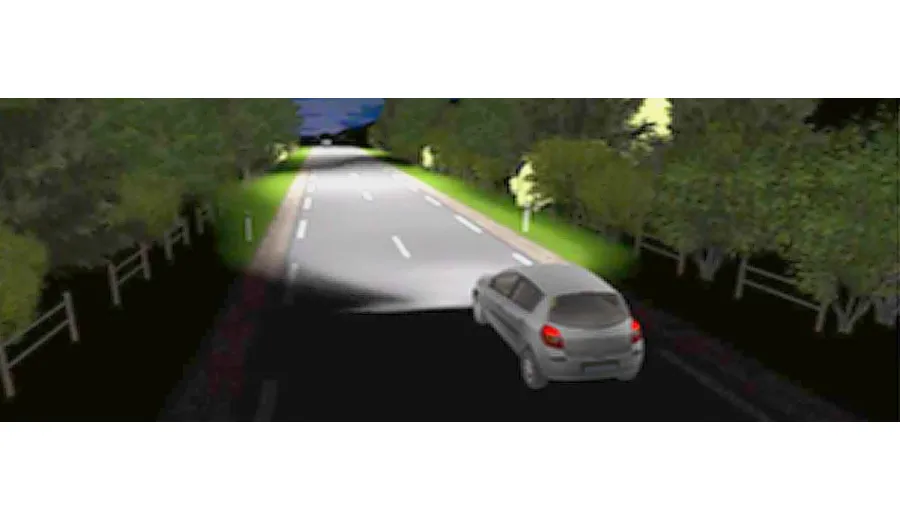
This exam question from the Traffic Rules of Ukraine concerns road safety at night and the rules for using external lighting devices. Proper switching of headlights directly affects visibility and the ability of drivers to respond to the situation in time, as blinding an oncoming driver can lead to loss of orientation, leaving the lane, or delayed braking.
35.159. Why should the speed of novice drivers be lower than that of other drivers?
UAЧому швидкість водіїв-початківців має бути нижчою, ніж в інших водіїв?
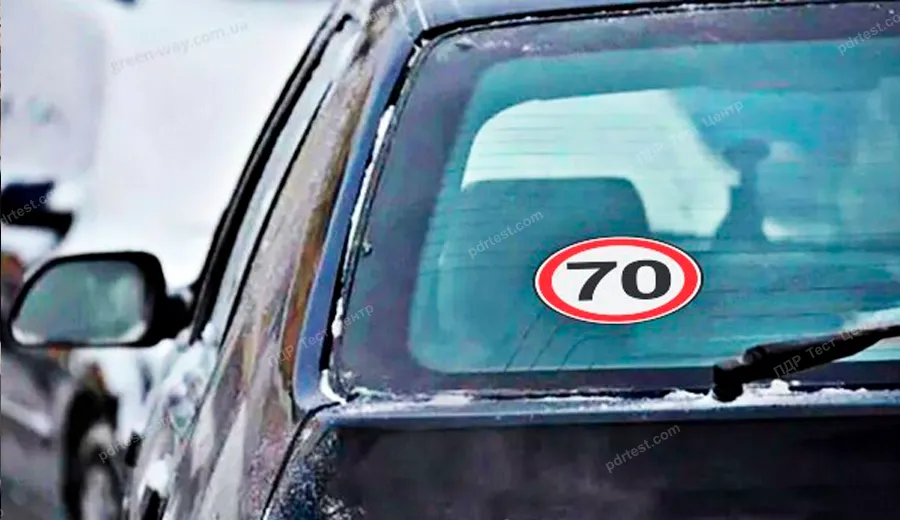
This is an exam question from the Traffic Rules of Ukraine about speed safety and the psychology of driving: why beginners need to drive at a more cautious speed. In real traffic, speed determines not only travel time, but also the margin for error, braking distance, and the severity of accident consequences. Therefore, the traffic rules specifically identify beginner drivers as a high-risk category, for whom special restrictions apply to reduce the likelihood of accidents in the first years of independent driving.
35.160. Looking at zone C in this situation, I must take into account that:
UAДивлячись на зону С в даному випадку я повинен враховувати, що:
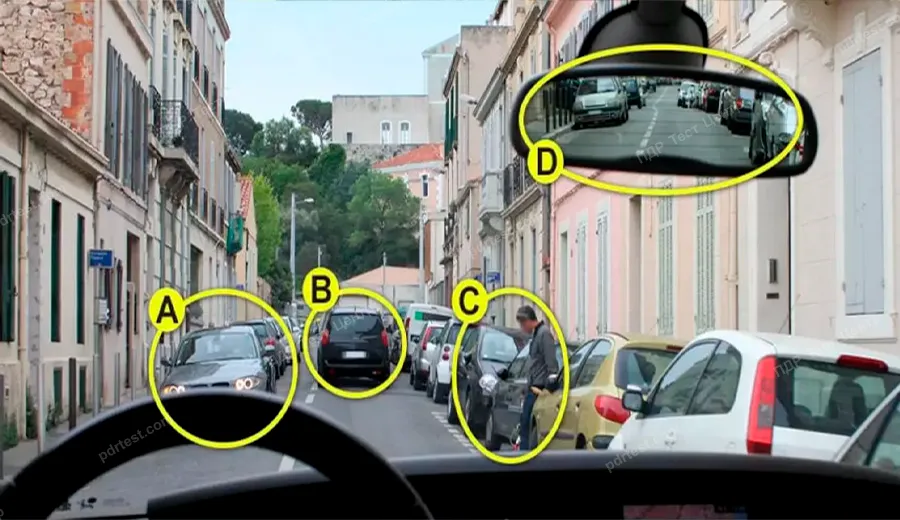
This is an exam question from the Traffic Rules of Ukraine (PDR) concerning road safety in conditions of limited visibility and anticipating pedestrian behavior. In real traffic, the greatest risks arise not when the danger is already obvious, but when it may suddenly appear: a person stands near the edge of the roadway or steps out from behind parked cars, and the driver must be prepared for their actions in advance.
35.161. A cyclist ahead of you is frequently braking sharply. You:
UAПопереду Вас рухається велосипедист, який постійно різко пригальмовує. Ви:
Question without image
This is an exam question from the Traffic Rules of Ukraine about safe interaction with vulnerable road users and the correct response to unstable road situations. The scenario with a cyclist who frequently and sharply brakes is potentially dangerous due to the risk of sudden approach, the cyclist losing balance, or unpredictable changes in speed. In the theoretical exam, it is checked whether the driver understands that the main tactic here is not pressure and haste, but speed control, maintaining distance, and constant readiness to stop.
35.162. When opening the door of a vehicle from the side of the carriageway, what should you pay attention to?
UAВідкриваючи двері транспортного засобу зі сторони проїжджої частини, на що слід звернути увагу?
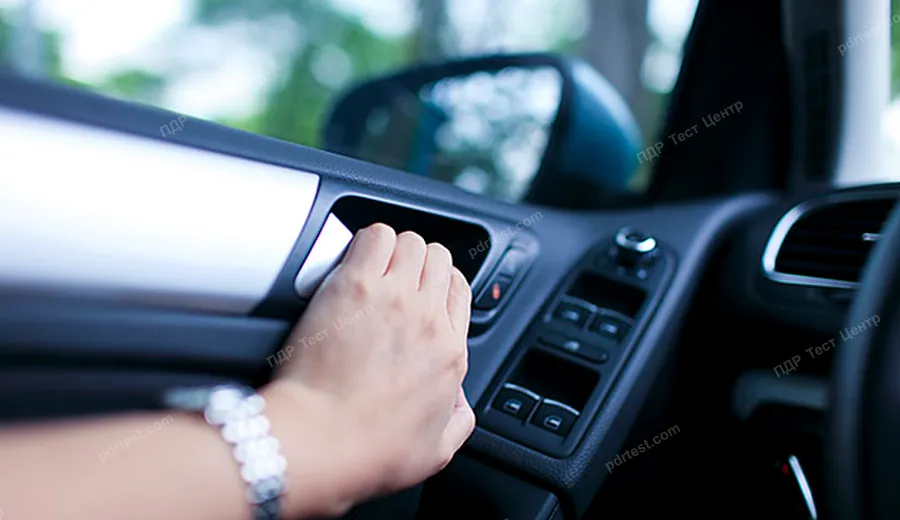
This exam question from the Traffic Rules of Ukraine concerns basic road safety during stopping or parking: even the “simple” act of opening a door can suddenly create an obstacle on the roadway and sharply increase the width of the vehicle. In real traffic, this is dangerous for drivers, cyclists, and pedestrians, as they may not have time to react, especially in heavy traffic, at night, or when the side clearance is minimal.
35.163. Is it mandatory for a driver with less than two years of driving experience to display the appropriate identification sign on the vehicle?
UAЧи обов'язково водієві, стаж водіння якого менше двох років, вішати відповідний розпізнавальний знак на автомобіль?
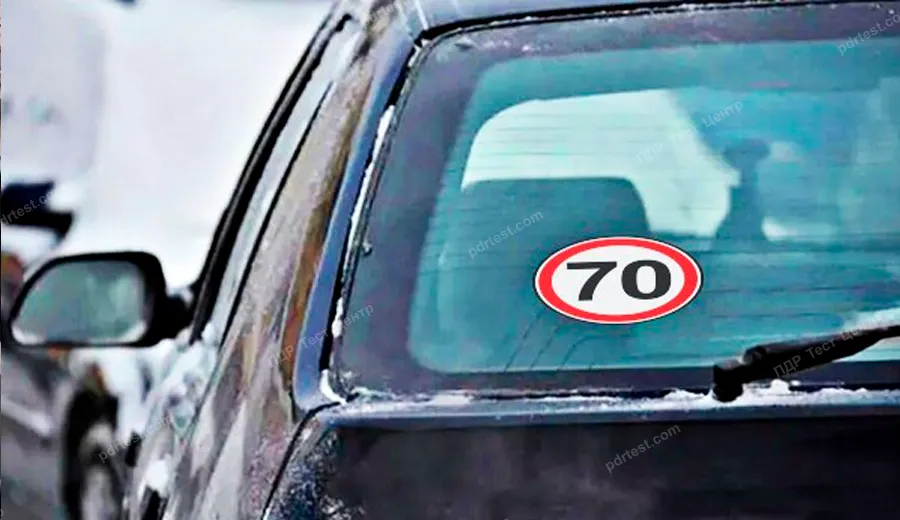
This exam question from the Traffic Rules of Ukraine concerns road safety and mutual understanding between drivers through identification signs on a vehicle. Such markings are not "just for show," but are needed so that other road users can correctly assess your driving style, distance, and possible mistakes, especially in heavy traffic or difficult weather conditions.
35.164. If you are driving straight ahead at a green traffic signal, do you need to reduce your speed in this case?
UAЯкщо Ви рухаєтесь прямо на зелений сигнал світлофора, чи потрібно Вам зменшити швидкість у даному випадку?
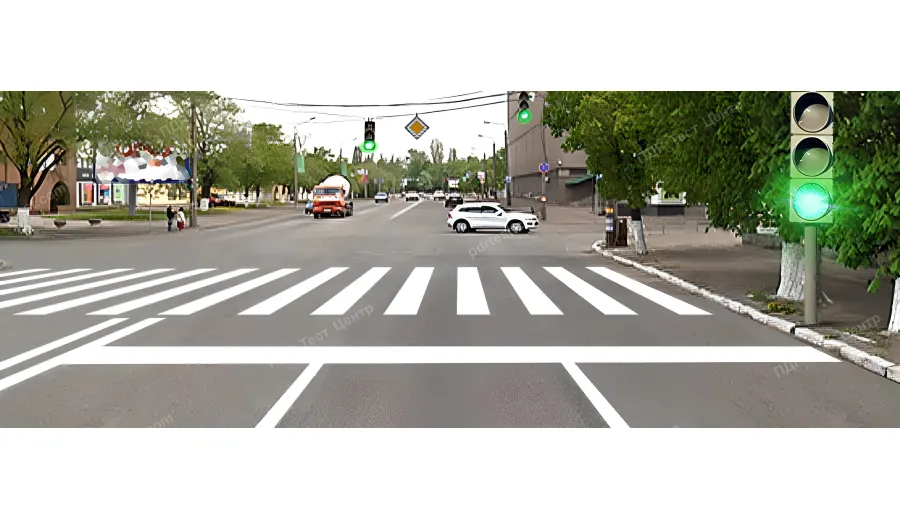
This is an exam question from the Traffic Rules of Ukraine about the safe passage through a controlled intersection on a permissive signal. It emphasizes that “green” means permission to proceed, but does not cancel the requirement to constantly monitor the traffic situation and respond in advance to potential risks. For the theoretical exam, it is important to understand: safety is determined not only by the traffic light signal, but also by the actual situation ahead, where obstacles or other road users who are still completing their maneuvers may appear.
35.165. You are approaching a pedestrian crossing where there are no pedestrians either on the approaches to it or directly on it. Are you allowed to pass without reducing your speed?
UAВи наближаєтесь до пішохідного переходу, на підходах до якого та безпосередньо на ньому немає пішоходів. Чи можете Ви проїхати, не зменшуючи швидкість?
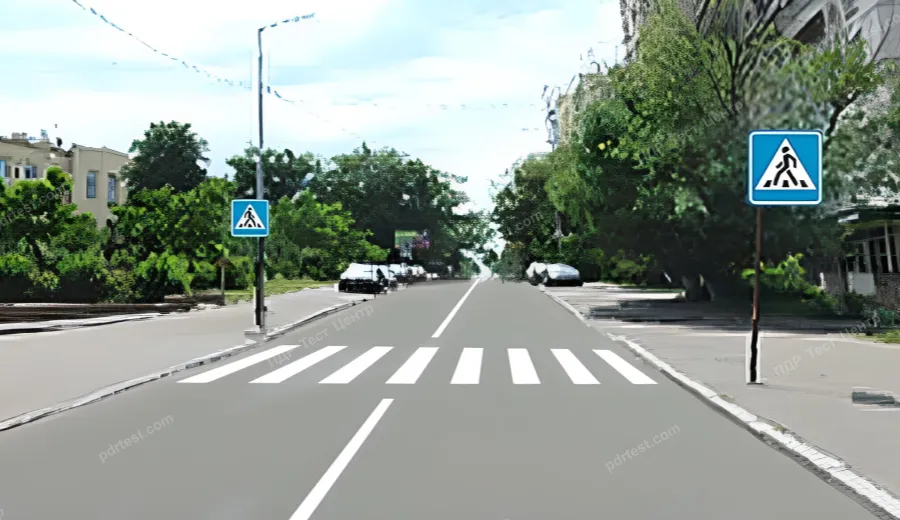
This is an exam question from the Traffic Rules of Ukraine about the safe passage of uncontrolled pedestrian crossings and the correct assessment of the traffic situation. In the context of the theoretical exam, it checks whether the driver understands when the obligation to reduce speed or stop arises, and how the presence of a "zebra crossing" relates to the actual presence of pedestrians and the possibility of creating danger for them.
35.166. Is the driver of the grey vehicle allowed to stop at this location?
UAЧи дозволено водієві сірого автомобіля виконати зупинку у цьому місці?
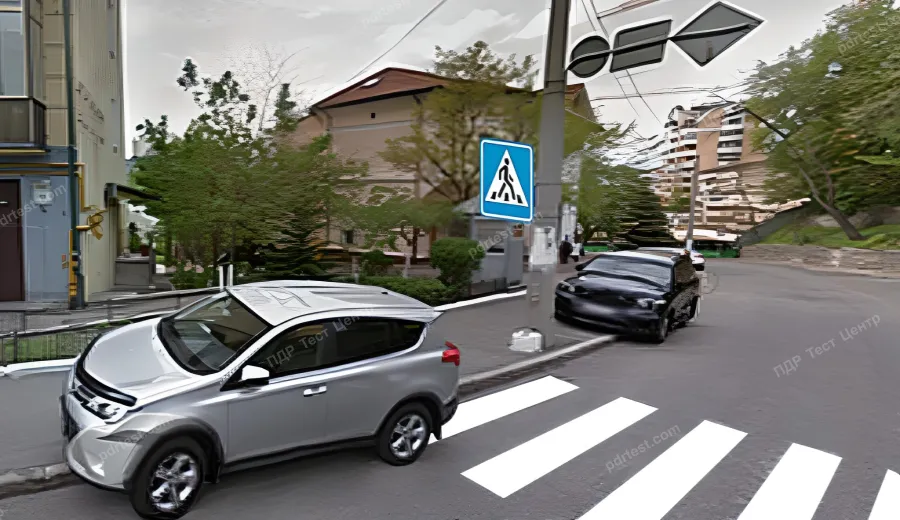
This exam question from the Traffic Rules of Ukraine concerns traffic safety in the area of pedestrian crossings and the proper choice of a place to stop. Stopping near a "zebra" crossing directly affects visibility: it becomes harder for approaching drivers to notice a pedestrian, and pedestrians find it more difficult to assess the situation. That is why the traffic rules pay special attention to restrictions on stopping and parking near crossings, which is often checked in the theoretical exam.
35.167. Are you required to stop in this situation if the driver of the oncoming vehicle, without making sure the maneuver is safe, is making a left turn?
UAЧи повинні Ви зупинитись у даному випадку, якщо водій зустрічного автомобіля, не переконавшись у безпечності маневру, виконує поворот ліворуч?
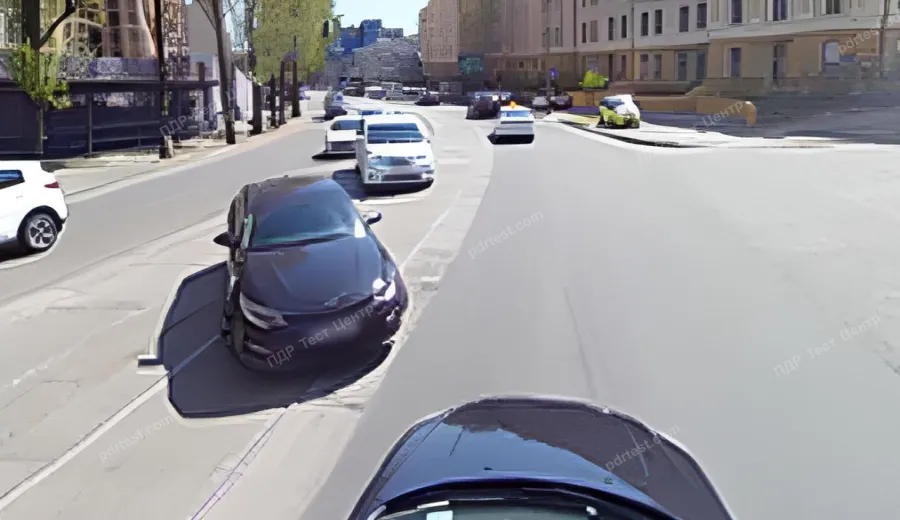
This is an exam question from the Traffic Rules of Ukraine about road safety and the ability to act correctly in a conflict situation at an intersection. It emphasizes an important principle: even when you have the right of way according to the traffic rules, the driver is obliged to be guided by safety and to prevent an accident if the danger is obvious and objectively noticeable.
35.168. Is it necessary to increase the lateral clearance when you are approaching a truck?
UAЧи потрібно збільшувати боковий інтервал, коли Ви наближаєтесь до вантажного автомобіля?
Question without image
This exam question from the Traffic Rules of Ukraine concerns the safety of interacting with large vehicles in traffic and teaches how to assess risks when approaching, overtaking, or passing. On the road, trucks present additional hazards: larger dimensions, possible protruding cargo, limited visibility due to "blind spots," and the effect of air currents, which can "push" or "pull" lighter vehicles. That is why choosing the correct lateral gap is critically important to prevent contact and loss of stability.
35.169. When driving straight in this situation, must you take into account that the cyclist may start moving at any moment?
UAЧи повинні Ви під час руху прямо в даному випадку враховувати те, що велосипедист у будь-який момент може розпочати рух?
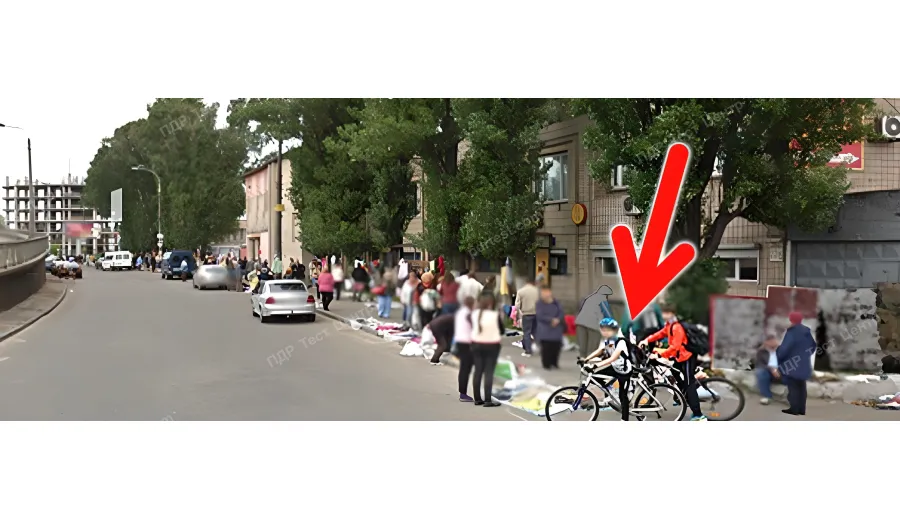
This is an exam question from the Traffic Rules of Ukraine concerning safety when driving straight alongside vulnerable road users. In real-life situations, a cyclist near the roadway can change the situation on the road at any moment, so the driver must not only "drive by the rules," but also anticipate risks and act proactively to avoid an accident.
35.170. Is it necessary to reduce speed when passing a pedestrian in this case?
UAЧи потрібно зменшити швидкість, проїжджаючи повз пішохода у даному випадку?
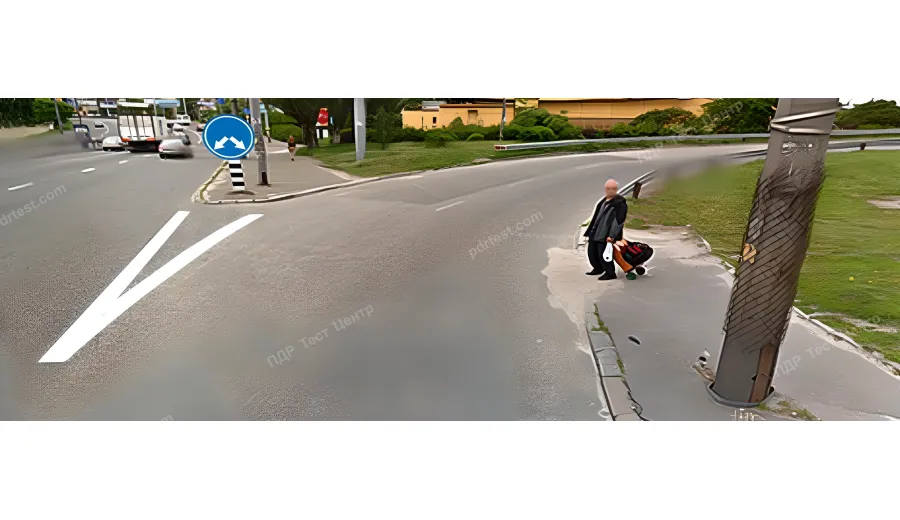
This exam question from the Traffic Rules of Ukraine concerns road safety when driving near pedestrians. In real-life situations, a pedestrian is the least protected participant, and their actions can be unpredictable: a sudden step onto the roadway, a change of direction, emerging from behind an obstacle, or an incorrect assessment of the vehicle's speed. Therefore, the driver must act "proactively" to minimize the risk of an accident.
35.171. Which factors can cause driver glare?
UAЯкі фактори можуть призвести до засліплення водія?
Question without image
This exam question from the Traffic Rules of Ukraine concerns road safety and the driver's ability to perceive the traffic situation in a timely manner. Glare is dangerous because even for a short time it reduces the ability to notice obstacles, road markings, the edge of the carriageway, or pedestrians, and therefore directly affects the choice of safe speed and distance, especially at night or during sudden changes in lighting.