
20.1. Is it permitted in this situation to drive through the level crossing in two lanes?
UAЧи дозволено в цій ситуації рух через переїзд у два ряди?
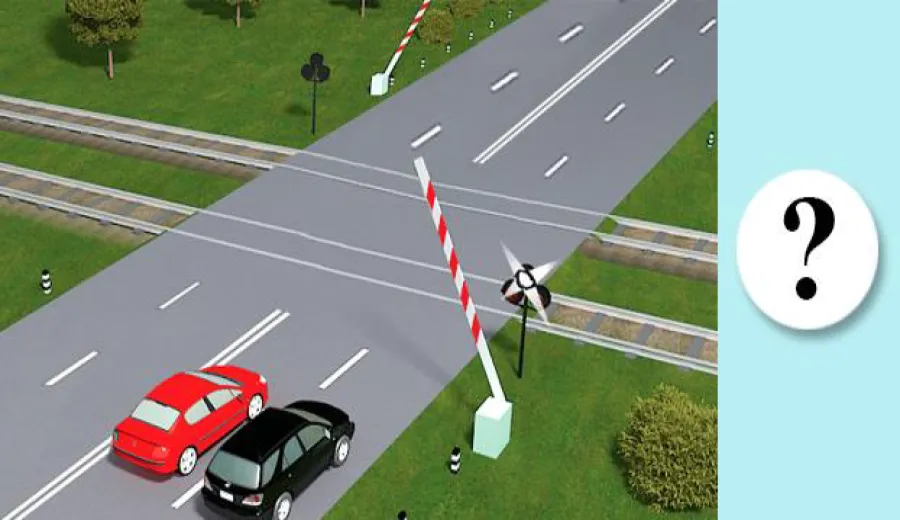
This is an exam question from the Traffic Rules of Ukraine concerning the safe crossing of railway crossings and the correct choice of traffic lane. At a railway crossing, any mistake in maneuvering or traveling in parallel lanes increases the risk of congestion on the tracks, so the traffic rules clearly define when vehicles may move simultaneously in several lanes.
20.2. How should you act in this situation when a traffic jam has formed at the railway crossing, which will force you to stop?
UAЯк ви повинні вчинити в цій ситуації, коли на залізничному переїзді утворився затор, який змусить вас зупинитися?
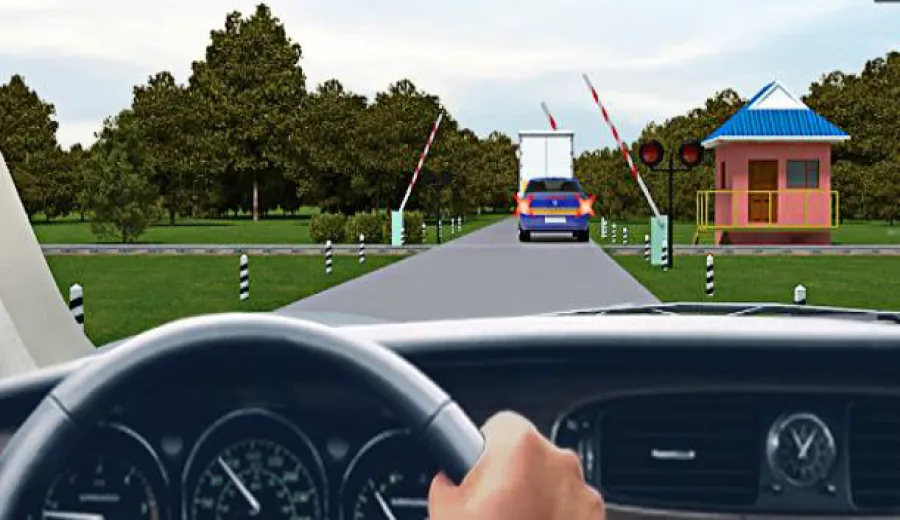
This exam question from the Traffic Rules of Ukraine checks a basic safety principle at railway crossings: a driver is not allowed to create a situation where the vehicle may end up stopped on the tracks. In real traffic, a traffic jam after the tracks is especially dangerous because a train has a long braking distance, and the engineer may not have time to react to an obstacle. That is why the traffic rules require the driver to assess the situation in advance and not risk entering the crossing without a guaranteed exit.
20.3. Is it allowed in this situation to drive across the level crossing in two lanes?
UAЧи дозволено в цій ситуації рух через переїзд у два ряди?
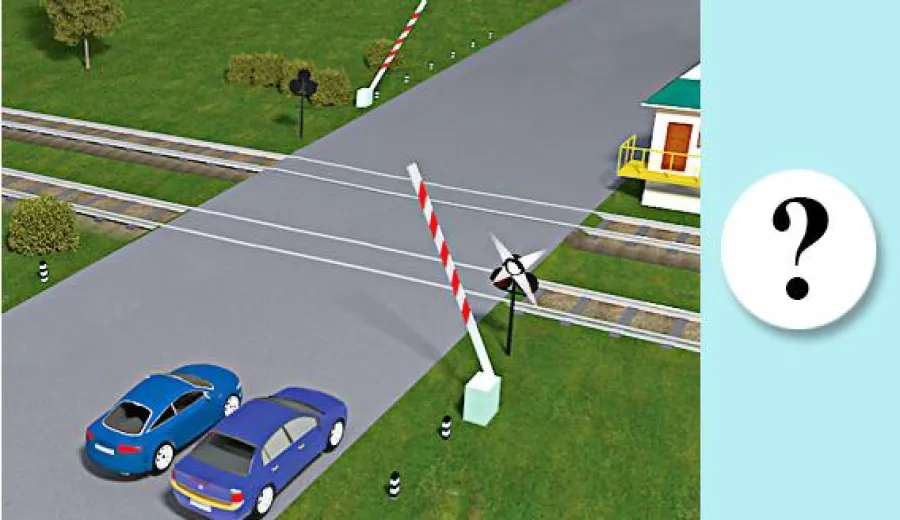
This is an exam question from the Traffic Rules of Ukraine (PDR) concerning safety at railway crossings, where any mistake in lane organization can lead to side collisions or track blockage. Space at crossings is often limited, and maneuvers between vehicles are dangerous, so the traffic rules set clear requirements: how exactly the flow should be formed and in what order vehicles should cross the tracks.
20.4. Is it permitted to open the barrier at a railway crossing without authorization?
UAЧи дозволяється самовільно відкривати шлагбаум на залізничному переїзді?
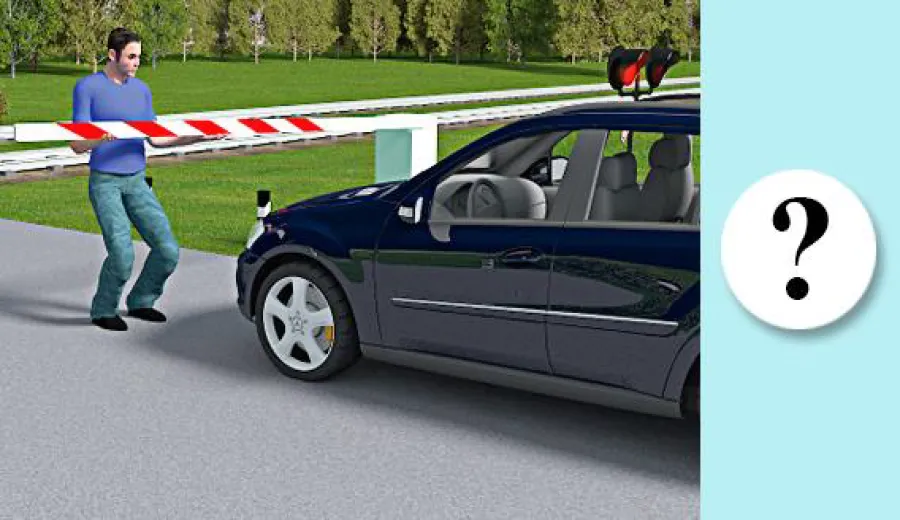
This exam question from the Traffic Rules of Ukraine concerns safety at railway crossings and tests the driver's ability to act in high-risk situations. Any manipulation of the barrier at a crossing directly affects safety, since a train has a long braking distance and cannot stop quickly, so even a brief mistake by the driver can lead to the most severe consequences.
20.5. What must the driver of the vehicle be guided by when passing this railway crossing?
UAЧим повинен керуватися водій транспортного засобу під час проїзду цього залізничного переїзду?
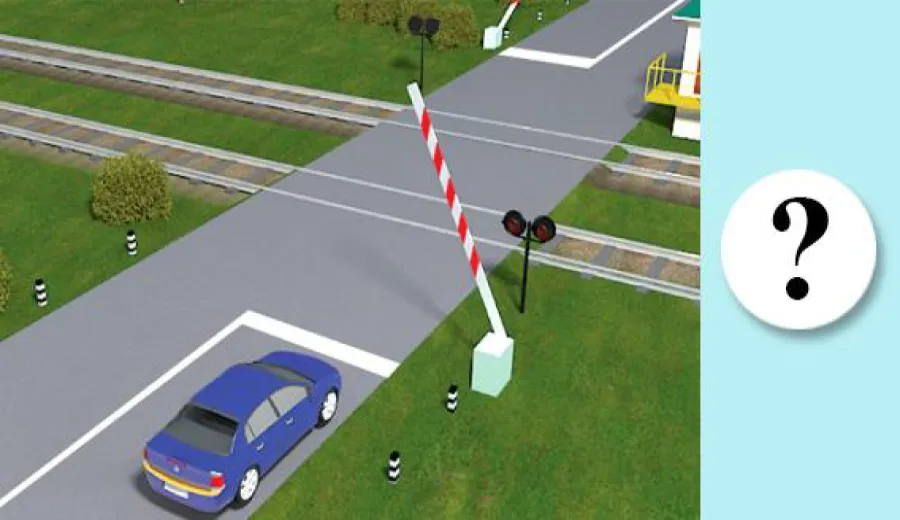
This exam question from the Traffic Rules of Ukraine concerns safety at railway crossings—one of the most high-risk sections of the road. At a crossing, the driver cannot rely on just one “signal,” since the situation can change instantly, and a train’s braking distance is much longer than that of a car. That is why the traffic rules require increased attention and strict adherence to all available means of regulation.
20.6. What must the driver of the vehicle be guided by when passing this railway crossing?
UAЧим повинен керуватися водій транспортного засобу під час проїзду цього залізничного переїзду?
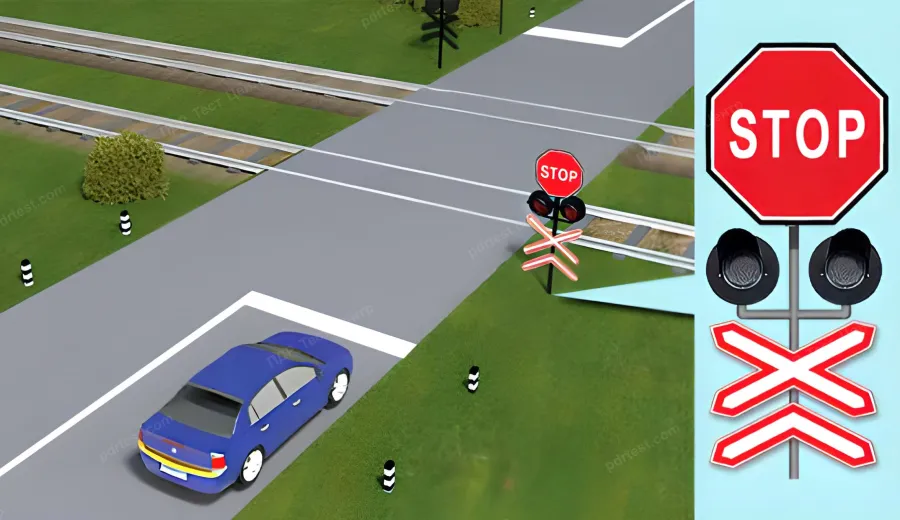
This exam question from the Traffic Rules of Ukraine concerns road safety in high-risk areas where the road intersects with railway tracks at the same level. Crossing a railway crossing requires maximum attention, as mistakes here often lead to the most severe consequences. That is why the traffic rules provide not just one 'main' guideline, but a set of measures that the driver must simultaneously take into account when approaching and starting to cross the tracks.
20.7. Is it permitted to proceed through the railway crossing in the situation shown in the illustration?
UAЧи дозволено рух через залізничний переїзд у ситуації, зображеній на малюнку?
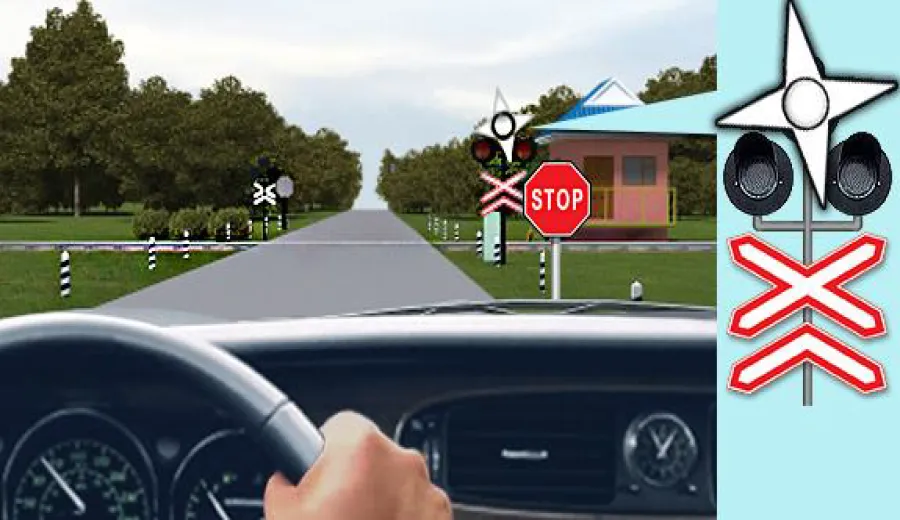
This is an exam question from the Traffic Rules of Ukraine concerning safety at railway crossings and the ability to correctly interpret railway crossing signal lights. For the theoretical exam, it is important to understand that special signals operate at crossings, and a mistake in interpreting them can lead to a dangerous situation or a violation of traffic rules.
20.8. Is it permitted to proceed through the railway crossing in the situation shown in the illustration?
UAЧи дозволено рух через залізничний переїзд у ситуації, зображеній на малюнку?
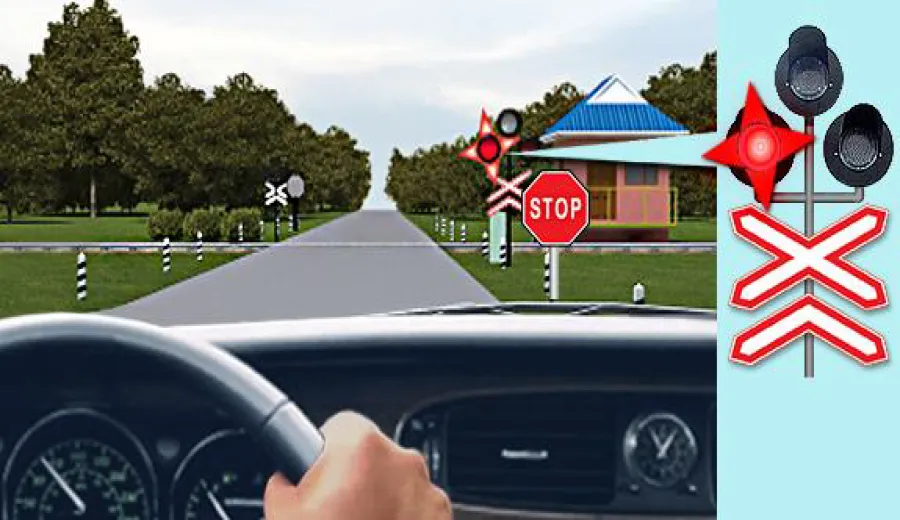
This exam question from the Traffic Rules of Ukraine concerns road safety at railway crossings — some of the most dangerous sections of the road, where a driver's mistake can have critical consequences. According to the traffic rules, the procedure for passing such places is determined primarily by the signals of the railway crossing traffic light, and only then by other means of traffic organization.
20.9. How should you act in this situation when the light and sound signals are activated at the railway crossing, but the barriers have not yet started to lower?
UAЯк ви повинні вчинити в цій ситуації, коли на залізничному переїзді увімкнулися світлова та звукова сигналізації, а шлагбауми ще не почали опускатися?
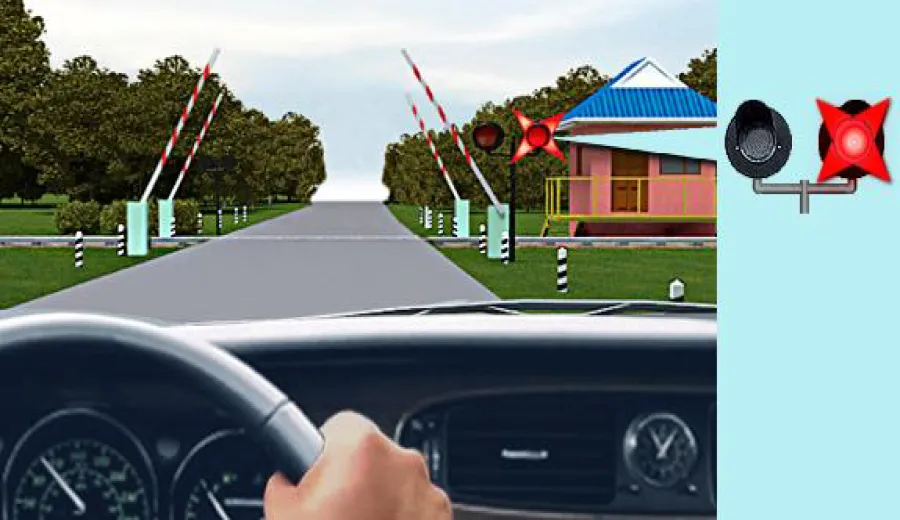
This exam question from the Traffic Rules of Ukraine tests knowledge of the rules for safely crossing railway crossings—one of the most dangerous sections of the road, where a driver's mistake can have fatal consequences. Such situations often appear in the theoretical exam, as it is important to clearly understand that the main signal for the driver is not only the barrier, but primarily the light and sound signals, which warn of an approaching train and prohibit entry.
20.10. In the event of a forced stop of a vehicle on a railway crossing, the driver must immediately:
UAУ разі вимушеної зупинки транспортного засобу на залізничному переїзді водій зобов'язаний негайно:
Question without image
This is an exam question from the Traffic Rules of Ukraine (PDR) concerning safety at railway crossings—one of the most high-risk sections of the road. A forced stop on the tracks creates a critical danger, as a train has a long braking distance and cannot stop instantly. Therefore, the traffic rules require the driver to act quickly and without delay to reduce the risk of tragedy for passengers and other road users.
20.11. What actions must the driver of a vehicle take in the event of a forced stop at a railway crossing if it is not possible to clear the railway crossing?
UAЯких заходів повинен вжити водій транспортного засобу в разі вимушеної зупинки на залізничному переїзді, якщо йому не вдається звільнити залізничний переїзд?
Question without image
This exam question from the Traffic Rules of Ukraine tests the driver's knowledge of actions in one of the most dangerous situations on the road: a forced stop on a railway crossing. Here, the key goal of the traffic rules is to remove the obstacle from the tracks as quickly as possible while simultaneously warning the train driver, since a train's braking distance is long and any delay can lead to serious consequences.
20.12. What is the signal to stop a train given by a person in case of a forced stop of a vehicle on a railway crossing or other danger?
UAЩо є сигналом зупинки поїзда, який подається людиною в разі вимушеної зупинки транспортного засобу на залізничному переїзді або іншої небезпеки?
Question without image
This exam question from the Traffic Rules of Ukraine concerns safety at railway crossings and the actions of drivers and other individuals in critical situations when there is a real threat to train movement. Such knowledge is important for the theoretical exam, as any delay at a crossing can be very costly: a train has a large mass and a long braking distance, so the engineer needs to receive a clear, unambiguous danger signal as early as possible.
20.13. How should you act in a situation when, as you approach a railway crossing, you see an approaching train, but the railway crossing's audible and visual signals are not activated?
UAЯк ви повинні вчинити в ситуації, коли при під'їзді до залізничного переїзду ви побачили поїзд, що наближається, але при цьому звукова та світлова сигналізація залізничного переїзду не увімкнена?
Question without image
This exam question from the Traffic Rules of Ukraine concerns road safety at one of the most dangerous points on the road — a railway crossing. Such situations test whether a driver can make decisions not “prompted” by technology, but based on the actual road situation, since a mistake near the tracks can have the gravest consequences. For the theoretical exam, it is important to understand: actual danger takes priority, not just the operation of the signaling system.
20.14. How should you act in a situation where you have stopped in front of a railway crossing at a prohibitory traffic signal, when the train has already passed, but the light and sound signals have not yet turned off?
UAЯк ви повинні вчинити в ситуації, якщо ви зупинилися перед залізничним переїздом на заборонний сигнал світлофора, коли поїзд вже проїхав, а світлова та звукова сигналізація ще не вимкнулися?
Question without image
This exam question focuses on road safety when crossing railway crossings, where a driver's mistake can have the most serious consequences. According to the traffic rules, the signals of the crossing automation always have priority, as they warn of real danger even when the train has already disappeared from sight. That is why the theoretical exam often includes situations where you need not "guess," but act strictly according to the Traffic Rules of Ukraine.
20.15. How should you act in a situation where the light and sound signals are activated at a railway crossing, but the train is not yet visible?
UAЯк ви повинні вчинити в ситуації, коли на залізничному переїзді увімкнулася світлова та звукова сигналізація, а поїзд ще не з'явився в межах видимості?
Question without image
This is an exam question from the Traffic Rules of Ukraine about traffic safety and the rules for crossing railway crossings. Such situations are among the most dangerous in road traffic, as a train has a long braking distance, and the driver cannot accurately assess its approach “by eye.” Therefore, during the theoretical exam, the driver’s ability to rely primarily on the crossing signals, and not on whether the train is visible, is tested.
20.16. How should you act in this situation when the barriers in front of you begin to lower?
UAЯк ви повинні вчинити в цій ситуації, коли шлагбауми, які знаходяться перед вами, почали опускатися?
Question without image
This exam question from the Traffic Rules of Ukraine tests the basic skills of safe driver behavior near railway crossings, where any mistake can have the most severe consequences. In real traffic, the temptation to “make it” before the crossing closes often leads to dangerous situations, so the traffic rules clearly define when entry onto the tracks becomes unacceptable and exactly where the driver must stop.
20.17. A railway level crossing is considered:
UAЗалізничним переїздом вважається:
Question without image
This is an exam question from the Traffic Rules of Ukraine concerning safety in high-risk areas where the paths of vehicles and rail transport may intersect. Proper understanding of terms in the traffic rules is important not only for the theoretical exam but also for practice: a mistake in identifying such a place can lead to incorrect driver actions and critically dangerous situations.
20.18. Where must the driver of a vehicle stop to give way to an approaching train in the absence of traffic control devices at the railway crossing?
UAДе водій автомобіля повинен зупинити свій транспортний засіб для пропуску поїзда, що наближається, за відсутності на переїзді засобів організації дорожнього руху?
Question without image
This exam question from the Traffic Rules of Ukraine concerns safety at railway crossings, where a mistake in the stopping location can lead to a critically dangerous situation. Such traffic rules are often included in the theoretical exam because they test not “logic,” but precise knowledge of the regulatory distance and the ability to act when the driver is not guided by markings or signs.
20.19. What must the driver make sure of when approaching any railway crossing?
UAУ чому повинен переконатися водій при під'їзді до будь-якого залізничного переїзду?
Question without image
This exam question from the Traffic Rules of Ukraine checks a basic safety principle when crossing railway tracks: the driver must act with maximum caution, since a train has unconditional priority and its braking distance is much longer than that of any car. Such high-risk situations are often included in the theoretical exam, where the decisive factor is not the formal observation of signs, but the driver's personal assessment of danger.
20.20. What must drivers of vehicles be guided by when crossing any railway level crossings?
UAЧим повинні керуватися водії транспортних засобів під час проїзду будь-яких залізничних переїздів?
Question without image
This exam question from the Traffic Rules of Ukraine tests basic skills for safe behavior at railway crossings, where the cost of a mistake is especially high. During the theoretical exam, it is important to understand that at a crossing, the driver cannot rely on just one “convenient” signal, since different traffic control means may operate in a certain sequence, and the train has unconditional priority and cannot stop instantly.
20.21. Where are drivers of vehicles allowed to cross railway tracks?
UAДе водіям транспортних засобів дозволено перетинати залізничні колії?
Question without image
This exam question from the Traffic Rules of Ukraine checks the basic safety rule when approaching a place where a road crosses railway tracks. Crossing tracks is always associated with an increased risk of accidents: a train has a long braking distance, and outside specially equipped areas, a driver may not notice an approaching train, encounter uneven surfaces, or even get stuck on the rails.
20.22. Drivers of vehicles may cross railway tracks only:
UAВодії транспортних засобів можуть перетинати залізничні колії лише:
Question without image
This exam question from the Traffic Rules of Ukraine concerns one of the most dangerous situations in road traffic — crossing railway tracks. A mistake here can cost lives, since a train has a long braking distance, and attempts to “cut” across the tracks outside of a permitted location often end with the car getting stuck or a collision. That is why the traffic rules set strict restrictions, which are checked in the theoretical exam.
20.23. What is the general alarm sound signal at railway level crossings?
UAЩо є звуковим сигналом загальної тривоги на залізничних переїздах?
Question without image
This exam question from the Traffic Rules of Ukraine concerns safety at railway crossings and the driver's actions in case of sudden danger. Any delay at a crossing can have critical consequences, so the traffic rules provide for a clear, recognizable audible signal that cannot be confused with the ordinary warning use of the horn.
20.24. In which case are you allowed to drive under a lowering barrier at a railway crossing?
UAУ якому випадку Ви можете проїхати під шлагбаумом, який опускається на залізничному переїзді?
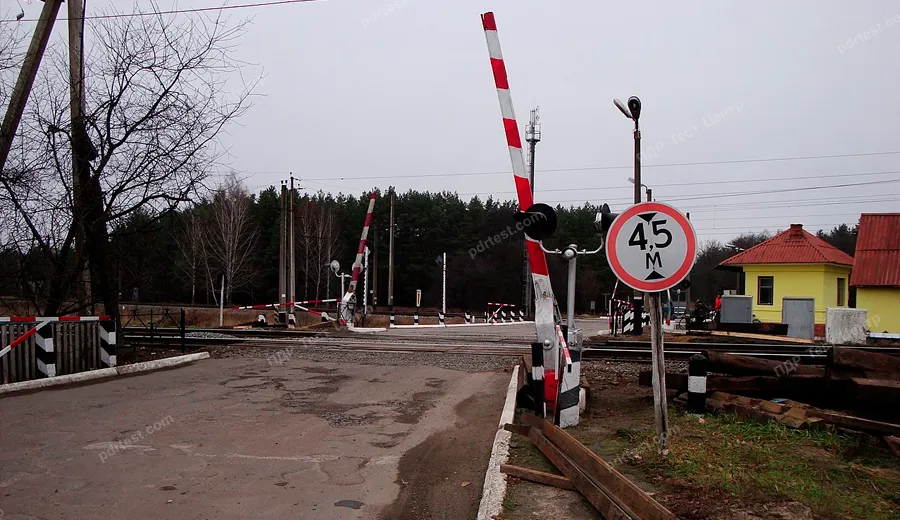
This exam question from the Traffic Rules of Ukraine checks a basic safety principle at railway crossings: the driver must unconditionally obey the signals indicating the closure of the crossing, as any attempt to "make it in time" creates a critical risk of collision with a train. In the context of the theoretical exam, such tasks emphasize that at a crossing, the logic of "I see it's far away" or "I'll carefully pass through" does not apply—direct prohibitions of the traffic rules are in effect.
20.25. If you are approaching a railway crossing, you must stop:
UAЯкщо ви наближаєтеся до залізничного переїзду, Ви повинні зупинитися:
Question without image
This exam question from the Traffic Rules of Ukraine concerns safety at railway crossings and the driver's ability to correctly determine the stopping point when crossing is prohibited. Such situations are critical in practice: a mistake with the stopping point can create the danger of a collision with a train or interfere with the operation of the crossing signals, which is why the theoretical exam often includes the algorithm of actions before the crossing.
20.26. Under what condition is overtaking allowed at a railway level crossing:
UAЗа якої умови дозволено виконати обгін на залізничному переїзді:
Question without image
This is an exam question from the Traffic Rules of Ukraine concerning road safety in high-risk areas and the correct choice of maneuvers near railway infrastructure. A railway crossing is a section where the situation can change instantly due to the appearance of a train, activation of signaling, or the need for an emergency stop, so the traffic rules establish especially strict restrictions here.
20.27. Under what condition is overtaking allowed at a railway level crossing:
UAЗа якої умови дозволено виконати обгін на залізничному переїзді:
Question without image
This exam question from the Traffic Rules of Ukraine concerns road safety in high-risk areas, particularly near railway crossings. A crossing is a place where any mistake can have serious consequences: the barrier may close suddenly, traffic may stop, visibility is limited, and there is minimal time to maneuver. Therefore, the traffic rules impose strict restrictions here regardless of whether a train is visible or the road seems "clear."
20.28. Are you allowed to cross a railway crossing if the barrier has not lowered, but the light and sound signals are activated?
UAЧи дозволено Вам проїхати залізничний переїзд, якщо шлагбаум не опустився, а лише увімкнулась світлова та звукова сигналізація?
Question without image
This exam question from the Traffic Rules of Ukraine concerns traffic safety at railway crossings and the correct driver response to warning signals. Such situations are among the most dangerous in road traffic, as a train has a long braking distance and a driver's mistake can lead to severe consequences. That is why the traffic rules establish strict requirements for stopping and waiting before the tracks.
20.29. Are you allowed to reverse over a railway crossing if you missed a right turn?
UAЧи дозволено Вам рух через залізничний переїзд заднім ходом, якщо ви пропустили поворот праворуч?
Question without image
This is an exam question from the Traffic Rules of Ukraine (PDR) concerning the safety of maneuvering in high-risk areas, where any delay or incorrect action can lead to critical consequences. A railway crossing is one of the most dangerous sections of the road, as the driver has limited time to make decisions, and a train cannot stop quickly. That is why the traffic rules establish strict prohibitions for such places, which are often tested in the theoretical exam.
20.30. Is the driver allowed to start reversing in this case?
UAЧи дозволено водієві в даному випадку розпочати рух заднім ходом?
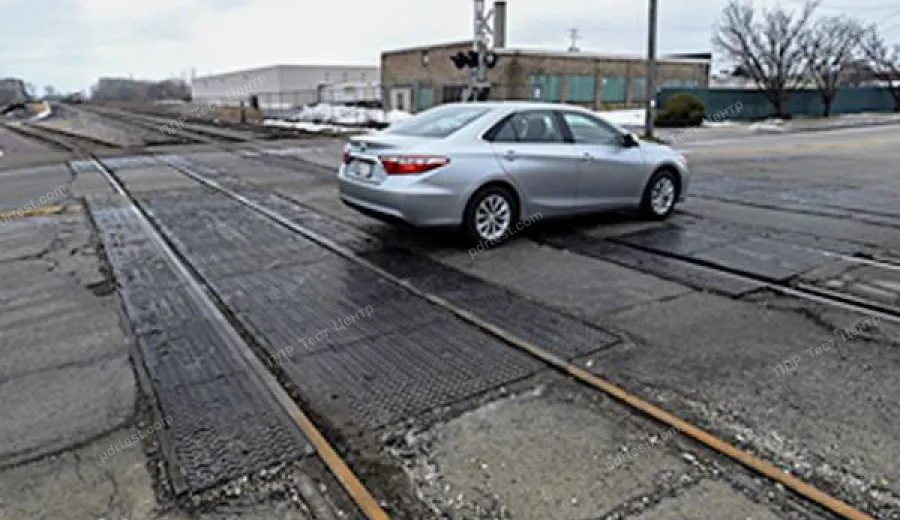
This is an exam question from the Traffic Rules of Ukraine concerning the safety of maneuvering and the predictability of movement in high-risk areas. Reversing always requires special attention, but on certain sections of the road, the traffic rules impose a direct prohibition, since any delay or unexpected change in trajectory can create a critical situation for all road users.
20.31. Is the driver allowed to make a U-turn in this case if there are no vehicles ahead or behind?
UAЧи дозволено водієві в даному випадку виконати розворот, якщо попереду і позаду нього немає транспортних засобів?
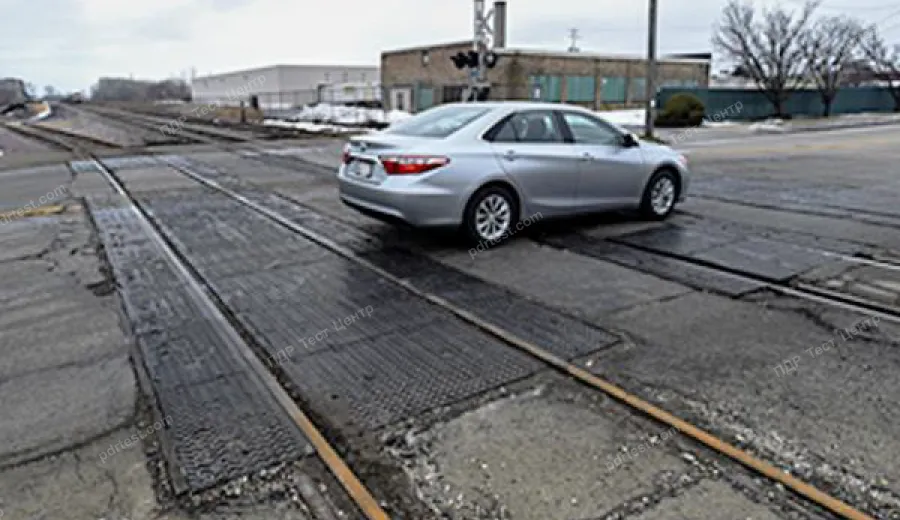
This is an exam question from the Traffic Rules of Ukraine concerning the safety of maneuvering in high-risk areas, where any delay can have critical consequences. A railway crossing is exactly such a section of road, as it is an intersection of a road with railway tracks at the same level (the definition of the term is provided in point 1.10 of the traffic rules). Therefore, theoretical exams often include situations where you need to recognize a crossing by the tracks on the roadway and correctly assess the permissibility of maneuvers.