
11.1. You are allowed to make a U-turn along trajectory B because:
UAВам дозволений розворот по траєкторії Б, тому що:
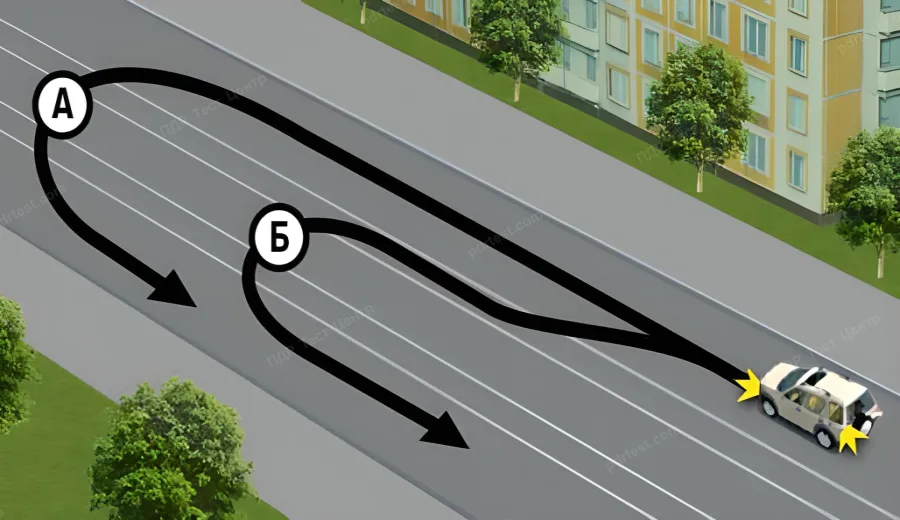
This is an exam question from the Traffic Rules of Ukraine about the safe and correct execution of a left maneuver on a road with tram tracks. Such situations often occur in cities, and a mistake during a U-turn can create an obstacle for the tram or provoke a conflict with vehicles behind. Therefore, theoretical driving exams regularly include nuances of choosing the correct position on the roadway before making a U-turn.
11.2. Is a car allowed to drive onto a tram track going in the same direction?
UAЧи дозволено автомобілю виконати виїзд на трамвайну колію попутного напрямку?
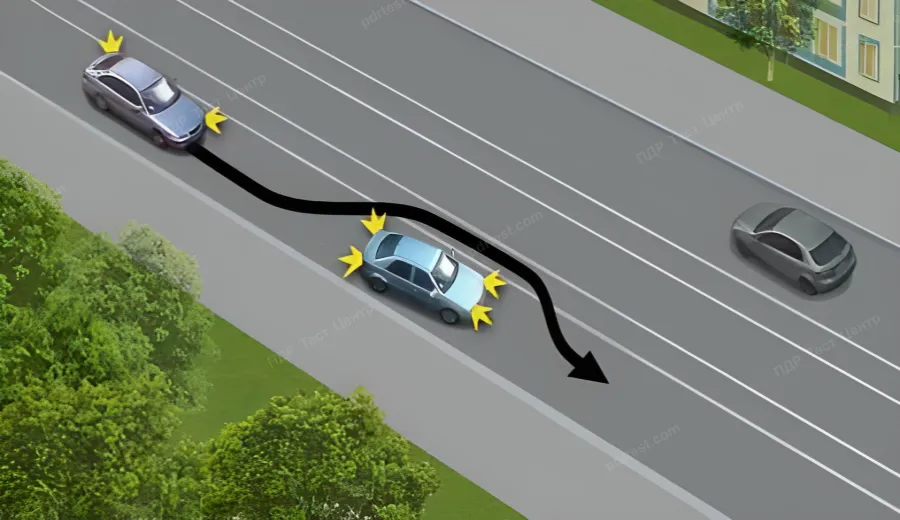
This exam question from the Traffic Rules of Ukraine concerns the safe interaction of non-rail vehicles with tram infrastructure in urban environments. Tram tracks are a part of the road designated for the priority movement of trams, so any maneuvers by a car near them are associated with increased risk and require a clear understanding of traffic rules in order not to obstruct rail transport or provoke an accident.
11.3. Along which trajectory is the driver allowed to make a left turn?
UAПо якій траєкторії водієві дозволено виконати поворот ліворуч?
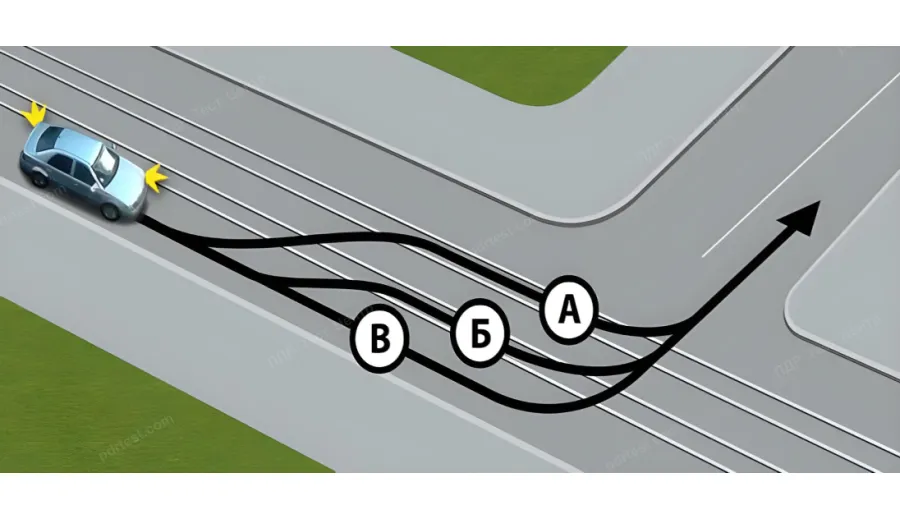
This exam question from the Traffic Rules of Ukraine tests the driver's ability to safely perform a left turn maneuver at an intersection where tram tracks are present. Such situations often occur in cities, and a mistake in choosing the trajectory can lead to a conflict with a tram, entering the oncoming lane, or causing a traffic jam, so the topic is directly related to road safety.
11.4. Is the driver allowed in this situation to make a left turn from the tram track of the same direction?
UAЧи дозволено водію у даній ситуації виконати поворот ліворуч із трамвайної колії попутного напрямку?
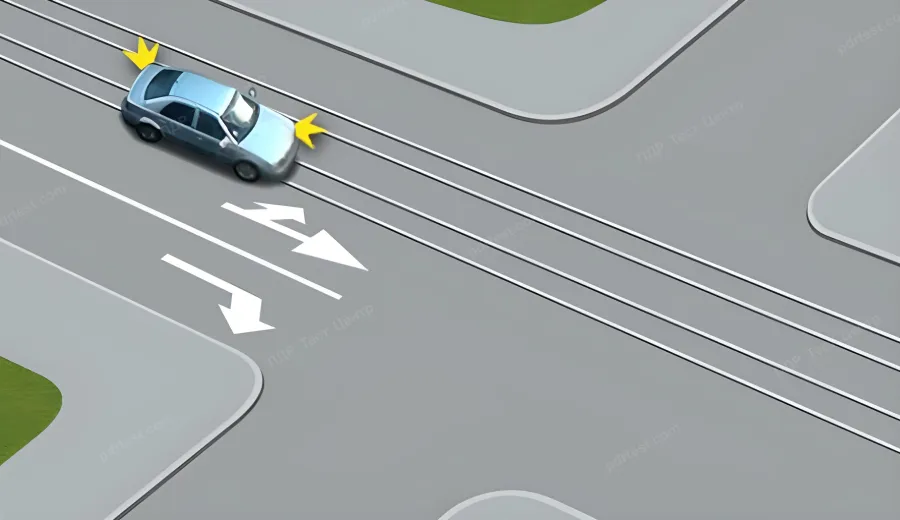
This is an exam question from the Traffic Rules of Ukraine concerning the safe and predictable execution of maneuvers at intersections when there are tram tracks on the roadway. Such situations often cause confusion among drivers, as it is important to distinguish: you may cross tram tracks while turning, but using them as a 'lane' to begin a maneuver is not always permitted. Correct interpretation of the traffic rules reduces the risk of conflicts with trams and accidents.
11.5. Does the driver have the right in this situation to make a left turn from the tramway track of the same direction?
UAЧи має право водій у даній ситуації виконати поворот ліворуч із трамвайної колії попутного напрямку?
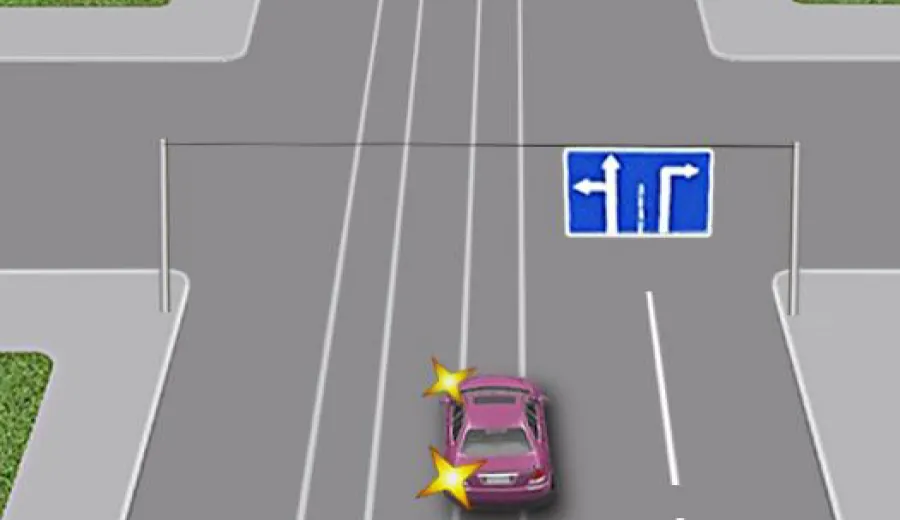
This exam question from the Traffic Rules of Ukraine checks the driver's attentiveness when passing intersections and the correct choice of lane before performing a maneuver. Such situations are directly related to road safety, as entering tram tracks and incorrect positioning of the vehicle before turning can create a conflict with the tram and lead to an emergency situation.
11.6. Is the driver allowed to drive on the tram track in the same direction in this situation?
UAЧи дозволено водієві рух по трамвайній колії попутного напрямку в даній ситуації?
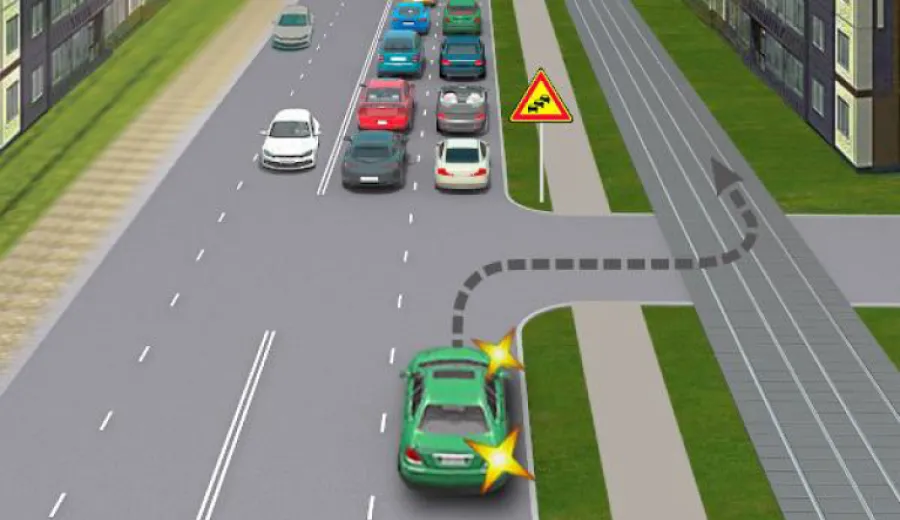
This exam question from the Traffic Rules of Ukraine tests the understanding of where a driver may use tram tracks as additional space for movement, and where this creates danger and conflict with public transport. Such situations often occur during traffic jams or road narrowing, when there is a temptation to "bypass" the flow along the rails, but the traffic rules strictly limit such maneuvers.
11.7. Is the driver of the vehicle moving correctly on a road that is divided into lanes by road markings?
UAЧи правильно водій автомобіля рухається по дорозі, яка поділена на смуги лініями дорожньої розмітки?
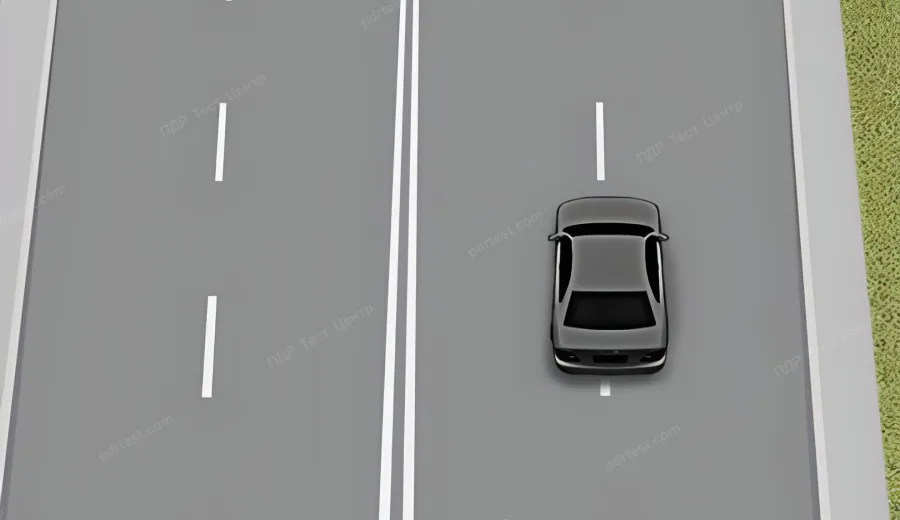
This exam question from the Traffic Rules of Ukraine concerns safety and predictability of movement on a multi-lane road, where the directions and boundaries of the lanes are defined by horizontal road markings. Correct lane occupation reduces the risk of side collisions and dangerous "trajectory conflicts," since other drivers expect that a vehicle will move within a single lane, not "on the line" between them.
11.8. What should the driver do in this situation when driving straight ahead?
UAЯк повинен вчинити водій у даній ситуації в разі руху прямо?
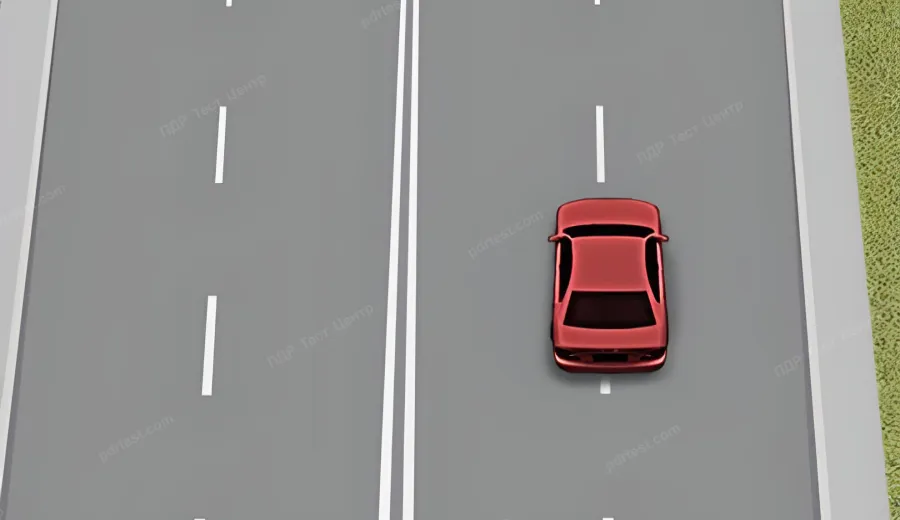
This exam question from the Traffic Rules of Ukraine concerns the safe positioning of a vehicle on a multi-lane road and lane discipline. Such situations often occur in city traffic when a driver is "stuck" between two lanes or delays completing a maneuver. Knowing these rules is important not only for the theoretical exam, but also for preventing side collisions and conflicts during lane changes.
11.9. Is the driver of the white car allowed to change lanes in heavy traffic?
UAЧи дозволено водієві білого автомобіля при інтенсивному русі виконати перестроювання?
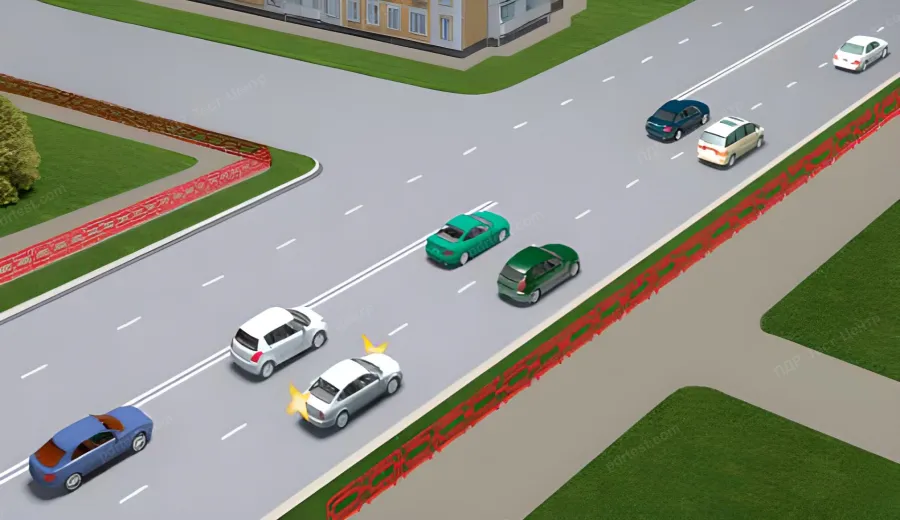
This is an exam question from the Traffic Rules of Ukraine (PDR) concerning safe interaction in dense traffic, when any lane change can provoke sudden braking, a "wave" of traffic jams, or an accident. In conditions of heavy traffic, it is especially important not to create obstacles for other participants, so the traffic rules set stricter restrictions on maneuvers than under normal road load.
11.10. Along which trajectory may the driver of the white vehicle enter the reversible lane when turning?
UAПо якій траєкторії водій білого автомобіля може виїжджати на смугу з реверсивним рухом при повороті?
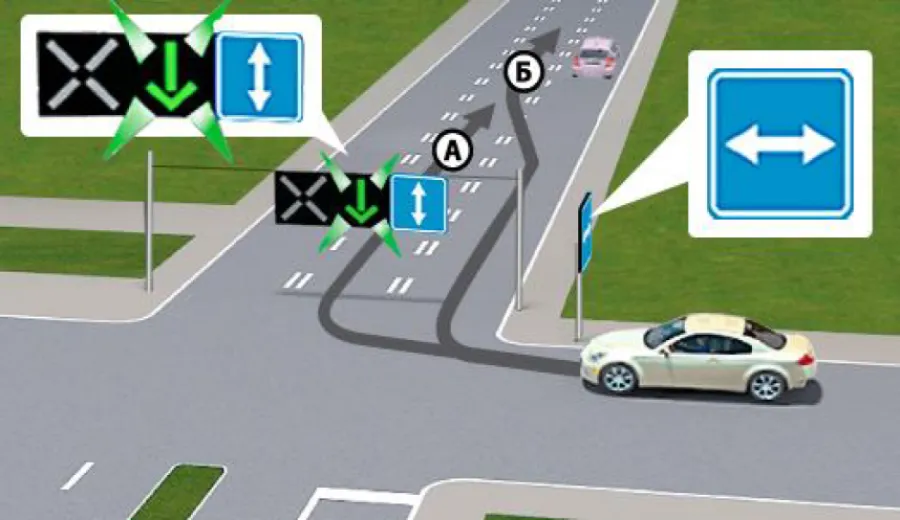
This exam question from the Traffic Rules of Ukraine tests the ability to safely make a turn onto a road with a reversible lane. Such lanes operate with a variable direction, so a mistake when entering them can lead to driving into oncoming traffic or onto a lane where movement is temporarily prohibited. In the context of the theoretical exam, it is important to understand that reversible traffic is always "tied" to the signals of the reversible traffic light and the corresponding road markings, and not just to the driver's desire to take a more convenient lane.
11.11. Along which trajectory is the cyclist allowed to continue moving?
UAПо якій траєкторії велосипедистові дозволено подальший рух?
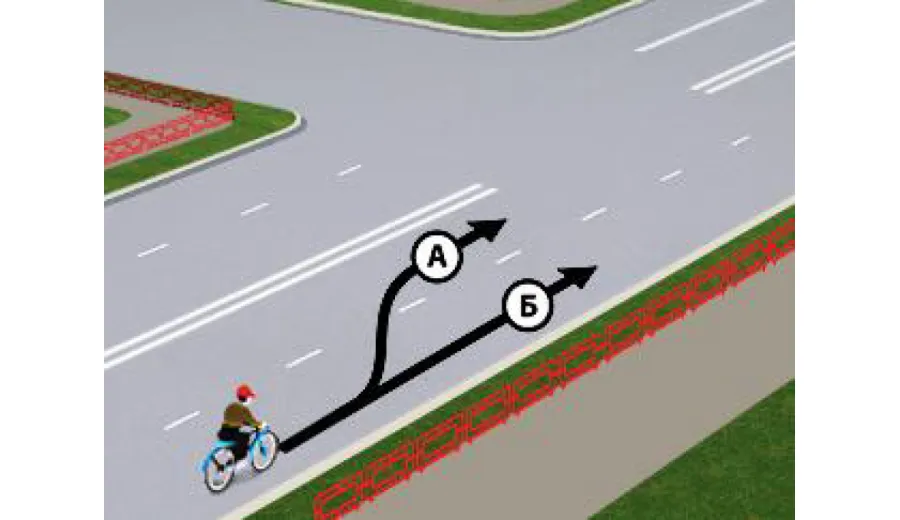
This is an exam question from the Traffic Rules of Ukraine (PDR) concerning the safe positioning of a cyclist on the roadway and the choice of lane. For real-world safety, this is critical: a cyclist is less visible to drivers, and moving into a more leftward lane on a multi-lane road sharply increases the risk of collision during overtaking and lane changes. That is why the traffic rules strictly limit where and how a cyclist may move within the traffic flow.
11.12. On which of the roads is it permitted for cyclists, moped drivers, persons driving animal-drawn vehicles, as well as riders, to turn left or make a U-turn?
UAНа якій із доріг велосипедистам, водіям мопедів, особам, які керують гужовим транспортом, а також вершникам дозволено поворот ліворуч або розворот?
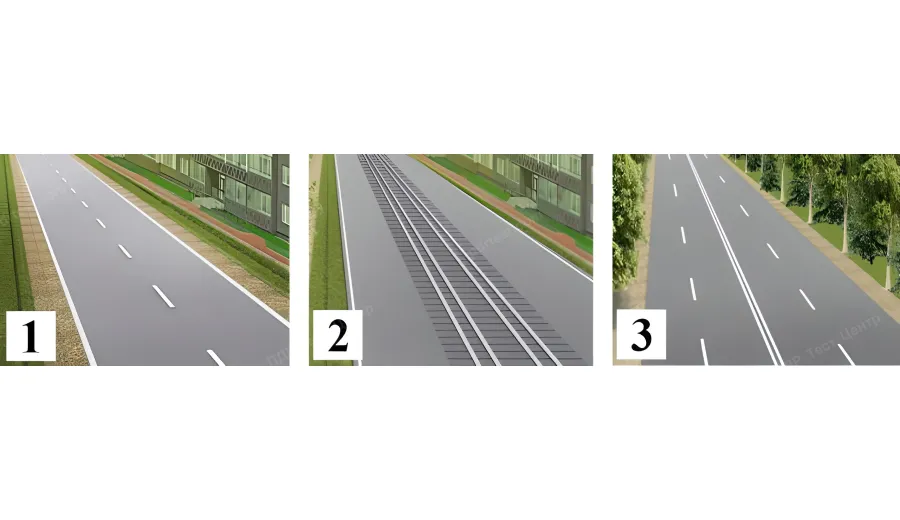
This is an exam question from the Traffic Rules of Ukraine about maneuvering safety for slow and vulnerable road users: cyclists, moped drivers, drivers of animal-drawn vehicles, and riders. The topic is important for real road conditions, as turning left and making a U-turn involve crossing oncoming traffic and require clear restrictions to avoid conflicts with faster vehicles.
11.13. May this vehicle move in the far left lane?
UAЧи може даний транспортний засіб рухатися по крайній лівій смузі?
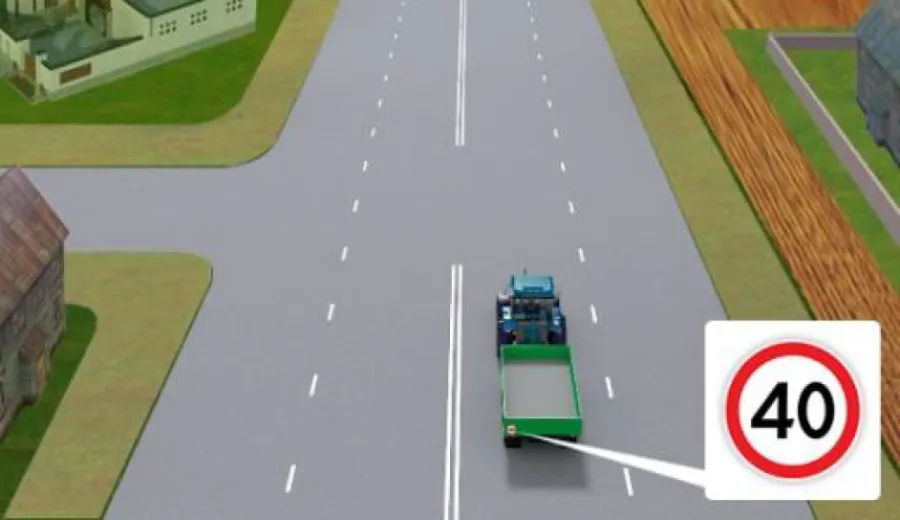
This exam question from the Traffic Rules of Ukraine concerns the safe distribution of traffic flows on a multi-lane road and the prevention of obstacles for faster-moving vehicles. In real conditions, slow vehicles, particularly agricultural machinery, can cause traffic jams and hazardous situations if they occupy the left lanes without necessity. Therefore, the traffic rules specifically regulate where "slow-moving" vehicles must travel and when they are allowed to deviate from keeping to the right.
11.14. Which of the drivers has correctly chosen the lane before the stop?
UAЯкий з водіїв правильно зайняв смугу перед зупинкою?
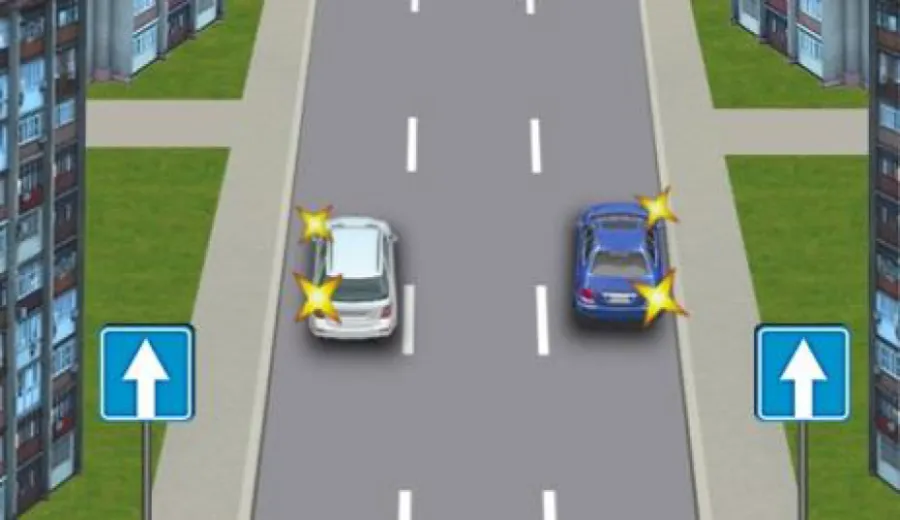
This exam question from the Traffic Rules of Ukraine concerns the safe positioning of a vehicle on the roadway before stopping and the ability to “read” road signs. In real traffic, choosing the correct lane and side for stopping reduces the risk of conflicts with the traffic flow, does not create obstacles for other drivers, and helps avoid violations for which points are often lost on the theoretical exam.
11.15. On which of the illustrations is the road shown where it is permitted to drive onto the side of the road designated for oncoming traffic?
UAНа якому з малюнків показана дорога, на якій дозволено виїжджати на призначений для зустрічного руху бік дороги?
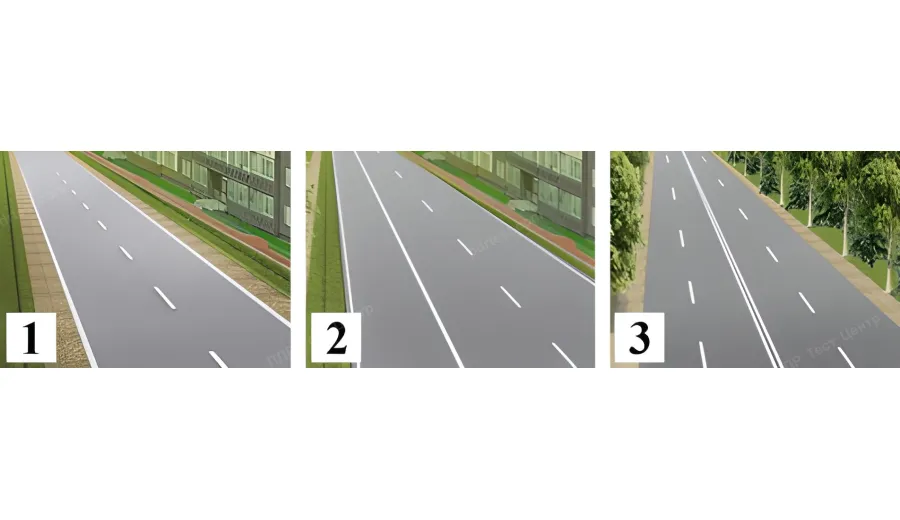
This exam question from the Traffic Rules of Ukraine concerns the safe execution of maneuvers on two-way roads, specifically overtaking and bypassing obstacles. Driving onto the side of the road designated for oncoming traffic is one of the most dangerous actions a driver can take, so the traffic rules strictly limit such maneuvers depending on the number of lanes and the type of horizontal road markings.
11.16. Is the driver of the yellow vehicle allowed to enter the oncoming traffic lane?
UAЧи дозволено водієві жовтого автомобіля виїхати на смугу зустрічного руху?
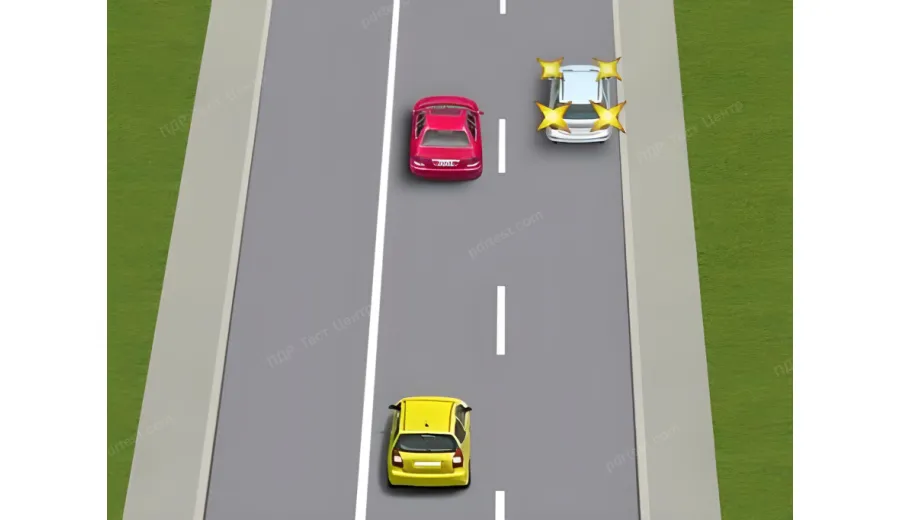
This exam question from the Traffic Rules of Ukraine tests the understanding of safe passing and the prevention of dangerous maneuvers related to entering the oncoming traffic lane. Such situations are among the riskiest in real traffic, as head-on collisions and conflicts on the 'oncoming lane' often occur precisely because of incorrect interpretation of overtaking or bypassing permissions.
11.17. Under what conditions is a driver of a passenger car allowed to drive in the far left lane on a road with a median strip?
UAЗа яких умов водієві легкового автомобіля дозволено рух по крайній лівій смузі на дорозі з розділювальною смугою?
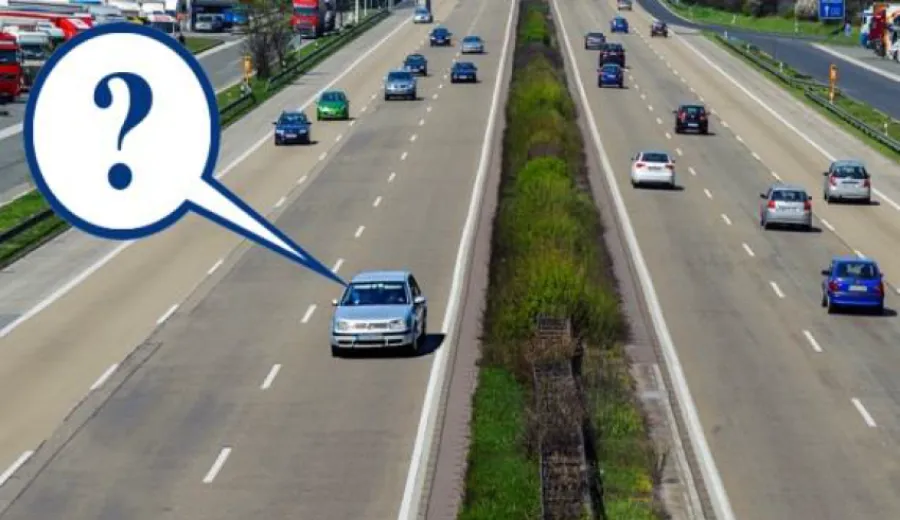
This exam question from the Traffic Rules of Ukraine checks understanding of the safe distribution of lanes on multi-lane roads and the correct choice of lane before a maneuver. The far left lane next to the median strip is usually faster and requires increased attention, so the traffic rules restrict its use to reduce the risk of conflicts, abrupt lane changes, and rear-end collisions.
11.18. Is it allowed for a vehicle, whose speed for technical reasons does not exceed 40 km/h, to drive in the far left lane?
UAЧи дозволено транспортному засобу, швидкість руху якого з технічних причин не перевищує 40 км/год., рухатися по крайній лівій смузі?
Question without image
This exam question from the Traffic Rules of Ukraine tests the understanding of safe distribution of traffic flows on multi-lane roads. Slow or technically limited vehicles create a speed difference, which increases the risks of sudden maneuvers, dangerous overtaking, and traffic jams. That is why the traffic rules establish separate requirements for them regarding lane selection and positioning on the carriageway.
11.19. May the driver of a vehicle enter the lane intended for oncoming traffic in order to stop or park near the left edge of the carriageway?
UAЧи може водій транспортного засобу в'їжджати на смугу, призначену для зустрічного руху, для зупинки або стоянки біля лівого краю проїзної частини?
Question without image
This is an exam question from the Traffic Rules of Ukraine about the safe positioning of a vehicle on the roadway and the exceptions when a driver may briefly enter the oncoming traffic lane not for overtaking, but for stopping or parking on the left side. This topic is important for road safety because any entry into the "oncoming" lane increases the risk of conflict with vehicles that have the right of way, especially at high speeds outside populated areas.
11.20. In which cases is a driver allowed to change lanes in heavy traffic?
UAУ яких випадках водієві при інтенсивному русі дозволено змінювати смугу?
Question without image
This is an exam question from the Traffic Rules of Ukraine about the safety and predictability of maneuvers in dense traffic flow. During heavy traffic, any unnecessary lane change increases the risk of an accident: drivers are forced to brake sharply, the safe distance is reduced, and conflicts arise due to blind spots and insufficient gaps. That is why the traffic rules restrict lane changes under such conditions, in order to maintain the uniformity of the flow and reduce accident rates.
11.21. How must drivers of non-rail vehicles move on roads with two or more lanes for traffic in each direction?
UAЯк повинні рухатися водії нерейкових транспортних засобів на дорогах із двома смугами й більше для руху в кожному напрямку?
Question without image
This is an exam question from the Traffic Rules of Ukraine about the safe and rational positioning of a vehicle on the roadway. It directly affects the road's capacity and helps prevent conflicts between drivers traveling at different speeds: when the slower flow keeps to the right, the left lanes remain available for maneuvers and more intensive movement. That is why the rules for lane selection are often included in the theoretical exam, since "occupying the left lane without necessity" creates obstacles and provokes dangerous lane changes.
11.22. In which cases may the driver of a non-rail vehicle drive without keeping as close as possible to the right edge of the carriageway on roads with two or more lanes in each direction?
UAУ яких випадках водій нерейкового транспортного засобу може рухатися, не тримаючись ближче до правого краю проїзної частини на дорогах, що мають по дві й більше смуг для руху в кожному напрямку?
Question without image
This exam question from the Traffic Rules of Ukraine checks the understanding of the basic principle of right-hand traffic and the safe distribution of traffic flows on multi-lane roads. When drivers keep to the right, the left lanes remain freer for maneuvers, the number of conflict situations decreases, and the predictability of actions in the flow increases, which directly affects safety both during the theoretical exam and in real driving conditions.
11.23. In which cases is it permitted for vehicles to drive on sidewalks and pedestrian paths?
UAУ яких випадках транспортним засобам дозволено рух по тротуарах і пішохідних доріжках?
Question without image
This is an exam question from the Traffic Rules of Ukraine (PDR) concerning pedestrian safety and the priority of their movement in areas primarily intended for people, not vehicles. According to the traffic rules, the sidewalk and pedestrian path are considered spaces where any vehicle movement creates increased risk, so the general rule is prohibition, and permission is possible only as an exception under clearly defined conditions.
11.24. Under what conditions are vehicles allowed to drive on sidewalks and pedestrian paths to perform work or service commercial and other enterprises located directly adjacent to these sidewalks or paths?
UAЗа яких умов транспортним засобам дозволено рух по тротуарах і пішохідних доріжках для виконання робіт або обслуговування торговельних та інших підприємств, розташованих безпосередньо біля цих тротуарів або доріжок?
Question without image
This exam question from the Traffic Rules of Ukraine concerns pedestrian safety and the restrictions on vehicle movement in areas primarily intended for pedestrian traffic. According to the definition in the Traffic Rules, sidewalks and pedestrian paths are designed for pedestrians, so any entry of a vehicle into these zones is potentially dangerous and, in most cases, prohibited. That is why exam situations often involve exceptions, where it is important not to simply "memorize," but to understand the logic of prioritizing safety.
11.25. How must cyclists, moped drivers, persons driving animal-drawn vehicles, and riders move on the carriageway?
UAЯк повинні рухатися по проїзній частині велосипедисти, водії мопедів, особи, які керують гужовим транспортом, а також вершники?
Question without image
This exam question from the Traffic Rules of Ukraine concerns the safe interaction of different road users on the carriageway: cyclists, moped drivers, persons with animal-drawn vehicles, and riders. The topic is important for the theoretical exam, as these road users are more vulnerable, move slower than the traffic flow, and must be as predictable as possible for car drivers to reduce the risk of dangerous overtaking, "cutting off," and lane conflicts.
11.26. How must a non-rail vehicle move on a road that has two or more lanes for traffic in each direction, is free from other vehicles, and there is no need to perform maneuvers?
UAЯк має рухатися нерейковий транспортний засіб на дорозі, яка має по дві й більше смуг для руху в кожному напрямку, вільній від інших транспортних засобів, якщо немає необхідності виконувати маневри?
Question without image
This is a driving exam question from the Traffic Rules of Ukraine about the safe and orderly positioning of a vehicle on the carriageway. On multi-lane roads, the correct choice of lane affects road capacity, the predictability of drivers’ actions, and reduces the risk of dangerous lane changes, especially when other road users are overtaking or approaching intersections.
11.27. What must the driver of a non-rail vehicle take into account to determine the number of lanes in the absence of road markings and the road signs 'Directions of movement by lanes' and 'Direction of movement by lane'?
UAЩо повинен враховувати водій нерейкового транспортного засобу для визначення кількості смуг за відсутності дорожньої розмітки та дорожніх знаків «Напрямки руху по смугах» і «Напрямки руху по смузі»?
Question without image
This is an exam question from the Traffic Rules of Ukraine about the safe organization of traffic on the road, when the driver needs to navigate independently without the guidance of markings and signs. Such situations are typical in winter, during road repairs, or on poorly marked sections, and it is precisely here that dangerous close approaches, “squeezing” into a lane, and side collisions most often occur. Therefore, the topic is directly related to road safety and the correct assessment of road conditions.
11.28. If the road is divided into traffic lanes by road markings, must the driver always drive exactly within the traffic lane?
UAЯкщо дорога поділена на смуги руху лініями дорожньої розмітки, чи завжди водій повинен рухатися точно по смузі для руху?
Question without image
This exam question from the Traffic Rules of Ukraine concerns safety and driving discipline on multi-lane roads where the lanes are marked with horizontal road markings. Staying within your lane makes the driver's actions predictable for other road users, reduces the risk of side collisions and conflicts during heavy traffic, especially in cities and on high-speed sections.
11.29. In which cases is it prohibited to drive onto the lane designated for oncoming traffic?
UAУ яких випадках заборонено виїжджати на призначений для зустрічного руху бік дороги?
Question without image
This is an exam question from the Traffic Rules of Ukraine concerning safety on roads with two-way traffic and, above all, the prevention of head-on collisions. Driving onto the side of the road designated for oncoming traffic is one of the most dangerous maneuvers, which is why the traffic rules clearly distinguish situations depending on the number of lanes in each direction and establish direct prohibitions.
11.30. Is a driver allowed to overtake by entering the median strip, which is separated by solid road markings?
UAЧи дозволено водієві виконати випередження, виїхавши на розділювальну смугу, яка відокремлена суцільними лініями дорожньої розмітки?
Question without image
This exam question from the Traffic Rules of Ukraine concerns the safety of maneuvering and the proper organization of traffic on roads with separated opposing flows. Elements such as the median strip are created to reduce the risk of head-on collisions and to discipline drivers: they are not a “reserve” lane for maneuvers, even if it seems that this would allow you to overtake slower vehicles more quickly. In the theoretical exam, it is checked whether the driver understands the purpose of road elements and can distinguish a traffic lane from zones where entry is prohibited.
11.31. How must a vehicle, whose speed must not exceed 40 km/h or which, for technical reasons, cannot reach such speed, move?
UAЯк повинен рухатися транспортний засіб, швидкість руху якого не повинна перевищувати 40 км/год. або який з технічних причин не може розвивати таку швидкість?
Question without image
This exam question from the Traffic Rules of Ukraine concerns the safe organization of traffic flow when slow-moving vehicles appear on the road. Such vehicles, tractors, or special machinery can cause delays and provoke dangerous maneuvers by other drivers, so the traffic rules establish a clear requirement for their positioning on the carriageway.
11.32. Under what conditions is a driver of a passenger car allowed to enter the far left lane on a road with a median strip?
UAЗа яких умов водієві легкового автомобіля дозволено виїжджати на крайню ліву смугу на дорозі з розділювальною смугою?
Question without image
This exam question from the Traffic Rules of Ukraine concerns the safe choice of lane on multi-lane roads and discipline when driving in traffic flow. Proper use of the far left lane reduces the risk of conflicts during overtaking, lane changes, and preparation for maneuvers, as well as helps avoid dangerous stops where other drivers expect free passage.
11.33. When are non-rail vehicles allowed to drive on a tram track in the same direction, located at the same level as the carriageway?
UAКоли нерейковим транспортним засобам дозволено рух по трамвайній колії попутного напрямку, розташованій на одному рівні з проїзною частиною?
Question without image
This is an exam question from the Traffic Rules of Ukraine (PDR) concerning safety in urban conditions, where tram tracks often run alongside traffic lanes. For the driver of a non-rail vehicle, it is important to understand that a tram track is not 'just another lane', but is used only as an exception and under specific conditions. Improper entry onto the rails creates a risk of traffic accidents, forces the tram to brake, and provokes conflicts in the traffic flow.
11.34. In which case is it prohibited to enter the adjacent tram tracks located at the same level as the carriageway?
UAУ якому випадку заборонено в'їжджати на попутні трамвайні колії, розташовані на одному рівні з проїзною частиною?
Question without image
This exam question from the Traffic Rules of Ukraine concerns traffic safety in urban conditions and the correct interaction with rail transport. Parallel tram tracks at the same level as the carriageway may sometimes be used by cars, but only as an exception and under strict conditions, since the tram has priority and requires a clear corridor for movement. Understanding these restrictions directly affects safety, helps avoid traffic jams, and prevents common mistakes on the theoretical exam.
11.35. In which case is it permitted to drive onto a tram track of the same direction at intersections?
UAУ якому випадку дозволено виїжджати на трамвайну колію попутного напрямку на перехрестях?
Question without image
This is an exam question from the Traffic Rules of Ukraine (PDR) concerning road safety in situations where the roadway is shared with rail transport. Entering tram tracks at intersections often leads to conflict situations, so the traffic rules strictly limit when the driver of a non-rail vehicle may occupy a parallel tram track, in order not to obstruct the tram and not to disrupt traffic organization.
11.36. When is it permitted to enter the far left lane on roads with two or more lanes in one direction?
UAКоли дозволено виїжджати на крайню ліву смугу на дорогах, що мають дві смуги і більше для руху в одному напрямку?
Question without image
This is an exam question from the Traffic Rules of Ukraine about the correct positioning of vehicles on the carriageway and the safe distribution of traffic flows on multi-lane roads. Its essence boils down to the principle of "keep to the right": on roads with two or more lanes in one direction, the far left lane is not intended for continuous driving without necessity, as this creates conflicts during lane changes, reduces throughput, and increases the risk of accidents.
11.37. Is the driver of a vehicle allowed to enter the tram track of the opposite direction?
UAЧи має право водій транспортного засобу виїжджати на трамвайну колію зустрічного напрямку?
Question without image
This exam question from the Traffic Rules of Ukraine concerns traffic safety in urban conditions and the rules for interaction between non-rail vehicles and trams. Tram tracks are a separate element of the road, and a tram cannot stop quickly or maneuver around an obstacle, so any trajectory conflicts with it are especially dangerous. In the theoretical exam, such situations are tested to ensure the driver understands that "free tracks" are not an additional lane for maneuvering.
11.38. On roads with what minimum number of lanes for traffic in one direction is it prohibited to drive onto the side designated for oncoming traffic?
UAНа дорогах з якою мінімальною кількістю смуг для руху в одному напрямку заборонено виїжджати на бік, призначений для зустрічного руху?
Question without image
This exam question from the Traffic Rules of Ukraine concerns road safety and the prevention of driving into oncoming lanes, which is one of the most dangerous causes of head-on collisions. For the theoretical exam, it is important to understand how the organization of traffic on the road (the number of lanes in your direction) affects permitted maneuvers and where a strict prohibition on entering the oncoming lane applies.
11.39. What should the driver of a non-rail vehicle primarily be guided by to determine the number of lanes on the carriageway?
UAЧим у першу чергу повинен керуватися водій нерейкового транспортного засобу для визначення кількості смуг на проїзній частині?
Question without image
This exam question from the Traffic Rules of Ukraine tests the driver's ability to correctly “read” the organization of traffic on the carriageway. Understanding the number of lanes directly affects safety: it determines proper lane changes, choice of position before an intersection, and avoidance of conflicts during overtaking or passing. In the theoretical exam, such questions help assess whether the driver navigates not “by eye,” but according to official means of traffic organization.