
6.1. Does a cyclist have the right of way if a cycle track crosses the road outside an intersection?
UAЧи має перевагу в русі велосипедист, якщо велосипедна доріжка перетинає дорогу поза перехрестям?
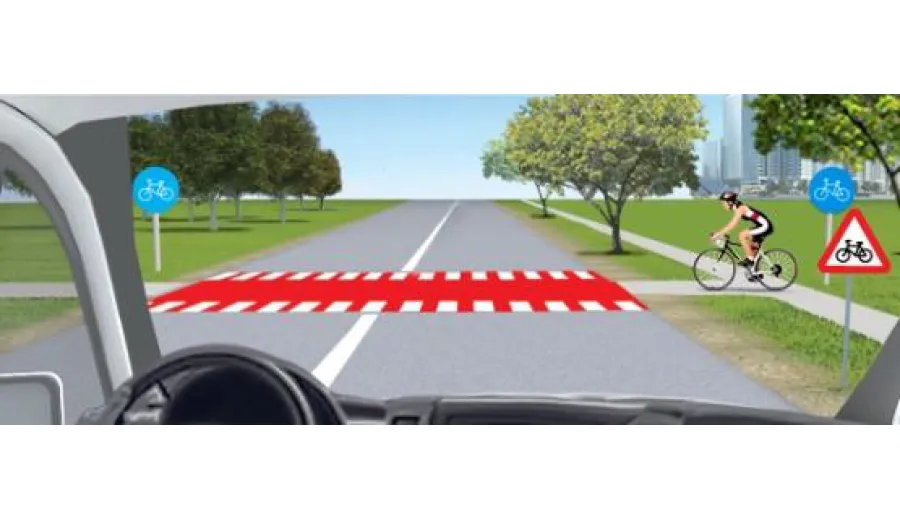
This exam question from the Traffic Rules of Ukraine checks the understanding of right of way and safe crossing of the carriageway when cycling infrastructure crosses a road outside of an intersection. Such places are often marked with warning signs and road markings, but the main idea of the traffic rules remains unchanged: on the carriageway, vehicles move faster, so the cyclist must act with maximum caution and not create danger.
6.2. Is it allowed to carry passengers on a bicycle?
UAЧи дозволено перевезення пасажирів на велосипеді?
Question without image
This exam question from the Traffic Rules of Ukraine concerns the safety of cyclists and control over the vehicle. Carrying a second person on a bicycle significantly changes the balance, braking distance, and handling, which increases the risk of falling and injury for both participants. That is why the traffic rules clearly regulate when and under what conditions someone other than the rider may be on a bicycle.
6.3. A cyclist is prohibited while riding a bicycle:
UAВелосипедисту під час руху на велосипеді забороняється:
Question without image
This is an exam question from the Traffic Rules of Ukraine about active safety while riding a bicycle and maintaining control over the vehicle in motion. It is directly related to the prevention of falls and collisions: any action that reduces controllability (loss of support with hands or feet, or dependence on another vehicle) sharply increases the risk of injury to the cyclist and creates danger for other road users.
6.4. In which case are cyclists allowed to ride on sidewalks and pedestrian paths?
UAУ якому випадку велосипедистам дозволено рухатись тротуарами і пішохідними доріжками?
Question without image
This exam question from the Traffic Rules of Ukraine concerns the safety of interaction between cyclists and pedestrians in pedestrian spaces. Sidewalks and pedestrian paths are primarily intended for people on foot, so the presence of a bicycle increases the risk of conflicts and collisions. For this reason, the traffic rules establish clear restrictions, which are important to know before the theoretical exam.
6.5. In which case is a cyclist prohibited from riding on the carriageway?
UAУ якому випадку велосипедисту заборонено рухатися проїзною частиною?
Question without image
This is an exam question from the Traffic Rules of Ukraine concerning cyclist safety and the proper choice of where to ride on the road. The logic of the traffic rules is simple: where separate infrastructure has been created for bicycles, the cyclist must use it to minimize conflicts with cars, overtaking, and dangerous maneuvers near intersections and exits.
6.6. Under what conditions is a cyclist prohibited from riding a bicycle?
UAЗа яких умов велосипедисту заборонено керувати велосипедом?
Question without image
This is an exam question from the Traffic Rules of Ukraine about the basic safety requirements for a cyclist as a full participant in road traffic. It emphasizes that riding a bicycle is only allowed when it is possible to stop safely, to warn others of your maneuver in advance, and to be clearly visible on the road, especially at night and in poor visibility conditions. Such rules directly affect the risk of traffic accidents and are often encountered in the theoretical exam.
6.7. What loads may a cyclist transport?
UAЯкі вантажі може перевозити велосипедист?
Question without image
This exam question from the Traffic Rules of Ukraine concerns road safety when transporting items by bicycle. For a cyclist, any cargo directly affects handling, braking, and stability, and can also pose a danger to pedestrians and nearby vehicles. That is why the traffic rules focus not on the 'convenience' of transportation, but on the real risks for all road users.
6.8. What distance must be maintained between moving columns of cyclists?
UAЯка дистанція має бути між рухомими колонами велосипедистів?
Question without image
This is an exam question from the Traffic Rules of Ukraine concerning road safety when organized groups of cyclists are moving along the carriageway. Choosing the correct distance between parts of the column reduces the risk of dangerous overtaking, sudden maneuvers, and conflicts with faster vehicles, as drivers need space to overtake the group and safely return to their lane.
6.9. When moving in groups, cyclists must ride on the road...
UAРухаючись групами, велосипедисти мають їхати по дорозі...
Question without image
This exam question from the Traffic Rules of Ukraine tests a basic principle of safe interaction between different road users on the carriageway: cyclists usually move slower than cars, so their organized column should not create obstacles for overtaking or passing. Compliance with the requirements for group cycling reduces the risk of dangerous maneuvers, sudden braking, and conflicts in traffic, which is especially important in the theoretical exam.
6.10. What must be installed on bicycles for driving at night and in conditions of insufficient visibility?
UAЩо встановлюється на велосипедах для руху в темну пору доби та в умовах недостатньої видимості?
Question without image
This exam question from the Traffic Rules of Ukraine concerns the safety of cyclists and their visibility on the road at night and in poor weather conditions. In such situations, the risk of a collision increases sharply because other drivers notice the bicycle later, and the cyclist sees obstacles less clearly. Therefore, the traffic rules pay special attention to lighting equipment as a key element of active safety.
6.11. What must a bicycle be equipped with?
UAЧим має бути обладнаний велосипед?
Question without image
This is an exam question from the Traffic Rules of Ukraine about the basic safety and visibility of two-wheeled vehicles in traffic. It concerns how a bicycle should alert other road users to its presence and how to remain visible in various lighting conditions, which directly affects the prevention of collisions and dangerous close encounters on the road.
6.12. From what age is it permitted to ride a bicycle on the roads?
UAЗ якого віку дозволено рухатися по дорогах на велосипеді?
Question without image
This exam question from the Traffic Rules of Ukraine concerns road safety for the most vulnerable participants — cyclists. When a bicycle enters the roadway, it joins the flow of cars, where quick reactions, the ability to judge distance, assess risks, and comply with traffic rules are crucial. That is why the Traffic Rules set age restrictions, which reduce the likelihood of dangerous situations on public roads.
6.13. Is it permitted for cyclists to ride on motorways, roads for motor vehicles, and the carriageway when there is a bicycle path nearby?
UAЧи дозволено велосипедистам рухатися автомагістралями, дорогами для автомобілів і проїзною частиною за наявності поруч велосипедної доріжки?
Question without image
This exam question from the Traffic Rules of Ukraine concerns traffic safety on high-speed roads and the correct choice of route for cyclists. On motorways and roads for motor vehicles, traffic moves at high speed (with a minimum speed requirement), so the appearance of a slower participant creates a speed difference, forces drivers to maneuver, and increases the risk of accidents. That is why the traffic rules establish specific restrictions for cyclists.
6.14. Is towing a bicycle permitted?
UAЧи дозволено буксирування велосипеда?
Question without image
This is an exam question from the Traffic Rules of Ukraine concerning the safety of two-wheeled vehicles and actions that sharply increase the risk of falling and accidents. Towing on the road is always associated with jerks in coupling, changes in trajectory, and the need for very stable control, and for a bicycle as an unstable vehicle, this is especially dangerous. That is why the traffic rules specifically highlight restrictions for cyclists and moped drivers.
6.15. In places where traffic is regulated, cyclists must follow:
UAУ місцях, де рух регулюється, велосипедисти повинні керуватися:
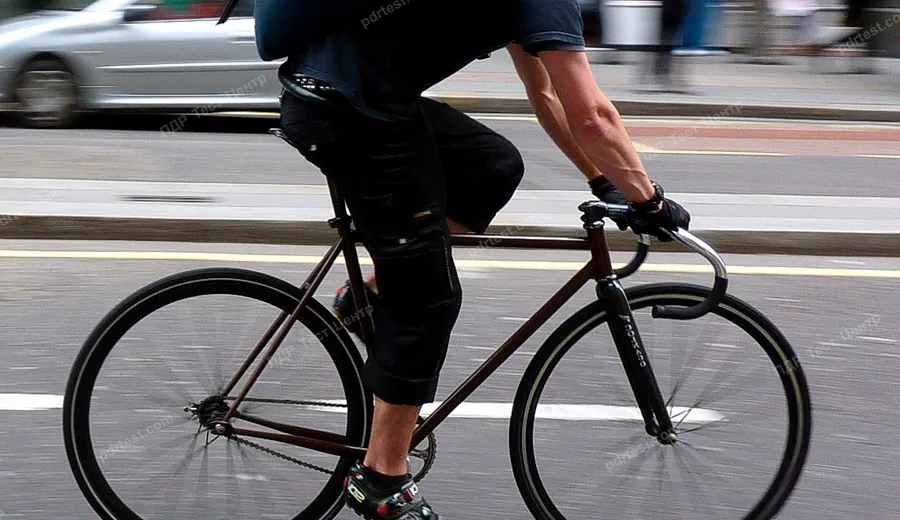
This is an exam question from the Traffic Rules of Ukraine concerning safety in regulated areas: at intersections, crossings, and sections where the order of passage is determined by the “commands” of regulating devices. For a cyclist, this is critical because they are a full participant in road traffic and move in the same flow as other vehicles, so failure to comply with signals quickly creates conflict and accident-prone situations.
6.16. What does the indicated road sign mean?
UAЩо позначає вказаний дорожній знак?
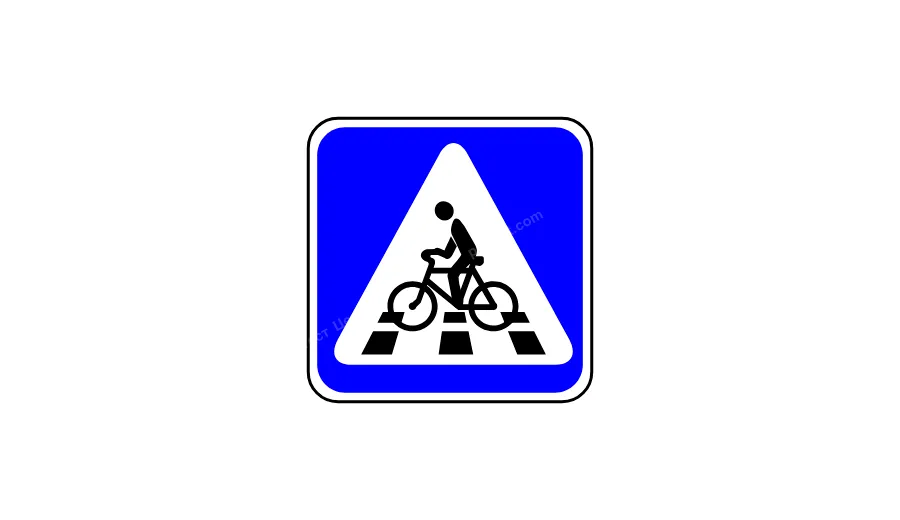
This exam question from the Traffic Rules of Ukraine concerns the safety of interaction between drivers and cyclists in areas where their routes intersect. Such sections require clear traffic organization, as cyclists may appear on the roadway at a designated point, and drivers must recognize informational and guiding signs in advance and act attentively in accordance with traffic regulations.
6.17. What does this horizontal road marking indicate in this case?
UAЩо в даному випадку позначає ця горизонтальна розмітка?
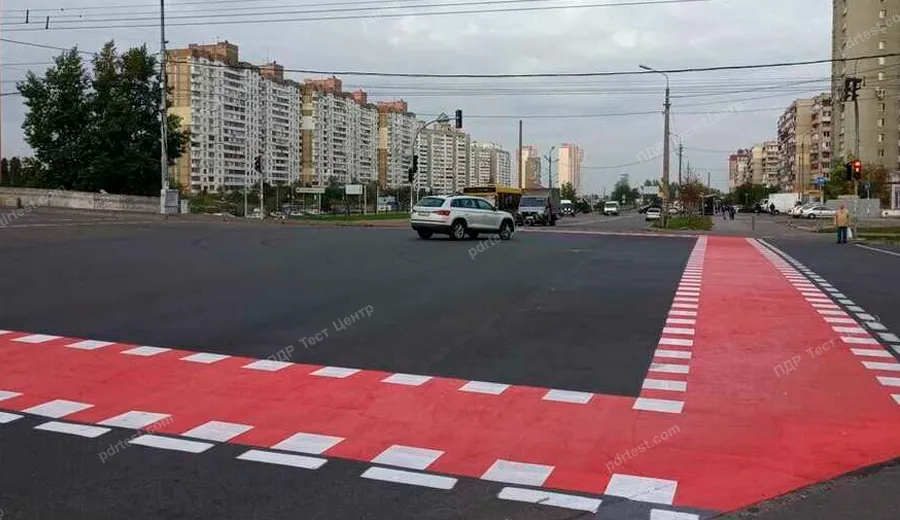
This exam question from the Traffic Rules of Ukraine tests attentiveness to horizontal road markings and understanding of how the safe coexistence of different road users is organized on the same section of road. Such marking elements directly affect safety, as they warn the driver about places where the paths of cars and cyclists may intersect and help to choose speed and maneuver in advance.
6.18. Which of the following statements about cyclists is incorrect?
UAЯке з наведених тверджень про велосипедистів є невірним?
Question without image
This exam question from the Traffic Rules of Ukraine concerns the safety of cyclists in traffic flow and their interaction with pedestrians. In the theoretical exam, such tasks check whether the candidate understands that a bicycle is a vehicle, and therefore, separate traffic rules apply to it, aimed at reducing the risk of accidents and conflicts on sidewalks and the roadway.
6.19. Is it also permitted for mopeds to use a bicycle lane?
UAВелосипедна смуга дозволяє також рух мопедів по ній?
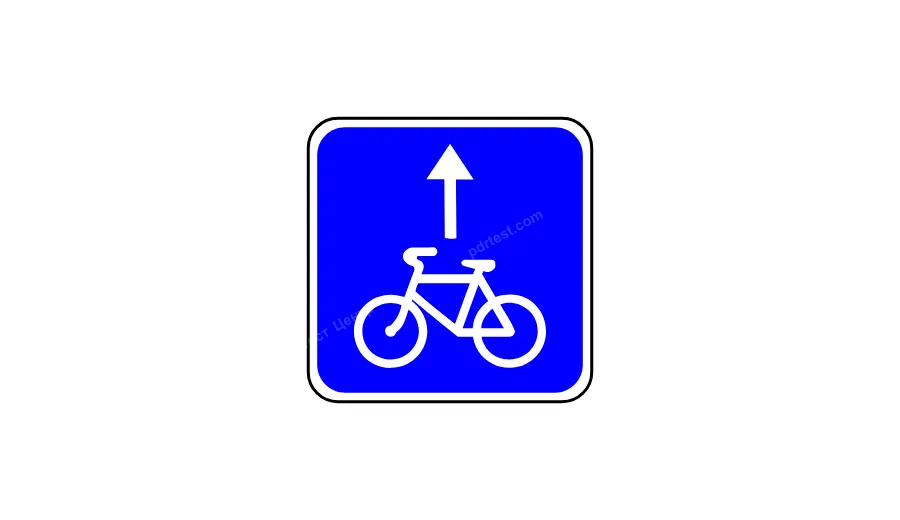
This exam question from the Traffic Rules of Ukraine concerns road safety and the proper distribution of traffic flows on the carriageway. Allocating a separate space for cyclists reduces conflicts with cars and motor vehicles, so understanding the purpose of special lanes directly affects safe behavior in the city and on rural roads.
6.20. Is it also permitted for motorcycles to travel on a bicycle lane?
UAВелосипедна смуга дозволяє також рух мотоциклів по ній?
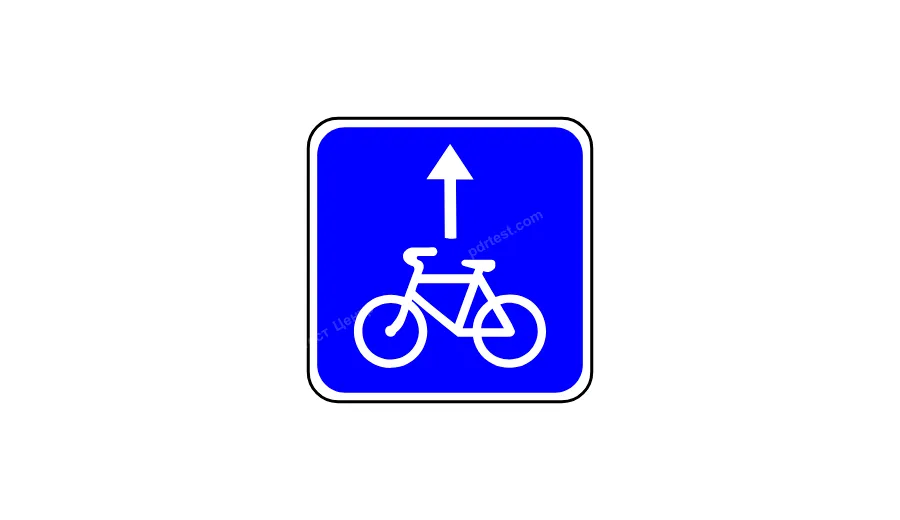
This exam question from the Traffic Rules of Ukraine concerns road safety and the proper allocation of space on the roadway among different road users. Bicycle infrastructure is created to separate cyclists from the general traffic flow, reduce conflicts, and increase the predictability of maneuvers, so understanding its purpose is important for everyone taking the theoretical exam.
6.21. Except for bicycles, who else is allowed to use the bicycle lane?
UAКрім велосипедів, по велосипедній смузі можуть рухатись:
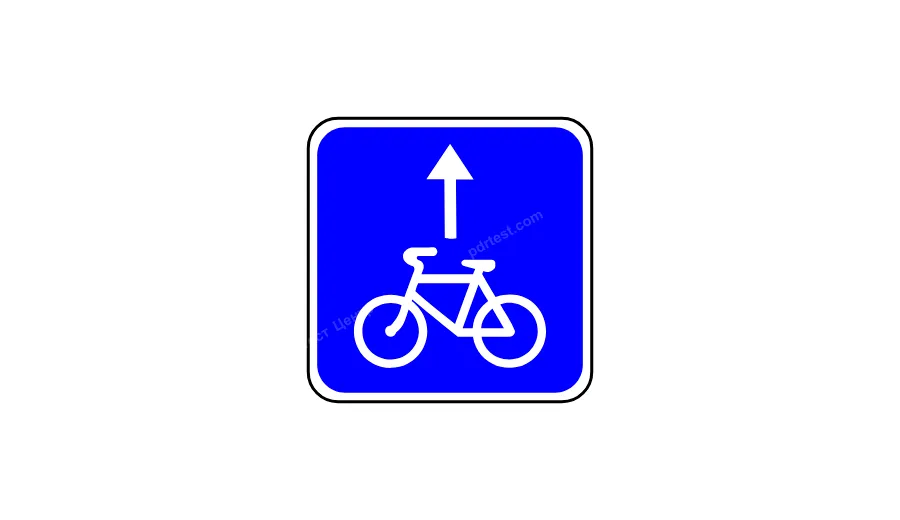
This exam question from the Traffic Rules of Ukraine checks the understanding of how safe movement is organized on the carriageway and how the flows of different road users are separated. Bicycle infrastructure is created to reduce conflicts between cyclists and motor vehicles, so proper use of the bicycle lane directly affects safety and is a typical topic for the theoretical exam.
6.22. Is it allowed for cyclists to ride in two rows if there are no oncoming vehicles?
UAЧи дозволено велосипедистам рухатися в два ряди, якщо зустрічні транспортні засоби відсутні?
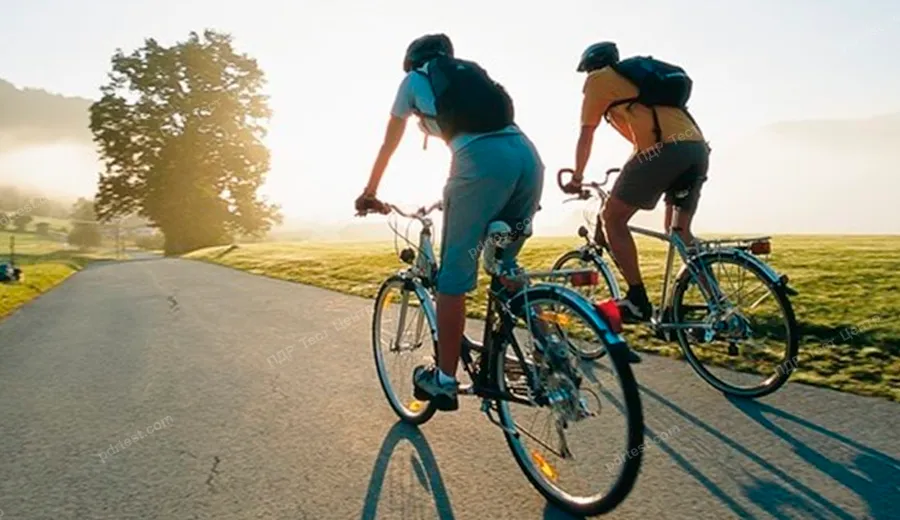
This exam question from the Traffic Rules of Ukraine concerns the safety of cyclists in general traffic flow and the rules for their positioning on the roadway. Such requirements are important not only for comfort but primarily for reducing the risk of traffic accidents: when cyclists occupy more lane width, it becomes more difficult for drivers behind to safely overtake or pass, and any maneuver requires more time and space.