
13.1. What is considered a safe distance?
UAЩо вважається безпечною дистанцією?
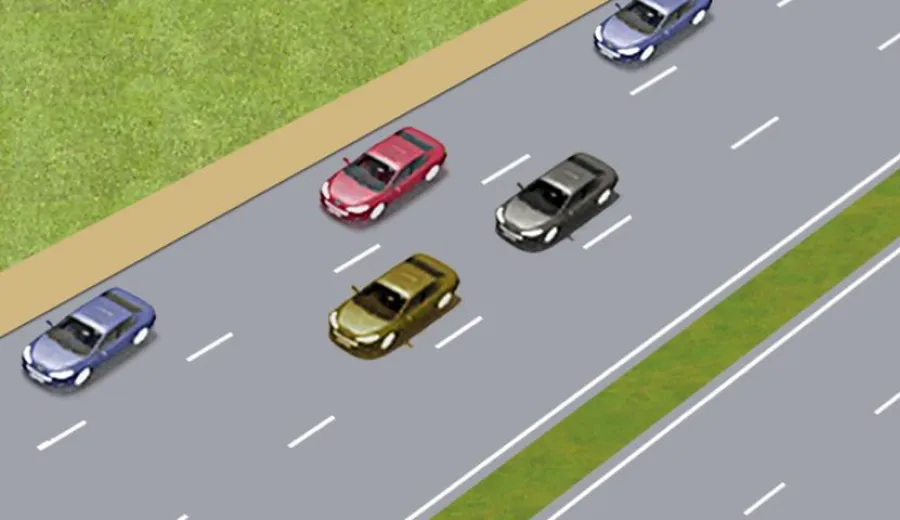
This exam question focuses on road safety in traffic flow and the prevention of the most common type of accident: "rear-end collision." In the Traffic Rules of Ukraine, distance is important not as a specific number in meters, but as a margin of time and space that allows the driver to react and brake when the situation ahead changes suddenly. That is why, when preparing for the theoretical exam, it is important to understand the logic behind the definition rather than trying to memorize a "universal" number.
13.2. Which vehicle driver has the right of way at this section of the road?
UAВодій якого автомобіля має перевагу на цій ділянці дороги?
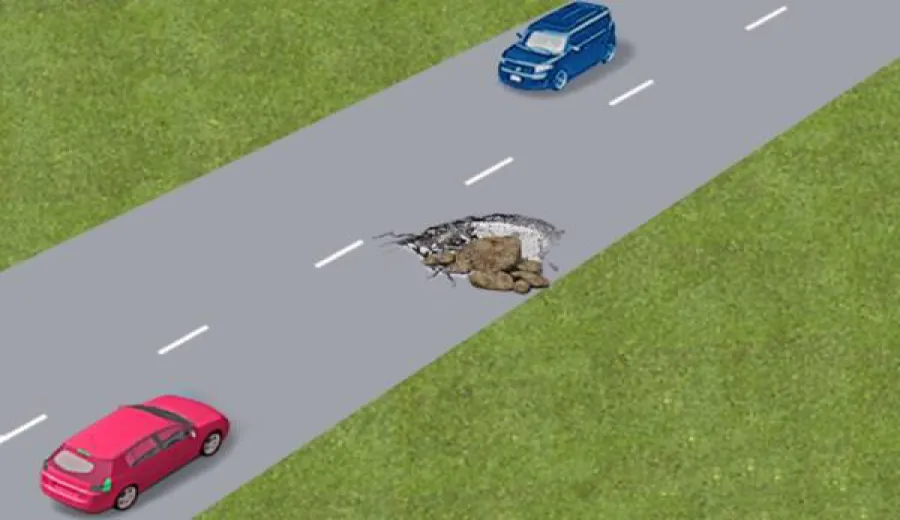
This exam question from the Traffic Rules of Ukraine concerns the safe passing of oncoming vehicles on narrow sections of the road when a lane is partially blocked by an obstacle. In real traffic, such situations often arise due to roadworks, parked cars, or a narrowing of the carriageway, and correctly determining the priority of movement affects safety and helps prevent head-on collisions.
13.3. Which driver must yield during an oncoming passing on this section?
UAВодій якого транспортного засобу повинен дати дорогу під час зустрічного роз'їзду на цій ділянці?
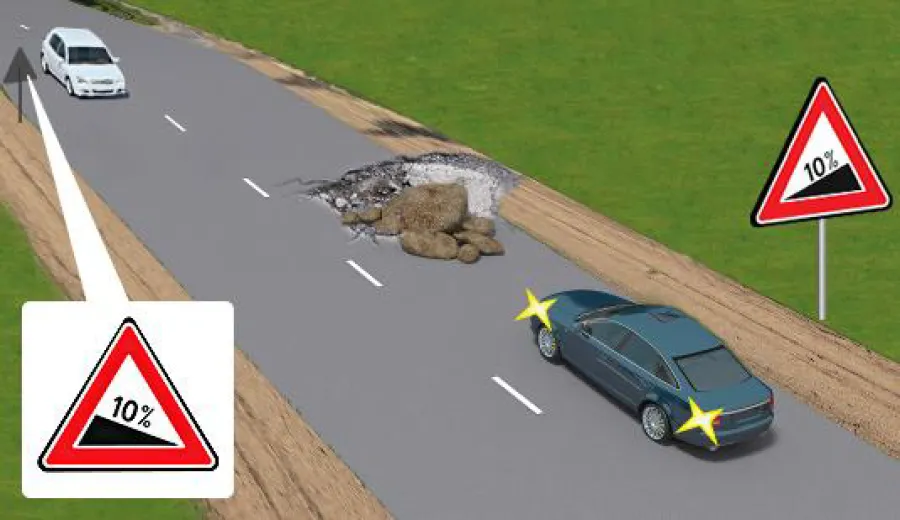
This is an exam question from the Traffic Rules of Ukraine (PDR) concerning safe meeting and passing on a narrow section of road, where movement is complicated by an obstacle and a longitudinal slope (ascent/descent). Such situations are typical for mountain roads and rural routes: correctly determining the order of passage reduces the risk of collisions, sudden braking, and forced maneuvers on a limited roadway width.
13.4. May the driver of the blue vehicle continue driving without waiting for the red vehicle to pass, if the obstruction is on his side?
UAЧи може водій синього автомобіля продовжити рух, не чекаючи проїзду червоного автомобіля, якщо перешкода на його боці?
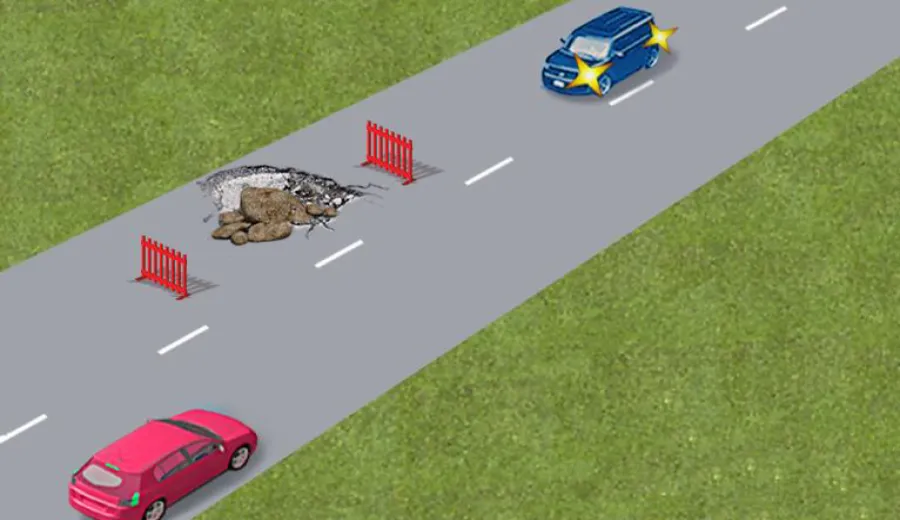
This is an exam question from the Traffic Rules of Ukraine about safe passing on a narrow section of road when movement is complicated by an obstacle. Such situations often occur near parked cars, construction zones, or road narrowings, and the correct order of passing directly affects road safety and the prevention of head-on collisions.
13.5. Which driver must give way?
UAХто з водіїв повинен дати дорогу?
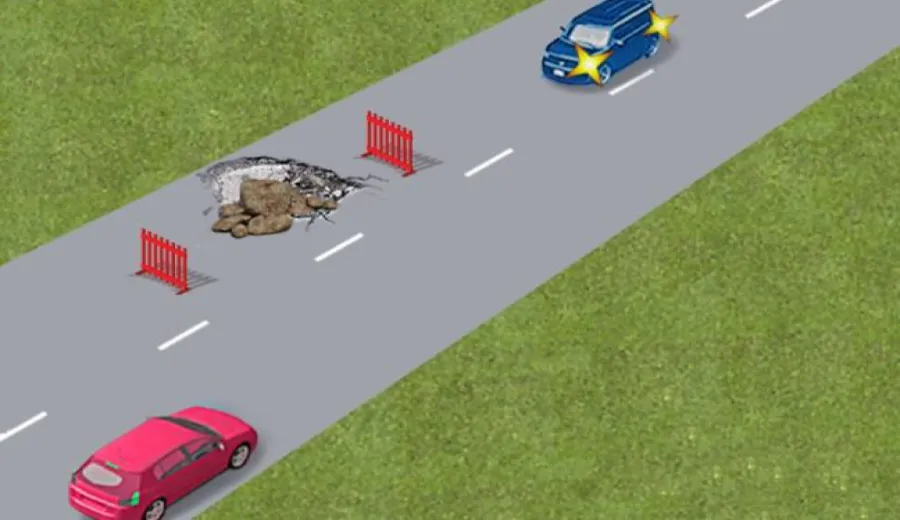
This exam question from the Traffic Rules of Ukraine concerns the safety of oncoming passing on narrow sections of the road, when one of the lanes is partially blocked by repairs, a pothole, or another stationary object. Such situations often occur in cities and on rural roads and require a clear understanding of who exactly must yield in order not to create a dangerous conflict with oncoming traffic.
13.6. What distance must be maintained between tractors moving outside populated areas if their speed does not exceed 40 km/h?
UAЯка дистанція повинна бути між тракторами, що рухаються за межами населених пунктів, якщо їх швидкість не перевищує 40 км/год.?
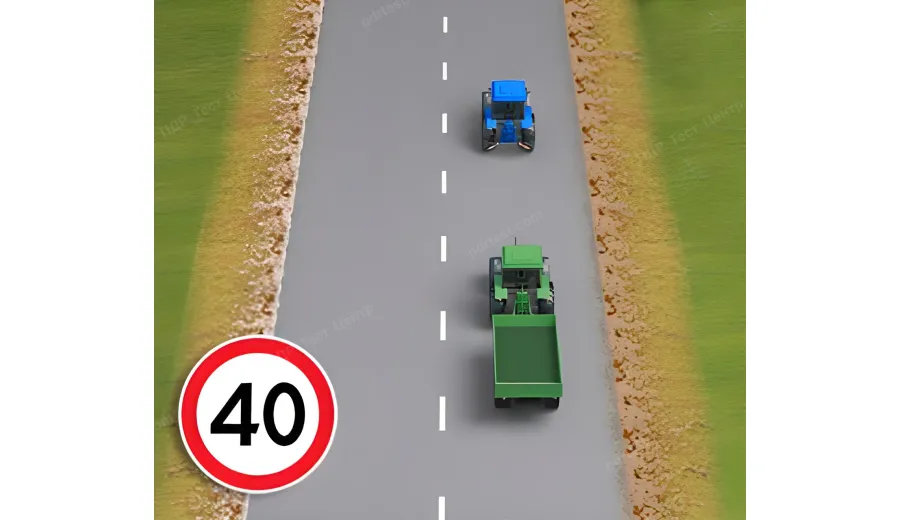
This exam question from the Traffic Rules of Ukraine concerns road safety on rural roads, where slow-moving vehicles (in particular, tractors) can significantly affect the speed of traffic flow. Properly chosen distance in such conditions reduces the risk of accidents during overtaking, as other drivers are forced to enter the oncoming lane and need to complete the maneuver quickly and safely.
13.7. What is considered a safe lateral clearance?
UAЩо вважається безпечним інтервалом?
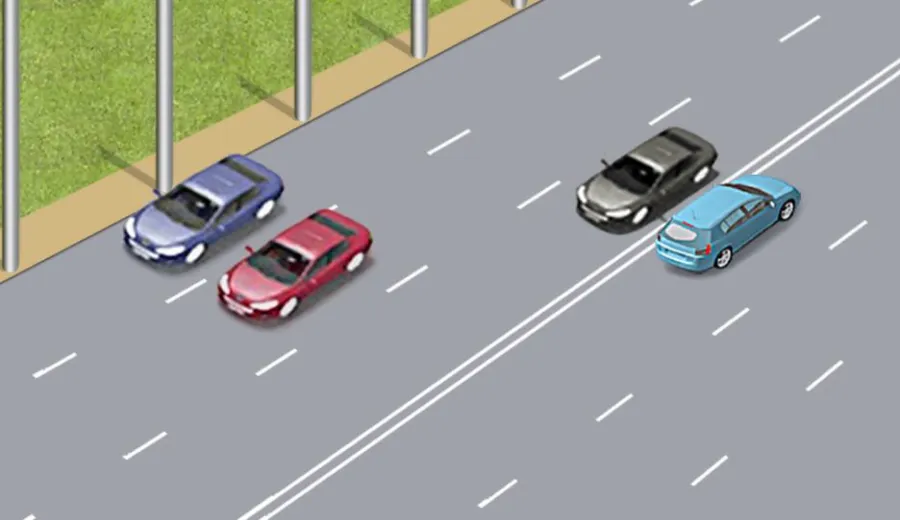
This is an exam question from the Traffic Rules of Ukraine (PDR) concerning the basic concepts of road safety and the driver's ability to correctly assess the space to the side while driving. In practice, it is precisely insufficient lateral clearance that often leads to "side" accidents during lane changes, overtaking, passing, oncoming traffic, or bypassing obstacles. Therefore, when preparing for the theoretical exam, it is important not to confuse the lateral interval with the distance (the space in front and behind).
13.8. Which rule should drivers follow in case of limited oncoming passing on road sections marked with 'Steep Ascent' and 'Steep Descent' signs?
UAЯким правилом повинні керуватися водії в разі обмеженого зустрічного роз'їзду на ділянках доріг, позначених знаками «Крутий підйом» і «Крутий спуск»?
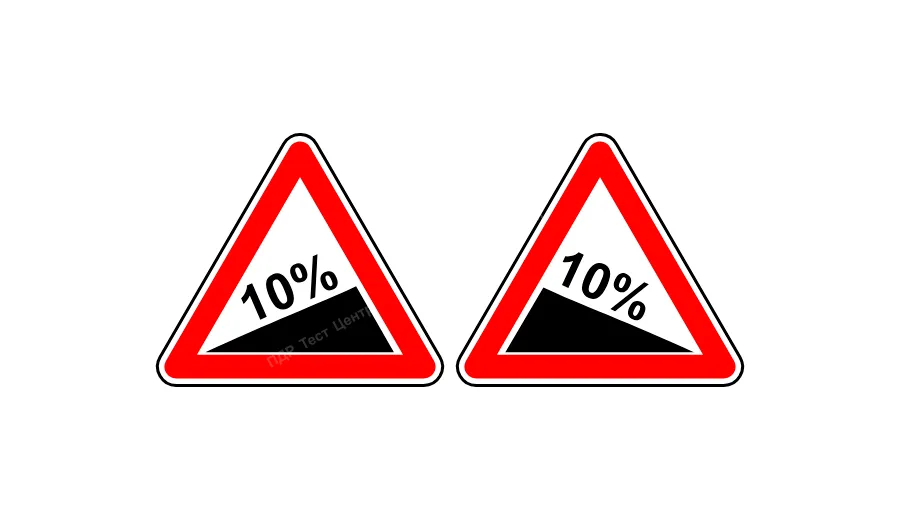
This exam question from the Traffic Rules of Ukraine tests knowledge of safe passing rules on narrow road sections during ascent and descent, when oncoming passage is complicated. In real traffic, such situations often arise in mountainous areas or on roads with significant inclines, where a mistake with priority can lead to dangerous maneuvers, sudden braking, or even loss of vehicle control.
13.9. During which maneuvers must the driver maintain a safe lateral clearance?
UAПід час виконання яких маневрів водій повинен дотримуватися безпечного інтервалу?
Question without image
This is an exam question from the Traffic Rules of Ukraine about road safety when vehicles approach each other and pass by obstacles. Its essence is that the driver must leave sufficient lateral space to avoid side collisions due to gusts of wind, road irregularities, misjudgment of vehicle dimensions, or unexpected movement of another car. Such a safety margin is especially important at speed and in dense traffic, which is why this topic often appears on the theoretical exam.
13.10. What distance must drivers of vehicles whose speed does not exceed 40 km/h maintain outside populated areas?
UAЯкої дистанції повинні дотримуватися водії транспортних засобів, швидкість яких не перевищує 40 км/год. поза населеними пунктами?
Question without image
This is an exam question from the Traffic Rules of Ukraine concerning road safety when driving in a convoy outside populated areas, where there are slow-moving vehicles on the road. Choosing the correct distance here is important not only to avoid rear-end collisions but also to reduce the risk of dangerous overtaking on two-lane rural roads, where oncoming traffic and limited visibility often create critical situations.
13.11. What must the driver take into account when choosing a safe following distance and lateral interval?
UAЩо повинен враховувати водій під час вибору безпечної дистанції та інтервалу?
Question without image
This exam question from the Traffic Rules of Ukraine concerns basic road safety: how to correctly choose the distance to the vehicle ahead and the lateral interval when passing, overtaking, or driving in traffic. Mistakes in assessing these values most often lead to rear-end collisions, especially on wet or slippery surfaces, when the braking distance increases sharply and there is less time to react. For the theoretical exam, it is important to understand that a safe distance and interval cannot be "the same at all times"—they depend on driving conditions and the capabilities of the vehicle.
13.12. You are on a section of road marked with the 'Steep Ascent' sign, and there is a stationary obstacle in your lane that complicates passing with oncoming traffic. How should you pass the oncoming vehicle that is descending?
UAВи на ділянці дороги, позначеній знаком «Крутий підйом», на Вашій смузі нерухома перешкода, що утруднює зустрічний роз'їзд. Як Вам виконати роз'їзд із зустрічним автомобілем, що рухається на спуск?
Question without image
This is an exam question from the Traffic Rules of Ukraine about the safety of oncoming passing on narrow or difficult road sections, particularly on ascents and descents. Such situations often occur in mountainous areas or on roads with limited visibility, where incorrect determination of the right of way can lead to traffic blockage, abrupt maneuvers, and dangerous situations. Knowledge of this rule is important for successfully passing the theoretical exam and for real-life driving practice.
13.13. Which rule should drivers follow when meeting oncoming traffic in places where passing is difficult?
UAЯким правилом повинні керуватися водії під час зустрічного роз'їзду в місцях, де він утруднений?
Question without image
This exam question from the Traffic Rules of Ukraine concerns safety during oncoming passing on narrow road sections, where it is difficult for two vehicles to pass each other without stopping or reducing speed. Such situations often arise due to parked cars, roadworks, road narrowing, or oversized vehicles, so knowing the correct order of passage directly affects the avoidance of conflicts and head-on collisions.